











1 / 10 Questions
0 Points

Which reality TV show launched in 2010 and turned storage unit auctions into a national phenomenon?

Storage Hunters

Baggage Battles

Storage Wars

Auction Hunters

Points won
0
Correct score
0%

More Questions

9 Strange Facts About Venus Flytraps Counting Touch Signals

Venus flytraps count touch signals before snapping shut on prey. Discover 9 strange facts about these carnivorous plants and their hunting abilities.

Did You Know Vampires Cannot Cross Running Water

Vampire legends reveal why the undead cannot cross running water. Discover the folklore origins behind this enduring supernatural boundary and protection.

Which ice cream bar came from a boy’s tough choice?

Which ice cream bar came from a boy's tough choice? Question 1: Which ice cream bar came from a boy's tough choice? A. Edy's Pie B. Klondike...

More Articles

How Long Would It Take to Fall Through Earth to China

How Long Would It Take to Fall Through Earth to China

How Long Would It Take to Fall Through Earth to China

By Trivia Owl, Staff Writer — Published August 30, 2026

Table of Contents

The idea of digging a hole straight through the Earth has captured imaginations for generations. Children across the Western world have gleefully shoveled backyard dirt, convinced they're tunneling toward China. But what would actually happen if you could drill through our planet's core and jump in? The answer reveals surprising physics that would take you on the most extreme free-fall ride imaginable—and no, you wouldn't end up in China.

This classic thought experiment combines geography, physics, and a dash of childhood myth-busting. The journey would take far less time than you might expect, yet the conditions would be utterly impossible to survive. Let's explore what scientists discover when they calculate this hypothetical plunge.

Key Takeaways

  • A straight tunnel through Earth from most of North America actually exits in the Indian Ocean, not China—the antipodal point myth is geographically incorrect for nearly all locations.
  • Ignoring air resistance and assuming uniform density, you would take approximately 42 minutes to fall through Earth and reach the other side.
  • You'd accelerate to roughly 17,700 miles per hour at Earth's center before gravity pulls you back, creating an oscillating motion.
  • The journey involves temperatures exceeding 10,000 degrees Fahrenheit at the core and pressures millions of times atmospheric pressure.
  • This theoretical fall time matches the orbital period of a satellite skimming Earth's surface—a fascinating mathematical coincidence.
  • Without friction, you'd oscillate back and forth through the tunnel forever, like a pendulum passing through equilibrium.

The China Myth: Where Would You Actually End Up?

First, let's address the geographical misconception. If you drilled straight down from anywhere in the continental United States, you wouldn't emerge in China. The antipodal point—the spot directly opposite on Earth's surface—from most of North America lies in the Indian Ocean, somewhere between Madagascar and Australia. China is roughly on the same side of the globe as North America, just shifted westward.

Only a few land-to-land antipodal pairs exist on Earth. Spain and New Zealand form one such pair. Argentina aligns roughly with China and Mongolia. But for the vast majority of locations, drilling straight through Earth lands you in ocean. The "digging to China" phrase likely originated from the fact that China seemed impossibly distant and exotic to Western children, representing the farthest imaginable place.

The Physics of a 42-Minute Free Fall

Now for the amazing calculation. Assuming you could create a vacuum tunnel and ignore Earth's rotation, molten core, and crushing pressures, the time it would take to fall through our planet is approximately 42 minutes and 12 seconds. You'd reach the opposite side in that time, then—with no way to grab on—you'd fall back through, oscillating like a pendulum.

Here's how it works. As you fall, gravity accelerates you downward. You'd pick up speed rapidly at first, reaching maximum velocity as you pass through Earth's center—roughly 17,700 miles per hour (about 28,000 kilometers per hour). That's more than twenty times the speed of sound.

But here's the interesting part: once you pass the center, gravity begins working against you. The mass of Earth is now above you, pulling you backward. You decelerate at the same rate you accelerated, arriving at the opposite surface with zero velocity—at which point you'd fall back down again. Without friction or air resistance, this motion would continue indefinitely.

Why Exactly 42 Minutes?

The 42-minute figure emerges from calculus and gravitational physics. Inside Earth, gravitational force decreases linearly with distance from the center (assuming uniform density). This creates what physicists call simple harmonic motion—the same type of motion a spring exhibits when compressed and released.

The math reveals something remarkable: this fall time equals the orbital period of a satellite traveling just above Earth's surface. Both scenarios take approximately 84 minutes for a complete cycle—42 minutes each way through Earth, or 84 minutes to orbit around it. This isn't coincidence; it's fundamental physics connecting gravity, mass, and motion.

What Makes This Journey Impossible

The theoretical calculation is elegant, but reality presents insurmountable obstacles. Earth's interior is nothing like the empty vacuum tube our physics assumes.

Depth Temperature Pressure Material State
Surface 59°F average 1 atmosphere Solid rock
Mantle (1,800 miles) ~2,700°F ~500,000 atmospheres Plastic/flowing rock
Outer Core (3,200 miles) ~8,000°F ~1.3 million atmospheres Liquid iron/nickel
Inner Core (3,950 miles) ~10,800°F ~3.6 million atmospheres Solid iron/nickel

The temperatures at Earth's core rival the surface of the sun. No known material could survive the journey, let alone a human body. The pressure would instantly crush anything long before reaching the core. Even if you somehow survived the heat and pressure, Earth's rotation would slam you against the tunnel walls at tremendous speed.

Variations on the Thought Experiment

Physicists enjoy tweaking this scenario. What if the tunnel didn't pass through the center? Surprisingly, a straight tunnel between any two points on Earth's surface produces the same travel time—42 minutes. A chord tunnel from New York to Los Angeles would take the same time as one through the core, though you'd travel a shorter distance.

This counterintuitive result occurs because shorter tunnels mean less gravitational acceleration, perfectly balancing the reduced distance. It's called a gravity train, and it represents the theoretical fastest travel time between any two points on Earth using only gravity.

Some variations consider air resistance. With air in the tunnel, you'd reach terminal velocity relatively quickly—only a few hundred miles per hour—and the journey would take considerably longer. You'd also need to worry about compression heating as air density increased toward the center.

Frequently Asked Questions

Would you actually end up in China if you dug through Earth from America?

No. A hole straight through Earth from the continental United States would exit in the Indian Ocean, between Australia and Madagascar. China is on roughly the same hemisphere as North America, making the "digging to China" phrase geographically inaccurate.

How fast would you be traveling at Earth's center?

You would reach approximately 17,700 miles per hour (28,000 kilometers per hour) at the center point, assuming no air resistance. This represents your maximum velocity before gravity begins decelerating you for the second half of the journey.

Why does the journey take 42 minutes regardless of tunnel angle?

Any straight tunnel through Earth creates simple harmonic motion with the same period. Shorter tunnels have less gravitational acceleration, which precisely compensates for the reduced distance, resulting in identical travel times.

Has anyone ever drilled completely through Earth?

No. The deepest hole ever drilled is the Kola Superdeep Borehole in Russia, reaching about 7.5 miles down—less than 0.2% of the way through Earth. Extreme temperatures and pressure make drilling deeper extraordinarily difficult with current technology.

The fantasy of falling through Earth connects us to childhood wonder while teaching real physics. Though we'll never actually make the journey, the mathematics behind it reveals elegant truths about gravity, motion, and our planet's structure. Sometimes the most impossible scenarios lead to the most interesting discoveries.
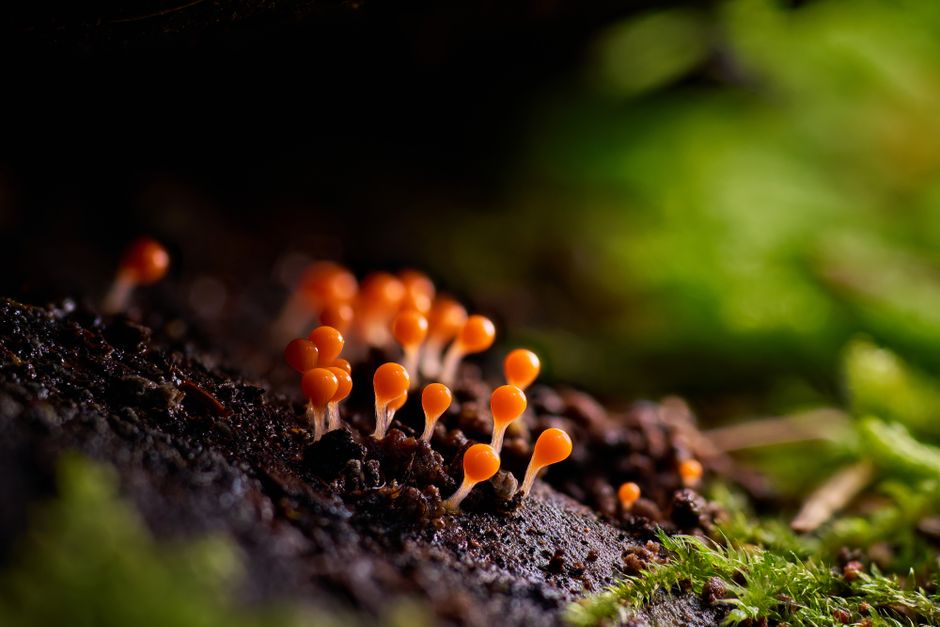
11 Surprising Facts About Fungi Being Closer to Animals

11 Surprising Facts About Fungi Being Closer to Animals

11 Surprising Facts About Fungi Being Closer to Animals

By Trivia Owl, Staff Writer — Published November 8, 2026

Table of Contents

When you think about mushrooms sprouting in your backyard or the yeast that makes bread rise, you probably don't imagine them as distant relatives of your pet dog. Yet one of the most amazing discoveries in modern biology reveals that fungi closer animals than they are to plants. This surprising truth upended centuries of scientific classification and continues to fascinate researchers today. The evolutionary relationship between fungi and animals is written in their DNA, their cellular chemistry, and even the way they obtain energy from their environment.

For most of human history, fungi were lumped together with plants in scientific classification systems. They seemed plant-like enough, growing from the ground and staying in one place. But molecular biology has shown us a far more interesting story about these remarkable organisms.

Key Takeaways

  • Fungi and animals share a more recent common ancestor than either does with plants, making them evolutionary cousins.
  • Both fungi and animals store energy as glycogen, while plants use starch as their primary energy reserve.
  • Fungal and animal cells lack chloroplasts and cannot produce their own food through photosynthesis.
  • Chitin, the structural compound in fungal cell walls, is the same material found in insect exoskeletons and crustacean shells.
  • Genetic analysis shows fungi and animals diverged from their common ancestor roughly one billion years ago.
  • Both fungi and animals must consume organic matter for nutrition rather than synthesizing food from sunlight.

Why Fungi Closer Animals Matters for Science

The discovery that fungi share closer evolutionary ties to animals than to plants represents more than just a curiosity for trivia enthusiasts. This relationship has profound implications for medicine, agriculture, and our understanding of life's diversity. When scientists develop antifungal medications, they face a unique challenge: because fungi and animals are so closely related at the cellular level, drugs that harm fungal cells often damage human cells too. This is why effective, safe antifungal treatments are much harder to develop than antibacterial drugs.

The fungal kingdom encompasses an estimated 2.2 to 3.8 million species, though only about 150,000 have been formally described. These organisms play crucial roles in ecosystems as decomposers, forming partnerships with plant roots, and even influencing animal behavior. Understanding their evolutionary position helps scientists explore these diverse functions and relationships.

The Molecular Evidence That Changed Everything

Before molecular biology techniques became available in the late 20th century, organisms were classified primarily by visible characteristics. Fungi looked enough like plants that the association seemed natural. Both appeared rooted in place, both had cell walls, and both reproduced through spores. The advent of DNA sequencing technology allowed researchers to compare genetic material directly, revealing relationships that physical appearance had hidden for centuries.

Ribosomal RNA analysis and other molecular techniques consistently showed that fungi branched off from the lineage leading to animals after both had already diverged from plants. The genetic similarities extend beyond simple ancestry markers. Fungi and animals share numerous genes involved in fundamental cellular processes that differ from plant versions of the same genes.

1. Fungi and Animals Store Energy the Same Way

Both fungi and animals use glycogen as their primary energy storage molecule. This complex carbohydrate serves as a readily accessible fuel reserve that cells can quickly break down when energy is needed. Plants, by contrast, store energy as starch, a chemically similar but structurally distinct polysaccharide. This shared biochemical strategy reflects the common ancestry of fungi and animals and represents a fundamental similarity in how these organisms manage their cellular energy economy.

2. Chitin Connects Mushrooms to Lobsters

The cell walls of fungi contain chitin, a tough, flexible polysaccharide that provides structural support. This exact same compound forms the exoskeletons of insects, spiders, and crustaceans like crabs and lobsters. No plants produce chitin naturally. This shared structural material is not coincidental but rather evidence of the evolutionary relationship between fungi and animals. The presence of chitin in both groups suggests their common ancestor also used this effective biological building material.

3. Neither Fungi Nor Animals Can Photosynthesize

Plants, algae, and certain bacteria can capture energy from sunlight and convert it into chemical energy through photosynthesis. Fungi and animals completely lack this ability. Both must obtain energy by consuming organic compounds produced by other organisms. Fungi secrete enzymes into their environment to break down organic matter externally, then absorb the resulting nutrients. Animals consume food and digest it internally. While the methods differ, the fundamental requirement to obtain pre-made organic molecules unites fungi and animals as heterotrophs, distinguishing them from autotrophic plants.

4. Genetic Analysis Places Fungi in the Opisthokonta Supergroup

Modern taxonomy groups fungi and animals together in a large classification called Opisthokonta. This supergroup is defined by organisms whose motile cells propel themselves with a single posterior flagellum. While most fungi don't swim around as adults, certain primitive fungal groups and the reproductive cells of some species retain this characteristic swimming structure. Animals, particularly in their sperm cells, also display this trait. Plants and their close relatives belong to an entirely different supergroup, emphasizing the fundamental divide between these kingdoms of life.

5. Fungi and Animals Diverged About One Billion Years Ago

Molecular clock estimates, which use the rate of genetic mutations to calculate divergence times, suggest fungi and animals split from their common ancestor roughly one billion years ago. This ancient divergence occurred long before most of the familiar life forms we see today evolved. The common ancestor of fungi and animals was likely a single-celled organism living in ancient oceans. Over hundreds of millions of years, one lineage evolved into the diverse animal kingdom, while the other became the equally diverse fungal kingdom.

6. Both Lack Cell Wall Cellulose

Plant cell walls are primarily composed of cellulose, a structural polysaccharide that gives plants their rigidity. Animal cells lack cell walls entirely, while fungal cells have walls made of chitin and other compounds, but never cellulose. This absence of cellulose in both animals and fungi is another marker of their shared evolutionary history. The different structural strategies reflect each group's lifestyle: animals developed mobility and flexible cell membranes, while fungi developed chitin-based walls suitable for their absorptive lifestyle.

7. Similar Cell Membrane Composition

The cell membranes of fungi and animals contain ergosterol and cholesterol respectively, which are structurally related sterols that help maintain membrane integrity and fluidity. Plants use entirely different compounds called phytosterols in their membranes. This biochemical similarity is why antifungal drugs often target ergosterol synthesis—the process is similar enough to animal sterol metabolism to be accessible to drug designers, but different enough to allow selective targeting. The challenge lies in the fine-tuning required to affect fungal cells without harming human ones.

8. Both Require Preformed Organic Nitrogen

Unlike many plants that can utilize simple inorganic nitrogen compounds from soil, both fungi and animals require more complex, organic nitrogen sources. They must break down proteins and other nitrogen-containing organic molecules to obtain this essential element. This shared nutritional requirement reflects similar metabolic pathways inherited from their common ancestor and represents another distinction from the plant kingdom's more versatile nitrogen metabolism.

9. Fungi Have Genes for Collagen-Like Proteins

Researchers have discovered that some fungi possess genes encoding proteins structurally similar to collagen, the primary structural protein in animal connective tissue. While fungal versions serve different functions than animal collagen, the presence of related genes suggests these protein families existed in the common ancestor of fungi and animals. This genetic echo from the deep past provides molecular evidence for the relationship that DNA sequencing first revealed.

10. Shared Developmental Signaling Pathways

Certain cellular signaling pathways that control growth and development in animals also appear in fungi, though often adapted for different purposes. These shared molecular mechanisms, absent in plants, indicate that the toolkit for cellular communication and coordination was established before the fungal-animal split. The presence of similar signaling molecules and receptors in both groups demonstrates that evolution often modifies existing systems rather than inventing entirely new ones.

11. Both Produce Urea as a Metabolic Waste Product

Many fungi and animals produce urea as a nitrogen-containing waste product from protein metabolism. While the details vary—different species handle urea differently—the basic biochemical pathway that generates this compound is shared between the groups. Plants typically handle nitrogen waste through entirely different mechanisms. This shared metabolic waste product represents yet another biochemical similarity linking fungi to animals rather than plants.

Characteristic Fungi Animals Plants
Energy Storage Glycogen Glycogen Starch
Cell Wall Material Chitin None Cellulose
Nutrition Type Heterotrophic Heterotrophic Autotrophic
Sterol in Membrane Ergosterol Cholesterol Phytosterols
Evolutionary Group Opisthokonta Opisthokonta Archaeplastida

Frequently Asked Questions

Are fungi more closely related to animals or plants?

Fungi are more closely related to animals than to plants. Molecular evidence shows fungi and animals share a more recent common ancestor, having diverged from each other roughly one billion years ago, long after both lineages had already separated from plants.

Why were fungi originally classified with plants?

Before DNA analysis became available, fungi were classified with plants because they appeared stationary, grew from substrates like soil, had cell walls, and reproduced via spores. These superficial similarities masked their true evolutionary relationships, which molecular biology later revealed.

What is the main difference between fungi and animals?

The main difference is how they obtain nutrients: fungi digest food externally by secreting enzymes into their environment and absorbing the breakdown products, while animals ingest food and digest it internally. Despite this difference, they share fundamental cellular and genetic similarities.

Do fungi and animals share any structural materials?

Yes, both fungi and animals use chitin as a structural material. Fungi incorporate chitin into their cell walls, while animals use it in structures like insect exoskeletons, crustacean shells, and even some internal structures. Plants do not produce chitin.

The next time you encounter a mushroom, consider that you're looking at a distant cousin rather than a member of the plant kingdom. This fascinating relationship reminds us that life's family tree holds surprises that challenge our everyday assumptions, and that the invisible world of molecules and genes often tells stories our eyes alone could never discover.