
9 Surprising Facts About Basilisk Lizards Walking on Water
By Trivia Owl, Staff Writer — Published August 27, 2026
Table of Contents
- Key Takeaways
- Understanding How Basilisk Lizards Walking on Water Actually Works
- The Weight Limit for Water Walking
- Species Diversity Among Basilisks
- Frequently Asked Questions
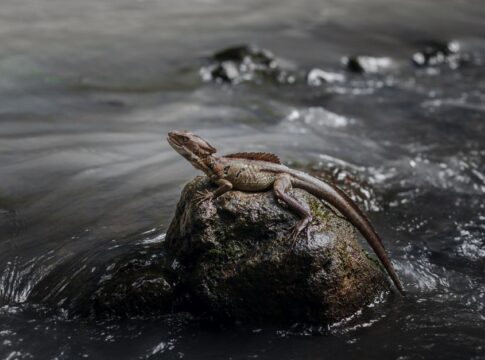
Few creatures capture the imagination quite like the basilisk lizard, a reptile that performs what seems like pure magic: running across the surface of water without sinking. These Central and South American lizards have earned the nickname “Jesus Christ lizard” for their seemingly miraculous ability. But the science behind basilisk lizards walking on water is far more fascinating than folklore, involving biomechanics, physics, and evolutionary adaptations that continue to surprise researchers and nature enthusiasts alike.
These remarkable reptiles don’t just skim across water—they sprint at speeds that would make most animals sink instantly. Understanding how they accomplish this feat reveals surprising truths about physics, anatomy, and survival strategies that have evolved over millions of years.
Key Takeaways
- Basilisk lizards can run approximately 5 feet per second across water surfaces using rapid leg movements and specialized foot structures.
- Only juvenile and lighter adult basilisks can walk on water; heavier adults typically sink and must swim instead.
- The lizards create air pockets with each footstep that provide momentary buoyancy before collapsing.
- Basilisks can maintain their water-running ability for distances up to 15 feet before momentum fails and they must swim.
- This ability serves primarily as an escape mechanism from predators rather than a hunting strategy.
- Four distinct species of basilisk lizards exist, all native to tropical regions of the Americas.
Understanding How Basilisk Lizards Walking on Water Actually Works
The mechanics behind this extraordinary ability involve a precise combination of speed, force, and anatomy. When a basilisk runs across water, its hind feet slap the surface with enough force to create a pocket of air beneath specially adapted feet. The lizard’s foot pushes down on this air pocket before it collapses, providing just enough support to keep the animal above water. But timing is everything.
Each foot must strike the water and withdraw before the air cavity collapses—a process that happens in mere fractions of a second. The lizard’s long toes spread wide on impact, increasing surface area and maximizing the supportive force. Fringes of skin along the toes further enhance this effect, creating more resistance against the water. Between steps, the feet fold to reduce drag as they swing forward for the next strike.
Scientists have calculated that basilisks must maintain a stride rate of approximately 20 steps per second to stay afloat. Slow down even slightly, and physics wins—the lizard sinks. This incredible feat requires not just speed but also perfect coordination between both legs, maintaining balance while essentially sprinting on an unstable surface.
The Weight Limit for Water Walking
Size matters tremendously when it comes to this ability. Young basilisks weighing just a few grams can run across water with relative ease. Adult males, which can grow up to two feet long and weigh several hundred grams, face a much greater challenge. The relationship between body mass and the force required to stay afloat means that many adult basilisks simply cannot generate enough speed and power to support their weight.
This creates an interesting dynamic in basilisk populations. Juveniles rely heavily on water-running as an escape strategy, darting across streams and ponds to evade snakes, birds, and other predators. As they mature and gain weight, they increasingly depend on swimming ability and other defensive behaviors. Adult basilisks can still swim efficiently, but they’ve lost the spectacular water-walking talent that defines the species in popular imagination.
Species Diversity Among Basilisks
| Species | Common Name | Distinctive Features | Geographic Range |
|---|---|---|---|
| Basiliscus basiliscus | Common Basilisk | Large head crest in males | Central America, northern South America |
| Basiliscus plumifrons | Green Basilisk | Bright emerald coloration | Central America |
| Basiliscus vittatus | Brown Basilisk | Striped pattern, smaller crest | Mexico to Colombia; introduced to Florida |
| Basiliscus galeritus | Western Basilisk | Double head crest | Western Colombia, Ecuador |
1. They Run on Their Hind Legs Like Tiny Dinosaurs
Basilisks adopt a bipedal stance when running across water, using only their powerful hind legs while their front limbs remain tucked against their body. This posture isn’t just for water-running—basilisks frequently sprint on two legs across land as well, especially when fleeing danger. The stance maximizes speed and allows the tail to act as a counterbalance, keeping the body upright. This bipedal locomotion has drawn comparisons to small theropod dinosaurs, and indeed, the biomechanics share surprising similarities with how paleontologists believe certain dinosaurs may have moved.
2. Air Pockets Provide the Key to Buoyancy
The secret to staying afloat isn’t continuous surface tension like a water strider insect uses. Instead, basilisks create temporary air cavities with each footstrike. High-speed photography has revealed that when the foot slaps downward, it forces the water surface downward and outward, creating a depression filled with air. The lizard’s foot then pushes against both the air and the sloped walls of this cavity, generating an upward force. Before the cavity collapses and fills with water, the foot has already withdrawn and moved forward for the next step. It’s a continuous cycle of creating and escaping from collapsing air pockets.
3. The Tail Functions as a Critical Stabilizer
A basilisk’s tail can be up to three times the length of its body, and this isn’t just for show. During water-running, the tail acts as a dynamic counterbalance and rudder, making rapid adjustments to keep the lizard upright and on course. Without this long tail, the forward-leaning posture and rapid leg movements would send the lizard tumbling. The tail also provides stabilization during swimming, undulating from side to side to generate thrust. Basilisks that have lost portions of their tails show noticeably impaired water-running ability, demonstrating just how essential this appendage is to the entire system.
4. Distance Limits Exist Even for Expert Runners
Even the most accomplished juvenile basilisk cannot run on water indefinitely. Most successful water-running episodes last only a few seconds and cover distances of 10 to 15 feet before the lizard either reaches the opposite shore or begins to sink and must transition to swimming. Fatigue sets in quickly—maintaining 20 steps per second requires enormous energy expenditure. The lizard’s muscles simply cannot sustain that pace for long. This means water-running works best as a short-burst escape tactic across narrow streams or ponds, not as a long-distance travel method.
5. Predator Evasion Drives This Evolutionary Adaptation
Basilisks didn’t evolve water-walking to impress observers or hunt prey. This ability serves one primary purpose: escaping predators. Basilisks typically bask on branches overhanging water, where they can quickly drop and sprint across the surface if a snake, bird, or mammal approaches. The tropical forests and riverbanks they inhabit teem with predators, making quick escape routes essential for survival. By combining the ability to run on water with strong swimming skills and agile climbing, basilisks have developed a comprehensive escape strategy that keeps them alive in a dangerous environment.
6. Temperature Affects Performance Significantly
As ectothermic reptiles, basilisks depend on environmental temperatures to regulate their body heat and muscle function. A cold basilisk cannot generate the rapid muscle contractions needed for water-running. Early morning or cooler weather significantly impairs this ability, making the lizards more vulnerable during these periods. Conversely, basilisks that have basked in sunlight and achieved optimal body temperature can perform at peak capacity. This temperature dependency means the famous water-walking ability isn’t available on demand—it requires the right physiological conditions.
7. Introduced Populations Thrive in Florida
Brown basilisks have established breeding populations in southern Florida, likely originating from escaped or released pets. These non-native lizards have adapted successfully to Florida’s subtropical climate and abundant waterways. While they haven’t caused the ecological disruption seen with some invasive species, their presence demonstrates the basilisk’s adaptability beyond its native range. Florida residents occasionally witness these exotic lizards performing their signature water-running behavior in local ponds and canals, bringing a touch of Central American wildlife to North American suburbs.
8. Males Sport Elaborate Crests for Display
Male basilisks develop prominent crests on their heads, backs, and tails—structures that serve social and reproductive functions rather than aiding water-walking. These crests signal dominance and maturity to other males while attracting females during breeding season. The elaborate ornamentation comes with a cost: increased weight and air resistance that actually impairs water-running ability. This represents a classic evolutionary trade-off where sexual selection for impressive displays conflicts with the practical demands of locomotion. Young males with developing crests occupy a middle ground, retaining some water-walking ability while beginning to advertise their maturity.
9. Robotics Engineers Study Basilisks for Bio-Inspired Design
The basilisk’s water-running ability has inspired robotics researchers seeking to create machines that can traverse water surfaces. Several universities have developed basilisk-inspired robots that replicate the rapid leg movements and foot structures of the living lizards. These experimental machines help scientists understand the precise biomechanics involved while exploring potential applications for water-surface robots that could perform environmental monitoring or search-and-rescue operations in flooded areas. The basilisk’s millions of years of evolutionary refinement provide a proven blueprint that human engineering is only beginning to approximate.
Frequently Asked Questions
Can basilisk lizards walk on water their entire lives?
No, only juvenile and lighter adult basilisks can walk on water effectively. As they grow larger and heavier, most adults lose this ability because they cannot generate enough force to support their increased body weight, though they remain excellent swimmers.
How fast do basilisks need to run to stay on top of water?
Basilisks must maintain speeds of approximately 5 feet per second with a stride rate of about 20 steps per second to generate sufficient force to avoid sinking. Any slower, and the physics of their water-running technique fails.
Do basilisk lizards ever walk on water to hunt prey?
No, basilisks use water-running exclusively as an escape mechanism from predators. They hunt insects, small vertebrates, and plant matter on land or while swimming, but not while running across water surfaces.
Are basilisk lizards related to the mythical basilisk creature?
The lizards share only a name with the legendary basilisk of European mythology, which was described as a serpent-like creature with deadly powers. Early European naturalists who encountered these water-running lizards in the Americas applied the familiar name, though the animals bear no resemblance to the mythical beast.
The basilisk lizard’s water-walking ability reminds us that nature’s most spectacular adaptations often arise from the simple need to survive another day. What looks like magic is actually millions of years of evolution fine-tuning biomechanics to solve the urgent problem of escaping predators. Every frantic sprint across a jungle stream represents a small miracle of physics, biology, and the relentless creativity of natural selection.