









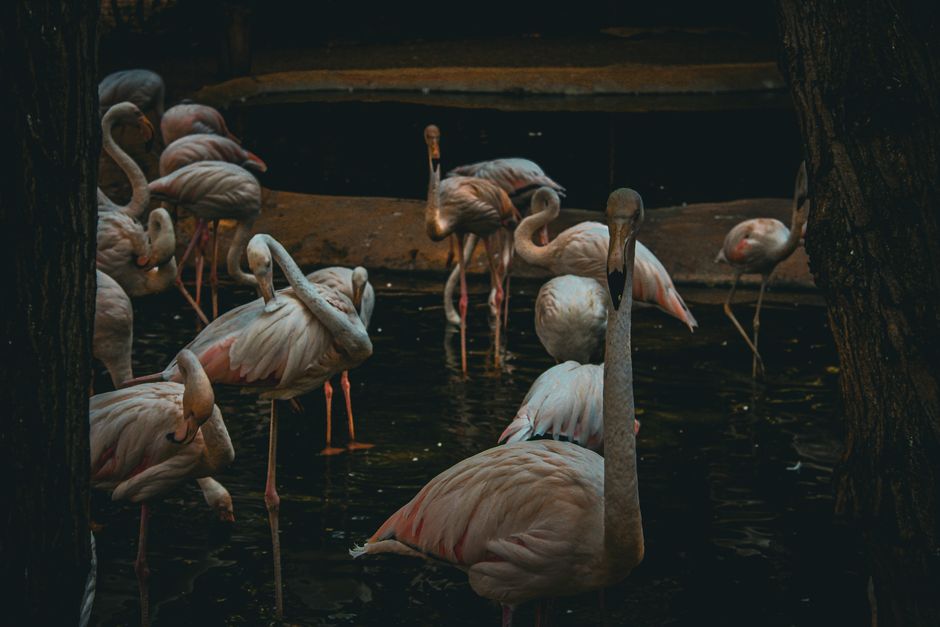
Why Flamingos Stand on One Leg: The Energy-Saving Truth
By TriviaOwl, Staff Writer — Published August 18, 2026
Table of Contents
- Key Takeaways
- The Biomechanical Secret Behind One-Legged Balance
- Energy Conservation: The Primary Advantage
- Temperature Regulation: A Secondary Benefit
- Common Myths About Flamingo Standing
- Comparing Flamingo Species and Their Standing Habits
- Other Birds That Stand on One Leg
- Frequently Asked Questions
Picture a flamingo standing serenely in shallow water, balanced perfectly on one impossibly thin leg while the other tucks neatly against its body. This iconic pose isn't just for show. Scientists have discovered the surprising truth: flamingos stand on one leg primarily to conserve energy, a remarkable adaptation that allows these pink wading birds to rest while remaining upright. Understanding why flamingos stand this way reveals fascinating facts about bird physiology and the clever strategies animals use to survive in demanding environments.
This behavior has puzzled observers for centuries, inspiring theories ranging from temperature regulation to simple comfort. Recent research has finally cracked the code, uncovering an amazing biomechanical system that makes one-legged standing not just possible, but actually easier than standing on two legs.
Key Takeaways
- Flamingos use a passive gravitational stay mechanism that locks their leg in place, requiring virtually no muscular effort to maintain balance on one leg.
- Standing on one leg conserves body heat by reducing the surface area exposed to cold water, helping flamingos regulate their body temperature efficiently.
- Both living and deceased flamingos can maintain the one-legged stance, proving the position is mechanically stable rather than requiring active muscle control.
- Flamingos alternate legs regularly, though they show no consistent preference for left or right, switching based on comfort and environmental conditions.
- This energy-saving posture allows flamingos to rest while remaining alert to predators, a crucial survival advantage in the wild.
- The behavior appears across all six flamingo species worldwide, from the Caribbean to the Andes to Africa.
The Biomechanical Secret Behind One-Legged Balance
Researchers have uncovered the mechanical truth behind this curious stance. Flamingos possess a unique skeletal and ligament structure that essentially locks their leg in place when standing on one foot. This passive support system works like a biological kickstand, requiring minimal muscular effort to maintain.
The key lies in how the flamingo's body weight aligns over the supporting leg. When properly positioned, gravity actually helps stabilize the bird rather than toppling it over. Scientists tested this by examining both living flamingos and deceased specimens, discovering that even flamingo cadavers could maintain the one-legged position when properly arranged. Living birds standing on two legs, however, swayed considerably more than those balanced on one, demonstrating that the single-leg stance is mechanically more stable.
The hip and knee joints work together in this system. When a flamingo pulls one leg up and shifts its weight, specialized tendons and ligaments engage, creating a locked configuration that holds everything in place. Think of it as an internal support beam that clicks into position. The bird can then relax most of its leg muscles while remaining perfectly upright.
Energy Conservation: The Primary Advantage
Standing requires muscular effort, even for birds. By reducing the number of active limbs from two to one, flamingos cut their energy expenditure significantly. This matters enormously for birds that spend many hours each day standing in water while feeding, resting, or sleeping.
Flamingos often inhabit challenging environments—alkaline lakes, coastal lagoons, and high-altitude wetlands where food can be scarce and weather conditions harsh. Every calorie conserved through efficient standing posture is a calorie available for other essential activities: flying to new feeding grounds, maintaining body temperature, or reproducing. Over the course of a day, week, or breeding season, these energy savings add up substantially.
The difference becomes especially pronounced during rest periods. A flamingo can doze on one leg with minimal energy cost, whereas standing on two legs would require continuous muscular engagement to maintain balance and posture. This allows the birds to achieve restorative rest while remaining standing and alert to potential threats.
Temperature Regulation: A Secondary Benefit
While energy conservation appears to be the primary driver, thermoregulation provides an important secondary advantage. Flamingos frequently stand in water that's significantly cooler than their body temperature. By tucking one leg into their feathers, they reduce heat loss through their unfeathered limbs.
Bird legs lack the insulating feathers that cover the rest of their bodies. Standing in cold water with both legs submerged creates a substantial heat drain, forcing the bird to burn additional calories to maintain its core temperature. Pulling one leg up and tucking it against the warm, feathered body helps retain heat and reduces this thermal stress.
Interestingly, flamingos in warmer water or air temperatures still stand on one leg frequently, which supports the idea that energy conservation remains the primary motivation. If temperature regulation were the sole purpose, we'd expect to see the behavior disappear in warm conditions. Instead, it persists across various environmental temperatures, though flamingos may switch legs more frequently in cold water.
Common Myths About Flamingo Standing
Several popular explanations for one-legged standing don't hold up under scientific scrutiny. One persistent myth suggests flamingos stand this way to avoid muscle fatigue in their legs. While this contains a grain of truth—the posture does reduce fatigue—it misses the mechanical reality that the locked-leg system actually makes one-legged standing easier than using both legs.
Another misconception claims flamingos must stand on one leg because their legs are too weak to support them on two. This is demonstrably false. Flamingos stand on two legs regularly when walking, feeding actively, or taking flight. Their legs are perfectly capable of supporting their body weight using both limbs.
Some observers have suggested the behavior helps with blood circulation, preventing blood from pooling in the legs. While bird circulatory systems do face challenges related to gravity and long limbs, there's no evidence that one-legged standing specifically addresses circulation issues.
Comparing Flamingo Species and Their Standing Habits
| Species | Primary Habitat | Typical Water Temperature | Standing Behavior |
|---|---|---|---|
| Greater Flamingo | Africa, Southern Europe, Asia | Varies widely | Frequent one-legged standing |
| American Flamingo | Caribbean, Galápagos | Warm to moderate | Regular one-legged posture |
| Chilean Flamingo | South America | Cool to moderate | Consistent one-legged stance |
| Andean Flamingo | High-altitude Andes | Very cold | Extended one-legged periods |
| Lesser Flamingo | Africa, India | Warm to hot | Frequent one-legged rest |
| James's Flamingo | High-altitude Andes | Very cold | Prolonged one-legged standing |
Other Birds That Stand on One Leg
Flamingos aren't alone in this behavior. Many wading birds and waterfowl adopt similar postures, though few do so as consistently or dramatically as flamingos. Herons, storks, and even ducks can be observed resting on one leg, suggesting the biomechanical and thermoregulatory advantages apply across multiple bird families.
What makes flamingos particularly notable is how perfectly adapted they are to this stance. Their long, thin legs and lightweight bodies create ideal conditions for the passive support mechanism to work efficiently. The behavior has become so strongly associated with flamingos that it's considered one of their defining characteristics, alongside their distinctive pink coloration and filter-feeding lifestyle.
Penguins also occasionally stand on one foot, though their body proportions and aquatic adaptations make the posture less common. Shorebirds like avocets and stilts, which share similar habitats with flamingos, demonstrate comparable standing habits, reinforcing the idea that the behavior evolved as an adaptation to life in shallow water environments.
Frequently Asked Questions
Do flamingos sleep while standing on one leg?
Yes, flamingos regularly sleep while balanced on one leg. Their passive locking mechanism allows them to rest and even doze without falling over, providing security against predators while conserving energy during sleep.
Which leg do flamingos prefer to stand on?
Flamingos show no consistent preference for left or right legs. They alternate regularly throughout the day, switching legs to distribute wear and adjust to changing environmental conditions like water temperature or wind direction.
Can flamingos stand on one leg from birth?
Young flamingo chicks take time to develop the coordination and skeletal structure necessary for one-legged standing. They begin attempting the posture at a few weeks old, gradually mastering the technique as they mature and their biomechanical systems fully develop.
Do flamingos in zoos stand on one leg as much as wild flamingos?
Flamingos in captivity display the same one-legged standing behavior as their wild counterparts. The behavior is instinctive and biomechanically advantageous regardless of environment, though zoo flamingos may experience less temperature stress than those in harsh natural habitats.
The next time you observe a flamingo balanced serenely on one impossibly slender leg, you're witnessing millions of years of evolutionary refinement. What looks like a quirky balancing act is actually an elegant energy-saving solution, proving that nature's most curious behaviors often hide surprisingly practical purposes. These pink birds have transformed standing still into an art form—and a survival strategy.