
⏱️ 6 min read
Did You Know? 10 Facts About Frogs
Frogs are among the most fascinating and diverse creatures in the animal kingdom, belonging to the order Anura within the class Amphibia. These remarkable amphibians have captivated scientists and nature enthusiasts for centuries with their unique characteristics, complex life cycles, and incredible adaptations. Found on every continent except Antarctica, frogs play vital roles in ecosystems worldwide as both predators and prey. From their extraordinary jumping abilities to their permeable skin and distinctive vocalizations, frogs possess numerous features that set them apart from other animals. This article explores ten intriguing facts about these remarkable creatures that demonstrate why they deserve our attention and protection.
1. Frogs Have Been Around for Millions of Years
The fossil record reveals that frogs have existed for approximately 265 million years, making them one of the oldest groups of animals still inhabiting Earth today. The earliest known frog ancestor, Triadobatrachus, lived during the Early Triassic period. Modern frogs evolved around 200 million years ago and survived multiple mass extinction events, including the one that wiped out the dinosaurs. This incredible longevity demonstrates the remarkable adaptability and resilience of these amphibians, which have successfully navigated countless environmental changes throughout their evolutionary history.
2. There Are Over 7,000 Known Frog Species
Scientists have identified more than 7,000 different species of frogs worldwide, and new species continue to be discovered regularly. These species exhibit tremendous diversity in size, color, habitat preferences, and behaviors. The smallest known frog, Paedophryne amauensis from Papua New Guinea, measures just 7.7 millimeters in length, while the goliath frog of West Africa can grow up to 32 centimeters long and weigh more than three kilograms. This incredible variety makes frogs one of the most diverse vertebrate groups on the planet.
3. Frogs Breathe Through Their Skin
While frogs do have lungs, they primarily absorb oxygen through their skin in a process called cutaneous respiration. Their skin must remain moist for this process to work effectively, which is why frogs are typically found near water sources or in humid environments. This permeable skin allows oxygen to pass directly into their bloodstream but also makes them particularly vulnerable to environmental pollutants and toxins. Some aquatic frog species can obtain virtually all their oxygen through their skin, especially during winter months when they remain underwater.
4. Many Frogs Undergo Complete Metamorphosis
The transformation from tadpole to adult frog represents one of nature’s most dramatic metamorphoses. Frog eggs hatch into aquatic tadpoles with gills, tails, and no legs. Over several weeks to months, depending on the species, these tadpoles gradually develop legs, absorb their tails, lose their gills, and develop lungs. Their digestive systems also transform from herbivorous to carnivorous. This complete restructuring of body form allows frogs to exploit different ecological niches at different life stages, reducing competition between juveniles and adults.
5. Frogs Are Exceptional Jumpers
Frogs possess incredibly powerful hind legs that enable them to jump distances many times their body length. The Australian rocket frog can leap more than fifty times its body length in a single jump. This extraordinary jumping ability serves multiple purposes, including escaping predators, catching prey, and navigating their environment. The secret lies in their specialized leg muscles and elongated ankle bones, which work together like a spring-loaded catapult. Some species have evolved different locomotion methods, including climbing, swimming, and even gliding.
6. Male Frogs Use Complex Vocalizations to Attract Mates
The characteristic croaking sounds associated with frogs are primarily produced by males during breeding season to attract females and establish territories. Each species has its own distinctive call, created when air passes over vocal cords and is amplified by vocal sacs that inflate like balloons. Some species produce incredibly loud calls that can be heard from over a mile away. Scientists have documented that female frogs can distinguish between individual males based on subtle variations in their calls, selecting mates based on call quality, which often indicates the male’s size, health, and genetic fitness.
7. Some Frogs Are Highly Poisonous
Poison dart frogs, found primarily in Central and South America, secrete potent toxins through their skin as a defense mechanism against predators. These brightly colored frogs advertise their toxicity through warning coloration, a phenomenon called aposematism. The golden poison frog contains enough batrachotoxin to kill ten adult humans. Interestingly, these frogs do not produce their toxins internally but instead sequester them from their diet of specific insects, particularly certain species of ants and mites. Captive-bred poison dart frogs raised on different diets do not develop these toxic properties.
8. Frogs Are Important Environmental Indicators
Because of their permeable skin and dual life stages in both aquatic and terrestrial environments, frogs are considered excellent bioindicators of environmental health. Their populations respond quickly to changes in habitat quality, pollution levels, and climate conditions. Scientists monitor frog populations to assess ecosystem health and detect environmental problems early. Unfortunately, amphibian populations worldwide have experienced significant declines in recent decades, with nearly one-third of all amphibian species currently threatened with extinction due to habitat loss, climate change, pollution, and disease.
9. Frogs Have Unique Eye Adaptations
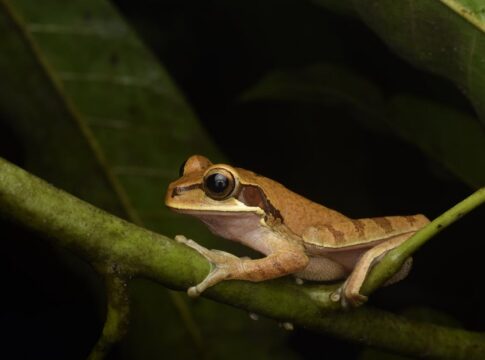
Frogs possess remarkable visual systems adapted to their predatory lifestyle. Their large, protruding eyes provide nearly 360-degree vision, allowing them to watch for both prey and predators simultaneously. Most frogs have excellent night vision and can see in color. Interestingly, many frogs use their eyes to help swallow food, retracting their eyeballs downward into their skull to help push food down their throat. Some species have specialized pupils, including horizontal, vertical, or even heart-shaped configurations, each adapted to their specific environmental conditions and hunting strategies.
10. Frogs Employ Diverse Survival Strategies
Frogs have evolved numerous fascinating survival strategies to cope with environmental challenges. Some species can survive freezing temperatures by producing glucose and urea as natural antifreeze, allowing ice crystals to form around, but not inside, their cells. Wood frogs can survive with up to 70 percent of their body water frozen. Desert-dwelling frogs can remain underground in cocoons of shed skin for years, waiting for rain. Certain arboreal species have developed adhesive toe pads that allow them to climb smooth vertical surfaces. These diverse adaptations demonstrate the remarkable evolutionary flexibility of frogs in colonizing varied habitats worldwide.
Conclusion
These ten facts merely scratch the surface of the fascinating world of frogs. From their ancient origins and incredible diversity to their unique physiological adaptations and important ecological roles, frogs continue to amaze researchers and nature lovers alike. Their permeable skin, dramatic metamorphosis, powerful jumping abilities, and complex vocalizations represent just some of the remarkable features that make these amphibians so special. As environmental indicators, frogs also remind us of our responsibility to protect natural habitats and maintain ecological balance. Understanding and appreciating these extraordinary creatures helps foster conservation efforts essential for ensuring that frogs continue to thrive for millions of years to come, just as they have throughout their remarkable evolutionary history.