
⏱️ 7 min read
Did You Know? 10 Facts About Vikings
The Vikings have captured human imagination for centuries, often depicted as brutal warriors with horned helmets sailing across treacherous seas. However, the reality of Viking culture is far more complex and fascinating than popular myths suggest. These Norse seafarers, who flourished from approximately 793 to 1066 CE, were not merely raiders and pillagers but also skilled traders, explorers, craftsmen, and settlers who left an indelible mark on world history. Let’s explore ten remarkable facts about Vikings that separate historical truth from legend and reveal the sophisticated civilization behind the fearsome reputation.
1. Vikings Never Actually Wore Horned Helmets
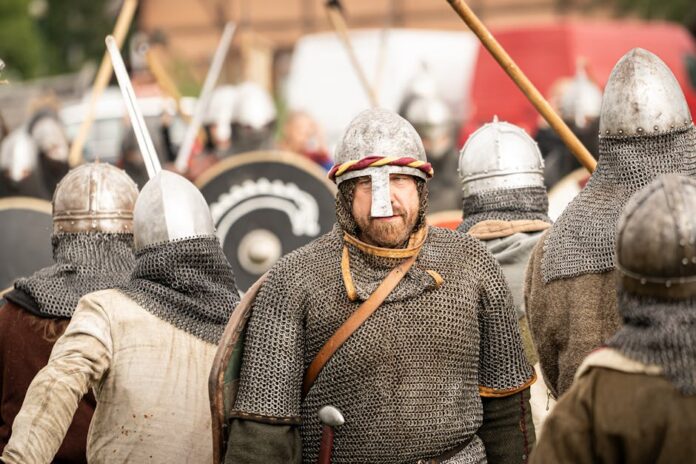
Perhaps the most pervasive myth about Vikings is that they wore horned helmets into battle. In reality, no archaeological evidence has ever been found to support this image. The misconception originated in the 19th century, popularized by costume designers for theatrical productions of Wagner’s operas. Actual Viking helmets were simple, practical designs made of iron or leather, often with a nose guard for protection. Horned helmets would have been impractical in combat, providing enemies with something to grab and potentially causing injury to fellow warriors in close quarters. The horned helmet image persists today purely through cultural repetition rather than historical accuracy.
2. The Word “Viking” Was Actually a Verb
The term “Viking” didn’t originally refer to a distinct ethnic group or nationality. Instead, “viking” was an Old Norse verb meaning “to go on an expedition” or “to raid.” When Norse people went viking, they were engaging in overseas raiding and trading expeditions. Not all Scandinavians of this era were Vikings; the term applied specifically to those who participated in these seafaring ventures. Most Norse people were farmers, craftsmen, and traders who never left their homelands. This linguistic detail reveals that Viking culture was more about an activity and lifestyle choice rather than a fixed ethnic identity.
3. Vikings Practiced Excellent Hygiene for Their Time
Contrary to the popular image of filthy barbarians, Vikings were remarkably clean by medieval standards. Archaeological discoveries have uncovered tweezers, razors, combs, and ear cleaners among Viking artifacts. They bathed at least once per week, which was considerably more frequent than many of their European contemporaries. Saturday was even designated as “laugardagur” (washing day) in Old Norse. Vikings also used a strong soap that doubled as a bleaching agent for their hair and beards. Contemporary accounts from other cultures often remarked on the Vikings’ cleanliness and grooming habits, with some noting that Norse men’s attention to hygiene made them particularly attractive to women in conquered territories.
4. Viking Women Had Remarkable Rights and Independence
Viking society granted women considerably more rights and freedoms than most other European cultures of the same period. Women could own property, request divorces, and reclaim their dowries if marriages ended. They managed household finances and ran farms while men were away on expeditions. Archaeological evidence shows some women were buried with weapons, suggesting they may have participated in warfare, though this remains debated among historians. Women could also inherit property and had legal protections against unwanted advances. While Viking society was not egalitarian by modern standards, women possessed a degree of agency and respect that was progressive for the medieval era.
5. Vikings Reached North America 500 Years Before Columbus
Long before Christopher Columbus’s famous 1492 voyage, Vikings had already established settlements in North America. Around the year 1000 CE, Norse explorer Leif Erikson led an expedition that reached the North American continent, establishing a settlement called Vinland. Archaeological evidence discovered at L’Anse aux Meadows in Newfoundland, Canada, confirms Viking presence in North America. These settlements didn’t last long due to conflicts with indigenous peoples and the difficulties of maintaining such distant outposts, but this achievement demonstrates the Vikings’ extraordinary seafaring capabilities and adventurous spirit that drove them to explore far beyond known horizons.
6. Vikings Were Master Shipbuilders and Navigators
The technological sophistication of Viking longships was centuries ahead of its time. These vessels featured a shallow draft that allowed navigation in both deep oceans and shallow rivers, making Vikings incredibly mobile and unpredictable to their enemies. The ships were clinker-built with overlapping planks that provided flexibility in rough seas while maintaining strength. Vikings navigated using sophisticated knowledge of astronomy, ocean currents, wind patterns, and wildlife behavior. They may have used sunstones (Iceland spar crystals) to locate the sun’s position on cloudy days, enabling navigation even in poor visibility. This maritime expertise enabled their vast trading networks and exploration reaching as far as Constantinople, Baghdad, and North America.
7. Vikings Established the First Democratic Parliament
The Vikings created one of the world’s earliest forms of democratic governance through the “Thing” or “Althing,” a parliamentary assembly where free men could gather to settle disputes, make laws, and discuss community matters. Iceland’s Althing, established in 930 CE, is considered one of the oldest surviving parliaments in the world. These assemblies represented an early form of representative democracy where legal matters were decided collectively rather than by a single ruler’s decree. The Thing system demonstrated that Viking society valued law and order, contradicting the image of lawless raiders. This tradition of communal decision-making influenced governance structures throughout Scandinavian territories.
8. Vikings Had a Complex System of Writing
The Vikings developed and used a writing system called runes, known as the “Futhark” alphabet after its first six letters. These angular characters were designed to be carved into wood, stone, and metal. Runes were used for various purposes including memorials, property markers, magical inscriptions, and everyday messages. Thousands of runic inscriptions have been discovered throughout Scandinavia and in territories Vikings explored or settled. The runic system wasn’t merely primitive scratches but represented a sophisticated understanding of language and communication. Vikings also had a rich oral tradition of poetry and storytelling, with skalds (poets) holding honored positions in society for their ability to compose and recite complex verses.
9. Vikings Were Sophisticated International Traders
While raids captured historical attention, Vikings were equally, if not more importantly, engaged in extensive international trade. They established trade routes that stretched from Scandinavia to the Mediterranean, Middle East, Central Asia, and beyond. Vikings traded furs, amber, walrus ivory, and slaves for silver, silk, spices, wine, and jewelry. They founded trading centers that grew into major cities, including Dublin in Ireland and Kiev in Ukraine. Arabic silver coins called dirhams have been found in large quantities in Scandinavia, evidencing substantial trade with the Islamic world. This commercial activity spread cultural influences, technologies, and ideas across vast distances, making Vikings crucial connectors in the medieval global economy.
10. Viking Influence Shaped the English Language
The Vikings’ extensive settlements in England, particularly in the Danelaw region, left a permanent linguistic legacy. Hundreds of English words derive from Old Norse, including everyday terms like “sky,” “egg,” “knife,” “husband,” “window,” “anger,” and “happy.” Many English place names, especially in northern England, have Norse origins—locations ending in “-by” (meaning village), “-thorpe” (hamlet), or “-thwaite” (clearing) indicate Viking settlement. Even some English pronouns, including “they,” “their,” and “them,” come from Old Norse. This linguistic influence demonstrates how deeply Viking culture integrated into English society, extending far beyond military conquest to fundamental cultural and social transformation.
Conclusion
These ten facts reveal that Vikings were far more than the one-dimensional raiders of popular imagination. They were innovative shipbuilders, intrepid explorers, shrewd traders, and the founders of democratic institutions. Their society, while certainly capable of violence, also valued cleanliness, legal order, gender equity relative to their time, and cultural sophistication. The Vikings’ contributions to exploration, governance, trade, language, and technology had lasting impacts that shaped medieval Europe and continue to influence modern society. By understanding the historical reality behind the myths, we gain appreciation for a complex civilization whose legacy extends far beyond horned helmets and violent raids. The Norse seafarers were truly remarkable people whose achievements deserve recognition alongside their fearsome reputation.