
⏱️ 6 min read
Did You Know? 10 Fascinating Facts About Wolves
Wolves have long captured human imagination, appearing in folklore, mythology, and literature across cultures worldwide. These magnificent predators are far more complex and fascinating than their often-misunderstood reputation suggests. As apex predators and highly social animals, wolves play a crucial role in maintaining ecological balance while displaying remarkable intelligence and intricate social behaviors. The following ten facts reveal the extraordinary nature of these iconic creatures and shed light on why they deserve our respect and protection.
1. Wolves Are Exceptional Communicators
Wolves possess one of the most sophisticated communication systems in the animal kingdom. Their famous howling serves multiple purposes: coordinating pack activities, defending territory, locating pack members, and strengthening social bonds. A wolf’s howl can be heard up to ten miles away in open terrain and six miles in forested areas. Beyond howling, wolves use an extensive vocabulary of barks, growls, whines, and whimpers, combined with body language including tail position, ear orientation, and facial expressions to convey complex messages to one another.
2. Wolf Packs Are Family Units
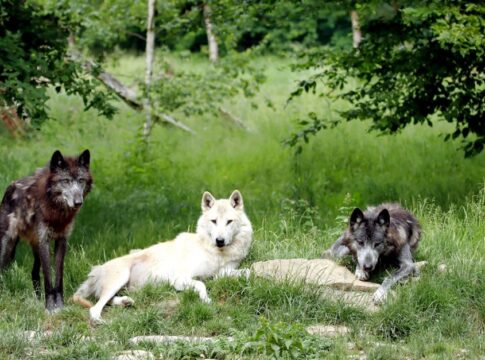
Contrary to popular belief about dominance hierarchies, wolf packs are actually family groups led by breeding parents, often called the alpha pair. These packs typically consist of the parent wolves and their offspring from various years. The social structure is similar to a human family, with parents guiding and teaching their young. Pack sizes vary depending on prey availability and habitat, ranging from as few as two wolves to as many as fifteen in rare cases, though the average pack contains five to eight individuals.
3. Wolves Have Incredible Stamina and Speed
These powerful predators are built for endurance hunting. Wolves can travel up to 30 miles in a single day while searching for food, and their territories can span anywhere from 50 to 1,000 square miles depending on prey density. They can reach speeds of 36 to 38 miles per hour in short bursts when chasing prey, though they typically travel at a loping pace of about five miles per hour. Their long legs and large paws, which can measure up to five inches across, act like snowshoes, allowing them to traverse deep snow more efficiently than many of their prey species.
4. Wolves Are Keystone Species
The ecological importance of wolves cannot be overstated. As keystone species, wolves help regulate prey populations and create a cascade of positive environmental effects. The reintroduction of wolves to Yellowstone National Park in 1995 demonstrated this dramatically. Wolf predation on elk allowed overgrazed vegetation to recover, which stabilized riverbanks, reduced erosion, and created habitat for numerous other species. This phenomenon, known as a trophic cascade, shows how wolves indirectly benefit entire ecosystems, affecting everything from plant communities to insects and birds.
5. Wolves Have Remarkable Bite Force
Wolves possess one of the most powerful bites in the animal kingdom, with a bite force of approximately 400 pounds per square inch—roughly twice that of a large domestic dog. Their jaws contain 42 teeth specifically designed for their carnivorous lifestyle, including specialized carnassial teeth that work like scissors to shear meat. The canine teeth can measure over two inches long, perfect for gripping and holding prey. This incredible bite force allows wolves to crush bones and access the nutritious marrow inside, an important food source especially during harsh winters.
6. Wolves Demonstrate Complex Hunting Strategies
Wolf hunting is a coordinated, intelligent endeavor that showcases their problem-solving abilities. Packs work together to strategize their hunts, with different wolves taking on specific roles such as chasers, blockers, and ambushers. They test prey animals to identify the weak, old, or sick individuals that are easier to catch. Interestingly, wolf hunts fail more often than they succeed—only about one in ten hunting attempts results in a kill. This low success rate explains why wolves must hunt large prey and why they consume large quantities when food is available.
7. Wolves Mate for Life
Wolves typically form monogamous pair bonds that last for life, though they may find new mates if their partner dies. The breeding pair in a pack is usually the only pair to reproduce, with mating occurring once per year in late winter. After a gestation period of approximately 63 days, the female gives birth to a litter of four to six pups in a protected den. All pack members participate in raising the young, bringing food, playing with pups, and teaching them essential survival skills. This cooperative breeding system increases pup survival rates significantly.
8. Wolves Have Diverse Global Populations
While the gray wolf is the most well-known and widespread species, wolves display remarkable diversity across their range. Historically, wolves inhabited most of the Northern Hemisphere, from the Arctic to Mexico and from Portugal to Japan. Today’s wolves include several recognized subspecies, such as the Arctic wolf, which has adapted to extreme cold with white fur and smaller ears, and the Mexican gray wolf, one of the most endangered subspecies. Wolves can adapt to various habitats including tundra, forests, grasslands, and deserts, demonstrating their evolutionary versatility.
9. Wolves Are Highly Intelligent and Playful
Scientific studies have revealed that wolves possess intelligence comparable to that of great apes in some problem-solving tasks. They can learn through observation, remember complex spatial layouts, and even engage in deceptive behaviors. Play behavior is common among wolves throughout their lives, not just during puppyhood. Adults engage in games of chase, wrestling matches, and tug-of-war, which serve important functions in maintaining social bonds, practicing hunting skills, and establishing social relationships within the pack structure.
10. Wolves Face Ongoing Conservation Challenges
Despite their ecological importance, wolves continue to face significant threats from habitat loss, human conflict, and in some regions, legal hunting. Once nearly extinct in the lower 48 United States, conservation efforts have helped certain populations recover, though they remain absent from much of their historic range. Current global wolf populations are estimated at around 200,000 to 250,000 individuals, with the majority living in Russia, Canada, and Alaska. Successful wolf conservation requires balancing ecological needs with human interests, particularly in areas where wolves may prey on livestock, making coexistence strategies essential for their long-term survival.
Conclusion
These ten facts merely scratch the surface of what makes wolves such extraordinary animals. From their complex social structures and sophisticated communication systems to their crucial ecological roles and remarkable physical adaptations, wolves represent one of nature’s most successful predators. Understanding these facts helps dispel myths and misconceptions that have plagued wolves throughout history. As we continue to learn more about these magnificent creatures, it becomes increasingly clear that protecting wolves means protecting the health and diversity of entire ecosystems. Their survival depends on human willingness to coexist with these intelligent, social, and ecologically vital animals.