
⏱️ 5 min read
Did You Know? 15 Facts About Bull Sharks
Bull sharks are among the most fascinating and formidable predators in the ocean. Known for their aggressive nature and remarkable adaptability, these powerful creatures have captured the attention of marine biologists and ocean enthusiasts alike. Unlike many of their shark relatives, bull sharks possess unique characteristics that set them apart in the underwater world. From their ability to thrive in both saltwater and freshwater environments to their surprising presence in unexpected locations, bull sharks continue to intrigue researchers worldwide. Here are 15 incredible facts about these extraordinary marine predators that showcase why they deserve our respect and understanding.
1. Masters of Both Salt and Fresh Water
Bull sharks possess a rare ability among sharks to survive in both saltwater and freshwater environments. Through a process called osmoregulation, they can adjust their internal salt concentration to match their surroundings. Special glands near their tails help them retain salt in freshwater while expelling excess salt in ocean environments, making them one of the few shark species capable of this remarkable adaptation.
2. River Travelers
These sharks have been documented thousands of miles inland in major river systems. Bull sharks have been spotted in the Mississippi River as far north as Illinois, in the Amazon River thousands of miles from the ocean, and even in the Ganges River in India. This ability to penetrate deep into river systems makes them unique among large shark species.
3. Incredibly Powerful Bite Force
Pound for pound, bull sharks have one of the strongest bite forces in the shark family. Their bite force can reach up to 1,300 pounds per square inch, which is remarkably powerful for their size. This incredible jaw strength, combined with their aggressive feeding behavior, makes them highly efficient predators.
4. Compact but Mighty
Bull sharks typically grow between seven to eleven feet in length, with females being larger than males. Despite their relatively modest size compared to great white sharks, their stocky, muscular build and aggressive nature make them formidable hunters. Adult bull sharks can weigh between 200 to 500 pounds, with some exceptional specimens exceeding these measurements.
5. High Testosterone Levels
Bull sharks have some of the highest testosterone levels of any animal on Earth. This hormonal characteristic is believed to contribute to their notably aggressive behavior and territorial nature. Scientists continue to study how these elevated hormone levels influence their hunting patterns and interactions with other marine life.
6. Opportunistic Feeders
These sharks are not picky eaters and will consume almost anything they encounter. Their diet includes fish, dolphins, other sharks, rays, turtles, birds, mollusks, and crustaceans. In freshwater environments, they readily adapt their diet to include local species, demonstrating remarkable feeding flexibility.
7. Responsible for Human Encounters
Bull sharks are considered one of the three shark species most likely to be involved in unprovoked attacks on humans, alongside great white sharks and tiger sharks. Their tendency to inhabit shallow, murky waters near coastlines and river mouths, where humans frequently swim, increases the likelihood of encounters. However, actual attacks remain statistically rare.
8. Excellent Low-Visibility Hunters
Bull sharks thrive in murky, turbid waters where visibility is limited. They possess highly developed electroreceptors called ampullae of Lorenzini, which detect electrical fields produced by other animals. This sensory system, combined with their acute sense of smell, allows them to hunt effectively even when they cannot see their prey clearly.
9. Global Distribution in Warm Waters
These sharks inhabit coastal waters worldwide in tropical and subtropical regions. They are found along the coasts of the Americas, Africa, Asia, and Australia, preferring shallow waters less than 100 feet deep. Their preference for warm waters limits their range to areas where ocean temperatures remain above 68 degrees Fahrenheit.
10. Viviparous Reproduction
Bull sharks give birth to live young through a process called viviparity. Females have a gestation period of approximately 10 to 11 months and typically give birth to between one and thirteen pups. These young sharks are born in protected freshwater or brackish nursery areas, which provide safety from larger ocean predators during their vulnerable early life stages.
11. Long Lifespan
Bull sharks can live for approximately 16 years in the wild, though some individuals may survive longer under optimal conditions. Their relatively long lifespan allows them to grow to substantial sizes and establish themselves as apex predators in their ecosystems.
12. Slow Sexual Maturity
These sharks take considerable time to reach reproductive maturity. Males typically mature between eight to ten years of age, while females require even longer, reaching maturity between 18 years old. This slow reproductive rate makes bull shark populations particularly vulnerable to overfishing and environmental pressures.
13. Counter-Shading Camouflage
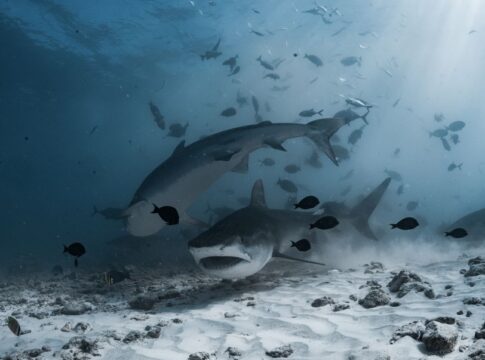
Bull sharks display a classic counter-shading coloration pattern with dark gray on top and white underneath. This coloration serves as effective camouflage, making them appear darker when viewed from above against the ocean floor and lighter when seen from below against the bright surface water, helping them ambush prey.
14. Solitary Hunters
Unlike some shark species that occasionally hunt in groups, bull sharks are primarily solitary predators. They establish and defend individual hunting territories, particularly in river systems and estuaries. However, multiple individuals may gather in areas with abundant food sources without necessarily hunting cooperatively.
15. Conservation Concerns
Bull sharks face various threats, including commercial fishing, habitat degradation, and pollution in coastal and river environments. While not currently classified as endangered, their populations are monitored due to their slow reproductive rates and the pressures they face from human activities. Many regions have implemented protective measures to ensure their continued survival.
Conclusion
Bull sharks represent one of nature’s most adaptable and resilient predators. These 15 facts demonstrate their unique biological capabilities, from their extraordinary ability to transition between saltwater and freshwater to their powerful physique and sensory adaptations. Understanding these remarkable creatures helps us appreciate the complexity of marine ecosystems and the importance of conserving these apex predators. While their reputation for aggression precedes them, bull sharks play a vital role in maintaining healthy aquatic environments. By respecting their space and protecting their habitats, we ensure that future generations can continue to marvel at these incredible animals that have successfully navigated Earth’s waters for millions of years.