










Ad Space
1 / 10 Questions
0 Points

Which fjord plunges deeper than most mountains are tall?

Sognefjord

Nærøyfjord

Geirangerfjord

Hardangerfjord

Points won
0
Correct score
0%
Ad Space

More Questions

Top 15 Most Fascinating Pangolins

⏱️ 6 min read Top 15 Most Fascinating Pangolins Pangolins are among the most unique and enigmatic creatures on Earth, yet they remain largely unknown to...

Top 10 Weirdest Things About Mpemba Effect

⏱️ 6 min read Top 10 Weirdest Things About Mpemba Effect The Mpemba effect is one of science's most puzzling phenomena: under certain conditions, hot water...

Did You Know? 10 Facts About Cursed Diamonds

⏱️ 6 min read Did You Know? 10 Facts About Cursed Diamonds Throughout history, certain precious gemstones have acquired reputations far more sinister than their sparkling...

More Articles

Did You Know? 10 Facts About Anubis

Did You Know? 10 Facts About Anubis

⏱️ 6 min read

Did You Know? 10 Facts About Anubis

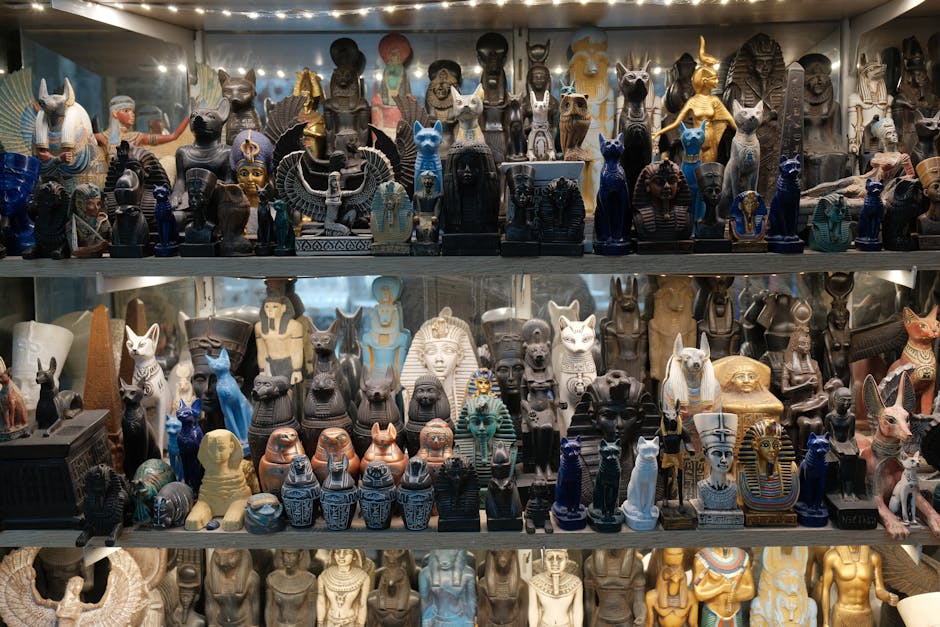
Anubis stands as one of the most recognizable and enduring figures from ancient Egyptian mythology. With his distinctive jackal head and mysterious presence, this god of the dead has captivated human imagination for thousands of years. From his role in the afterlife to his complex relationships with other deities, Anubis played a crucial part in Egyptian religious beliefs and funerary practices. This article explores ten fascinating facts about this enigmatic deity that reveal the depth and complexity of ancient Egyptian spirituality.

1. Anubis is One of the Oldest Egyptian Gods

Anubis ranks among the most ancient deities in the Egyptian pantheon, with evidence of his worship dating back to the First Dynasty, around 3100 BCE. His prominence in early Egyptian religion predates many other well-known gods, including Osiris. Initially, Anubis held the supreme position as god of the dead before later mythology elevated Osiris to this role. This ancient lineage demonstrates the enduring importance of death rituals and afterlife beliefs in Egyptian culture from its earliest periods.

2. The Jackal-Headed God Has Practical Origins

The distinctive jackal or wild dog head of Anubis was not chosen arbitrarily. Ancient Egyptians observed jackals and wild dogs scavenging in cemeteries and desert burial grounds, where they would dig up improperly buried bodies. By making a deity in the image of these animals, Egyptians essentially placed these creatures under divine control, believing this would protect graves from desecration. This practical approach to religious symbolism reflects the Egyptian tendency to incorporate observed natural phenomena into their spiritual framework.

3. Anubis Was the Original God of the Dead

Before Osiris became the primary deity associated with death and resurrection, Anubis held this supreme position. As Egyptian mythology evolved during the Middle Kingdom period, Osiris assumed the role of ruler of the underworld, while Anubis transitioned to a supporting but still vital position. Rather than diminishing his importance, this shift allowed Anubis to specialize in the technical and ritual aspects of death, including mummification and the weighing of hearts ceremony.

4. He Invented Mummification

According to Egyptian mythology, Anubis created the practice of mummification. The legend states that after the god Set murdered Osiris and scattered his body parts across Egypt, Anubis gathered the pieces and performed the first mummification, thereby preserving Osiris's body for resurrection. This mythological origin story established Anubis as the patron of embalmers, and priests who performed mummification rituals often wore jackal masks to embody the god during the sacred process.

5. Guardian of Scales in the Weighing of the Heart Ceremony

One of Anubis's most important roles involved the judgment of the dead. In the famous weighing of the heart ceremony, Anubis would guide deceased souls to the scales and oversee the weighing of their hearts against the feather of Ma'at, representing truth and justice. If the heart was lighter than or equal to the feather, the soul could proceed to the afterlife. If heavier with sin, it would be devoured by Ammit, a demon. This role positioned Anubis as an impartial arbiter of cosmic justice.

6. His Parentage Varies Across Egyptian Mythology

Different mythological traditions offer varying accounts of Anubis's parentage. Some texts identify him as the son of Ra, the sun god, while others claim Osiris as his father. One particularly interesting version states that Anubis was born from the union of Osiris and Nephthys, who disguised herself as Isis. This illegitimate birth led Nephthys to abandon the infant, whereupon Isis found and raised him. These varying genealogies reflect the complex and sometimes contradictory nature of Egyptian mythology as it evolved across different regions and time periods.

7. Protector of Graves and Cemeteries

Beyond his role in mummification and judgment, Anubis served as the guardian of graves and tombs. Ancient Egyptians believed he watched over burial sites, protecting the deceased from desecration and evil spirits. Statues and images of Anubis commonly appeared in tombs, and his presence was invoked in funerary texts and spells. This protective function made him one of the most frequently depicted deities in tomb art and funerary equipment, from royal pyramids to common burial sites.

8. Associated with the Color Black

Anubis was typically depicted with black skin, a color that held deep symbolic meaning in Egyptian culture. Unlike in many modern Western contexts, black represented fertility, rebirth, and the rich soil of the Nile River rather than evil or death. The black color also referenced the discoloration of corpses during mummification when treated with natron and resins. This association linked Anubis directly to the physical transformation of death and the promise of regeneration in the afterlife.

9. His Worship Center Was Cynopolis

The primary cult center for Anubis worship was located in Cynopolis, known in ancient Egyptian as "Hardai," in Upper Egypt. The Greek name Cynopolis literally means "city of dogs," reflecting Anubis's canine form. In this city, dogs and jackals were considered sacred animals, and harming them was strictly forbidden. Archaeological evidence suggests that elaborate cemeteries existed there specifically for the burial of sacred dogs, demonstrating the deep connection between the deity and his animal form.

10. His Influence Extended Beyond Egypt

The worship of Anubis spread beyond Egyptian borders during the Greco-Roman period. As cultural exchange increased following Alexander the Great's conquest of Egypt, Anubis was incorporated into Greek and Roman religious practices. The Greeks sometimes associated him with Hermes, creating a syncretic deity called Hermanubis who combined attributes of both gods. Evidence of Anubis worship has been found throughout the Mediterranean, including in Rome itself, demonstrating the broad appeal of this ancient Egyptian deity across different cultures.

Conclusion

These ten facts about Anubis reveal a deity far more complex than his popular image as simply the god of death. From his ancient origins and practical symbolism to his evolving roles and international influence, Anubis embodied crucial aspects of Egyptian spirituality and cultural values. His functions as inventor of mummification, guardian of graves, and judge of souls made him indispensable to Egyptian afterlife beliefs. The enduring fascination with Anubis in modern times testifies to the powerful symbolism and profound spiritual concepts that ancient Egyptians embedded in this jackal-headed god. Understanding these facts provides valuable insight into how one of the world's greatest civilizations confronted mortality and imagined the journey beyond death.

Did You Know? 12 Facts About Black Holes

Did You Know? 12 Facts About Black Holes

⏱️ 6 min read

Did You Know? 12 Facts About Black Holes

Introduction

Black holes are among the most fascinating and mysterious objects in the universe. These cosmic phenomena possess gravitational forces so intense that nothing, not even light, can escape their grasp once it crosses a certain boundary. Since their theoretical prediction by Einstein's general theory of relativity and their subsequent observation, black holes have captivated scientists and the public alike. Here are twelve intriguing facts about these enigmatic celestial objects that demonstrate just how extraordinary they truly are.

12 Fascinating Facts About Black Holes

1. Black Holes Are Not Actually Holes

Despite their name, black holes are not empty voids in space. They are incredibly dense regions of matter compressed into an extremely small area. The gravitational pull is so strong because a massive amount of matter has been squeezed into a tiny space. Think of them more as the ultimate cosmic compactor rather than an empty hole. The matter inside is concentrated at what scientists call a singularity, a point of theoretically infinite density at the center.

2. There Are Different Types of Black Holes

Black holes come in various sizes and are classified into several categories. Stellar black holes form when massive stars collapse and typically range from about 3 to 20 times the mass of our sun. Supermassive black holes, found at the centers of galaxies, can contain millions or even billions of solar masses. Intermediate black holes fall between these two categories, while theoretical primordial black holes may have formed shortly after the Big Bang.

3. The Event Horizon Is the Point of No Return

The event horizon is the boundary surrounding a black hole beyond which nothing can escape. Once any object, including light, crosses this threshold, it is inevitably pulled toward the singularity at the center. The size of the event horizon, also called the Schwarzschild radius, depends on the mass of the black hole. For observers outside, anything crossing the event horizon appears to slow down and fade away, frozen at the edge forever due to extreme time dilation effects.

4. Time Behaves Strangely Near Black Holes

According to Einstein's theory of relativity, gravity affects the passage of time. Near a black hole, where gravity is immensely strong, time slows down significantly compared to regions farther away. If you could watch someone fall toward a black hole from a safe distance, you would see them move slower and slower as they approached the event horizon, eventually appearing to freeze in time. However, from the perspective of the person falling in, time would seem to pass normally.

5. Black Holes Can Spin at Incredible Speeds

Black holes can rotate, and some spin at nearly the speed of light. These rotating black holes, called Kerr black holes, drag the fabric of spacetime around with them in a phenomenon known as frame-dragging. The rotation creates an ergosphere, a region outside the event horizon where objects cannot remain stationary and are forced to rotate with the black hole. This rotation also affects the shape of the event horizon itself.

6. We Have Actually Photographed a Black Hole

In April 2019, the Event Horizon Telescope collaboration released the first-ever image of a black hole, specifically the supermassive black hole at the center of the galaxy M87. This groundbreaking achievement required coordinating eight radio telescopes across the globe to create a virtual Earth-sized telescope. The image showed the black hole's shadow against the bright ring of superheated matter swirling around it, confirming decades of theoretical predictions.

7. Black Holes Emit Radiation

Despite their reputation for consuming everything, black holes can actually emit radiation. Stephen Hawking theorized that black holes emit what is now called Hawking radiation due to quantum effects near the event horizon. This radiation causes black holes to slowly lose mass and energy over time. However, this process is extremely slow for large black holes, taking longer than the current age of the universe for them to evaporate completely.

8. Supermassive Black Holes Lurk at Galaxy Centers

Nearly every large galaxy, including our own Milky Way, harbors a supermassive black hole at its center. The Milky Way's central black hole, called Sagittarius A*, has a mass equivalent to about four million suns. These massive objects play a crucial role in galaxy formation and evolution, influencing the motion of stars and gas throughout their host galaxies. The relationship between a galaxy's mass and its central black hole's mass suggests they evolve together.

9. You Would Be "Spaghettified" in a Black Hole

If you fell into a black hole, you would experience spaghettification, a process scientists officially call tidal disruption. This occurs because the gravitational force on the parts of your body closer to the singularity would be significantly stronger than on the parts farther away. This difference would stretch you vertically while compressing you horizontally, elongating your body like a strand of spaghetti. The effect becomes more extreme as you approach the singularity.

10. Black Holes Can Collide and Merge

When black holes orbit each other closely enough, they eventually spiral inward and merge, creating a larger black hole. These catastrophic events release tremendous amounts of energy in the form of gravitational waves—ripples in the fabric of spacetime itself. The Laser Interferometer Gravitational-Wave Observatory (LIGO) first detected these waves in 2015, opening a new window into observing the universe and confirming another prediction of Einstein's general relativity.

11. Black Holes Are Surprisingly Simple Objects

Despite their mysterious nature, black holes are mathematically quite simple. They can be completely described by just three properties: mass, electric charge, and angular momentum (spin). This principle, known as the "no-hair theorem," means that all other information about the matter that formed the black hole is lost. This simplicity stands in stark contrast to the complexity of most other astronomical objects, which require many parameters to describe fully.

12. Stellar Black Holes Are Relatively Common

Scientists estimate that our galaxy alone contains tens of millions to hundreds of millions of stellar-mass black holes. These form when massive stars, at least 20 times the mass of our sun, exhaust their nuclear fuel and collapse under their own gravity. While this might sound alarming, space is so vast that the nearest known black hole is still thousands of light-years away, posing no threat to Earth. Most of these black holes remain invisible unless they are actively consuming matter or have a companion star.

Conclusion

These twelve facts only scratch the surface of what makes black holes such compelling objects of study. From warping time and space to emitting radiation despite being the universe's ultimate trap, black holes challenge our understanding of physics and push the boundaries of human knowledge. As technology advances and our observational capabilities improve, we continue to uncover new mysteries about these cosmic giants. Whether through gravitational wave detection, direct imaging, or theoretical advances, black holes will undoubtedly remain at the forefront of astrophysical research for generations to come, offering endless opportunities to explore the most extreme conditions in our universe.