
Honey Badger Fearlessness: The Truth About Their Behavior
By Trivia Owl, Animals Desk — Published August 22, 2026
Table of Contents
- Key Takeaways
- Physical Adaptations Behind Honey Badger Fearlessness
- Behavioral Strategies: Calculated Risk, Not Mindless Aggression
- Diet and Hunting: Opportunistic Omnivores
- Comparing Honey Badgers to Other Fearless Animals
- Myths Versus Reality
- Frequently Asked Questions
The honey badger has earned a reputation as one of the most fearless creatures on Earth, but how much of this legendary status is fact versus folklore? This small carnivore, weighing only 20 to 30 pounds, routinely confronts animals many times its size and survives encounters that would kill most other species. The honey badger fearlessness that dominates internet memes and wildlife documentaries stems from real behavioral adaptations that make this animal a genuine force in its habitat.
Native to Africa, Southwest Asia, and the Indian subcontinent, honey badgers occupy diverse habitats ranging from grasslands to forests. Their scientific name, Mellivora capensis, literally means “honey eater of the Cape,” yet these animals consume far more than sweet treats. Understanding what drives their bold behavior reveals sophisticated survival strategies rather than reckless aggression.
Key Takeaways
- Honey badgers possess remarkably thick, loose skin that protects them from bee stings, porcupine quills, and predator bites, allowing them to engage threats other animals avoid.
- Their fearless reputation comes from documented confrontations with lions, leopards, and hyenas, though they typically retreat when escape routes exist.
- A specialized anal gland produces a suffocating stink similar to skunks, giving honey badgers a chemical defense that complements their physical toughness.
- These creatures demonstrate problem-solving intelligence, using tools and working cooperatively with other species to locate food.
- Despite their fierce nature, honey badgers are primarily opportunistic feeders that prefer avoiding conflict when possible, making calculated risk assessments rather than mindlessly attacking.
- Their loose skin allows them to twist and bite attackers even when grabbed, a defensive adaptation that makes them exceptionally difficult to kill.
Physical Adaptations Behind Honey Badger Fearlessness
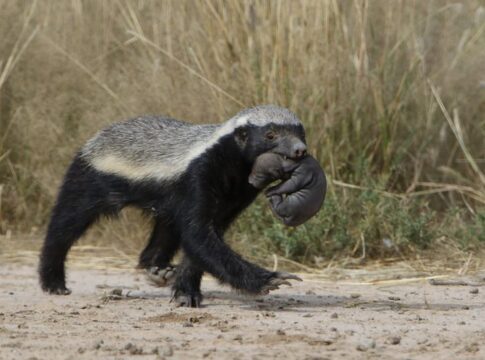
The honey badger’s body functions as natural armor. Their skin measures approximately 6 millimeters thick—particularly tough around the neck and shoulders where predators typically target. What makes this defense truly remarkable is the skin’s looseness. When a predator grabs a honey badger, the animal can literally twist inside its own skin to bite its attacker. This adaptation proves so effective that even the powerful jaws of lions and leopards struggle to inflict fatal wounds.
Beyond thickness, the skin’s rubbery quality deflects stings and quills. Honey badgers regularly raid bee nests, enduring hundreds of stings that would send other animals fleeing. They also prey on porcupines, somehow navigating around or simply tolerating the defensive quills that deter most predators. Their stocky build and powerful claws, each measuring about 1.5 inches long, allow them to dig rapidly—both to access prey underground and to escape when genuinely threatened.
The black and white coloration serves as warning coloration, similar to skunks. This high-contrast pattern signals to potential predators that attacking carries consequences. Most experienced predators in honey badger territory learn to recognize and avoid these bold patterns.
Behavioral Strategies: Calculated Risk, Not Mindless Aggression
Wildlife researchers studying honey badgers in their natural habitat have documented behavior far more nuanced than the “fearless” stereotype suggests. These animals assess situations carefully. When confronted by a single predator, honey badgers often stand their ground, puffing up their fur, arching their backs, and releasing their noxious spray. This display usually convinces attackers to seek easier prey.
However, when facing multiple predators or particularly dangerous threats, honey badgers retreat to burrows or climb trees—yes, they’re surprisingly capable climbers. Their fearlessness manifests as confidence backed by genuine defensive capabilities, not suicidal recklessness. They fight when cornered or when protecting food, but they’re pragmatic survivors first and warriors second.
Their hunting behavior reveals sophisticated intelligence. Honey badgers have been observed using tools, such as rolling logs to use as stepladders to reach food. Some populations have developed cooperative relationships with honeyguide birds, which lead them to bee nests. The bird gets access to the wax and larvae after the honey badger tears open the hive—a remarkable example of interspecies communication in nature.
Diet and Hunting: Opportunistic Omnivores
Honey badgers consume an astonishing variety of foods, demonstrating the opportunistic feeding strategy that supports their wide habitat range. Their diet includes:
- Small mammals such as rodents, hares, and even young foxes or jackals
- Reptiles including venomous snakes, against which they have partial resistance
- Birds, eggs, and nestlings
- Insects, especially bee larvae and honey
- Fruits, roots, and berries when animal prey is scarce
- Carrion when available, competing with hyenas and vultures
Their willingness to tackle venomous snakes, including cobras and puff adders, demonstrates both their physical resilience and their opportunistic nature. While not completely immune to venom, honey badgers possess some resistance and have been observed recovering from bites that would kill other animals of similar size. They may enter a temporary coma-like state after severe envenomation, then wake hours later and continue about their business.
Comparing Honey Badgers to Other Fearless Animals
| Animal | Primary Defense | Size (Weight) | Fearlessness Factor |
|---|---|---|---|
| Honey Badger | Thick loose skin, powerful bite, chemical spray | 20-30 lbs | Confronts predators 10x its size |
| Wolverine | Powerful jaws, aggression, thick fur | 20-40 lbs | Drives bears from kills |
| Tasmanian Devil | Powerful bite force, aggression | 9-26 lbs | Scavenges aggressively, not confrontational with large predators |
| Mongoose | Speed, agility, venom resistance | 1-11 lbs | Specialized snake hunters, avoids larger threats |
Myths Versus Reality
Internet culture has amplified honey badger mythology beyond the already impressive reality. The viral video narration claiming “honey badger don’t care” popularized exaggerated claims. While these animals are genuinely tough, they’re not invincible or suicidal.
They do care about survival—that’s precisely why their defensive adaptations evolved. A honey badger won’t attack an elephant or actively seek out lions for sport. They respond to threats proportionally and retreat when overwhelmingly outmatched. Their fearlessness is context-dependent, emerging primarily when defending food, young, or themselves when cornered.
The claim that honey badgers are immune to snake venom is another overstatement. They possess resistance to certain toxins, likely evolved through their diet of venomous snakes, but severe bites still cause harm. Their survival depends on a combination of venom resistance, thick skin that limits fang penetration, and the ability to recover from sublethal doses.
Frequently Asked Questions
Do honey badgers really attack lions?
Honey badgers don’t hunt lions but will defensively confront them when cornered or protecting food. Lions typically avoid honey badgers because the effort and potential injury outweigh the small meal, making such encounters brief standoffs rather than sustained battles.
Are honey badgers endangered?
Honey badgers are currently listed as Least Concern by conservation authorities, with stable populations across their range. However, they face localized threats from habitat loss, persecution by beekeepers and farmers, and vehicle strikes in some regions.
Can honey badgers be kept as pets?
Keeping honey badgers as pets is illegal in most jurisdictions and extremely impractical. Their powerful claws, aggressive temperament, destructive behavior, and specialized dietary needs make them wholly unsuitable for captivity outside professional wildlife facilities.
How long do honey badgers live?
In the wild, honey badgers typically live 7 to 8 years, though some individuals reach their early teens. In captivity with veterinary care and consistent food, they can live up to 24 years, demonstrating the survival challenges they face in nature despite their formidable defenses.
The honey badger’s fearlessness ultimately reflects evolutionary success rather than reckless bravery. Every defensive adaptation—the loose skin, the chemical weapons, the powerful bite—represents millions of years of natural selection favoring animals that could access food sources other creatures couldn’t reach. They’re not fearless because they lack intelligence to recognize danger. They’re bold because they possess the tools to back up their confidence, making them one of nature’s most fascinating examples of how size matters far less than strategy.