









⏱️ 6 min read
Did You Know? 10 Facts About Mount Olympus
Mount Olympus stands as one of the most iconic landmarks in both Greek geography and mythology. This majestic mountain has captured human imagination for millennia, serving as the legendary home of the ancient Greek gods and a real geographical wonder. While many people recognize the name, the fascinating details about this mountain—both mythological and physical—often remain unknown. Here are ten compelling facts about Mount Olympus that reveal why this peak continues to hold such significance in both ancient lore and modern culture.
1. Greece's Highest Peak
Mount Olympus is the tallest mountain in Greece, reaching an impressive height of 2,917 meters (9,570 feet) at its highest peak, known as Mytikas or "Nose." The mountain is actually a complex massif with multiple peaks, with Mytikas being the most prominent. The second-highest peak, Skolio, stands at 2,911 meters, while Stefani, also called the "Throne of Zeus," reaches 2,909 meters. This significant elevation made the mountain appear to touch the heavens, reinforcing ancient beliefs that it served as a divine dwelling place.
2. Home of the Twelve Olympian Gods
In Greek mythology, Mount Olympus served as the celestial palace of the twelve major gods of the ancient Greek pantheon. Zeus, the king of the gods, ruled from his throne atop the mountain alongside his wife Hera, and other major deities including Poseidon, Demeter, Athena, Apollo, Artemis, Ares, Aphrodite, Hephaestus, Hermes, and either Hestia or Dionysus, depending on the tradition. According to myth, these gods lived in magnificent crystalline palaces, feasted on ambrosia and nectar, and observed the activities of mortals below while plotting their divine interventions.
3. A National Park and UNESCO Biosphere Reserve
Beyond its mythological significance, Mount Olympus holds important ecological value. In 1938, it became Greece's first national park, established to protect its unique flora and fauna. The park covers approximately 240 square kilometers and was designated as a UNESCO Biosphere Reserve in 1981. This recognition highlights the mountain's exceptional biodiversity and the need to preserve its natural ecosystems for future generations, bridging ancient reverence with modern conservation efforts.
4. Extraordinary Biodiversity
Mount Olympus hosts remarkable biological diversity, with over 1,700 plant species, some of which are endemic and found nowhere else on Earth. The mountain's varied altitudes create distinct ecological zones, from Mediterranean vegetation at lower elevations to alpine meadows and rocky terrain near the summit. Wildlife includes rare species such as the Balkan chamois, wild boar, roe deer, and numerous bird species including golden eagles. This rich biodiversity contributed to the ancient Greeks' perception of the mountain as a place of supernatural abundance and divine favor.
5. The Summit Was Unconquered Until 1913
Despite being revered for thousands of years, the summit of Mount Olympus remained unclimbed until relatively recently in human history. The first recorded successful ascent of Mytikas occurred on August 2, 1913, by Christos Kakalos, a local hunter, accompanied by Swiss photographers Frédéric Boissonnas and Daniel Baud-Bovy. This late conquest adds to the mountain's mystique—for millennia, its highest peaks remained the exclusive domain of the gods, at least in practice if not in belief.
6. Multiple Mythological Battles Were Fought There
Mount Olympus features prominently in several mythological conflicts, most notably the Titanomachy and the Gigantomachy. The Titanomachy was the ten-year war between the Olympian gods, led by Zeus, and the Titans, led by Kronos. After the Olympians' victory, Mount Olympus became their permanent residence. Later, during the Gigantomachy, the gods defended their mountain home against the Giants, who attempted to overthrow the Olympian order by piling mountains to reach the summit. These epic battles established Mount Olympus as the ultimate symbol of divine authority and power.
7. Not the Only Mount Olympus
While the Greek Mount Olympus is the most famous, the ancient world knew several mountains by this name. Cyprus, Lesbos, and various locations in Anatolia (modern-day Turkey) all had their own Mount Olympus. There is even a Mount Olympus on Mars, known as Olympus Mons, which is the largest volcano in the solar system. The name "Olympus" likely derives from a pre-Greek root meaning "mountain," suggesting that the term was applied to prominent peaks throughout the ancient Mediterranean world before becoming exclusively associated with the Greek mountain in mythology.
8. A Popular Hiking Destination
Today, Mount Olympus attracts thousands of hikers and climbers annually, making it one of Greece's most popular outdoor destinations. The most common route begins from the village of Litochoro and takes approximately two days, with overnight stays at mountain refuges. While reaching the summit requires good physical condition and some scrambling ability, it doesn't demand technical mountaineering skills for most routes. This accessibility allows modern adventurers to literally follow in the footsteps of the gods, experiencing the same awe-inspiring vistas that inspired ancient Greeks.
9. Shaped Greek Religious and Cultural Identity
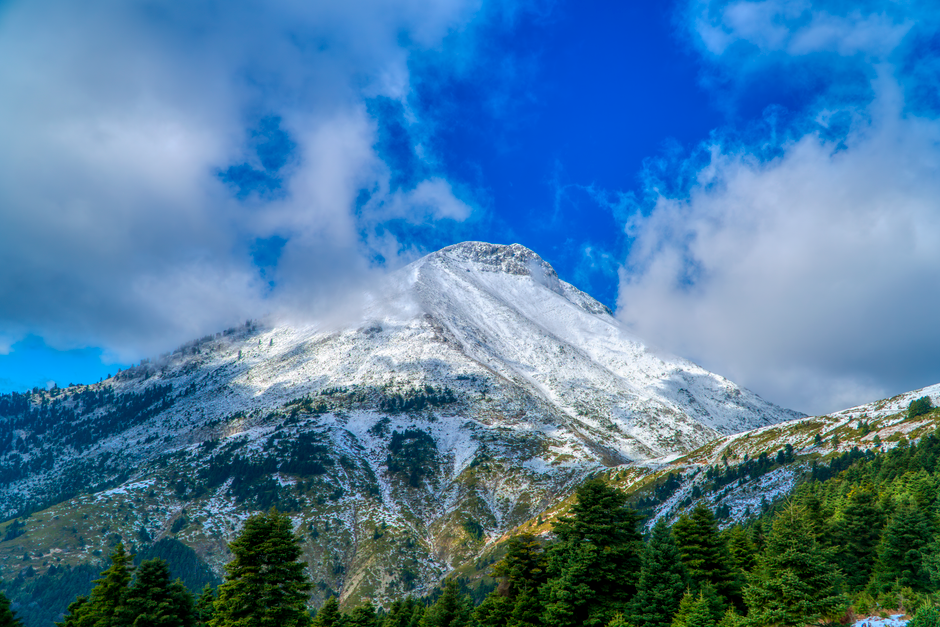
Mount Olympus profoundly influenced ancient Greek religion, philosophy, and culture. Its imposing presence made it a natural choice for the gods' dwelling place, and its frequently cloud-covered peaks reinforced the mystery and separation between divine and mortal realms. The mountain appeared in countless works of ancient literature, from Homer's epics to philosophical treatises, serving as a metaphor for excellence, achievement, and the divine order. Even the Olympic Games, though held at Olympia in a different region, drew their name from Olympus, connecting athletic achievement with divine perfection.
10. The Gateway to the Gods Required Special Guardianship
According to Greek mythology, the gates of Mount Olympus were guarded by the Horae, goddesses of the seasons and natural order. These divine gatekeepers controlled access to the mountain, opening and closing the cloud gates to allow gods to pass. Mortals were strictly forbidden from ascending to the divine realm, and the few exceptions to this rule—such as the hero Heracles, who earned immortality and a place among the gods—only emphasized how extraordinary such access was. This mythological detail reflected the mountain's sacred status and the clear boundary ancient Greeks drew between human and divine spheres.
Conclusion
Mount Olympus represents a unique intersection of natural wonder and mythological grandeur. From its status as Greece's highest peak to its role as the legendary home of the gods, from its ecological significance to its appearances in epic battles of cosmic importance, these ten facts reveal why this mountain has maintained its grip on human imagination for thousands of years. Whether viewed through the lens of ancient mythology, ecological conservation, or modern adventure tourism, Mount Olympus continues to inspire awe and wonder, standing as an enduring symbol of the heights—both physical and spiritual—that humans have always aspired to reach.