
The Truth About Lightning Striking Sand Creating Glass
By Trivia Owl, Staff Writer — Published October 16, 2026
Table of Contents
- Key Takeaways
- The Truth About Lightning Striking Sand: How Fulgurites Actually Form
- Why Not Every Beach Has Fulgurites
- What Fulgurites Look Like and Where They’re Found
- Comparing Types of Lightning-Formed Glass
- The Scientific Value of Frozen Lightning
- Frequently Asked Questions
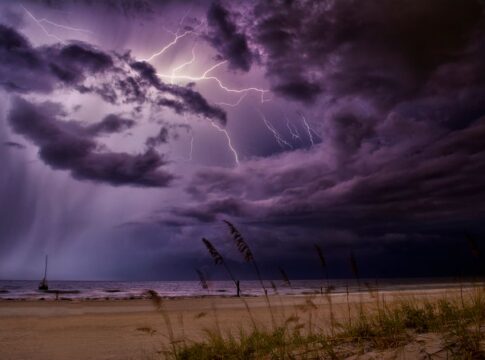
You’ve probably heard the claim: when lightning strikes sand, it instantly transforms into a delicate, hollow glass tube called fulgurite. It sounds like pure magic—nature’s alchemy at work. But is this fascinating phenomenon actually real, or just another internet myth? The truth about lightning striking sand is even more interesting than the simplified version most people know. Yes, fulgurites do exist, but the process is far more specific and rare than popular culture suggests.
Lightning carries tremendous energy—a typical bolt can reach temperatures around 30,000 degrees Celsius, roughly five times hotter than the surface of the sun. When this superheated channel of electricity penetrates certain types of sand, it can indeed fuse the silica grains into glass. But not every beach or sandbox will do. The conditions must be just right, and the results are often fragile, branching structures buried beneath the surface rather than the pristine glass sculptures you might imagine.
Key Takeaways
- Fulgurites are real natural glass formations created when lightning strikes sand with high silica content, fusing grains at temperatures exceeding 30,000 degrees Celsius.
- These structures form hollow, branching tubes that follow the lightning’s path underground, typically measuring a few centimeters in diameter but sometimes extending several meters deep.
- Not all sand produces fulgurites—the material must contain enough silica and have the right moisture content and mineral composition for glass formation to occur.
- Fulgurites are extremely fragile and often break during excavation, making intact specimens rare and valuable to collectors and researchers.
- Scientists study fulgurites to understand ancient lightning patterns, paleoclimate conditions, and the behavior of electrical discharges in soil.
- Similar glass formations called “exogenic” fulgurites can also form when lightning strikes rock surfaces, creating a glazed crust rather than hollow tubes.
The Truth About Lightning Striking Sand: How Fulgurites Actually Form
The creation of fulgurite requires a perfect storm of conditions. When lightning strikes the ground, it doesn’t simply zap the surface and disappear. The electrical discharge seeks the path of least resistance through the soil, often penetrating several feet underground. As it travels, the current heats the surrounding material to extreme temperatures.
Sand grains are primarily composed of silica (silicon dioxide), which melts at approximately 1,700 degrees Celsius under normal conditions. Lightning easily exceeds this threshold. The superheated silica melts instantly, coating the channel carved by the electrical current. Within milliseconds of the lightning’s passage, the molten material begins to cool and solidify into glass.
The resulting structure is hollow because the lightning’s core vaporizes any material directly in its path, leaving a tube-like cavity. The walls of this tube are made of fused glass, often rough on the outside where sand grains are partially melted and smooth on the inside where complete melting occurred. These formations typically range from pencil-thin to about an inch in diameter, though larger examples have been documented.
Why Not Every Beach Has Fulgurites
Walk along most beaches and you won’t stumble across fulgurites, despite lightning storms occurring regularly over coastal areas. Several factors determine whether fulgurite formation is possible.
First, the sand composition matters tremendously. Pure quartz sand with high silica content produces the best fulgurites. Beach sand contaminated with shells, organic matter, or significant quantities of other minerals may not fuse properly. Desert sand dunes and certain inland sandy areas often provide better conditions than coastal beaches.
Moisture content plays a crucial role too. Slightly damp sand conducts electricity better than bone-dry sand, allowing the lightning to penetrate deeper and create longer fulgurite structures. However, too much moisture can disperse the heat too quickly, preventing proper glass formation. The sweet spot exists in that narrow range where the sand is moist enough to conduct but dry enough to retain heat.
Finally, lightning must actually strike the sand—not a tree, building, or other tall object nearby. Since lightning typically seeks the highest point in an area, flat, open sandy expanses are ideal. This explains why fulgurites are more commonly found in deserts and dune systems than on crowded beaches with umbrellas and lifeguard towers.
What Fulgurites Look Like and Where They’re Found
Forget the smooth, artistic glass sculptures sometimes depicted in fiction. Real fulgurites are gnarled, irregular tubes that branch and twist as they follow the lightning’s chaotic path through the ground. The exterior surface is typically rough and sandy, with partially melted grains clinging to the glassy core. Colors range from tan and brown to greenish or grayish, depending on the minerals present in the original sand.
Most fulgurites are surprisingly fragile. The glass walls are often thin and brittle, shattering easily when excavated. This fragility makes intact specimens rare and valuable. Museums and private collectors prize longer, more complete examples, some of which can stretch several meters in length when carefully extracted.
Fulgurites have been discovered on every continent where sandy soil exists and lightning occurs. Notable locations include the Sahara Desert, the sand hills of Nebraska, beaches in Florida, and various locations throughout Australia. The Smithsonian Institution houses several impressive specimens in its mineral collection.
Comparing Types of Lightning-Formed Glass
| Type | Formation Location | Structure | Characteristics |
|---|---|---|---|
| Sand Fulgurites | Sandy soil, dunes, beaches | Hollow branching tubes | Most common type; fragile; follow underground lightning path |
| Rock Fulgurites | Rock surfaces and cliff faces | Glassy crust or coating | Form on surface rather than penetrating; more durable than sand types |
| Clay Fulgurites | Clay-rich soils | Irregular glassy masses | Less distinct tube structure; often mixed with unmelted material |
The Scientific Value of Frozen Lightning
Beyond their novelty, fulgurites serve as valuable scientific tools. Researchers study them to understand past lightning activity in different regions. By analyzing the age and distribution of fulgurites in an area, scientists can reconstruct historical storm patterns and climate conditions.
The glass itself preserves a record of the sand’s composition at the moment of formation, offering insights into past environments. Some ancient fulgurites discovered in geological formations provide evidence of lightning activity millions of years ago.
Physicists also examine fulgurites to better understand the behavior of high-energy electrical discharges in various materials. This research has applications ranging from lightning protection systems to understanding similar processes on other planets. NASA scientists have even discussed the possibility that fulgurite-like formations might exist on Mars, where dust storms can generate powerful electrical discharges.
Frequently Asked Questions
Can you make fulgurite artificially?
Yes, but it’s extremely difficult and dangerous. Some researchers have created fulgurite-like glass by passing massive electrical currents through sand in laboratory settings, but replicating the exact conditions of natural lightning strikes is challenging and requires specialized high-voltage equipment.
Are fulgurites worth money?
High-quality, intact fulgurite specimens can be quite valuable to collectors, with prices ranging from twenty dollars for small fragments to several hundred dollars for large, well-preserved examples. Scientific institutions and museums also acquire specimens for research and educational displays.
How long do fulgurites last in nature?
Fulgurites are surprisingly durable once formed, potentially lasting thousands or even millions of years if buried and protected from weathering. However, exposed fulgurites gradually erode from wind, rain, and temperature changes, often breaking down within decades of formation.
Has anyone ever witnessed fulgurite formation?
Direct observation of fulgurite creation is extremely rare due to the instantaneous nature of lightning strikes and the fact that fulgurites form underground. Most are discovered only after excavation, though people have occasionally found fresh fulgurites shortly after witnessing nearby lightning strikes.
The next time a thunderstorm rolls across a beach or desert, remember that beneath the sand, nature might be crafting these remarkable glass sculptures. Each fulgurite represents a unique moment when earth and sky met in a split-second fusion of elements—a permanent record of power too brief for human eyes to fully capture, yet solid enough to hold in your hand millennia later.