
⏱️ 7 min read
Top 10 The Basilisk Mysteries
The basilisk stands as one of the most terrifying and enigmatic creatures in the annals of myth and legend. Known as the “king of serpents,” this legendary beast has captured human imagination for thousands of years, weaving its way through ancient texts, medieval bestiaries, and modern fantasy literature. Despite its prominence in mythological traditions across multiple cultures, the basilisk remains shrouded in mystery, with conflicting accounts of its origins, appearance, and deadly powers. This article explores ten of the most intriguing mysteries surrounding this legendary creature that continue to fascinate scholars and enthusiasts alike.
1. The Contradictory Origins
One of the greatest mysteries surrounding the basilisk concerns its true origins. Ancient sources provide wildly different accounts of how this creature came into existence. Pliny the Elder, writing in the first century CE, described it as a small serpent from North Africa, while medieval European texts claimed it was born from a cock’s egg hatched by a serpent or toad. Some traditions assert that the basilisk could only be created during specific astrological conditions, when Sirius was ascendant. This confusion about its genesis raises questions about whether different cultures were describing entirely different creatures or if the myth evolved dramatically over time.
2. The Appearance Paradox
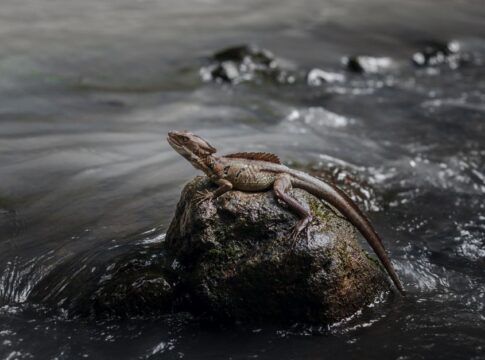
Descriptions of the basilisk’s physical form vary so dramatically that it seems impossible they refer to the same creature. Classical sources depicted it as a small snake, typically no longer than twelve inches, with a distinctive crown-like crest on its head. However, medieval accounts transformed it into a monstrous hybrid with the head of a rooster, serpentine body, wings, and sometimes even eight legs. Modern interpretations have further complicated matters by sometimes conflating the basilisk with the cockatrice, another legendary creature. This dramatic inconsistency in physical descriptions remains one of the creature’s most perplexing mysteries.
3. The Lethal Gaze
Perhaps the most famous mystery of the basilisk concerns its supposedly deadly gaze. Legend holds that anyone who makes eye contact with a basilisk dies instantly, yet the mechanism behind this supernatural power remains unexplained. Some accounts suggest it releases a poisonous emanation through its eyes, while others claim the death is purely magical in nature. Even more mysterious are reports that the basilisk itself could be killed if it saw its own reflection, suggesting its power operated on principles that could be turned against it. The inconsistency of these accounts raises questions about what the lethal gaze actually represented in ancient and medieval thought.
4. The Poison Puzzle
Ancient texts describe the basilisk’s venom as so potent that it could kill from a distance, contaminate water sources for years, and even travel up weapons to kill those who struck the creature. Pliny claimed that a mounted warrior who speared a basilisk died along with his horse as the poison traveled up the spear. However, the nature of this extraordinarily powerful toxin remains mysterious. No natural substance behaves in the manner described, leading to speculation about whether these accounts were purely allegorical or based on misunderstood observations of actual venomous creatures with exaggerated properties.
5. The Weasel Connection
One of the strangest mysteries surrounding the basilisk concerns its supposed natural enemy: the weasel. Medieval bestiaries consistently claimed that weasels were immune to the basilisk’s powers and could kill it, often being placed in basilisk dens for this purpose. Some accounts specified that weasels needed to eat rue, an herb, before confronting the creature. The origin and meaning of this specific relationship remains unexplained. Why would a small mammal be uniquely equipped to defeat such a powerful monster? This peculiar detail has puzzled scholars for centuries and may contain clues about the myth’s practical origins.
6. The Geographic Mystery
The basilisk’s habitat presents another enduring puzzle. While Pliny and other Roman sources placed it specifically in Libya and the deserts of North Africa, medieval European writers relocated it to their own regions. Some accounts mention basilisks in the sewers beneath major European cities, while others place them in remote wilderness areas. This geographic mobility of the legend raises questions about whether sightings in different locations referred to different creatures entirely, or whether the myth served different social functions in various cultural contexts. The creature’s supposed preference for arid environments conflicts with many later accounts placing it in damp, underground spaces.
7. The Crown Mystery
Nearly all accounts of the basilisk mention a distinctive crown-like marking or crest on its head, which is the source of its title as “king of serpents.” However, the exact nature of this crown varies between descriptions, and its significance remains mysterious. Some sources describe it as a white spot shaped like a diadem, while others depict it as raised scales forming a crest. The consistency of this detail across otherwise contradictory accounts suggests it may have been based on observation of an actual animal, possibly the cobra with its distinctive hood, or perhaps a horned viper. Why this feature became so central to the creature’s identity and mythology remains an open question.
8. The Immunity Enigma
Beyond the weasel, various sources claim different methods of protection against the basilisk’s deadly powers. Carrying mirrors, wearing crystals, burning specific herbs, and even the crowing of roosters were all reportedly effective countermeasures. The proliferation of these supposed defenses raises intriguing questions about the belief system surrounding the creature. Were these protective measures developed through actual experimentation in the minds of believers, or did they serve symbolic purposes in medieval thought? The fact that sound (rooster’s crow) could allegedly kill or drive away a basilisk adds another layer to the mystery of its vulnerabilities.
9. The Biblical Connection
Some medieval scholars attempted to identify the basilisk with serpents mentioned in biblical texts, creating theological mysteries that persist today. Various translations of the Bible have rendered certain Hebrew words for snakes as “basilisk” or “cockatrice,” leading to debates about whether the creature had some basis in scriptural authority. This religious dimension added gravitas to basilisk legends but also created confusion about whether the creature was considered a real animal by medieval theologians or recognized as purely mythological. The intersection of natural history and biblical interpretation in basilisk lore remains a complex scholarly puzzle.
10. The Historical Reality Question
Perhaps the ultimate basilisk mystery is whether any real creature inspired these legends. Various candidates have been proposed, including cobras, horned vipers, monitor lizards, and even misidentified dinosaur fossils. Some scholars suggest the basilisk represents an amalgamation of humanity’s fears about venomous creatures, while others argue it may have originated from distorted accounts of actual animals encountered by travelers. The creature’s presence in serious natural history texts well into the Renaissance, alongside real animals, indicates that many educated people believed in its existence. Understanding what convinced intelligent observers that such a creature was real remains one of the most fascinating aspects of basilisk mythology.
Conclusion
The ten mysteries surrounding the basilisk reveal a creature whose legend is far more complex than simple monster mythology. From its contradictory origins and appearance to its impossible powers and puzzling weaknesses, the basilisk embodies the ways ancient and medieval people understood, categorized, and feared the natural world. These mysteries also demonstrate how myths evolve across cultures and centuries, accumulating layers of meaning that can obscure their original purposes. Whether the basilisk began as a misunderstood real animal, a symbolic representation of death and danger, or a purely imaginative creation, its mysteries continue to intrigue us, reminding us that legendary creatures often reveal more about human culture and psychology than about the monsters themselves. The enduring fascination with the basilisk ensures that these mysteries will continue to be explored and debated by future generations of scholars and myth enthusiasts.