




1 / 10 Questions
0 Points

Which state moved its capital over bad hotel food?

Oklahoma

Kansas

Nebraska

Iowa

Points won
0
Correct score
0%

More Questions

11 Surprising Facts About Fungi Being Closer to Animals

Fungi classification reveals surprising links to animals rather than plants. Discover 11 scientific facts that explain why mushrooms are closer to you.

The Hidden Story of Fingerprints Being Unique to Koalas Too

Fingerprints unique to humans aren't so unique after all. Koalas share remarkably similar ridge patterns that even experts struggle to distinguish.

The Truth About Phoenix Myths Coming From Flamingo Sightings

Phoenix myths may have originated from ancient flamingo sightings. Discover how these vibrant birds inspired one of history's most enduring legends.

More Articles

Why Water Can Boil and Freeze Simultaneously in Space

Why Water Can Boil and Freeze Simultaneously in Space

Why Water Can Boil and Freeze Simultaneously in Space

By Trivia Owl, Staff Writer — Published November 4, 2026

Table of Contents

Imagine watching water bubble and turn to ice at the exact same moment. This isn't science fiction—it's what happens when you expose liquid water to the vacuum of space. The phenomenon reveals a surprising truth about how pressure, temperature, and phase changes interact in ways we never witness on Earth. When astronauts accidentally spill water during spacewalks or when spacecraft vent moisture into the void, this strange behavior occurs because space offers conditions unlike anything we experience at sea level.

The secret lies in something called the triple point, combined with the near-total absence of atmospheric pressure. While this might sound like obscure physics trivia, understanding why water can boil and freeze at once helps us discover how pressure shapes the behavior of every liquid around us. It's a mind-blowing reminder that the "normal" rules we take for granted are just special cases of more interesting universal principles.

Key Takeaways

  • Water exposed to space's vacuum boils and freezes simultaneously because of extremely low pressure, not temperature alone.
  • The triple point of water occurs at 0.01°C and 611.657 pascals, where all three phases coexist in equilibrium.
  • In space's near-vacuum (effectively zero pressure), water's boiling point drops below its freezing point, creating the dual effect.
  • Boiling happens first as the liquid rapidly vaporizes, then the remaining water freezes from evaporative cooling.
  • NASA and other space agencies account for this phenomenon when designing life support systems and managing water supplies.
  • This same principle explains why water boils at lower temperatures on mountaintops where atmospheric pressure decreases.

How Pressure Controls When Water Boil and Freeze

Most of us learned that water boils at 100°C and freezes at 0°C. That's accurate—but only at standard atmospheric pressure, roughly 101,325 pascals at sea level. Change the pressure, and those temperatures shift dramatically.

Boiling occurs when a liquid's vapor pressure equals the surrounding atmospheric pressure. Molecules escape the liquid's surface and form bubbles throughout the substance. On Earth, our thick atmosphere pushes down on water, requiring significant heat energy to overcome that pressure. Remove the atmosphere, and water molecules can escape much more easily. The boiling point plummets.

At the top of Mount Everest, where atmospheric pressure drops to about one-third of sea-level pressure, water boils at approximately 70°C. Climbers can't make a proper cup of tea up there. Take this principle to its extreme—the vacuum of space—and the boiling point drops below 0°C. Water tries to boil and freeze at the same time because both phase transitions become thermodynamically favorable.

The Triple Point: Where Three States Meet

Scientists have precisely mapped the relationship between temperature and pressure for water. The result is a phase diagram showing when water exists as ice, liquid, or vapor. One special spot on this diagram fascinates physicists: the triple point.

At exactly 0.01°C (273.16 Kelvin) and 611.657 pascals of pressure, water can exist simultaneously as solid ice, liquid water, and water vapor in perfect equilibrium. This isn't a theoretical curiosity. Researchers use the triple point of water to calibrate thermometers because it's so precisely defined. You can create triple-point conditions in a laboratory with specialized equipment.

Space doesn't quite reach the triple point—its pressure is far lower, essentially zero. But the principle helps explain what happens. Below 611.657 pascals, liquid water cannot exist at any temperature. The substance must be either solid or gas. When you expose room-temperature liquid water to space's vacuum, it crosses multiple phase boundaries almost instantly.

What Actually Happens to Water in Space

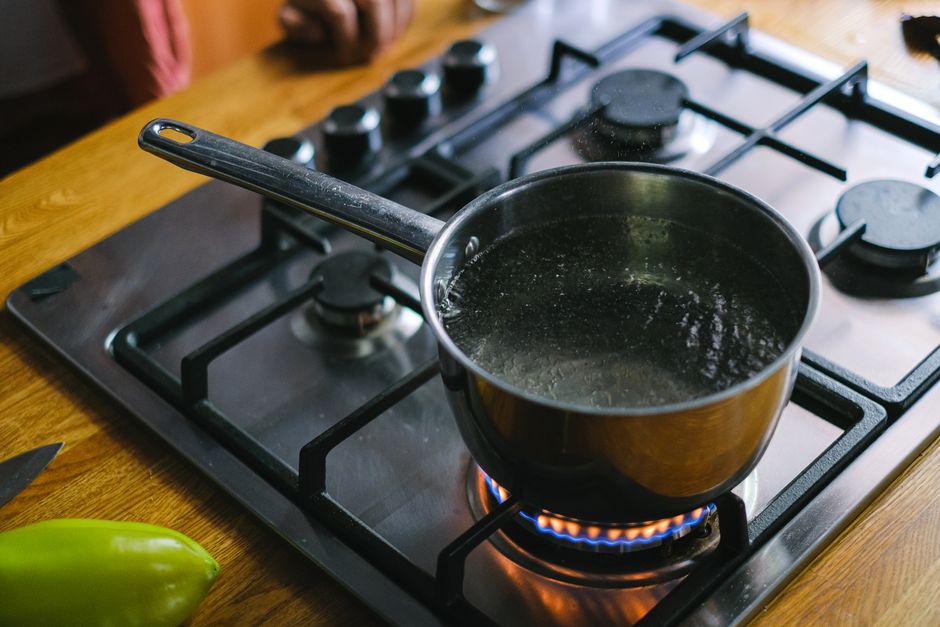
The sequence unfolds in fractions of a second. First, the water begins to boil violently. Without atmospheric pressure holding it together, the liquid's surface molecules escape rapidly. This isn't the gentle simmering you see in a kettle. The entire volume tries to vaporize at once, creating turbulent bubbling throughout.

But here's the twist: boiling is an endothermic process. It requires energy. As water molecules break free and turn to vapor, they carry away heat energy. This evaporative cooling rapidly chills the remaining liquid. Within moments, the water's temperature drops below its freezing point. Ice crystals begin forming even as other portions continue boiling.

The final result depends on the water's initial temperature and the surrounding conditions. Some water escapes as vapor and disperses into space. Some freezes into ice particles. Astronauts who've witnessed water releases during spacewalks report seeing a brief cloud of mist followed by tiny ice crystals floating away. The entire transformation happens so quickly that both phase changes appear simultaneous to the human eye.

Comparing Phase Changes at Different Pressures

Location Pressure (pascals) Boiling Point Freezing Point
Sea level (Earth) 101,325 100°C 0°C
Mount Everest summit ~33,700 ~70°C 0°C
Commercial airplane cabin ~75,000 ~90°C 0°C
Triple point 611.657 0.01°C 0.01°C
Space (near-vacuum) ~0 Below 0°C 0°C (but liquid cannot exist)

Why This Matters for Space Exploration

Understanding how water behaves in vacuum isn't just fascinating trivia—it's essential for keeping astronauts alive. NASA and other space agencies must carefully manage water supplies aboard spacecraft and space stations. Life support systems, cooling loops, and drinking water storage all need to account for pressure differentials.

When astronauts perform spacewalks, any moisture in their suits could potentially freeze or boil depending on whether it's exposed to vacuum or contained under pressure. Engineers design spacesuits with multiple layers and pressure controls to prevent this. The cooling systems in spacesuits use water circulation, but that water must remain pressurized to stay liquid.

The same principles affect how spacecraft dispose of wastewater. Simply venting liquid water into space would create ice particles that could damage delicate equipment or contaminate scientific experiments. Instead, systems are designed to control the release or recycle water through closed-loop systems.

The Everyday Wonder of Atmospheric Pressure

This space phenomenon highlights something we rarely appreciate: Earth's atmosphere does remarkable work. That invisible blanket of air pressing down on everything—about 14.7 pounds per square inch at sea level—creates the stable conditions that make liquid water possible across most of our planet's surface.

Without atmospheric pressure, Earth's oceans would boil away and freeze simultaneously, leaving behind a barren ice-covered rock or a desiccated wasteland. The narrow band of pressure and temperature that allows liquid water to exist is one reason why Earth supports such abundant life. We live in a sweet spot that seems ordinary only because we've never experienced anything else.

You can explore this principle yourself with simpler experiments. A vacuum chamber demonstration—common in science museums—shows water boiling at room temperature when air is pumped out. It's the same physics, just not taken to space's extreme. Even cooking at high altitude teaches the lesson: lower pressure means lower boiling points and longer cooking times.

Frequently Asked Questions

Would a human body boil or freeze in space?

Neither immediately. While exposed body fluids would boil due to low pressure, your body's internal pressure and skin would prevent instant boiling. You'd lose consciousness in about 15 seconds from lack of oxygen, and the moisture on your tongue and eyes would boil, but you wouldn't explode or instantly freeze as movies suggest.

Can water exist as a liquid anywhere in space?

Yes, but only under pressure. Water remains liquid inside pressurized spacecraft, spacesuits, and potentially beneath the icy surfaces of moons like Europa or Enceladus, where internal pressure from overlying ice could maintain liquid oceans.

Why doesn't the triple point happen naturally on Earth?

Earth's atmospheric pressure at sea level is far too high. You'd need to climb to an altitude of about 60 kilometers—well above where airplanes fly—to reach pressures low enough. Even then, the temperature would need to be precisely controlled.

Do other liquids behave the same way in space?

Yes, all liquids have their own phase diagrams and triple points. Each substance has different pressure and temperature thresholds, but the underlying physics remains the same. Liquid nitrogen, carbon dioxide, and even liquid metals would exhibit similar dual phase-change behavior in vacuum conditions.

The next time you boil water for coffee or watch ice melt in a glass, remember that these everyday transitions depend entirely on the invisible weight of air above you. Space strips away that familiar context and reveals the strange, beautiful physics that govern matter everywhere in the universe. Water's ability to simultaneously boil and freeze reminds us that "normal" is just one possibility among many.
Unicorn Legend Origins: The Rhinoceros Misidentification

Unicorn Legend Origins: The Rhinoceros Misidentification

Unicorn Legend Origins: The Rhinoceros Misidentification

By Trivia Owl, Staff Writer — Published August 21, 2026

Table of Contents

The majestic unicorn, with its spiraling horn and pure white coat, has captivated human imagination for millennia. But the unicorn legend origins might surprise you—these mythical creatures likely stem from confused reports of very real animals. Travelers' tales of one-horned beasts, filtered through centuries of cultural telephone, transformed stocky rhinoceroses into elegant, magical horses. This fascinating case of mistaken identity reveals how myths emerge from fragments of truth, distorted by distance, language barriers, and the human tendency to embellish.

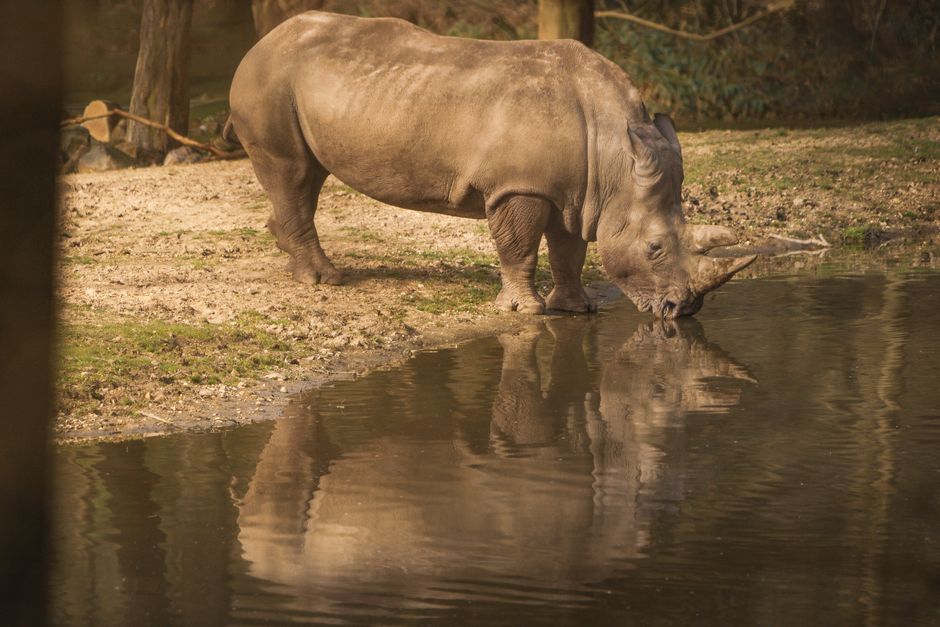
The connection between unicorns and rhinos isn't just speculation. Ancient texts describe "unicorns" with characteristics that match no horse but fit rhinoceroses perfectly: thick, gray skin, a love of wallowing in mud, and a decidedly un-dainty temperament.

Key Takeaways

  • Ancient Greek and Roman writers described unicorns based on secondhand accounts of Indian rhinoceroses, creating a mythology rooted in real animals.
  • The elasmotherium, an extinct giant rhinoceros with a massive single horn, may have survived long enough to inspire early unicorn stories in Eurasia.
  • Medieval Europeans believed unicorn horns (actually narwhal tusks) could detect and neutralize poison, selling them for astronomical sums.
  • Marco Polo reported seeing "unicorns" in Southeast Asia, then described them as ugly, mud-loving creatures—clearly rhinoceroses, not the elegant beasts Europeans imagined.
  • The biblical translation of the Hebrew word "re'em" as "unicorn" in the King James Bible cemented the creature's place in Western culture, though the word likely referred to wild oxen.

How Unicorn Legend Origins Trace Back to Ancient Misidentifications

When Greek physician Ctesias returned from Persia around 400 BCE, he brought tales of wild asses in India with white bodies, purple heads, and a single horn projecting from their foreheads. He claimed drinking from their horns protected against poison and disease. Ctesias never visited India himself—he compiled reports from Persian travelers who had ventured east. These descriptions, passing through multiple languages and cultures, likely started as accounts of Indian rhinoceroses.

The confusion makes sense. Imagine trying to describe a rhinoceros to someone who had never seen one, using only words, across language barriers. The animal's massive size, unusual horn, and exotic origin would make it seem almost mythical. Details would shift with each retelling. The thick, gray hide might become white in translation. The single horn would remain the most striking feature.

Roman naturalist Pliny the Elder described the "monoceros" (one-horn) as having the body of a horse, head of a stag, feet of an elephant, tail of a boar, and a single black horn. This jumbled description reads like a committee's attempt to reconstruct an animal from conflicting reports. The elephant feet suggest rhinoceros influence—no horse has feet remotely resembling an elephant's.

The Elasmotherium Connection

An even more intriguing possibility involves the elasmotherium, sometimes called the "Siberian unicorn." This extinct rhinoceros species stood over six feet tall at the shoulder and sported an enormous horn that may have reached six feet in length. Unlike modern rhinos with their relatively modest horns, the elasmotherium's single horn would have been truly spectacular.

For decades, scientists believed elasmotherium died out 350,000 years ago. Recent fossil discoveries pushed that timeline forward dramatically. Some specimens may have survived until roughly 29,000 years ago, overlapping with human populations in Eurasia. If ancient peoples encountered these massive, genuinely unicorn-like creatures, the stories would have persisted through oral tradition, eventually merging with rhinoceros reports from distant lands.

The combination of living rhinoceros accounts and inherited memories of elasmotherium could explain why unicorn legends appear across such diverse cultures. The myth had multiple sources of reinforcement.

Medieval Europe's Unicorn Horn Trade

Medieval Europeans never saw unicorns, but they desperately wanted their horns. The supposed magical properties—neutralizing poison, purifying water, curing disease—made unicorn horns more valuable than gold. Royalty and nobles paid fortunes for these treasures, which they displayed as status symbols and used as primitive medical devices.

There was just one problem: these "unicorn horns" came from narwhals. The narwhal, a whale species native to Arctic waters, grows a single spiraling tusk that can exceed eight feet in length. When Scandinavian and Russian traders brought these tusks south, European buyers accepted them as genuine unicorn horns. The spiral pattern seemed to confirm the magical nature of the object.

The deception wasn't necessarily intentional. Many traders probably didn't know narwhals existed. They purchased mysterious spiral horns from northern sources and sold them as unicorn horns because that's what buyers wanted. Queen Elizabeth I reportedly owned a narwhal tusk valued at £10,000—enough to buy a castle.

Marco Polo's Reality Check

When Marco Polo traveled through Southeast Asia in the 13th century, he encountered what locals called unicorns. His description shattered European fantasies. These "unicorns," he wrote, were nothing like the delicate creatures of legend. They had thick legs like elephants, hair like buffalo, and spent their time wallowing in mud. They were ugly and dangerous.

Polo had seen Javan rhinoceroses. His honest account should have ended the unicorn myth, but Europeans simply concluded that Asian unicorns must be a different, inferior species. The "true" unicorn—white, graceful, pure—remained safely in the realm of imagination, untainted by muddy reality.

This selective belief reveals how powerful myths can be. When facts contradicted the legend, people adjusted the facts rather than abandoning the myth.

Comparing Real One-Horned Animals

Animal Horn/Tusk Length Geographic Range Contribution to Unicorn Legend
Indian Rhinoceros 8-24 inches South Asia Primary source of ancient Greek and Roman unicorn descriptions
Javan Rhinoceros 10 inches (often smaller) Southeast Asia The "unicorn" Marco Polo described in his travels
Elasmotherium (extinct) Up to 6 feet (estimated) Eurasia Possible source of ancient Eurasian unicorn folklore
Narwhal 5-10 feet Arctic waters Source of medieval "unicorn horns" sold across Europe

Cultural Transformations of the Myth

As the unicorn legend traveled west from India through Persia and into Europe, it transformed. The rhinoceros's bulk melted away. Its gray hide whitened. Its aggressive temperament softened into gentleness. Medieval European artists, who had never seen either a rhinoceros or a unicorn, depicted the creature based on cultural ideals rather than zoological reality.

Christian symbolism adopted the unicorn as a representation of purity and Christ himself. The famous unicorn tapestries, woven in the late 15th century, show an elegant white creature in a garden setting—about as far from a mud-wallowing rhinoceros as imagination allows. The myth had completely severed from its origins.

This transformation wasn't unique to unicorns. Many legendary creatures started as garbled reports of real animals. Dragons may derive from dinosaur fossil discoveries or exaggerated crocodile accounts. The kraken likely originated with giant squid sightings. Humans have always struggled to accurately communicate encounters with unfamiliar animals, and the gaps fill with imagination.

Frequently Asked Questions

Did unicorns ever actually exist?

No single-horned horse ever existed, but the elasmotherium—a giant rhinoceros species with one massive horn—lived until roughly 29,000 years ago and may have inspired early unicorn legends. Modern rhinoceroses, particularly the Indian species, contributed to ancient descriptions of unicorns.

Why did people believe unicorn horns had magical powers?

Medieval Europeans attributed magical properties to unicorn horns (actually narwhal tusks) based on ancient texts claiming they could neutralize poison and cure disease. The rarity and exotic appearance of these spiral tusks reinforced belief in their supernatural powers, making them status symbols for royalty.

What animal is most responsible for the unicorn legend?

The Indian rhinoceros is the primary source of ancient Greek and Roman unicorn descriptions. Travelers' secondhand reports of these one-horned creatures from India were filtered through multiple languages and cultures, transforming the stocky, gray rhinoceros into the elegant white unicorn of mythology.

When did people stop believing unicorns were real?

Belief in unicorns persisted well into the Renaissance, with many educated Europeans accepting their existence until the 17th century. Scientific exploration and better zoological knowledge gradually revealed that "unicorn horn" came from narwhals and that unicorn descriptions matched known rhinoceros species.

The next time you see a unicorn on a child's backpack or a corporate logo, remember the muddy, short-tempered rhinoceros that started it all. The most enchanting myths often have the most surprising origins—and sometimes the truth is just as fascinating as the legend, even if it's considerably less elegant and spends more time wallowing in swamps.