






1 / 10 Questions
0 Points

What common office supply was originally called a 'Gem'?

Paper clip

Stapler

Rubber band

Push pin

Points won
0
Correct score
0%

More Questions

9 Strange Facts About Venus Flytraps Counting Touch Signals

Venus flytraps count touch signals before snapping shut on prey. Discover 9 strange facts about these carnivorous plants and their hunting abilities.

Did You Know Vampires Cannot Cross Running Water

Vampire legends reveal why the undead cannot cross running water. Discover the folklore origins behind this enduring supernatural boundary and protection.

Which ice cream bar came from a boy’s tough choice?

Which ice cream bar came from a boy's tough choice? Question 1: Which ice cream bar came from a boy's tough choice? A. Edy's Pie B. Klondike...

More Articles

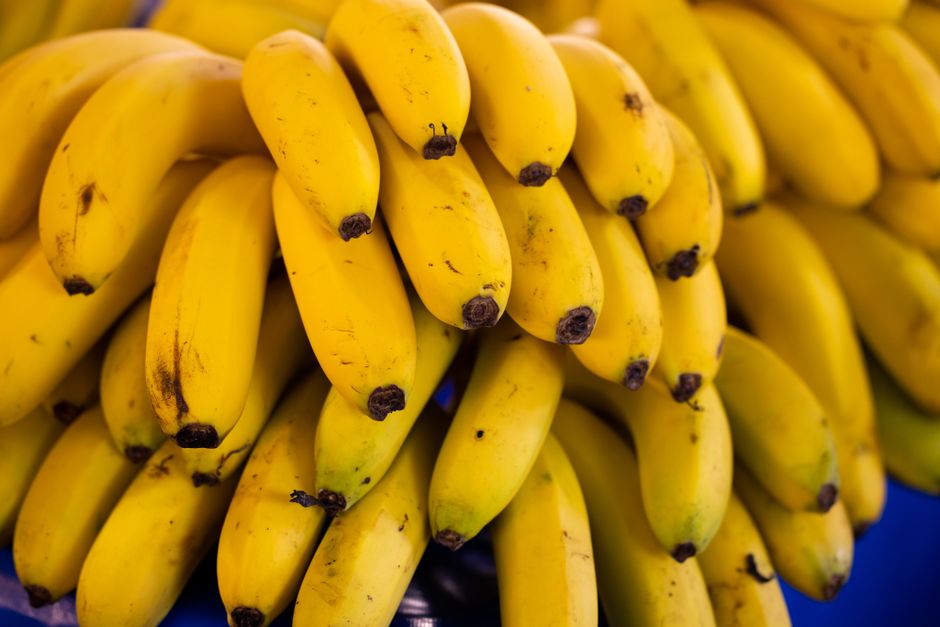
Why Bananas Are Radioactive and Perfectly Safe to Eat

Why Bananas Are Radioactive and Perfectly Safe to Eat

Why Bananas Are Radioactive and Perfectly Safe to Eat

By Trivia Owl, Staff Writer — Published September 26, 2026

Table of Contents

Every banana you've ever eaten has been radioactive. This surprising trivia isn't a cause for alarm—it's a fascinating glimpse into the natural world around us. Bananas are radioactive because they contain potassium, and a tiny fraction of all potassium on Earth is radioactive. The amazing part? You'd need to eat millions of bananas in one sitting to experience any harm. This curious fact about everyday fruit opens the door to discover how radiation exists all around us, in our food, our bodies, and even the air we breathe.

Understanding why bananas are radioactive and perfectly safe reveals one of nature's most interesting paradoxes: radiation is everywhere, yet most of it poses no danger whatsoever. The story behind radioactive bananas combines chemistry, physics, and the reassuring truth that our bodies have evolved to handle the natural radiation we encounter daily.

Key Takeaways

  • Bananas contain potassium-40, a naturally occurring radioactive isotope that makes them measurably radioactive.
  • The "banana equivalent dose" is a real unit scientists use to communicate low levels of radiation exposure to the public.
  • You would need to eat approximately 10 million bananas at once to receive a fatal radiation dose.
  • Your own body is more radioactive than a single banana due to the potassium, carbon-14, and other isotopes you naturally contain.
  • Natural background radiation from soil, rocks, cosmic rays, and food contributes far more to your annual exposure than any banana consumption.
  • The human body maintains strict potassium balance, quickly eliminating excess through urine regardless of banana intake.

The Potassium Connection: Why Bananas Are Radioactive and Perfectly Natural

Potassium is essential for life. Every cell in your body depends on it to function properly, from nerve signals to muscle contractions. Bananas are famously rich in potassium, which is exactly what makes them radioactive. About 0.012% of all naturally occurring potassium is potassium-40, an isotope with an unstable nucleus that decays over time, releasing radiation in the process.

This isn't unique to bananas. Any food high in potassium—including sweet potatoes, spinach, white beans, avocados, and Brazil nuts—contains the same radioactive isotope. Bananas simply became the poster child for edible radiation because they're common, portable, and contain a consistent, measurable amount of potassium-40. A typical banana contains about 450 milligrams of potassium, of which roughly 0.05 milligrams is the radioactive variety.

The radiation emitted is primarily beta particles and gamma rays, both forms of ionizing radiation. But the dose is extraordinarily small. A single banana delivers approximately 0.1 microsieverts of radiation—a measurement so tiny it requires scientific notation to appreciate. For context, a chest X-ray delivers about 100 microsieverts, making it equivalent to eating 1,000 bananas in terms of radiation exposure.

The Banana Equivalent Dose: When Scientists Get Creative

Nuclear engineers and health physicists face a communication challenge: how do you explain radiation doses to people unfamiliar with sieverts, grays, or rems? Enter the banana equivalent dose, an informal unit that compares radiation exposure to eating a single banana. While not used in official scientific literature, this concept helps illustrate that low-level radiation is part of everyday life.

The banana equivalent dose works because it's relatable. Telling someone they received 5 microsieverts from a dental X-ray might not resonate, but saying it's like eating 50 bananas suddenly makes sense. The comparison humanizes an abstract concept and provides much-needed perspective on what constitutes dangerous versus negligible radiation.

However, the analogy has limitations. Your body doesn't accumulate potassium-40 from bananas because it maintains tight homeostatic control over potassium levels. Eat a banana, and your kidneys will excrete an equivalent amount of potassium in your urine within hours. This means banana radiation doesn't build up over time—each banana is a zero-sum game for your body's radioactivity.

How Radioactive Are You?

Here's a mind-blowing truth: you are more radioactive than a banana. The average human body contains about 140 grams of potassium, meaning you're carrying around 16 milligrams of potassium-40 at any given moment. That's roughly 280 times more radioactive potassium than a single banana contains.

But potassium-40 isn't your only internal radiation source. Carbon-14, another naturally occurring radioactive isotope, exists in every carbon-based molecule in your body. Your DNA, proteins, and fats all contain trace amounts of this isotope, which is constantly created in the atmosphere by cosmic rays and absorbed through the food chain. Together, these natural isotopes make the human body emit approximately 4,000 to 5,000 beta particles every second.

This internal radiation has been part of life on Earth for billions of years. Our cells have evolved sophisticated DNA repair mechanisms to fix the occasional damage caused by radioactive decay. The dose is so low and so constant that it's considered part of the baseline against which all other radiation exposures are measured.

Comparing Natural Radiation Sources

Source Approximate Dose (microsieverts) Banana Equivalents
One banana 0.1 1
Sleeping next to someone for 8 hours 0.05 0.5
Living in a brick house for one year 70 700
Round-trip flight New York to Los Angeles 40 400
Annual background radiation (U.S. average) 3,000 30,000
Chest X-ray 100 1,000

Why You Can't Get Radiation Poisoning from Bananas

The dose makes the poison. Radiation becomes dangerous when it's intense enough or sustained enough to damage cells faster than your body can repair them. Acute radiation sickness requires exposure of at least 1 million microsieverts over a short period. To reach that threshold from bananas alone, you'd need to eat roughly 10 million bananas immediately.

Physical impossibility aside, your body's potassium regulation would prevent accumulation long before radiation became an issue. Hyperkalemia—dangerously high potassium levels in the blood—would occur after eating just a few hundred bananas in rapid succession, causing cardiac arrest well before radiation poisoning could develop. Nature has built-in safeguards that make banana-induced radiation exposure essentially impossible.

The radioactive decay of potassium-40 has a half-life of 1.25 billion years, meaning it decays extremely slowly. This glacial pace ensures that the radiation released at any given moment is minimal. By the time all the potassium-40 in a banana has decayed, the Earth will be unrecognizable, the Sun will have expanded into a red giant, and humanity will have long since vanished or evolved into something unimaginable.

Frequently Asked Questions

Are organic bananas less radioactive than conventional bananas?

No. Radioactivity in bananas comes from naturally occurring potassium-40, which exists in all potassium regardless of farming methods. Organic and conventional bananas contain essentially identical amounts of radioactive material.

Can radiation detectors actually detect a banana?

Yes. Sensitive radiation detectors can measure the gamma rays emitted by potassium-40 in bananas. Truckloads of bananas have occasionally triggered radiation alarms at border crossings and security checkpoints designed to detect smuggled radioactive materials.

What food is the most radioactive?

Brazil nuts are significantly more radioactive than bananas due to high concentrations of radium absorbed from the soil. A single Brazil nut can deliver up to 10 times more radiation than a banana, though still a perfectly safe amount.

Does cooking a banana reduce its radioactivity?

No. Cooking doesn't change the atomic structure of potassium-40. Whether raw, baked, fried, or blended, bananas retain the same level of natural radioactivity because the isotope remains stable through heat and processing.

The radioactive banana reminds us that radiation isn't always the invisible monster portrayed in popular culture. It's woven into the fabric of existence, from the potassium in our muscles to the cosmic rays streaming down from space. Every breath, every meal, every moment of life on this planet involves tiny amounts of radiation that our bodies handle effortlessly. That humble banana sitting on your counter isn't just a convenient snack—it's a tiny ambassador from the atomic world, perfectly safe and quietly decaying one nucleus at a time.

Why Wombats Produce Cube-Shaped Poop: Science Explained

Why Wombats Produce Cube-Shaped Poop: Science Explained

Why Wombats Produce Cube-Shaped Poop: Science Explained

By Trivia Owl, Staff Writer — Published September 18, 2026

Table of Contents

In the animal kingdom, few biological facts spark as much curiosity as this one: wombats produce cube-shaped poop. Yes, you read that correctly. These stocky, burrowing marsupials native to Australia are the only known mammals to excrete waste in the form of neat, stackable cubes. It's one of nature's most surprising and fascinating mysteries, and scientists have spent years trying to discover exactly how and why this happens.

This isn't just a fun piece of trivia to share at parties. The cube-shaped droppings reveal amazing insights into digestive anatomy, territorial behavior, and the ingenious ways evolution solves problems. Let's explore the science behind this extraordinary phenomenon.

Key Takeaways

  • Wombats are the only mammals known to produce cube-shaped feces, with each dropping measuring roughly two centimeters per side.
  • The cube shape forms in the final portion of the intestine through differential elasticity in the intestinal walls, not through a cube-shaped anus.
  • Wombats stack their cubic droppings on rocks and logs to mark territory, and the shape prevents them from rolling away.
  • The intestinal process takes approximately 14 to 18 days, making wombat digestion among the slowest of all mammals.
  • Research into wombat intestinal mechanics has potential applications in manufacturing and soft-tissue engineering.
  • Wombats can produce between 80 and 100 individual cubes each night during their territorial marking activities.

How Wombats Produce Cube-Shaped Droppings: The Intestinal Mystery

For decades, the mechanism behind cubic wombat feces puzzled biologists. The shape doesn't form in a cube-shaped rectum or anus, as some initially theorized. Instead, research has revealed that the cube formation happens in the final sections of the wombat's intestine, where the material is still soft and pliable.

The intestinal walls have varying degrees of elasticity. Some sections stretch easily, while others remain stiff and rigid. As the intestinal muscles contract in rhythmic waves, they squeeze the fecal matter into distinct corners and flat sides. This differential elasticity creates the sharp edges and flat faces that define a cube. By the time the waste reaches the end of the digestive tract, it has solidified into its distinctive geometric shape.

The process is remarkably slow. Wombats have one of the longest digestive transit times of any mammal, taking roughly two weeks to fully process their food. This extended digestion allows maximum nutrient extraction from their fibrous, plant-based diet and gives the intestinal walls plenty of time to mold the waste into cubes.

The Physics of Soft Tissue Shaping

Scientists have studied wombat intestinal tissue to understand the exact physics at play. The intestinal walls contain varying thicknesses of muscle layers, and the stiffness changes around the circumference. When peristaltic contractions move material through these regions, the softer areas bulge outward while the stiffer regions maintain straight edges. This creates corners where stiff sections meet.

Mathematical models show that this process produces shapes with four to eight sides, and wombats have evolved the precise tissue arrangement to consistently produce six-sided cubes. The discovery has interested engineers studying soft robotics and manufacturing processes that shape flexible materials without rigid molds.

Why Evolution Favored Cubic Poop: The Territorial Advantage

Function drives form in evolution, so the interesting question becomes: why cubes? The answer lies in wombat behavior and habitat.

Wombats are territorial animals that communicate through scent marking. They strategically place their droppings on elevated surfaces like rocks, fallen logs, and prominently visible spots around their territory. These markers convey information to other wombats about boundaries, breeding status, and individual identity.

Here's where geometry matters. Spherical or cylindrical droppings would roll off these elevated surfaces, especially on Australia's often-sloped terrain. Cubic shapes, however, stay exactly where they're placed. The flat sides and sharp corners prevent rolling, ensuring the scent markers remain in their intended locations. This stability makes the territorial communication system far more effective.

Wombats take their marking seriously. A single wombat can deposit between 80 and 100 individual cubes in a single night, carefully positioning them to create a network of scent posts throughout its range. The cubes also stack neatly, creating visible piles that serve as both olfactory and visual signals.

Wombat Digestive Adaptations: Built for Efficiency

The cube-forming intestine is just one part of the wombat's highly specialized digestive system. These marsupials are hindgut fermenters, meaning they extract nutrients through bacterial fermentation in an enlarged colon and cecum, similar to horses and rabbits.

Their diet consists primarily of tough, fibrous grasses, roots, and bark—materials low in nutrients and difficult to digest. The remarkably slow transit time compensates for this poor-quality food source, squeezing every possible calorie from each meal. Wombats also have continuously growing teeth, an adaptation to their abrasive diet that would otherwise wear down tooth enamel rapidly.

Water conservation plays a crucial role too. Wombats live in some of Australia's driest regions, and their digestive system extracts nearly all moisture from food. The resulting feces are exceptionally dry and dense, which helps maintain the cubic shape once formed. This efficiency allows wombats to survive in environments where many other herbivores would struggle.

Comparing Wombat Species and Their Cubic Production

Wombat Species Size (Adult Weight) Habitat Cube Production
Common Wombat 20–35 kg Southeastern Australia, Tasmania 80–100 cubes nightly
Southern Hairy-Nosed Wombat 19–32 kg Southern Australia (semi-arid) Similar production, drier cubes
Northern Hairy-Nosed Wombat 25–40 kg Queensland (critically endangered) Similar production, limited data

All three wombat species produce cubic feces, though the Northern Hairy-Nosed Wombat is so rare—with fewer than 300 individuals remaining in the wild—that detailed behavioral studies remain limited. Conservation efforts focus on protecting their remaining habitat in Queensland's Epping Forest National Park.

Scientific Research and Unexpected Applications

The wombat's cubic poop has captured attention beyond zoology. Researchers studying the intestinal mechanics have identified principles applicable to manufacturing and biomedical engineering. Understanding how soft tissues can shape materials without rigid external molds offers insights for processes ranging from food production to medical device design.

The research also contributes to our understanding of gastrointestinal mechanics across species. Comparative anatomy reveals how different mammals have evolved diverse intestinal structures to match their diets, habitats, and behaviors. The wombat represents an extreme example of form following function in digestive evolution.

Wildlife biologists use wombat droppings as non-invasive monitoring tools. The distinctive cubes make field surveys straightforward, and DNA analysis of the feces provides information about population genetics, health status, and diet without disturbing the animals. This proves particularly valuable for studying the critically endangered Northern Hairy-Nosed Wombat.

Frequently Asked Questions

Do wombats have cube-shaped anuses?

No, wombat anuses are round like other mammals. The cube shape forms in the last portion of the intestine through varying elasticity in the intestinal walls, and the cubes emerge fully formed.

Are wombats the only animals with unusually shaped poop?

Wombats are unique in producing cubes, but other animals have distinctive feces. Caterpillars produce tiny hexagonal pellets, and some bat species create segmented droppings, though none match the geometric precision of wombat cubes.

How long does it take a wombat to produce a single cube?

The entire digestive process takes 14 to 18 days from eating to excretion. The actual cube formation happens gradually over the final portion of this journey as material passes through the specialized intestinal sections.

Can you keep wombat poop as a souvenir?

Wombat droppings are dry and stable, making them popular novelty items in Australia. Some gift shops sell varnished wombat cubes, though collecting them from the wild may be restricted in protected areas and national parks.

The next time you encounter a surprising fact about the natural world, remember the humble wombat and its geometric droppings. Evolution doesn't always follow the paths we expect, and sometimes the most curious adaptations—stackable poop included—reveal the elegant problem-solving that shapes life on Earth.