











Ad Space
1 / 10 Questions
0 Points

What is the approximate silica content required for sand to produce singing sounds?

30-40%

70-80%

50-60%

90-95% or higher

Points won
0
Correct score
0%
Ad Space

More Questions

#N/A

⏱️ 5 min read Understanding the #N/A Error: A Comprehensive Guide The #N/A error is one of the most commonly encountered error values in spreadsheet applications,...

Top 10 Coldest Places on Earth

⏱️ 8 min read Top 10 Coldest Places on Earth Earth's most frigid locations present some of the harshest environments imaginable, where temperatures plunge to extremes...

Top 10 Rarest Animals

⏱️ 6 min read Top 10 Rarest Animals on Earth: A Journey into Critical Endangerment The natural world harbors countless species, each playing a vital role...

More Articles

Top 10 Strangest World Records

Top 10 Strangest World Records

⏱️ 6 min read

Top 10 Strangest World Records

The Guinness World Records has been documenting extraordinary human achievements and bizarre feats since 1955. While many records celebrate athletic prowess or scientific breakthroughs, some entries venture into the realm of the truly peculiar. These strange records showcase human creativity, determination, and sometimes sheer eccentricity. From unusual body modifications to bizarre collections, the world of strange records reveals the limitless boundaries of human ambition when it comes to being recognized for something unique. Here are ten of the strangest world records ever officially documented.

1. Longest Fingernails on a Pair of Hands (Ever)

Lee Redmond of the United States held the record for the longest fingernails ever grown on a pair of hands. She started growing her nails in 1979 and carefully manicured them for decades. By 2008, her nails had reached a combined length of 28 feet 4.5 inches (8.65 meters), with the longest individual nail measuring over 2.5 feet. Unfortunately, she lost her nails in a car accident in 2009, but her record remains unbroken in the "ever" category. This dedication required constant care and adjustment to daily activities, making it one of the most commitment-intensive records.

2. Most Bees on the Body

In 2014, Ruan Liangming from China broke the world record by covering his body with an estimated 637,000 bees weighing approximately 140 pounds (63.5 kilograms). This dangerous feat required years of experience working with bees and understanding their behavior. The record holder remained covered in the swarm for extended periods, demonstrating remarkable composure and trust in his relationship with the insects. This record represents one of the most dangerous and anxiety-inducing achievements in the record books.

3. Largest Collection of Rubber Ducks

Charlotte Lee from the United States holds the record for the largest collection of rubber ducks, with 9,631 different rubber ducks as of 2023. Her collection, which began in 1996, features ducks of every imaginable variety, from classic yellow duckies to themed characters and promotional items. The collection requires significant storage space and meticulous organization. This record demonstrates how a simple childhood toy can evolve into a lifelong passion and an officially recognized achievement.

4. Stretchiest Skin

Gary Turner from the United Kingdom holds the record for the stretchiest skin, able to stretch the skin of his stomach to 6.25 inches (15.8 centimeters). This unusual ability results from a rare medical condition called Ehlers-Danlos Syndrome, a disorder affecting connective tissues. While this condition can cause various health challenges, Turner has embraced his unique characteristic and holds the record for this extraordinary physical trait. His record highlights how medical conditions can sometimes manifest in record-breaking ways.

5. Most Spoons Balanced on the Face

Etibar Elchiyev from Georgia achieved the peculiar feat of balancing 53 metal spoons on his face and head simultaneously in 2013. The spoons were placed across his forehead, nose, chin, cheeks, and other facial areas, all adhering through natural skin contact without any adhesives. This record requires a specific type of skin texture and incredible patience to achieve the perfect balance. It represents one of the more unusual demonstrations of facial balance and control.

6. Longest Duration Balancing a Lawnmower on the Chin

Ashrita Furman, who holds more Guinness World Records than any other individual, achieved the record for balancing a running lawnmower on his chin for 3 minutes and 52 seconds in 2015. This dangerous and unusual feat combines balance, strength, and remarkable focus. The record showcases the extreme lengths some individuals will go to achieve recognition, even with everyday objects like gardening equipment. Furman's collection of over 200 records includes many similarly bizarre achievements.

7. Most Big Macs Consumed in a Lifetime

Donald Gorske from the United States has consumed over 34,000 Big Mac hamburgers since 1972, eating at least one nearly every day for over five decades. He maintains detailed records of his consumption and credits the burger as his primary food source. Despite this unusual diet, he has maintained relatively good health, defying conventional nutritional wisdom. His record represents an extraordinary level of dietary consistency and brand loyalty that spans generations.

8. Farthest Eyeball Pop

Kim Goodman from the United States can pop her eyeballs out of her eye sockets by 0.47 inches (12 millimeters). This unusual ability, known as globe luxation, was discovered accidentally when she was hit on the head with a hockey mask. She can now perform this feat on demand, holding the record since 1998. This biological oddity represents one of the more visually striking and unsettling world records, demonstrating an extreme range of human physical variation.

9. Heaviest Weight Lifted by Tongue

Thomas Blackthorne from the United Kingdom lifted 27 pounds 8.96 ounces (12.5 kilograms) with his tongue in 2022. This extraordinary feat of tongue strength required specialized training and a custom apparatus to safely attach the weight. The record demonstrates that virtually any body part can be trained to perform extraordinary feats with sufficient dedication. This unusual strength record stands as one of the more creative applications of human muscular capability.

10. Longest Time Living with a Bullet in the Head

William Lawlis Pace survived with a bullet lodged in his head for 94 years after being accidentally shot at age 8 in 1917. The bullet remained in his skull until his death at age 103 in 2012, never causing sufficient problems to warrant its surgical removal. This record represents an extraordinary case of human resilience and adaptation, as his body adjusted to the foreign object over nearly a century. It stands as a testament to both medical anomaly and human survival capability.

Conclusion

These ten strange world records illustrate the remarkable diversity of human achievement and the unexpected ways people seek recognition and immortality in the record books. From physical oddities to bizarre collections and dangerous feats, these records push the boundaries of what we consider normal human behavior and capability. They remind us that world records aren't just about being the fastest or strongest, but also about celebrating the unique, the unusual, and the utterly unexpected aspects of human existence. Whether motivated by passion, physical uniqueness, or sheer determination to be remembered for something distinctive, these record holders have certainly achieved their goal of standing out from the crowd in the most memorable ways possible.
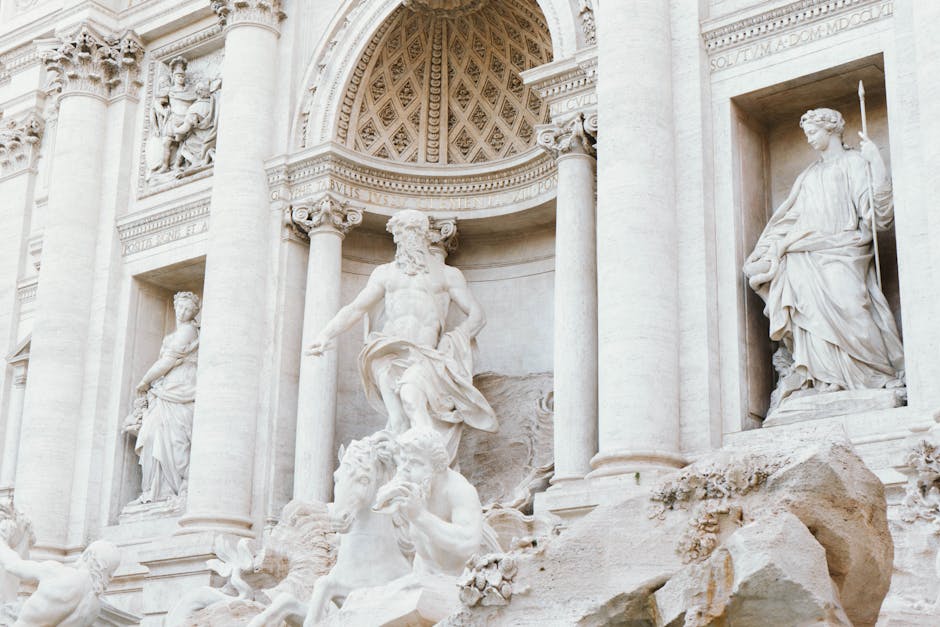
Did You Know? 12 Facts About Greek Gods

Did You Know? 12 Facts About Greek Gods

⏱️ 7 min read

Did You Know? 12 Facts About Greek Gods

The Greek pantheon has captivated humanity for millennia, inspiring countless works of art, literature, and philosophy. These divine beings, with their complex personalities and dramatic tales, formed the cornerstone of ancient Greek religion and continue to influence modern culture. While many people are familiar with the basic stories of Zeus, Athena, and Poseidon, the mythology surrounding these gods contains numerous fascinating details that often go unnoticed. Here are twelve intriguing facts about the Greek gods that reveal the depth and complexity of ancient Greek mythology.

1. Zeus Was Not the First Ruler of the Gods

Before Zeus claimed his throne on Mount Olympus, the cosmos was ruled by the Titans, led by Cronus, Zeus's own father. Cronus himself had overthrown his father Uranus, establishing a pattern of succession through conflict. Zeus and his siblings waged a ten-year war called the Titanomachy against the Titans before finally establishing the Olympian order. This fact reveals that even the king of the gods had to fight for his position, reflecting the Greek understanding that power must be earned and defended.

2. Athena Was Born From Zeus's Head

One of the most unusual birth stories in mythology belongs to Athena, the goddess of wisdom and warfare. According to legend, Zeus swallowed her mother Metis while she was pregnant, fearing a prophecy that their child would overthrow him. Athena subsequently emerged fully grown and armored from Zeus's head, which Hephaestus split open with an axe. This extraordinary birth emphasized her association with intellect and strategy, as she literally came from the mind of the king of gods.

3. Hades Was Not Actually Evil

Modern interpretations often portray Hades as a villainous figure, but ancient Greeks viewed him quite differently. As the god of the underworld, Hades was stern and unyielding but also fair and just. He rarely left his realm and was actually one of the most faithful husbands among the gods. The Greeks feared him not because he was evil, but because death itself was frightening and inevitable. His name was so respected that people often avoided saying it directly, using euphemisms instead.

4. Aphrodite Has Two Different Origin Stories

The goddess of love and beauty has two distinct birth narratives in Greek mythology. In Homer's version, she is the daughter of Zeus and the Titaness Dione. However, in Hesiod's account, she was born from the sea foam created when Cronus threw Uranus's severed genitals into the ocean. This second version, which gave her the epithet "Aphrodite Anadyomene" (risen from the sea), became the more popular and was famously depicted in Botticelli's "The Birth of Venus." These competing stories reflect different traditions that existed in various regions of ancient Greece.

5. Apollo Had a Twin Sister

Apollo, the god of music, poetry, and the sun, shared his birthday with Artemis, goddess of the hunt and the moon. According to myth, their mother Leto struggled to find a place to give birth because Hera, jealous of Zeus's infidelity, had forbidden any land to shelter her. Artemis was born first and immediately helped deliver her brother, which explained her role as a protector of women in childbirth despite being a virgin goddess. This twin relationship symbolized the balance between masculine and feminine divine forces.

6. Dionysus Was Born Twice

Dionysus, the god of wine, festivity, and theater, experienced a unique double birth. His mortal mother Semele died while pregnant after being tricked by Hera into asking Zeus to reveal his true form. Zeus rescued the unborn Dionysus and sewed him into his own thigh until the baby reached full term. This second birth made Dionysus "twice-born" and partially explained his dual nature as both a god and someone who understood mortal suffering. He was also the only Olympian to have a mortal parent.

7. Hephaestus Was Thrown From Olympus Twice

Hephaestus, the god of fire and metalworking, suffered the indignity of being cast from Mount Olympus on two separate occasions. First, Hera threw him down because she was ashamed of his physical deformity at birth. Later, Zeus hurled him from the mountain for taking Hera's side in an argument. The fall from this second incident supposedly took an entire day and left him permanently lame. Despite these humiliations, Hephaestus became the divine craftsman, creating magnificent palaces, weapons, and artifacts for the gods.

8. Demeter's Grief Created the Seasons

The changing seasons were explained through the myth of Demeter and her daughter Persephone. When Hades abducted Persephone to be his wife in the underworld, Demeter's sorrow caused all crops to fail and the earth to become barren. Eventually, a compromise was reached where Persephone would spend part of the year with Hades and part with her mother. During the months when Persephone resides in the underworld, Demeter mourns and winter comes; when her daughter returns, the earth blooms again in spring and summer.

9. Hermes Was a Troublemaker From Birth

The messenger god Hermes displayed his cunning nature from infancy. On the day he was born, he escaped from his cradle, invented the lyre from a tortoise shell, and stole Apollo's cattle, cleverly making them walk backwards to confuse anyone tracking them. When confronted by Apollo, the infant Hermes charmingly talked his way out of punishment and even traded the lyre he had invented for ownership of the cattle. This precocious beginning established his reputation as the god of thieves, travelers, and commerce.

10. Ares Was Not Respected Despite Being a War God

Unlike Athena, who represented strategic warfare, Ares embodied the brutal, chaotic aspects of battle. Interestingly, the Greeks did not particularly admire him, and he appears in myths as cowardly, quick to complain, and frequently defeated. Even his own father Zeus reportedly said he was the most hateful of all the gods. This negative portrayal reflected Greek values that favored intelligence and strategy over brute force and bloodlust. The Romans, however, held their equivalent god Mars in much higher esteem.

11. Hestia Gave Up Her Olympian Seat

Originally, Hestia, goddess of the hearth and home, was one of the twelve Olympians. However, when Dionysus achieved godhood, she willingly relinquished her seat in the council to avoid conflict and maintain harmony. This sacrifice was consistent with her peaceful nature and her role as the goddess of domestic tranquility. Despite losing her official Olympian status, she remained highly honored in Greek society, with every meal beginning and ending with an offering to Hestia, and every city maintaining an eternal flame in her honor.

12. The Gods Required Worship to Maintain Their Power

An often-overlooked aspect of Greek mythology is that the gods needed human worship and sacrifice to sustain their immortality and power. The gods derived strength from the smoke of sacrifices, prayers, and devotion of mortals. This created a reciprocal relationship where humans honored the gods through ritual, and the gods provided protection, favor, and intervention in return. This interdependence explained why the gods were so invested in human affairs and why they demanded respect and proper worship.

Conclusion

These twelve facts reveal that Greek mythology was far more nuanced and complex than simplified modern retellings often suggest. From unusual births and family conflicts to moral lessons and explanations of natural phenomena, the stories of the Greek gods served multiple purposes in ancient society. They explained the inexplicable, provided moral guidance, justified social structures, and offered entertainment. Understanding these lesser-known details enriches our appreciation of how the ancient Greeks viewed their gods—not as distant, perfect beings, but as powerful entities with recognizable emotions, flaws, and motivations that mirrored and magnified human nature itself.