








Axolotl Regeneration: 7 Bizarre Facts About Regrowth
By TriviaOwl, Animals Desk — Published August 5, 2026
Table of Contents
- Key Takeaways
- Understanding Axolotl Regeneration: A Biological Marvel
- The Seven Most Bizarre Facts About Axolotl Regeneration
- Why Can't Other Animals Regenerate Like Axolotls?
- Conservation Status and Habitat Threats
- Frequently Asked Questions
The axolotl, a peculiar amphibian native to the lakes of Mexico, possesses one of nature's most astounding superpowers: the ability to regenerate entire limbs, organs, and even portions of its brain. While many creatures in the animal kingdom can heal wounds or regrow small body parts, few species match the axolotl's comprehensive regeneration capabilities. This bizarre talent has made the axolotl regeneration bizarre phenomenon a subject of intense scientific fascination, offering potential insights into human healing and tissue repair.
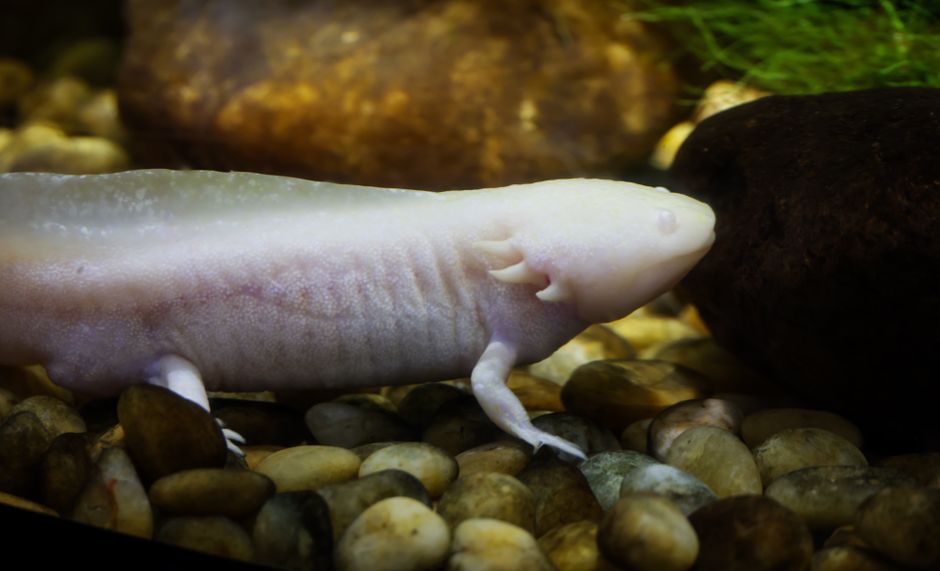
These permanently aquatic salamanders remain in their larval form throughout their lives, retaining their feathery external gills and never undergoing the typical amphibian metamorphosis. Beyond their unusual appearance, axolotls demonstrate regenerative abilities that seem almost magical, rebuilding complex structures with remarkable precision and speed.
Key Takeaways
- Axolotls can regenerate entire limbs, complete with bones, muscles, nerves, and blood vessels, multiple times throughout their lives without forming scar tissue.
- They can regrow portions of their heart, spinal cord, eyes, and even parts of their brain while maintaining normal function.
- The regeneration process involves cells reverting to a stem-cell-like state, allowing them to rebuild whatever structure was lost.
- Unlike most animals, axolotls experience no decline in regenerative ability as they age.
- Scientists study axolotl regeneration to potentially unlock therapeutic applications for human tissue repair and organ regeneration.
- The entire regeneration timeline from injury to fully functional limb takes approximately 40 to 50 days.
Understanding Axolotl Regeneration: A Biological Marvel
Axolotl regeneration works through a process fundamentally different from typical wound healing in mammals. When an axolotl loses a limb, specialized cells migrate to the injury site and form a structure called a blastema—a mass of undifferentiated cells similar to stem cells. These cells possess the remarkable ability to "remember" what they need to become, whether bone, muscle, nerve, or skin. The blastema essentially acts as a biological blueprint, orchestrating the reconstruction of the lost appendage with extraordinary fidelity.
What makes this process truly bizarre is the precision involved. The regenerated limb isn't a simplified version or approximate replacement. It's a perfect reconstruction, complete with the correct number of digits, proper skeletal structure, functional joints, and fully integrated nervous system. The new limb connects seamlessly to existing tissue, restoring full mobility and sensation. This level of biological engineering occurs without conscious direction, guided entirely by cellular communication and genetic programming that scientists are still working to fully understand.
The Seven Most Bizarre Facts About Axolotl Regeneration
1. They Can Regrow the Same Limb Over 100 Times
Unlike lizards that can only regrow their tails once or a few times, axolotls demonstrate virtually unlimited regenerative capacity. Research has documented individual axolotls regrowing the same limb more than 100 times over their lifespan without any degradation in quality or speed. Each regeneration produces a fully functional replacement indistinguishable from the original. This repeatable regeneration defies the cellular exhaustion that typically limits healing in other animals, suggesting axolotls possess mechanisms to prevent the cellular aging that would normally accumulate with repeated tissue repair.
2. No Scar Tissue Forms During Healing
When mammals heal from significant injuries, scar tissue forms—a fibrous material that fills gaps but lacks the functionality of original tissue. Axolotls bypass this limitation entirely. Their regeneration process produces perfect tissue replacement without any scarring whatsoever. The skin, muscle, and connective tissue that regrow are identical to the original structures at both the cellular and functional levels. This scar-free healing represents one of the most significant differences between axolotl regeneration and mammalian wound repair, and understanding this mechanism could revolutionize treatment for human injuries.
3. They Can Regenerate Portions of Their Brain and Spinal Cord
The central nervous system in mammals has extremely limited regenerative capacity, making spinal cord injuries and brain damage often permanent. Axolotls shatter this limitation. They can regrow damaged portions of their brain and completely regenerate severed spinal cords, restoring full neurological function. The regenerated neural tissue forms proper connections, allowing the animal to regain sensation and movement. This ability extends to the optic nerve and retina as well, enabling axolotls to recover from eye injuries that would cause permanent blindness in most creatures. The implications for understanding neural regeneration in this species have made axolotls invaluable to neuroscience research.
4. Heart Tissue Regenerates Without Functional Loss
Cardiac tissue regeneration represents one of the holy grails of regenerative medicine, as human hearts cannot effectively repair themselves after damage from heart attacks. Axolotls can regenerate significant portions of their heart muscle, including chambers and major blood vessels, while the heart continues beating and supporting life. The regenerated cardiac tissue integrates seamlessly with existing heart muscle, maintaining proper rhythm and pumping efficiency throughout the healing process. This ongoing functionality during regeneration demonstrates a level of biological multitasking that seems almost impossible—the heart simultaneously performs its life-sustaining work while rebuilding itself.
5. Regeneration Speed Doesn't Decline With Age
Most animals experience declining healing abilities as they age, with wounds taking longer to close and repairs becoming less complete. Axolotls maintain consistent regeneration speed and quality throughout their entire lifespan, which can exceed 15 years in captivity. An elderly axolotl regenerates limbs just as quickly and perfectly as a juvenile. This age-independent regeneration suggests axolotls have evolved mechanisms to prevent or counteract the cellular aging processes that limit healing in other species. Scientists studying this phenomenon hope to identify the genetic and molecular factors that preserve regenerative capacity, potentially offering insights into combating age-related decline in healing.
6. Cells Can Switch Identities During Regeneration
During the regeneration process, mature specialized cells can dedifferentiate—reverting to a less specialized, stem-cell-like state—and then redifferentiate into whatever cell type is needed. A muscle cell might become part of bone, or a skin cell might contribute to nerve tissue. This cellular plasticity allows axolotls to recruit whatever cells are available near the injury site, transforming them into the building blocks needed for reconstruction. The ability of mature cells to change their identity contradicts the traditional understanding of cellular differentiation as a one-way process, revealing flexibility in cellular programming that most animals lack.
7. They Can Accept Transplanted Organs From Other Axolotls
Axolotls demonstrate an unusually tolerant immune system that allows them to accept transplanted organs and tissue from other individuals without rejection. Researchers have successfully transplanted eyes, limbs, and portions of organs between axolotls, with the recipient's body integrating the foreign tissue and even innervating it with nerves. This immune tolerance, combined with regenerative ability, means axolotls can not only regrow their own structures but also adopt and integrate parts from others. While this behavior serves scientific research purposes, it reveals how the axolotl immune system prioritizes tissue integration over rejection, a trait that contrasts sharply with the aggressive immune responses seen in mammals.
Why Can't Other Animals Regenerate Like Axolotls?
The evolutionary path that led most mammals away from extensive regeneration remains a subject of scientific debate. One leading theory suggests that mammals traded regenerative capacity for other advantages, particularly a more aggressive immune system that rapidly seals wounds to prevent infection. Scar tissue forms quickly in mammals, creating a protective barrier but sacrificing perfect reconstruction. Axolotls, living in aquatic environments with different pathogen pressures, may have retained regeneration because their habitat and lifestyle made the slower, more precise healing process evolutionarily advantageous.
Another factor involves metabolic rate and body temperature. Axolotls are cold-blooded creatures with relatively slow metabolisms, which may provide the time and energy efficiency needed for the complex cellular coordination regeneration requires. Warm-blooded mammals operate at higher metabolic rates, potentially making the energy investment of perfect regeneration prohibitively expensive compared to faster, simpler scar-based healing.
Conservation Status and Habitat Threats
Despite their remarkable biology, axolotls face critical endangerment in the wild. These creatures are endemic to the lake complex underlying Mexico City, particularly Lake Xochimilco and Lake Chalco. Urban development, water pollution, and the introduction of invasive fish species have devastated wild populations. Estimates suggest fewer than 1,000 axolotls survive in their natural habitat, making them critically endangered according to conservation assessments.
Ironically, while wild populations collapse, axolotls thrive in captivity. Laboratories and hobbyist breeders worldwide maintain robust populations, ensuring the species' survival even as their native lakes deteriorate. This captive abundance has made axolotls one of the most studied amphibians in scientific research, with their regenerative abilities offering potential breakthroughs in human medicine even as their natural ecosystems disappear.
Frequently Asked Questions
How long does it take an axolotl to regenerate a limb?
Complete limb regeneration typically requires 40 to 50 days from injury to full functionality. The blastema forms within the first week, visible growth occurs over the following three to four weeks, and final maturation and integration take another one to two weeks.
Can axolotls feel pain during regeneration?
Axolotls possess nociceptors and can detect tissue damage, but their pain perception differs from mammals. They show behavioral responses to injury but appear to experience less distress during the regeneration process, possibly due to different neural pain pathways or natural analgesic mechanisms.
Could humans ever regenerate like axolotls?
Humans possess some of the same genes involved in axolotl regeneration, but these genes are either inactive or function differently in mammals. Research into activating or mimicking axolotl regenerative pathways could eventually lead to therapies for tissue repair, though full limb regeneration in humans remains theoretical and distant.
Do regenerated axolotl limbs have the same strength as originals?
Yes, regenerated limbs are functionally identical to original limbs, with equivalent strength, flexibility, and sensory capabilities. Studies measuring grip strength and locomotion patterns find no significant differences between regenerated and original appendages once healing completes.
The axolotl's regenerative prowess challenges our understanding of biological limits and offers tantalizing glimpses of what might be possible if we can decode the genetic and cellular mechanisms behind this extraordinary ability. These strange, smiling salamanders may hold keys to medical breakthroughs that could transform how humans heal from injury and disease, proving that sometimes the most important scientific discoveries come from nature's most bizarre creatures.