











1 / 10 Questions
0 Points

Which common kitchen item produces more bacteria than a toilet seat?

Kitchen sponge

Doorknob

TV remote

Computer keyboard

Points won
0
Correct score
0%

More Questions

More Articles

Top 10 Legendary Love Stories

Top 10 Legendary Love Stories

⏱️ 6 min read

Top 10 Legendary Love Stories

Throughout human history, love stories have captivated our imaginations and touched our hearts. The most enduring tales transcend time and culture, becoming legends that continue to resonate with people across generations. These mythological and legendary romances explore the depths of human emotion, sacrifice, devotion, and tragedy. From ancient civilizations to medieval times, these ten legendary love stories have shaped our understanding of romance and remain as powerful today as when they were first told.

1. Orpheus and Eurydice

This Greek mythological tale tells of Orpheus, a legendary musician whose songs could charm all living things, and his beloved wife Eurydice. When Eurydice died from a serpent bite, Orpheus descended into the underworld to retrieve her. His music softened the hearts of Hades and Persephone, who agreed to let Eurydice return to the living world on one condition: Orpheus must not look back at her until they reached the surface. Tragically, just before reaching the exit, Orpheus turned to ensure she was following, causing Eurydice to vanish forever. This story represents the ultimate test of faith and the devastating consequences of doubt in love.

2. Tristan and Isolde

This medieval romance from Celtic mythology centers on the forbidden love between Tristan, a Cornish knight, and Isolde, an Irish princess betrothed to King Mark of Cornwall. After accidentally consuming a love potion meant for Isolde and King Mark, Tristan and Isolde fall hopelessly in love. Their passionate but forbidden affair leads to betrayal, exile, and ultimately death. Various versions exist across European literature, but all emphasize the power of love that defies social conventions and the tragic consequences of divided loyalties.

3. Pyramus and Thisbe

Originating from Babylonian legend and popularized by the Roman poet Ovid, this tale inspired Shakespeare's Romeo and Juliet. Pyramus and Thisbe were young lovers in ancient Babylon whose families forbade their union. Communicating through a crack in the wall separating their homes, they planned to meet secretly. Due to a tragic misunderstanding involving a lion and a bloodstained veil, Pyramus believed Thisbe had been killed and took his own life. Upon discovering his body, Thisbe did the same. Their blood stained the white mulberry fruits purple, symbolizing their eternal love.

4. Cupid and Psyche

This Roman myth tells of Psyche, a mortal woman so beautiful that people worshipped her instead of Venus, the goddess of love. Jealous Venus ordered her son Cupid to make Psyche fall in love with a monster, but Cupid himself fell deeply in love with her. He visited her nightly but forbade her to look upon him. When Psyche's curiosity led her to break this rule, Cupid fled. Psyche then endured impossible tasks set by Venus to win back her love, eventually achieving immortality and marrying Cupid. This story represents the triumph of love over jealousy and the soul's journey toward divine union.

5. Lancelot and Guinevere

Perhaps the most famous love triangle in Arthurian legend, this story involves Sir Lancelot, the greatest knight of the Round Table, and Queen Guinevere, wife of King Arthur. Their illicit love affair exemplifies the conflict between courtly love and feudal loyalty. Despite their devotion to Arthur, Lancelot and Guinevere could not resist their passion for each other. Their relationship ultimately contributed to the downfall of Camelot and Arthur's kingdom, demonstrating how even the noblest love can lead to destruction when it conflicts with duty and honor.

6. Rama and Sita

From the ancient Indian epic Ramayana, this story portrays the ideal of devoted love in Hindu tradition. Prince Rama won Sita's hand by stringing the divine bow of Shiva. When Rama was exiled to the forest for fourteen years, Sita voluntarily accompanied him, demonstrating her unwavering devotion. After Sita was kidnapped by the demon king Ravana, Rama waged war to rescue her. Despite trials and separations, including Sita's trial by fire to prove her purity, their love endured. This legend exemplifies dharma, devotion, and the strength of marital bonds through adversity.

7. Paris and Helen

The love affair that launched a thousand ships, this Greek mythological tale involves Paris, prince of Troy, and Helen, the most beautiful woman in the world and wife of Menelaus, king of Sparta. When Paris judged Aphrodite the fairest goddess, she rewarded him with Helen's love. Paris's abduction or elopement with Helen sparked the Trojan War, lasting ten years and causing countless deaths. This legend explores how passion can have catastrophic consequences and questions whether love can justify war and destruction.

8. Eros and Thanatos in the Story of Alcestis and Admetus

This Greek myth tells of Alcestis, who volunteered to die in place of her husband, King Admetus, when the Fates decreed his death. Her supreme act of love and self-sacrifice moved the gods, and Heracles (or Persephone in some versions) intervened to bring her back from the underworld. This story represents the ultimate expression of selfless love and the belief that true devotion can overcome even death itself. It has inspired countless works exploring the theme of sacrificial love.

9. The Weaver Girl and the Cowherd

This Chinese legend tells of Zhinü, a goddess and skilled weaver, and Niulang, a mortal cowherd. When they fell in love and married, Zhinü neglected her heavenly duties. As punishment, the Queen Mother of Heaven separated them with the Milky Way, allowing them to meet only once yearly on the seventh day of the seventh lunar month, when magpies form a bridge across the celestial river. This story, celebrated during the Qixi Festival, symbolizes enduring love that transcends separation and the bittersweet nature of longing.

10. Layla and Majnun

This Arabian and Persian legend tells of Qays, who became known as Majnun (meaning "possessed" or "madman") due to his overwhelming love for Layla. When tribal conflicts prevented their marriage and Layla was wed to another, Majnun wandered the desert, composing poetry about his beloved. Even after Layla's death, Majnun continued his devotion until his own death at her grave. This story has become the quintessential tale of unrequited love in Middle Eastern and South Asian literature, representing love as a form of divine madness that transcends reason and social boundaries.

Conclusion

These ten legendary love stories have endured through centuries because they speak to universal human experiences: passion, sacrifice, devotion, loss, and the transformative power of love. Whether ending in triumph or tragedy, each tale reveals profound truths about the human heart and our eternal quest for connection. From the underworld of Greek mythology to the palaces of Arthurian legend, from ancient India to medieval Persia, these stories continue to inspire art, literature, and our understanding of love itself. They remind us that love has always been worth celebrating, worth suffering for, and worth remembering across the ages.
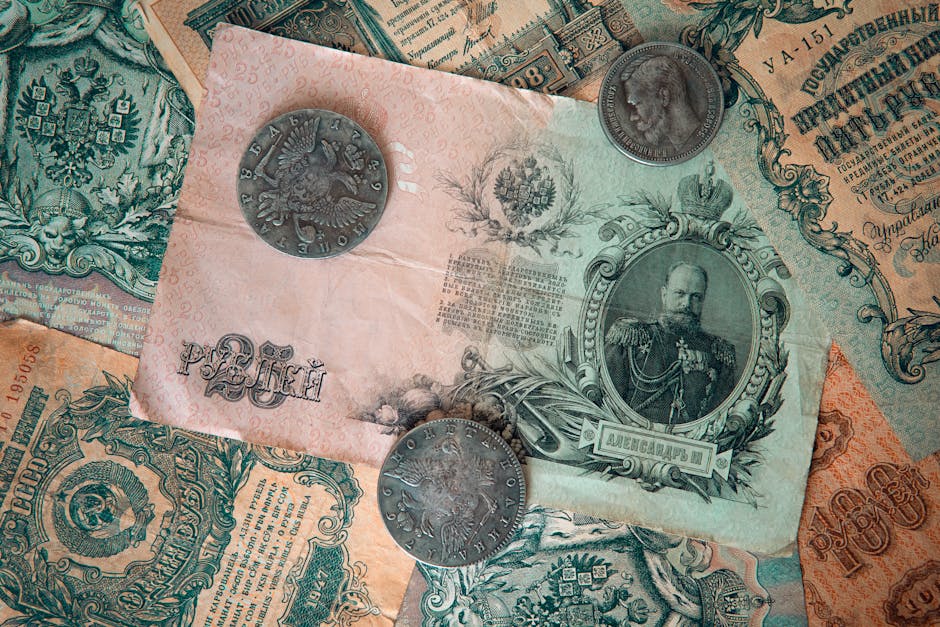
Top 10 Facts About Money History

Top 10 Facts About Money History

⏱️ 7 min read

Top 10 Facts About Money History

Money is one of humanity's most transformative inventions, fundamentally shaping civilizations and economies throughout history. From ancient barter systems to modern cryptocurrencies, the evolution of money reflects our collective ingenuity and the growing complexity of human societies. Understanding the history of money provides valuable insights into how economic systems developed and how they continue to influence our daily lives. This article explores ten fascinating facts about the history of money that reveal the remarkable journey from simple trade to sophisticated financial systems.

1. The Earliest Form of Money Wasn't Coins or Paper

Long before coins and paper currency, various commodities served as the earliest forms of money. Archaeological evidence suggests that around 9000 to 6000 BCE, livestock was among the first mediums of exchange. Cattle, sheep, and goats were valuable assets that could be traded for goods and services. Other early forms of commodity money included grain, salt, shells, and precious metals by weight. The word "salary" actually derives from the Latin word "salarium," which refers to the salt rations given to Roman soldiers. These commodity-based systems laid the groundwork for more standardized forms of currency that would emerge later.

2. The First Metal Coins Appeared in Ancient Lydia

The Kingdom of Lydia, located in modern-day Turkey, is credited with creating the world's first standardized metal coins around 600 BCE during the reign of King Alyattes. These coins were made from electrum, a naturally occurring alloy of gold and silver. What made these coins revolutionary was their standardized weight and purity, which were guaranteed by the state's stamp. This innovation eliminated the need to weigh and verify metal content with each transaction, dramatically simplifying trade and commerce. The practice quickly spread throughout the Mediterranean world, with Greece, Persia, and eventually Rome adopting and refining the concept of coinage.

3. China Pioneered Paper Money

While the Western world continued relying on metal coins, China revolutionized money once again by inventing paper currency during the Tang Dynasty (618-907 CE). Merchants in the capital city of Chang'an began depositing their coins with local merchants in exchange for paper receipts, which were easier to carry for long-distance trade. By the Song Dynasty (960-1279 CE), the government recognized the potential of this system and issued the first official government-produced paper money called "jiaozi." This innovation was so advanced that it took Europe another 700 years to adopt paper money on a widespread scale.

4. The Mongolian Empire Created the First International Currency System

Under Kublai Khan's rule in the 13th century, the Mongol Empire established what could be considered the world's first international currency system. The empire, which stretched from China to Eastern Europe, enforced the use of paper money throughout its vast territories. Marco Polo documented his amazement at this system during his travels, noting how the Khan's paper notes were accepted throughout the realm and could be exchanged for goods anywhere within the empire. This early attempt at creating a unified currency zone demonstrated the economic advantages of standardized money across large geographical areas.

5. The Gold Standard Dominated Global Finance for Centuries

The gold standard, which linked currency value directly to gold, became the dominant monetary system in the 19th and early 20th centuries. Britain officially adopted the gold standard in 1821, and by the 1870s, most major economies had followed suit. Under this system, paper money could be exchanged for a fixed amount of gold, and international transactions were settled in gold. The gold standard provided stability and predictability to international trade but also limited governments' ability to respond to economic crises. The system gradually collapsed during the 20th century, with the United States finally abandoning it completely in 1971 when President Nixon ended the direct convertibility of dollars to gold.

6. Hyperinflation Has Destroyed Multiple Currencies Throughout History

Throughout monetary history, numerous currencies have been destroyed by hyperinflation, demonstrating the importance of sound monetary policy. Perhaps the most famous example occurred in Weimar Germany during the early 1920s, when prices doubled approximately every three days at the peak of the crisis. People literally needed wheelbarrows full of money to buy basic goods. More recently, Zimbabwe experienced catastrophic hyperinflation in the late 2000s, eventually printing a 100 trillion Zimbabwe dollar note. These examples illustrate how the loss of confidence in currency can rapidly erode its value and destabilize entire economies.

7. The First Credit Card Appeared in the 1950s

While credit systems have existed for centuries, the modern credit card was born in 1950 with the introduction of the Diners Club card. The story goes that businessman Frank McNamara conceived the idea after forgetting his wallet at a restaurant. The Diners Club card was initially a cardboard charge card accepted at 27 restaurants in New York City. American Express launched its card in 1958, followed by Bank of America's BankAmericard (later Visa) in 1959. This innovation fundamentally changed consumer behavior and spending patterns, creating the credit-based economy that dominates much of the modern world.

8. Ancient Mesopotamians Invented Banking Over 4,000 Years Ago

The concept of banking dates back to ancient Mesopotamia around 2000 BCE. Temples and palaces in cities like Babylon served as safe repositories for grain and other valuables. These institutions would issue receipts for deposits and even make loans to farmers and merchants. The Code of Hammurabi, one of the oldest written legal codes from around 1750 BCE, includes detailed regulations about banking operations, including interest rates and loan terms. This demonstrates that sophisticated financial services existed far earlier than many people realize, with ancient civilizations already grappling with issues of debt, interest, and financial regulation.

9. Colonial America Used Tobacco as Legal Tender

Due to a severe shortage of precious metals, colonists in Virginia and other American colonies officially designated tobacco as legal tender in the 17th century. Tobacco notes representing stored tobacco could be used to pay taxes, debts, and even clergy salaries. This system persisted for over a century, with tobacco remaining legal tender in Virginia until 1776. Other colonies experimented with different commodity currencies, including wampum (shell beads), beaver pelts, and corn. These practical solutions to currency shortages illustrate how money systems adapt to local circumstances and resource availability.

10. Cryptocurrency Represents the Latest Revolution in Money

The launch of Bitcoin in 2009 by the pseudonymous Satoshi Nakamoto introduced cryptocurrency and blockchain technology, potentially marking the most significant monetary innovation since paper money. Unlike traditional currencies controlled by governments and central banks, cryptocurrencies operate on decentralized networks using cryptographic principles. As of now, thousands of cryptocurrencies exist, with varying degrees of acceptance and legitimacy. While their long-term impact remains uncertain, cryptocurrencies have already influenced discussions about the nature of money, privacy, government control, and the future of financial systems. Central banks worldwide are now exploring their own digital currencies in response to this technological disruption.

Conclusion

The history of money spans thousands of years and reflects humanity's continuous innovation in facilitating trade and economic activity. From livestock and shells to coins and paper currency, and now to digital and cryptocurrencies, each evolution has brought both opportunities and challenges. These ten facts reveal that monetary systems have always been dynamic, adapting to technological advances, political circumstances, and economic needs. Understanding this history helps us appreciate the complexity of modern financial systems and provides perspective on current debates about monetary policy, digital currencies, and the future of money. As we continue to innovate and experiment with new forms of currency, we build upon millennia of human experience in creating trusted mediums of exchange that enable commerce and prosperity.