









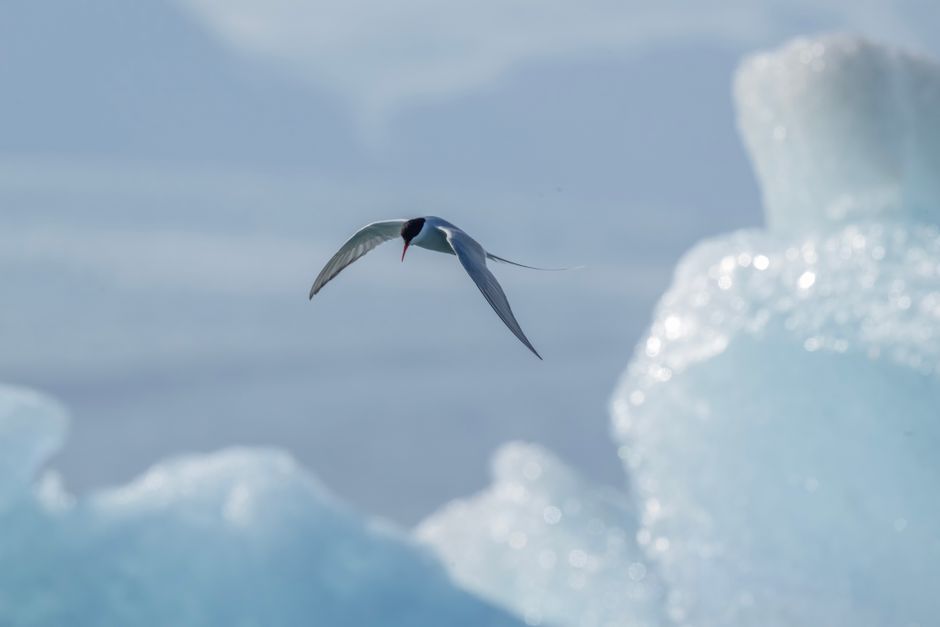
Arctic Tern Migration: 44000 Miles Each Year Explained
By Trivia Daily, Animals Desk — Published August 31, 2026
Table of Contents
- Key Takeaways
- The Route: From Arctic to Antarctic and Back
- Why Make Such an Extreme Journey?
- Navigation: How Do They Find Their Way?
- Physical Adaptations for Extreme Migration
- Comparing Record-Breaking Animal Migrations
- Conservation Status and Threats
- Frequently Asked Questions
A small seabird weighing less than a candy bar completes the longest migration of any animal on Earth. The arctic tern migration covers approximately 44,000 miles annually, a journey that takes this remarkable species from Arctic breeding grounds to Antarctic feeding waters and back again. This wildlife phenomenon represents one of nature's most extreme examples of animal behavior, with individual birds traveling the equivalent of three round trips to the moon over a typical 30-year lifespan.
What drives these creatures to undertake such an exhausting voyage? The answer lies in their pursuit of endless summer, following the sun across hemispheres to exploit the most productive feeding grounds on the planet.
Key Takeaways
- Arctic terns hold the record for the longest migration of any animal, traveling roughly 44,000 miles each year between polar regions.
- These seabirds experience more daylight than any other creature on Earth, witnessing two summers per year as they follow the sun between Arctic and Antarctic regions.
- Individual terns can live 30 years or more, meaning a single bird may fly over 1.3 million miles in its lifetime—equivalent to three trips to the moon and back.
- The species navigates using multiple methods including the sun's position, Earth's magnetic field, and visual landmarks along coastlines.
- Arctic terns weigh only 3 to 4 ounces yet possess exceptional endurance, sometimes flying for months without landing on solid ground.
- Their migration route isn't a straight line but follows an S-shaped path across the Atlantic Ocean to take advantage of prevailing winds.
The Route: From Arctic to Antarctic and Back
Arctic terns breed in the Arctic and subarctic regions during the Northern Hemisphere summer, nesting on coastlines across Alaska, Canada, Greenland, northern Europe, and Russia. When autumn approaches, they don't simply head south in a straight line. Instead, these birds follow a complex S-shaped route.
Most North Atlantic populations travel down the coasts of Europe and Africa before crossing to South America, then continuing to the Antarctic pack ice. This winding path adds thousands of miles to their journey but allows them to exploit predictable wind patterns and rich feeding areas along continental shelves. The birds spend the Southern Hemisphere summer feeding in Antarctic waters, where the austral summer provides nearly 24-hour daylight and abundant small fish and crustaceans.
Research using tiny tracking devices has revealed that some individuals don't take the most direct route home either. Rather than retracing their outbound path, many birds return via a different route, creating a figure-eight pattern across the Atlantic. This behavior may help them avoid headwinds or discover new feeding grounds.
Why Make Such an Extreme Journey?
The arctic tern migration exists because these birds are chasing the ultimate resource: sunlight. By commuting between the poles, terns experience two summers each year and avoid two winters. This strategy provides several survival advantages.
Continuous summer means continuous feeding opportunities. The long daylight hours in polar regions during summer create massive blooms of plankton, which support huge populations of small fish and marine invertebrates—the tern's primary food sources. By timing their presence in each hemisphere to coincide with peak productivity, these animals access abundant nutrition year-round.
The habitat strategy also helps terns avoid predators. While nesting in the Arctic, they face threats from foxes, gulls, and other predators, but the brief breeding season limits exposure. Spending the rest of the year at sea or in the relatively predator-free Antarctic environment reduces risk.
Temperature regulation plays a role too. Arctic terns are adapted to cool climates. Rather than enduring tropical heat, they follow temperate and polar waters where their physiology functions optimally.
Navigation: How Do They Find Their Way?
How does a bird weighing less than a stick of butter navigate across 44,000 miles of open ocean with remarkable precision? Scientists have identified several navigation mechanisms that work together.
The sun compass is fundamental. Arctic terns can determine direction based on the sun's position, adjusting for time of day through their internal biological clock. This celestial navigation works even when the sun is partially obscured by clouds, as terns can detect polarized light patterns in the sky.
Magnetic field detection gives terns another navigation tool. Like many migratory species, these birds possess magnetoreception—the ability to sense Earth's magnetic field. Special cells containing magnetic particles may act as an internal compass, helping terns maintain consistent headings across featureless ocean.
Visual landmarks matter along coastlines. When following continental margins, terns use geographic features to guide their journey, likely building a mental map through repeated migrations.
Genetic programming provides the foundation. Young terns making their first migration journey follow instinctive routes without guidance from experienced adults, suggesting that basic navigation information is inherited. Experience then refines these abilities over subsequent years.
Physical Adaptations for Extreme Migration
The anatomy and physiology of arctic terns reflect their extreme lifestyle. Their wings are long and pointed, creating an efficient airfoil that minimizes energy expenditure during sustained flight. The wing design allows for both powerful flapping when needed and effortless gliding when conditions permit.
Body mass management is critical. Before migration, terns build up fat reserves that serve as fuel for the journey. Despite their small size, they can nearly double their weight through fat deposition, though they remain remarkably light—typically 3 to 4 ounces even at peak condition.
Their plumage provides both insulation and waterproofing. The dense feather structure keeps them warm in polar waters while remaining light enough for efficient flight. Regular preening maintains feather condition, which is essential for both flight performance and survival in harsh marine environments.
Terns can also sleep while flying. Like some other seabirds, they may engage in unihemispheric slow-wave sleep, where one half of the brain rests while the other remains alert. This ability allows them to continue migrating through the night without landing.
Comparing Record-Breaking Animal Migrations
| Species | Annual Migration Distance | Route Type |
|---|---|---|
| Arctic Tern | ~44,000 miles | Pole-to-pole, ocean-based |
| Sooty Shearwater | ~40,000 miles | Circular Pacific Ocean route |
| Gray Whale | ~12,000 miles | Coastal, Arctic to Mexico |
| Monarch Butterfly | ~3,000 miles | North America to Mexico |
| Caribou | ~3,000 miles | Overland Arctic tundra |
Conservation Status and Threats
Arctic terns face multiple challenges despite their remarkable adaptations. Climate change poses the most significant long-term threat to this species. Warming temperatures alter the timing and abundance of prey species in both polar regions, potentially creating mismatches between tern arrival and peak food availability.
Sea ice loss in the Arctic affects breeding habitat and food webs. Many tern colonies nest on islands and coastlines that are experiencing increased erosion and flooding due to reduced ice protection and rising sea levels.
Human disturbance at nesting colonies can cause breeding failures. Arctic terns are aggressive defenders of their nests, dive-bombing intruders (including humans) who venture too close. However, repeated disturbances can cause adults to abandon nests, leaving eggs and chicks vulnerable to predators or exposure.
Pollution, particularly plastic debris in oceans, affects terns both directly through ingestion and indirectly by contaminating prey species. Oil spills along migration routes can devastate local populations.
Despite these pressures, arctic tern populations remain relatively stable globally, though some regional colonies have declined. The species is currently classified as Least Concern by conservation authorities, but continued monitoring is essential as environmental conditions change.
Frequently Asked Questions
How long does it take arctic terns to complete their migration?
Arctic terns typically spend about three months traveling from Arctic breeding grounds to Antarctic waters, and another three months returning, though they don't fly continuously. The birds make stops along the way to feed and rest, and the exact timing varies by individual and population.
Do arctic terns migrate alone or in groups?
Arctic terns often migrate in loose flocks, though individuals don't maintain tight formation flying like geese. Young birds making their first journey may travel independently, relying on instinct rather than following experienced adults, though they often encounter other terns along traditional migration corridors.
What do arctic terns eat during their long migration?
Arctic terns feed primarily on small fish, including sand eels, capelin, and cod, as well as crustaceans like krill. They hunt by hovering above the water and plunge-diving to catch prey near the surface, a technique they use throughout their migration whenever they encounter productive feeding areas.
How do scientists track arctic tern migrations?
Researchers use tiny geolocator devices weighing less than a gram, attached to leg bands, that record light levels and allow scientists to calculate approximate location based on day length and sunrise/sunset timing. Satellite tags have also been used on some individuals, though their weight limits their application to this small species.
The next time you see a small seabird hovering above coastal waters, consider that it might be resting during a journey longer than most humans will travel in a year. Arctic terns remind us that size doesn't limit ambition in nature—sometimes the smallest creatures accomplish the most extraordinary feats.