











1 / 10 Questions
0 Points

What invention did Johannes Gutenberg introduce around 1440?

Compass

Movable type printing press

Telescope

Mechanical clock

Points won
0
Correct score
0%

More Questions

The Truth About Left-Handed People Dying Younger

Left-handed myths about early death have persisted for decades. Discover what science actually reveals about longevity and handedness in this fact-check.

7 Bizarre Facts About Platypus Venom and Milk Sweat

Platypus facts reveal venomous spurs, milk-sweating skin, and other evolutionary oddities. Discover why this mammal defies biology's basic rules.

Why Dragon Legends Appear in Nearly Every Culture

Dragon legends appear across civilizations worldwide despite no contact. Discover the fascinating theories behind why dragons exist in nearly every

More Articles

The Truth About Vampires: Porphyria Disease Connection

The Truth About Vampires: Porphyria Disease Connection

The Truth About Vampires: Porphyria Disease Connection

By Trivia Daily, Staff Writer — Published September 12, 2026

Table of Contents

For centuries, vampire legends have haunted our collective imagination—pale figures lurking in shadows, avoiding sunlight, and displaying an unsettling aversion to garlic. While most dismiss these tales as pure fiction, some researchers have explored a fascinating medical angle. Could the truth about vampires and porphyria, a rare group of blood disorders, explain some of the characteristics attributed to these legendary creatures? This surprising connection between medical science and folklore reveals how real diseases might have inspired some of history's most enduring myths.

The theory linking vampires to porphyria gained attention in the late 20th century when scientists began examining how symptoms of certain rare diseases could mirror vampire folklore. While this connection remains debated and likely oversimplified, it offers an intriguing lens through which to explore both medical history and the origins of supernatural legends.

Key Takeaways

  • Porphyria encompasses a group of rare genetic disorders affecting heme production in the body, essential for oxygen transport in blood.
  • Some forms of porphyria cause severe photosensitivity, forcing patients to avoid sunlight—a characteristic famously attributed to vampires.
  • Certain porphyria symptoms include skin lesions, gum recession that makes teeth appear fang-like, and reddish-brown urine.
  • The vampire-porphyria theory emerged in medical literature but has been criticized as an oversimplification of both the disease and folklore origins.
  • Historical misunderstanding of rare diseases likely contributed to many supernatural legends across cultures.
  • Modern medicine has developed treatments for porphyria, though the disorders remain rare and challenging to diagnose.

Understanding the Truth About Vampires and Porphyria

Porphyrias are a collection of eight distinct disorders that affect the body's production of heme, a crucial component of hemoglobin. Hemoglobin carries oxygen in red blood cells, making it essential for life. When the enzymes involved in heme production malfunction, intermediate compounds called porphyrins accumulate in the body, causing a range of symptoms depending on which enzyme is affected.

The most relevant forms for the vampire connection are the cutaneous porphyrias, particularly congenital erythropoietic porphyria (CEP) and erythropoietic protoporphyria (EPP). These conditions cause extreme sensitivity to sunlight. When exposed to UV light, patients experience painful burning, blistering, and scarring. This photosensitivity could explain why vampire legends emphasize creatures who must avoid daylight at all costs.

CEP, one of the rarest forms, can cause particularly dramatic symptoms. The accumulated porphyrins can deposit in teeth and bones, causing them to fluoresce reddish-brown under UV light. Skin becomes fragile and prone to infection. Repeated scarring can lead to facial disfigurement. Gum tissue may recede, making teeth appear more prominent. In severe cases, fingers and facial features can become eroded over time.

Separating Medical Facts From Vampire Fiction

While the parallels seem compelling at first glance, medical historians and folklore experts have raised important objections to the porphyria-vampire hypothesis. The theory oversimplifies both the nature of the disease and the complex origins of vampire mythology.

Porphyria is extraordinarily rare. CEP affects fewer than one in a million people worldwide. It's statistically improbable that enough people with this condition existed in medieval villages to spawn widespread vampire legends. The geographic distribution of vampire folklore doesn't match the distribution of known porphyria cases.

The garlic connection often cited in support of the theory is particularly weak. Some have claimed that garlic could trigger symptoms in porphyria patients, but no solid medical evidence supports this. Vampire aversion to garlic appears in folklore for entirely different reasons, likely related to garlic's historical use as a general protective charm against evil.

Blood drinking, central to vampire mythology, has no connection to porphyria treatment. While drinking blood would theoretically provide heme, the digestive system breaks down heme molecules before they could enter the bloodstream. This "cure" wouldn't work, and no historical evidence suggests porphyria patients attempted it.

What Porphyria Really Looks Like

Modern understanding of porphyria reveals a complex group of conditions that affect patients in diverse ways. Acute porphyrias primarily cause neurological symptoms—severe abdominal pain, muscle weakness, seizures, and mental disturbances. These forms don't typically cause the photosensitivity associated with vampire legends.

Cutaneous porphyrias focus their effects on the skin. EPP, more common than CEP, causes immediate burning pain upon sun exposure, though without the severe disfigurement of CEP. Porphyria cutanea tarda (PCT), the most common form overall, causes skin fragility and blistering but typically appears in adulthood and can be triggered by factors like alcohol use or hepatitis C.

Porphyria Type Primary Symptoms Rarity
Congenital Erythropoietic Porphyria (CEP) Severe photosensitivity, skin scarring, tooth discoloration Extremely rare (1 in 1+ million)
Erythropoietic Protoporphyria (EPP) Painful sun sensitivity, burning sensation Rare (1 in 75,000 to 200,000)
Porphyria Cutanea Tarda (PCT) Skin fragility, blistering, hyperpigmentation Most common (1 in 10,000)
Acute Intermittent Porphyria (AIP) Abdominal pain, neurological symptoms Rare (1 in 20,000)

The Real Origins of Vampire Legends

Vampire folklore predates modern understanding of porphyria by centuries and appears across cultures with varying characteristics. Eastern European vampire legends, the most influential on modern vampire fiction, developed from complex cultural, religious, and social factors.

Decomposition processes poorly understood in earlier eras contributed significantly to vampire beliefs. Bodies exhumed weeks after burial often appeared less decomposed than expected, with blood-like fluid around the mouth—natural results of decomposition gases, but interpreted as evidence of vampirism. Epidemics of disease, particularly tuberculosis, spread through communities in patterns that seemed to suggest the dead were draining life from the living.

Other medical conditions beyond porphyria likely influenced vampire mythology. Rabies causes hydrophobia, aggression, and hypersensitivity—symptoms that could be misinterpreted as supernatural. Catalepsy, a condition causing temporary paralysis and reduced vital signs, may have led to premature burials and subsequent "vampire" reports when victims revived.

Modern Understanding and Treatment

Today's medical professionals can diagnose porphyrias through urine, blood, and stool tests that detect elevated porphyrin levels. Genetic testing can identify specific mutations. Treatment varies by type but may include avoiding triggers, using sun protection, receiving heme infusions, or undergoing regular phlebotomy to reduce iron levels.

For EPP patients, new treatments have emerged. Afamelanotide, a synthetic hormone that increases melanin production, can improve sun tolerance. Patients with acute porphyrias may receive hemin infusions during attacks. Managing PCT often involves phlebotomy and avoiding alcohol and other triggers.

The National Institutes of Health and specialized porphyria centers provide resources for patients with these rare conditions. Early diagnosis significantly improves outcomes, though the rarity of these disorders means many patients face delays in proper identification of their condition.

Frequently Asked Questions

Can porphyria patients actually not go out in sunlight?

Patients with cutaneous porphyrias experience varying degrees of photosensitivity. Some can tolerate brief sun exposure with protection, while those with severe forms like CEP may need to avoid all UV light. The reaction is immediate and painful, not supernatural.

Did people with porphyria drink blood in historical times?

No credible historical evidence supports this claim. Drinking blood wouldn't treat porphyria because digestive enzymes break down heme before it could be absorbed. This connection appears to be a modern myth rather than historical fact.

How rare is porphyria compared to other genetic disorders?

Porphyrias are quite rare. The most severe form linked to vampire myths, CEP, affects fewer than one in a million people. Even the most common form, PCT, occurs in roughly one in ten thousand people, making it unlikely to have spawned widespread folklore.

Are there any proven connections between porphyria and vampire legends?

No direct historical connection has been established. The theory emerged in the 1980s as a retrospective medical explanation but lacks supporting evidence from folklore studies or historical medical records. Most experts consider it an interesting but ultimately unsupported hypothesis.

The vampire-porphyria connection reveals more about our desire to find rational explanations for the inexplicable than about the true origins of vampire legends. While porphyria is a real and serious condition deserving understanding and research, its link to folklore remains speculative. Perhaps the most fascinating truth is how rare diseases, misunderstood death processes, and cultural fears combined to create legends that still captivate us centuries later—no single medical explanation required.
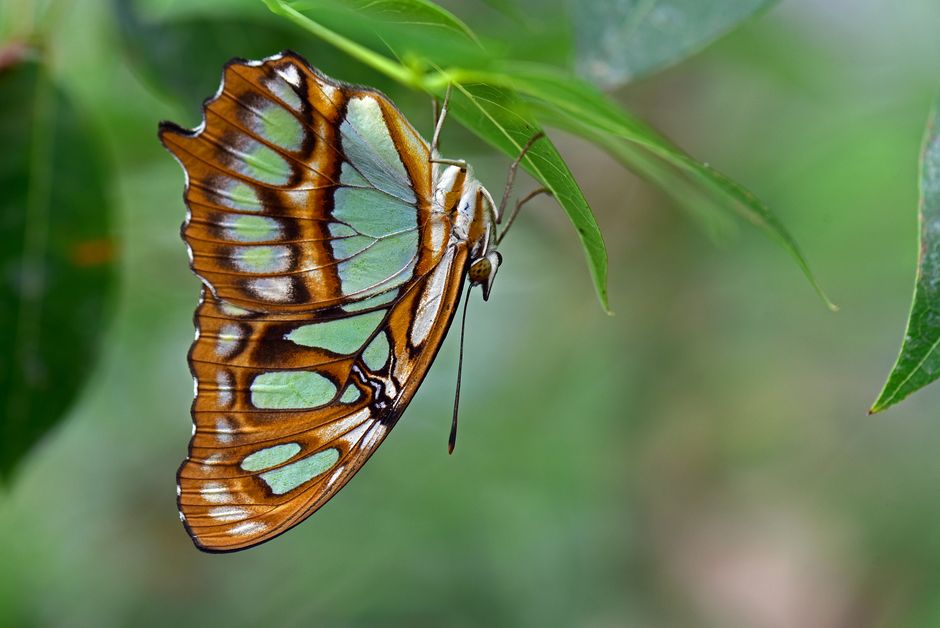
Why Butterflies Remember Being Caterpillars Despite Metamorphosis

Why Butterflies Remember Being Caterpillars Despite Metamorphosis

Why Butterflies Remember Being Caterpillars Despite Metamorphosis

By TriviaOwl, Staff Writer — Published July 31, 2026

Table of Contents

Inside the chrysalis, a caterpillar doesn't simply grow wings and emerge as a butterfly. Its body dissolves into a soupy cellular mass, rearranging itself completely during one of nature's most dramatic transformations. You might assume this biological meltdown would erase all memory of its caterpillar life. Surprisingly, butterflies remember being caterpillars, retaining specific learned behaviors even after metamorphosis turns their bodies into something entirely new. This amazing discovery challenges our understanding of memory, identity, and the resilience of neural connections.

The fact that memories survive such radical physical transformation reveals something profound about how living things store information. Scientists have confirmed that certain experiences from a caterpillar's life persist into adulthood, suggesting that some neural structures remain intact or reform with their learned patterns preserved.

Key Takeaways

  • Butterflies retain memories from their caterpillar stage despite their bodies dissolving during metamorphosis
  • Scientific experiments have demonstrated that moths trained as caterpillars avoid specific smells they learned to associate with danger after becoming adults
  • During pupation, the nervous system partially reorganizes rather than completely dissolving, allowing some neural pathways to survive
  • This memory retention occurs even though roughly 50% of the caterpillar's neurons die during transformation
  • The discovery has implications for understanding how brains store long-term memories at the cellular level
  • Butterflies and moths demonstrate that identity and learned behavior can persist through the most extreme bodily changes in nature

How Butterflies Remember Caterpillars: The Science Behind the Discovery

Researchers at Georgetown University conducted experiments using tobacco hornworm caterpillars to explore this curious phenomenon. They trained caterpillars to avoid a specific odor by pairing the smell with a mild electric shock. The caterpillars quickly learned to associate the scent with an unpleasant experience. After these trained caterpillars underwent metamorphosis and emerged as adult moths, scientists tested whether they still remembered their lesson.

The results were remarkable. Adult moths that had been trained as caterpillars avoided the odor they'd learned to fear, while moths that hadn't undergone the training showed no aversion. The memory had survived complete bodily reorganization. This wasn't instinct or genetic programming—it was a learned behavior that persisted across life stages.

What makes this even more interesting is what happens inside the chrysalis. The caterpillar's body releases enzymes that break down most of its tissues into a protein-rich soup called imaginal cells. From this cellular stew, the adult butterfly's body assembles itself using special clusters of cells that remained dormant during the caterpillar stage. Yet somehow, through this biological chaos, certain memories endure.

The Nervous System Survives (Partially)

The key to understanding memory retention lies in what happens to the nervous system during metamorphosis. While much of the caterpillar's body liquefies, its central nervous system doesn't completely dissolve. Instead, it undergoes extensive remodeling. Some neurons die—roughly half are pruned away during the transformation. But critical neural structures, particularly in the brain regions responsible for learning and memory, persist through the change.

Think of it like renovating a house while some residents stay inside. Walls come down, new rooms are built, but the foundation and certain key structures remain. The butterfly's brain reorganizes dramatically, adding new regions needed for adult behaviors like flight and mating, while retaining enough of the original architecture to preserve important learned information.

The mushroom bodies—brain structures involved in learning and memory in insects—appear to maintain their basic organization through metamorphosis. These structures shrink and then regrow, but they don't start from scratch. This continuity provides a physical basis for memory storage that survives the transformation.

What Kinds of Memories Transfer?

Not all caterpillar experiences necessarily transfer to the butterfly stage. Research suggests that strong associative memories—particularly those linked to survival, like avoiding dangerous situations or toxic substances—have the best chance of persisting. These are memories formed through classical conditioning, where the caterpillar learns to associate a neutral stimulus with something significant.

The types of memories that survive include:

  • Aversive conditioning—learning to avoid harmful stimuli based on past negative experiences
  • Odor associations—remembering specific smells linked to danger or other important outcomes
  • Spatial information—potentially retaining knowledge about the environment, though this is less well-studied
  • Taste preferences—learning which plants or substances to avoid based on earlier exposure

Everyday caterpillar activities probably don't create lasting memories. The specific leaf it ate on Tuesday or where it crawled that morning likely fade away. But significant learning events—those that triggered strong neural responses—can leave lasting imprints that survive the chrysalis.

Comparing Metamorphosis Across Insect Species

Insect Type Metamorphosis Style Body Changes Memory Retention
Butterflies and Moths Complete (holometabolous) Nearly total body reorganization Confirmed—learned behaviors persist
Beetles Complete (holometabolous) Extensive restructuring through pupal stage Likely similar to butterflies
Grasshoppers Incomplete (hemimetabolous) Gradual changes without pupal stage Continuous memory—no dramatic transformation
Dragonflies Incomplete (hemimetabolous) Nymph to adult without complete reorganization Memory likely continuous throughout life

Why This Matters Beyond Butterflies

The discovery that butterflies remember their caterpillar lives has implications far beyond insect biology. It reveals something fundamental about how memories are stored at the cellular and molecular level. If memories can survive such extreme physical transformation, they must be encoded in remarkably resilient ways—perhaps in the connections between neurons, in molecular changes within cells, or in patterns that can rebuild themselves even after disruption.

This research also challenges philosophical questions about identity and consciousness. If a butterfly retains memories from its caterpillar stage, is it the same individual? The physical continuity is tenuous at best, yet the psychological continuity—the thread of memory and learned experience—persists. For neuroscientists studying human memory, these findings suggest that our brains might store information in more robust, distributed ways than previously thought.

Evolutionary biologists find the phenomenon equally fascinating. The ability to transfer learned information across life stages provides a survival advantage. A caterpillar that learns which plants contain toxins can carry that knowledge into adulthood, helping the butterfly choose safe places to lay eggs or feed. Natural selection has preserved this memory transfer mechanism because it works.

Frequently Asked Questions

Do butterflies know they used to be caterpillars?

Butterflies don't possess self-awareness or conceptual thinking, so they don't "know" they were once caterpillars in a conscious sense. However, they do retain specific learned memories and behaviors from their caterpillar stage, demonstrating a form of experiential continuity across metamorphosis.

How much of the caterpillar's brain survives metamorphosis?

Approximately 50% of the caterpillar's neurons are pruned during metamorphosis, but key brain structures—particularly the mushroom bodies involved in learning and memory—persist through reorganization. The nervous system remodels extensively rather than completely dissolving.

Can all insects that undergo metamorphosis retain memories?

Research has primarily focused on moths and butterflies, but scientists suspect that other insects with complete metamorphosis (beetles, flies, bees) may also retain some learned behaviors. The degree of memory retention likely varies by species and the type of memory formed.

What happens to caterpillar memories that don't transfer?

Weaker memories and routine daily experiences from the caterpillar stage likely fade during the neural reorganization of metamorphosis. Only strong associative memories—particularly those related to survival—appear to have the neural resilience to persist into the butterfly stage.

The next time you watch a butterfly flutter past, consider the hidden depth of its experience. That delicate creature carries within it not just the genetic instructions for its transformation, but actual memories from a previous life spent crawling on leaves. Nature has found a way to preserve identity through change so profound it seems impossible—a small miracle hiding in plain sight.