
7 Surprising Facts About the Eiffel Tower Rusting Daily
By Trivia Daily, Staff Writer — Published October 23, 2026
Table of Contents
- Key Takeaways
- Understanding the Eiffel Tower Rusting Process
- The Seven-Year Paint Cycle
- Comparing Rust Rates on Famous Iron Structures
- The Chemistry Behind Iron Oxidation
- Frequently Asked Questions
Paris’s most iconic landmark is slowly dissolving. The Eiffel Tower rusting is not a crisis—it’s a natural process that has shaped the monument’s maintenance routine for more than a century. Every day, oxygen and moisture interact with the tower’s iron framework, creating a constant battle against corrosion. This fascinating dance between chemistry and preservation reveals surprising truths about one of the world’s most photographed structures.
What makes this ongoing rust particularly intriguing is the scale of the challenge. With thousands of tons of iron exposed to Parisian weather, the tower requires extraordinary care to survive. The facts behind its preservation are as captivating as the tower itself.
Key Takeaways
- The Eiffel Tower loses approximately 50 tons of weight to rust and paint removal during each repainting cycle
- The structure requires a complete repaint every seven years, consuming about 60 tons of paint each time
- Iron oxide formation occurs continuously across the tower’s 18,000 metallic parts joined by 2.5 million rivets
- The tower’s brown color was specifically chosen to minimize the visible appearance of rust and weathering
- Gustave Eiffel designed the tower with rust prevention in mind, including drainage systems and protective coatings
- Modern paint technology has extended the repainting interval from five years to seven years
Understanding the Eiffel Tower Rusting Process
The Eiffel Tower rusting happens through a chemical reaction called oxidation. When iron meets oxygen and water, it forms iron oxide—commonly known as rust. The tower’s puddled iron construction, while revolutionary for its time, is particularly susceptible to this process. Every raindrop, every humid morning, and every temperature fluctuation accelerates the reaction.
The tower’s lattice design, while architecturally brilliant, creates thousands of crevices where moisture can accumulate. These hidden pockets become rust factories. Wind-driven rain penetrates joints and rivets, making complete protection nearly impossible. The structure’s height also matters—different sections experience varying rates of corrosion depending on exposure to wind, rain, and pollution.
Parisian air pollution historically accelerated the rusting process. Industrial emissions and vehicle exhaust deposited acidic compounds on the iron surface, creating a more aggressive corrosive environment. Modern air quality improvements have slowed this damage somewhat, but the fundamental chemistry remains unchanged. The tower will rust as long as it stands exposed to the elements.
The Seven-Year Paint Cycle
Protecting the Eiffel Tower from rust requires one of the most demanding maintenance programs in architecture. Every seven years, a team of specialized painters descends on the structure for a complete repaint. This isn’t a simple cosmetic refresh—it’s a critical preservation effort that prevents the tower from literally falling apart.
The process begins with removing old, degraded paint layers. Workers use brushes and scrapers to strip away coating that has failed, exposing rusty iron underneath. They then treat corroded areas, apply primer, and add multiple layers of protective paint. The entire operation takes about 18 months and costs millions of euros. Approximately 60 tons of paint cover the tower’s surface, creating a barrier between iron and atmosphere.
This maintenance schedule represents a careful balance. Paint more frequently, and costs become prohibitive. Wait too long, and rust penetrates deeper into the iron, causing structural damage that’s far more expensive to repair. The seven-year interval emerged through decades of experience managing the tower’s deterioration rate.
1. The Tower Loses Weight Every Repainting Cycle
Each time painters strip the Eiffel Tower, they remove roughly 50 tons of material—old paint and rust combined. This means the tower you see today is lighter than the one built in 1889, despite multiple repainting efforts. The original iron structure weighed approximately 7,300 tons, but continuous rust removal has gradually reduced this mass. Paint adds weight back, but the net effect over time is a slow decrease in total mass as oxidation consumes the iron itself.
2. The Brown Color Hides Rust Strategically
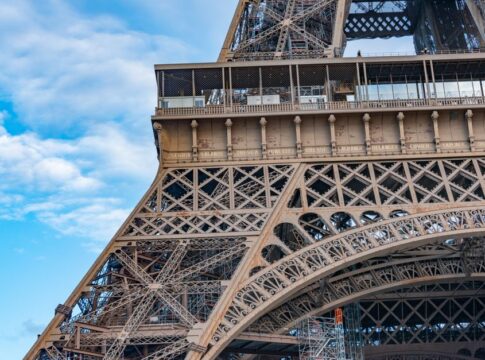
The Eiffel Tower’s distinctive brown hue isn’t random aesthetic preference—it’s a practical choice to mask rust. The current color, officially called “Eiffel Tower Brown,” is applied in three graduated shades from bottom to top. Darker tones at the base hide rust stains and pollution marks more effectively, while lighter shades higher up blend with the Parisian sky. This color strategy makes inevitable rust patches less visible between repainting cycles, maintaining the tower’s appearance even as corrosion continues beneath the surface.
3. Gustave Eiffel Predicted the Rust Problem
Gustave Eiffel understood that iron rusting would threaten his tower’s longevity. He designed built-in drainage systems to channel rainwater away from joints and connections where standing water could accelerate corrosion. He also insisted on applying protective coatings before assembly and specified regular maintenance schedules. His original contract required the tower to be repainted every seven years—a recommendation that remains standard practice more than 130 years later. Eiffel’s foresight transformed what could have been a temporary exhibition structure into a permanent monument.
4. Rivets Create Thousands of Rust-Prone Weak Points
The tower’s 2.5 million rivets represent 2.5 million potential corrosion sites. Each rivet creates a junction where two pieces of iron meet, forming gaps and crevices where water can infiltrate. These joints trap moisture and prevent paint from fully penetrating, making them particularly vulnerable to rust. When oxidation occurs at rivet connections, it can weaken structural integrity far more seriously than surface rust on flat plates. Inspectors pay special attention to these critical points, knowing that rivet failure could compromise entire sections.
5. Modern Paint Technology Extended Maintenance Intervals
Historical records show the Eiffel Tower originally required repainting every five years. Advances in coating technology have stretched this interval to seven years without increasing rust damage. Modern paints form more durable barriers against moisture and oxygen, with improved adhesion to iron surfaces and better resistance to UV degradation. These formulations also contain rust inhibitors that actively slow oxidation even when microscopic cracks develop in the paint film. This two-year extension represents significant cost savings and reduced disruption to visitors.
6. Pollution Damage Varies Across the Tower’s Height
Different sections of the Eiffel Tower rust at different rates due to varying environmental exposure. The base experiences more pollution from vehicle traffic and pedestrian activity, while upper sections face stronger winds and more direct rainfall. Industrial emissions historically deposited acidic compounds more heavily on lower levels, accelerating corrosion there. Temperature variations also matter—the iron expands and contracts as it heats and cools, creating microscopic cracks in paint that allow moisture penetration. Maintenance crews adjust their treatment strategies based on these zone-specific deterioration patterns.
7. The Tower Requires Continuous Spot Treatment
Between major repainting cycles, maintenance teams conduct ongoing spot repairs to address rust that breaks through the paint barrier. These touch-ups happen year-round, targeting areas where coating has failed or where inspections reveal emerging corrosion. Small rust patches get scraped, treated, and repainted before they spread. This continuous maintenance prevents localized damage from becoming major structural problems. Without these interim repairs, the seven-year cycle would be insufficient to protect the tower adequately.
Comparing Rust Rates on Famous Iron Structures
| Structure | Primary Material | Repainting Frequency | Special Challenges |
|---|---|---|---|
| Eiffel Tower | Puddled Iron | Every 7 years | Exposed lattice design, 2.5 million rivets |
| Brooklyn Bridge | Steel cables, iron towers | Continuous maintenance | Salt air corrosion, suspension cable protection |
| Golden Gate Bridge | Steel | Continuous rolling program | Marine environment, fog, salt spray |
| Forth Bridge (Scotland) | Steel | Every 20 years (modern coatings) | Coastal weather, wind exposure |
The Chemistry Behind Iron Oxidation
Iron rusting follows predictable chemical pathways. When iron atoms encounter oxygen and water simultaneously, electrons transfer from iron to oxygen. This creates iron oxide, which has a larger molecular structure than pure iron. The expansion causes rust to flake and crack, exposing fresh iron underneath to continue the cycle. Salt accelerates this process by acting as an electrolyte, which is why coastal structures rust faster than inland ones.
The Eiffel Tower’s puddled iron contains small amounts of carbon and other elements that affect rust resistance. This wrought iron form is more corrosion-resistant than modern mild steel but still vulnerable to oxidation. The material’s grain structure creates pathways for rust to propagate, meaning that surface corrosion can eventually penetrate deep into the metal if left untreated.
Frequently Asked Questions
How much does it cost to repaint the Eiffel Tower?
A complete repainting of the Eiffel Tower costs approximately 4 million euros and requires about 60 tons of paint. The process takes 18 months and employs specialized teams trained in working at height on historic iron structures.
Will the Eiffel Tower eventually rust away completely?
With proper maintenance, the Eiffel Tower can stand indefinitely. The seven-year repainting cycle and continuous spot repairs prevent rust from causing structural failure. However, without this maintenance, the tower would deteriorate significantly within decades.
Why was the Eiffel Tower built with iron instead of steel?
When construction began in 1887, puddled iron was the preferred structural material for large projects. Steel manufacturing had not yet achieved the consistency and availability needed for a project of this scale. Puddled iron’s properties were well understood by engineers of that era.
Does the Eiffel Tower’s rust affect its structural safety?
Regular inspections and maintenance ensure that rust never compromises the tower’s structural integrity. Engineers monitor corrosion levels continuously, and any areas showing significant deterioration receive immediate treatment. The maintenance program keeps the tower safe for millions of annual visitors.
The Eiffel Tower’s battle against rust reveals an unexpected truth about iconic monuments—they require constant care to survive. This iron giant reminds us that even our most permanent-seeming creations are engaged in an endless struggle with natural forces. The tower’s longevity depends not on invincibility, but on human dedication to preservation, one paint stroke at a time.