










1 / 10 Questions
0 Points

The Grand Ole Opry began as a show on what medium?

Radio

Television

Vaudeville stage

Newsreel

Points won
0
Correct score
0%

More Questions

More Articles

Did You Know? 10 Facts About Owls

Did You Know? 10 Facts About Owls

⏱️ 7 min read

Did You Know? 10 Facts About Owls

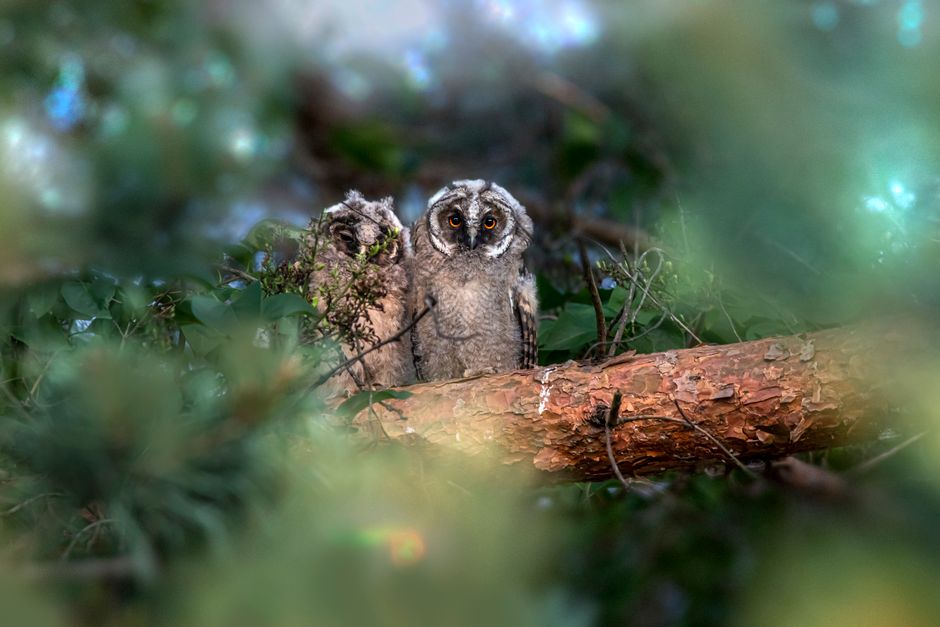
Owls have captivated human imagination for centuries, appearing in folklore, mythology, and popular culture as symbols of wisdom, mystery, and nocturnal prowess. These remarkable birds of prey possess an array of extraordinary adaptations that make them some of the most efficient hunters in the animal kingdom. From their silent flight to their incredible hearing abilities, owls are full of surprises. This article explores ten fascinating facts about these enigmatic creatures that demonstrate why they are among nature's most impressive avian species.

1. Owls Cannot Move Their Eyes

Unlike humans and most other animals, owls cannot move their eyes within their sockets. Their eyes are tubular in shape rather than spherical, which provides superior binocular vision but eliminates the ability to move them side to side or up and down. To compensate for this limitation, owls have evolved an extraordinary ability to rotate their heads up to 270 degrees in either direction. This remarkable flexibility is made possible by having fourteen neck vertebrae, twice the number found in humans, along with specialized blood vessel adaptations that prevent them from cutting off blood flow to the brain during extreme rotation.

2. Silent Flight Technology

One of the most incredible adaptations owls possess is their ability to fly almost completely silently. This stealth capability is achieved through three specialized feather modifications. First, the leading edge of their primary wing feathers features a comb-like structure that breaks up turbulence. Second, the trailing edges of their feathers are soft and fringed, which reduces noise even further. Third, their wing feathers have a velvety surface texture that dampens sound. These adaptations allow owls to approach prey without detection, making them devastatingly effective nocturnal hunters. Scientists have even studied owl feathers to develop quieter aircraft, wind turbines, and industrial fans.

3. Asymmetrical Ear Placement

Many owl species have asymmetrically positioned ears, with one ear opening higher than the other on their skull. This unique arrangement provides owls with exceptional sound localization abilities, allowing them to pinpoint prey with remarkable accuracy even in complete darkness. The difference in ear height creates a time delay between when sounds reach each ear, which the owl's brain processes to determine the vertical position of the sound source. Combined with the horizontal positioning of their ears on opposite sides of their head, this adaptation creates a three-dimensional sound map that enables owls to hunt successfully even when they cannot see their prey.

4. Regurgitated Pellets Reveal Diet Secrets

Owls swallow their prey whole or in large chunks, including bones, fur, and feathers. Unlike other birds, owls lack a crop where food can be stored and broken down. Instead, their digestive system separates soft tissues from indigestible materials in their gizzard. The indigestible parts are compressed into tight pellets and regurgitated approximately six to ten hours after eating. These owl pellets have become invaluable tools for scientists and educators, as examining them reveals exactly what the owl has been eating. Researchers can identify prey species by analyzing the bones, skulls, and other remains found within pellets, providing crucial data about local ecosystems and food webs.

5. Not All Owls Are Nocturnal

While most owl species are indeed nocturnal or crepuscular (active at dawn and dusk), several species are diurnal, meaning they hunt during daylight hours. The Snowy Owl, for instance, must be active during the day because it lives in Arctic regions where summer brings twenty-four hours of daylight. Similarly, the Northern Hawk Owl and the Northern Pygmy Owl are both day-active hunters. The Burrowing Owl is cathemeral, meaning it is active both day and night. These variations in activity patterns demonstrate the remarkable adaptability of owls to different environmental conditions and ecological niches across the globe.

6. Extraordinary Range of Sizes

The owl family exhibits an impressive range of sizes, from the tiny Elf Owl to the massive Blakiston's Fish Owl. The Elf Owl, found in the southwestern United States and Mexico, weighs a mere 1.4 ounces and stands about five to six inches tall, making it the world's smallest and lightest owl. At the opposite extreme, the Blakiston's Fish Owl of Russia and Japan can weigh up to 10 pounds with a wingspan exceeding six feet. The Eurasian Eagle Owl, another contender for largest owl, can have a wingspan of nearly seven feet. This size diversity allows different owl species to occupy various ecological niches and hunt different types of prey.

7. Powerful Talons and Crushing Grip Strength

Owls possess incredibly powerful feet and talons that are essential to their hunting success. The Great Horned Owl, one of North America's most formidable predators, can exert a crushing force of approximately 500 pounds per square inch with its talons, which is comparable to the bite force of a large dog. This tremendous gripping strength allows owls to capture and kill prey quickly and efficiently. Most owls have zygodactyl feet, meaning they can swivel one of their toes forward or backward, providing enhanced grasping ability. When an owl strikes its prey, its talons penetrate deeply and lock in place, making escape nearly impossible.

8. Excellent but Colorblind Vision

Owls have exceptionally keen eyesight that is specially adapted for low-light conditions. Their large eyes contain an abundance of rod cells, which are photoreceptors specialized for night vision, but relatively few cone cells, which detect color. This means that while owls can see extraordinarily well in dim light—approximately one hundred times better than humans—they have limited color vision and see the world primarily in shades of gray. Their eyes are so large relative to their skull that they take up considerable space, leaving little room for eye muscles, which explains why their eyes cannot move in their sockets. Some estimates suggest that owl eyes can make up to five percent of their total body weight.

9. Long Lifespan for Birds

Compared to many bird species of similar size, owls can live remarkably long lives, particularly in captivity where they face fewer dangers. In the wild, larger owl species like the Great Horned Owl can live fifteen to twenty-five years, while smaller species typically survive eight to twelve years. The oldest known wild Great Horned Owl lived to be at least twenty-eight years old, while captive owls have been documented living well into their thirties and even forties. The oldest recorded owl was a Eurasian Eagle Owl that lived to be sixty-eight years old in captivity. This longevity is attributed to their position as apex predators with few natural enemies once they reach adulthood.

10. Found on Every Continent Except Antarctica

Owls are remarkably successful birds with species inhabiting every continent except Antarctica. With more than 200 species distributed across diverse habitats worldwide, owls have adapted to environments ranging from Arctic tundra to tropical rainforests, from dense forests to open deserts. This global distribution demonstrates their evolutionary success and adaptability. Different species have evolved specific characteristics suited to their particular habitats. For example, the Snowy Owl has white plumage for Arctic camouflage, while the Tropical Screech Owl has mottled brown coloring to blend with tree bark. Desert-dwelling owls like the Burrowing Owl nest underground to escape extreme temperatures, while forest species nest in tree cavities.

Conclusion

These ten fascinating facts about owls reveal why these birds continue to intrigue scientists and nature enthusiasts alike. From their silent flight and asymmetrical ears to their powerful talons and extraordinary vision, owls represent some of nature's most sophisticated adaptations for predatory success. Their ability to thrive in diverse environments across the globe, combined with their unique physical characteristics and hunting abilities, makes them among the most successful and specialized birds of prey. Whether large or small, nocturnal or diurnal, owls remain powerful symbols of the natural world's ingenuity and continue to play vital roles in ecosystems worldwide as efficient predators that help maintain ecological balance.

The Hidden Story of Kraken Myths Based on Giant Squid

The Hidden Story of Kraken Myths Based on Giant Squid

The Hidden Story of Kraken Myths Based on Giant Squid

By Trivia Owl, Staff Writer — Published November 10, 2026

Table of Contents

For centuries, sailors whispered tales of monstrous sea creatures capable of dragging entire ships to the ocean's depths. These terrifying legends weren't pure fantasy. The hidden story kraken enthusiasts discover today reveals a fascinating truth: giant squid, real animals lurking in the deep ocean, likely inspired one of history's most enduring myths. These colossal cephalopods possess anatomy so alien and behaviors so mysterious that separating amazing facts from exaggerated folklore becomes an intriguing challenge for anyone curious about where legend meets reality.

The kraken myth spread through Scandinavian seafaring cultures, eventually appearing in literature and maps as a genuine maritime hazard. What makes this trivia particularly interesting is how closely some historical accounts align with what scientists now know about giant squid behavior and appearance.

Key Takeaways

  • Giant squid can reach lengths of approximately 40 to 43 feet, making them among the largest invertebrates on Earth and plausible inspiration for kraken legends.
  • These creatures possess the largest eyes in the animal kingdom, measuring up to 10 inches in diameter to detect faint light in the deep ocean.
  • No confirmed cases exist of giant squid attacking ships, though their powerful tentacles and sharp beaks could theoretically damage smaller vessels.
  • The first photographs of a living giant squid in its natural habitat weren't captured until 2004, explaining why the creatures remained mysterious for so long.
  • Giant squid belong to the genus Architeuthis, with several potential species still debated among marine biologists.
  • Sperm whales regularly hunt giant squid, and the circular scars from squid suckers found on whale skin helped scientists estimate squid size before specimens were recovered.

The Hidden Story Kraken Legends Tell About Real Animals

Scandinavian folklore described the kraken as an island-sized monster. When the beast submerged, it created whirlpools that swallowed ships whole. While dramatically exaggerated, these accounts may have originated from sailors encountering giant squid near the surface—rare events that would have seemed supernatural to observers unfamiliar with deep-sea life.

Giant squid normally inhabit depths between 1,000 and 3,000 feet, where sunlight never penetrates. Their occasional appearances at the surface likely occurred when they were sick, dying, or disoriented. A massive invertebrate thrashing in its death throes would certainly terrify anyone witnessing it from a wooden sailing vessel.

The confusion between octopuses and squid in historical texts further muddied the waters. Some kraken illustrations show creatures with eight arms rather than the ten appendages (eight arms and two longer feeding tentacles) that characterize squid. This artistic inconsistency suggests that multiple cephalopod encounters, embellished over time, merged into a single legendary creature.

Anatomy That Fueled Fearsome Myths

Giant squid possess biological features that seem designed for monster stories. Their tentacles, lined with hundreds of suction cups ringed by sharp, serrated edges, can grip prey with remarkable strength. The squid's beak, resembling a massive parrot's bill made of chitin, can slice through fish and other prey with precision.

Those enormous eyes serve a crucial purpose in the perpetual darkness of the deep ocean. Scientists believe they help giant squid detect the silhouettes of sperm whales—their primary predators—against the faint bioluminescent glow produced by smaller organisms. This evolutionary arms race between predator and prey plays out in an environment humans have barely begun to explore.

The mantle, or main body, of a giant squid can measure over six feet long, though the tentacles account for most of the animal's total length. Inside this mantle, three hearts pump blue, copper-based blood through the squid's body. Two hearts specifically serve the gills, while the third circulates blood to the rest of the organism—a circulatory system as alien as anything from science fiction.

When Myth Met Science

The transition from myth to documented species took longer than you might expect. Although dead giant squid occasionally washed ashore or appeared in fishing nets, the scientific community didn't formally describe the species until the mid-1800s. Even then, skepticism persisted about the maximum size these animals could reach.

Sperm whales provided crucial evidence. These deep-diving predators hunt giant squid, and whalers regularly found squid beaks inside whale stomachs. The scars on whale skin, circular marks left by squid suckers during underwater battles, offered clues about squid dimensions. Some of these scars suggested encounters with truly colossal specimens, though estimating exact size from sucker marks involves considerable uncertainty.

The first living giant squid wasn't photographed in its natural environment until Japanese researchers succeeded in 2004, using baited cameras in deep water. This groundbreaking achievement occurred more than a century after submarines were invented and decades after humans walked on the Moon, underscoring just how inaccessible the deep ocean remains.

Comparing Giant Squid to Other Ocean Giants

Creature Maximum Length Habitat Depth Notable Feature
Giant Squid 40-43 feet 1,000-3,000 feet Largest eyes in animal kingdom
Colossal Squid 39-46 feet 3,000+ feet Heavier body, rotating hooks on tentacles
Giant Pacific Octopus 16 feet (arm span) 0-2,000 feet Extreme intelligence, problem-solving ability
Lion's Mane Jellyfish 120+ feet (with tentacles) 0-120 feet Longest known animal by length

Surprising Facts That Separate Truth From Fiction

Several widely believed "facts" about giant squid turn out to be misconceptions. The creatures don't hunt humans—we're neither in their habitat nor part of their diet, which consists primarily of deep-sea fish and smaller squid. Their intelligence, while impressive for an invertebrate, doesn't approach the problem-solving abilities of octopuses, their eight-armed relatives.

Giant squid also aren't the largest squid species by mass. That distinction belongs to the colossal squid, a related species with a stockier build and unique rotating hooks on its tentacles. Colossal squid inhabit even deeper, colder waters around Antarctica, and scientists know even less about their behavior than they do about giant squid.

The claim that giant squid can sink ships lacks any verified evidence. While their size and strength are formidable by invertebrate standards, they lack the mass and power to damage modern vessels. Even historical wooden ships would have been unlikely targets, as attacking a large surface object offers no evolutionary advantage to an animal adapted for deep-water hunting.

Why Giant Squid Remain Mysterious

Despite technological advances, observing giant squid in their natural environment remains extraordinarily difficult. The deep ocean presents challenges that exceed those of space exploration in many ways. Water pressure at 2,000 feet can crush unprotected equipment. Darkness is absolute. Remotely operated vehicles require extensive cable systems or battery power that limits exploration time.

Most of what scientists know about giant squid comes from dead specimens. These provide anatomical data but reveal little about behavior, hunting strategies, reproduction, or social interactions. The few video clips captured show brief glimpses—a squid investigating a camera, or fleeing from lights—but nothing approaching the comprehensive understanding researchers have of surface-dwelling marine life.

This knowledge gap means that new discoveries remain possible. Giant squid might grow larger than currently documented specimens. Their population size, geographic range, and ecological importance in deep-sea food webs remain subjects of ongoing research.

Frequently Asked Questions

How big is the largest giant squid ever found?

The largest confirmed giant squid measured approximately 43 feet in total length, though estimates based on incomplete specimens and whale scars suggest larger individuals may exist. Most specimens recovered measure between 33 and 40 feet.

Can giant squid really sink ships?

No verified cases exist of giant squid sinking ships. While they possess considerable strength for invertebrates, they lack the size, power, and motivation to attack vessels. The kraken legends likely stemmed from exaggerated accounts of sick or dying squid seen at the surface.

Where do giant squid live?

Giant squid inhabit deep ocean waters worldwide, typically at depths between 1,000 and 3,000 feet. They've been found in the Atlantic, Pacific, and Indian Oceans, though their exact range and population distribution remain poorly understood due to the difficulty of deep-sea observation.

What eats giant squid?

Sperm whales are the primary predators of giant squid, diving to extreme depths to hunt them. Pilot whales and some large shark species may also prey on giant squid, though sperm whales show the most evidence of regular consumption through stomach contents and distinctive scars from squid suckers.

The kraken legend endures not despite the truth, but because of it. Reality offers something more intriguing than fiction: an enormous, intelligent creature with alien anatomy, inhabiting an environment we've barely begun to explore. Every new giant squid discovery reminds us that Earth still harbors mysteries worthy of the myths they inspired.