










Ad Space
1 / 10 Questions
0 Points

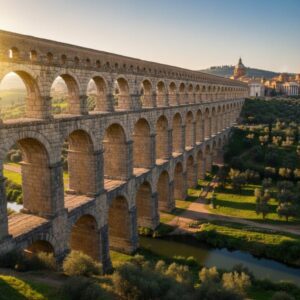
Which ancient Roman structures carried water over 50 miles using only gravity?

Fountains

Aqueducts

Bridges

Sewers

Points won
0
Correct score
0%
Ad Space

More Questions

Did You Know? 10 Facts About Loki

⏱️ 7 min read Did You Know? 10 Fascinating Facts About Loki Loki stands as one of the most complex and intriguing figures in Norse mythology....

More Articles

Top 10 Legendary Love Stories

Top 10 Legendary Love Stories

⏱️ 6 min read

Top 10 Legendary Love Stories

Throughout human history, love stories have captivated our imaginations and touched our hearts. The most enduring tales transcend time and culture, becoming legends that continue to resonate with people across generations. These mythological and legendary romances explore the depths of human emotion, sacrifice, devotion, and tragedy. From ancient civilizations to medieval times, these ten legendary love stories have shaped our understanding of romance and remain as powerful today as when they were first told.

1. Orpheus and Eurydice

This Greek mythological tale tells of Orpheus, a legendary musician whose songs could charm all living things, and his beloved wife Eurydice. When Eurydice died from a serpent bite, Orpheus descended into the underworld to retrieve her. His music softened the hearts of Hades and Persephone, who agreed to let Eurydice return to the living world on one condition: Orpheus must not look back at her until they reached the surface. Tragically, just before reaching the exit, Orpheus turned to ensure she was following, causing Eurydice to vanish forever. This story represents the ultimate test of faith and the devastating consequences of doubt in love.

2. Tristan and Isolde

This medieval romance from Celtic mythology centers on the forbidden love between Tristan, a Cornish knight, and Isolde, an Irish princess betrothed to King Mark of Cornwall. After accidentally consuming a love potion meant for Isolde and King Mark, Tristan and Isolde fall hopelessly in love. Their passionate but forbidden affair leads to betrayal, exile, and ultimately death. Various versions exist across European literature, but all emphasize the power of love that defies social conventions and the tragic consequences of divided loyalties.

3. Pyramus and Thisbe

Originating from Babylonian legend and popularized by the Roman poet Ovid, this tale inspired Shakespeare's Romeo and Juliet. Pyramus and Thisbe were young lovers in ancient Babylon whose families forbade their union. Communicating through a crack in the wall separating their homes, they planned to meet secretly. Due to a tragic misunderstanding involving a lion and a bloodstained veil, Pyramus believed Thisbe had been killed and took his own life. Upon discovering his body, Thisbe did the same. Their blood stained the white mulberry fruits purple, symbolizing their eternal love.

4. Cupid and Psyche

This Roman myth tells of Psyche, a mortal woman so beautiful that people worshipped her instead of Venus, the goddess of love. Jealous Venus ordered her son Cupid to make Psyche fall in love with a monster, but Cupid himself fell deeply in love with her. He visited her nightly but forbade her to look upon him. When Psyche's curiosity led her to break this rule, Cupid fled. Psyche then endured impossible tasks set by Venus to win back her love, eventually achieving immortality and marrying Cupid. This story represents the triumph of love over jealousy and the soul's journey toward divine union.

5. Lancelot and Guinevere

Perhaps the most famous love triangle in Arthurian legend, this story involves Sir Lancelot, the greatest knight of the Round Table, and Queen Guinevere, wife of King Arthur. Their illicit love affair exemplifies the conflict between courtly love and feudal loyalty. Despite their devotion to Arthur, Lancelot and Guinevere could not resist their passion for each other. Their relationship ultimately contributed to the downfall of Camelot and Arthur's kingdom, demonstrating how even the noblest love can lead to destruction when it conflicts with duty and honor.

6. Rama and Sita

From the ancient Indian epic Ramayana, this story portrays the ideal of devoted love in Hindu tradition. Prince Rama won Sita's hand by stringing the divine bow of Shiva. When Rama was exiled to the forest for fourteen years, Sita voluntarily accompanied him, demonstrating her unwavering devotion. After Sita was kidnapped by the demon king Ravana, Rama waged war to rescue her. Despite trials and separations, including Sita's trial by fire to prove her purity, their love endured. This legend exemplifies dharma, devotion, and the strength of marital bonds through adversity.

7. Paris and Helen

The love affair that launched a thousand ships, this Greek mythological tale involves Paris, prince of Troy, and Helen, the most beautiful woman in the world and wife of Menelaus, king of Sparta. When Paris judged Aphrodite the fairest goddess, she rewarded him with Helen's love. Paris's abduction or elopement with Helen sparked the Trojan War, lasting ten years and causing countless deaths. This legend explores how passion can have catastrophic consequences and questions whether love can justify war and destruction.

8. Eros and Thanatos in the Story of Alcestis and Admetus

This Greek myth tells of Alcestis, who volunteered to die in place of her husband, King Admetus, when the Fates decreed his death. Her supreme act of love and self-sacrifice moved the gods, and Heracles (or Persephone in some versions) intervened to bring her back from the underworld. This story represents the ultimate expression of selfless love and the belief that true devotion can overcome even death itself. It has inspired countless works exploring the theme of sacrificial love.

9. The Weaver Girl and the Cowherd

This Chinese legend tells of Zhinü, a goddess and skilled weaver, and Niulang, a mortal cowherd. When they fell in love and married, Zhinü neglected her heavenly duties. As punishment, the Queen Mother of Heaven separated them with the Milky Way, allowing them to meet only once yearly on the seventh day of the seventh lunar month, when magpies form a bridge across the celestial river. This story, celebrated during the Qixi Festival, symbolizes enduring love that transcends separation and the bittersweet nature of longing.

10. Layla and Majnun

This Arabian and Persian legend tells of Qays, who became known as Majnun (meaning "possessed" or "madman") due to his overwhelming love for Layla. When tribal conflicts prevented their marriage and Layla was wed to another, Majnun wandered the desert, composing poetry about his beloved. Even after Layla's death, Majnun continued his devotion until his own death at her grave. This story has become the quintessential tale of unrequited love in Middle Eastern and South Asian literature, representing love as a form of divine madness that transcends reason and social boundaries.

Conclusion

These ten legendary love stories have endured through centuries because they speak to universal human experiences: passion, sacrifice, devotion, loss, and the transformative power of love. Whether ending in triumph or tragedy, each tale reveals profound truths about the human heart and our eternal quest for connection. From the underworld of Greek mythology to the palaces of Arthurian legend, from ancient India to medieval Persia, these stories continue to inspire art, literature, and our understanding of love itself. They remind us that love has always been worth celebrating, worth suffering for, and worth remembering across the ages.
Top 10 Largest Volcanoes

Top 10 Largest Volcanoes

⏱️ 7 min read

Top 10 Largest Volcanoes on Earth

Volcanoes are among nature's most powerful and awe-inspiring geological formations, representing the raw energy that lies beneath Earth's surface. While many people think of volcanoes as towering peaks like Mount Fuji or Mount St. Helens, the truly largest volcanoes on our planet are often far more massive than commonly imagined. These geological giants stretch across vast areas, containing enormous volumes of material and representing millions of years of volcanic activity. Understanding the world's largest volcanoes provides insight into plate tectonics, Earth's internal dynamics, and the forces that continue to shape our planet today.

1. Tamu Massif

Located beneath the Pacific Ocean approximately 1,000 miles east of Japan, Tamu Massif holds the distinction of being the largest single volcano on Earth. This massive underwater shield volcano covers an area of approximately 120,000 square miles, making it roughly the size of New Mexico. Rising about 2.2 miles from the ocean floor, Tamu Massif was formed around 145 million years ago during the late Jurassic period. Scientists only confirmed its status as a single volcano in 2013, having previously believed it was a collection of multiple volcanic structures. The volcano has been extinct for millions of years and represents a remarkable example of how massive single volcanic systems can grow under the right geological conditions.

2. Mauna Loa

Mauna Loa, located on the Big Island of Hawaii, is the largest active volcano on Earth and one of five volcanoes that form the Hawaiian Islands. While it rises 13,681 feet above sea level, its true size becomes apparent when measured from its base on the ocean floor, where it extends an additional 16,400 feet downward. The volcano contains approximately 18,000 cubic miles of rock and covers an area of more than 2,000 square miles. Mauna Loa has erupted 33 times since 1843, with its most recent eruption occurring in 2022. The volcano continues to grow with each eruption, adding new layers of basaltic lava to its massive structure.

3. Kilauea

Also located on Hawaii's Big Island, Kilauea is one of the world's most active volcanoes and, when measured by volume of lava erupted, ranks among the largest. While smaller than its neighbor Mauna Loa, Kilauea has been erupting almost continuously since 1983, adding substantial material to its structure. The volcano covers approximately 552 square miles and rises 4,091 feet above sea level. Its persistent activity and accessibility have made it one of the most studied volcanoes in the world, providing scientists with invaluable data about volcanic processes and lava behavior.

4. Ojos del Salado

Straddling the border between Chile and Argentina, Ojos del Salado is the world's highest volcano at 22,615 feet above sea level. This massive stratovolcano is part of the Andes mountain range and represents one of the largest volcanic structures in terms of height and volume. Despite its extreme elevation and the presence of permanent snow and ice near its summit, Ojos del Salado remains an active volcano, though its last confirmed eruption occurred approximately 1,300 years ago. The volcano's enormous size results from millions of years of eruptions and the tectonic forces that continue to push the Andes upward.

5. Mount Kilimanjaro

Mount Kilimanjaro in Tanzania is Africa's highest peak and one of the world's largest stratovolcanoes, rising 19,341 feet above sea level. This massive volcanic complex consists of three volcanic cones: Kibo, Mawenzi, and Shira. Kibo, the highest peak, is a dormant volcano that last erupted approximately 360,000 years ago, though volcanic gas emissions continue to occur. The volcano covers an area of approximately 1,688 square miles and contains an enormous volume of volcanic rock accumulated over roughly three million years of activity. Its dramatic rise from the surrounding plains makes it one of the most visually impressive volcanoes on Earth.

6. Sierra Negra

Located in the Galápagos Islands, Sierra Negra features the second-largest volcanic crater in the world, measuring approximately six miles across. The volcano rises 3,688 feet above sea level and covers a substantial portion of Isabela Island. Sierra Negra is an active shield volcano that has erupted numerous times in recorded history, with its most recent significant eruption occurring in 2018. The volcano's massive caldera formed through repeated collapse events following major eruptions that emptied magma chambers beneath the surface. This geological giant continues to shape the landscape of the Galápagos and provides unique habitats for the islands' distinctive wildlife.

7. Newberry Volcano

Located in central Oregon, Newberry Volcano is one of the largest volcanoes in the continental United States, covering approximately 1,200 square miles. This shield volcano rises 7,984 feet above sea level and features a large caldera at its summit containing two alpine lakes. The volcano has been active for at least 600,000 years and last erupted approximately 1,300 years ago. Despite its enormous size, Newberry Volcano has a relatively low profile compared to the nearby Cascade peaks, making it less visually obvious but no less significant in terms of volcanic volume and area covered.

8. Galeras

Galeras, located in southern Colombia near the city of Pasto, is one of South America's most active and largest volcanoes. Rising 14,029 feet above sea level, this stratovolcano has been active for at least one million years. The volcano's current cone sits within a large caldera that formed approximately 560,000 years ago during a massive collapse event. Galeras covers a substantial area and poses significant hazards to the more than 450,000 people living in the surrounding region. Its persistent activity and large size make it one of the most closely monitored volcanoes in the world.

9. Mount Etna

Mount Etna, located on the eastern coast of Sicily, Italy, is Europe's largest and most active volcano. Standing 10,991 feet tall (though this height fluctuates with eruptions and collapses), Etna covers approximately 459 square miles. The volcano has been continuously active for at least 2,700 years, with written records of its eruptions dating back to ancient Greek and Roman times. Mount Etna's size and volume have grown substantially over hundreds of thousands of years of activity, and it continues to add new material through frequent eruptions. The volcano's fertile slopes support extensive agriculture, despite the ongoing volcanic hazards.

10. Yellowstone Caldera

The Yellowstone Caldera in Wyoming represents one of the world's largest volcanic systems and is classified as a supervolcano due to its capacity for exceptionally large eruptions. The current caldera, formed during a massive eruption 640,000 years ago, measures approximately 34 by 45 miles across. While the caldera itself is the result of collapse following a massive eruption, the entire Yellowstone volcanic system covers thousands of square miles and contains an enormous magma chamber beneath the surface. The volcano remains active, as evidenced by thousands of earthquakes annually, numerous geysers, hot springs, and ground deformation. Though it has been 70,000 years since the last lava flow, Yellowstone continues to be one of Earth's most significant volcanic features.

Conclusion

The world's largest volcanoes represent extraordinary geological phenomena that have shaped Earth's surface over millions of years. From the submarine giant Tamu Massif to the towering heights of Ojos del Salado, from Hawaii's shield volcanoes to the massive caldera systems like Yellowstone, these volcanic structures demonstrate the incredible power of Earth's internal processes. Many of these volcanoes remain active today, continuing to grow and evolve while providing scientists with opportunities to study volcanic behavior and better understand our dynamic planet. These geological giants remind us that Earth remains a constantly changing world, shaped by forces operating on timescales far beyond human experience yet profoundly influencing the environment and ecosystems we inhabit today.