
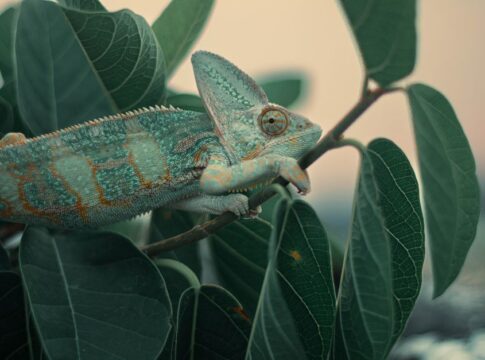
Why Chameleons Change Color: The Surprising Truth
By Trivia Daily, Staff Writer — Published July 31, 2026
Table of Contents
- Key Takeaways
- How Chameleons Change Color: The Biological Mechanism
- The Real Reasons Chameleons Change Color
- Comparing Color-Changing Abilities Across Species
- Common Myths About Chameleon Color Change
- The Speed and Limits of Color Change
- Frequently Asked Questions
For generations, we’ve been told that chameleons change color to blend into their surroundings—a perfect camouflage trick to hide from predators. But here’s a surprising fact that might change everything you thought you knew: chameleons don’t primarily change color for camouflage at all. The real reasons why chameleons change color are far more fascinating and involve communication, mood, temperature regulation, and even courtship displays. This amazing ability stems from specialized cells beneath their skin that work like tiny biological light filters, creating one of nature’s most interesting optical phenomena.
The truth behind this reptilian superpower reveals a world of complex biology and social behavior that scientists only fully began to understand in recent decades. Let’s explore the surprising science behind these color-changing creatures.
Key Takeaways
- Chameleons primarily change color to communicate with other chameleons, regulate body temperature, and express emotions—not mainly for camouflage.
- The color change happens through specialized cells called chromatophores, iridophores, and leucophores that contain pigments and reflective crystals beneath the skin.
- Male chameleons display brighter colors during courtship or territorial disputes, while darker colors often signal stress or submission.
- Not all chameleon species have the same color-changing abilities—some can only shift between limited shades of brown and green.
- Temperature affects color change: chameleons often become darker to absorb more heat and lighter to reflect sunlight.
- The panther chameleon holds the record for the most dramatic color transformations, shifting through vibrant reds, blues, greens, and yellows.
How Chameleons Change Color: The Biological Mechanism
The secret to a chameleon’s color-changing ability lies in multiple layers of specialized skin cells working together. The outermost layer contains chromatophores—cells packed with pigments like yellow, red, and brown. Beneath these sit iridophores, cells containing tiny nanocrystals that reflect light. Even deeper are leucophores, which reflect white light.
Here’s where it gets truly remarkable. When a chameleon experiences different stimuli—seeing a rival, feeling stressed, or detecting temperature changes—its nervous system sends signals that cause the iridophores to adjust the spacing of their nanocrystals. This adjustment changes which wavelengths of light get reflected back. Think of it like tuning a microscopic light filter across millions of cells simultaneously.
Researchers discovered that relaxed chameleons have tightly packed crystals in their iridophores, reflecting blue light. When excited or agitated, these crystals spread apart, reflecting longer wavelengths like yellow, orange, or red. Combined with the pigments in the upper layers, this creates the spectacular color displays we observe.
The Real Reasons Chameleons Change Color
Camouflage ranks surprisingly low on the list of reasons chameleons shift their hues. Social communication dominates. Male chameleons flash bright, bold colors during territorial disputes—a visual warning that says “back off” without requiring physical combat. During mating season, males display their most vibrant patterns to attract females and intimidate rivals.
Females use color to communicate too. A pregnant female often displays dark colors with bright spots to signal she’s not interested in mating. This saves energy and prevents unwanted attention from persistent males.
Temperature regulation plays a crucial role. Cold chameleons darken their skin to absorb more solar radiation, warming up faster in the morning sun. When overheated, they lighten to reflect sunlight and cool down. This thermoregulatory function is especially important for these cold-blooded reptiles.
Emotional states trigger color changes as well. Stressed or frightened chameleons often turn darker or display dull colors. Content, relaxed chameleons typically show their baseline coloration—usually greens and browns that do provide some background blending, though that’s more coincidental than intentional.
Comparing Color-Changing Abilities Across Species
| Chameleon Species | Color Range | Primary Use |
|---|---|---|
| Panther Chameleon | Vibrant reds, blues, greens, yellows, oranges | Courtship displays and territorial communication |
| Veiled Chameleon | Greens, yellows, browns, some blue | Temperature regulation and mood signaling |
| Jackson’s Chameleon | Greens, yellows, limited brown tones | Subtle mood changes and temperature |
| Pygmy Chameleons | Browns, grays, limited green shifts | Minimal color change, mostly brown tones |
Common Myths About Chameleon Color Change
The biggest myth? That chameleons can match any background like a living mood ring for their environment. In reality, chameleons have a limited color palette determined by their species. A chameleon can’t turn purple to match your shirt or blue to blend with the sky.
Another misconception suggests chameleons change color instantly. The transformation actually takes anywhere from 20 seconds to several minutes, depending on the intensity of the stimulus and the complexity of the pattern change.
Some people believe all lizards can change color like chameleons. While other species like anoles and geckos have limited color-shifting abilities, chameleons possess the most sophisticated system. Their multi-layered skin structure and crystalline cells remain unique in the reptile world.
The Speed and Limits of Color Change
A chameleon’s color-changing speed varies by situation. Rapid emotional responses—like spotting a predator or rival—can trigger visible changes within 20 to 30 seconds. Slower shifts related to temperature or relaxation may take several minutes to fully develop.
Physical limitations exist too. Chameleons can only produce colors that their specific cell structures allow. No chameleon can produce true black or pure white, though some species get close. The available palette depends on which pigments their chromatophores contain and how their iridophores’ crystal structures are arranged.
Age affects the ability as well. Juvenile chameleons often display more muted colors than adults. As they mature, their color-changing capabilities become more pronounced, particularly in males preparing for breeding competition.
Frequently Asked Questions
Do chameleons change color to match their environment?
No, this is a common myth. Chameleons primarily change color to communicate with other chameleons, regulate their body temperature, and express emotions like stress or excitement. While their natural colors may provide some camouflage, active background-matching is not their main purpose.
Can all chameleons change color equally well?
No, color-changing abilities vary widely by species. Panther chameleons display the most dramatic color shifts with vibrant hues, while pygmy chameleons can only shift between limited shades of brown and gray. About 160 chameleon species exist, each with different capabilities.
How fast can a chameleon change color?
Chameleons typically change color within 20 seconds to several minutes, depending on the trigger. Emotional responses like fear or aggression produce faster changes, while temperature-related shifts happen more gradually. The transformation is not instantaneous as often depicted in cartoons.
What causes the actual color change in chameleon skin?
Special cells called iridophores contain nanocrystals that adjust their spacing in response to neural signals. This changes which light wavelengths reflect back, creating different colors. These work together with pigment-containing chromatophores in the upper skin layers to produce the final visible color.
The next time you see a chameleon shifting from green to yellow or flashing bright patterns, remember you’re witnessing a sophisticated conversation or physiological response—not a simple camouflage trick. These remarkable reptiles carry a biological light show beneath their skin, reminding us that nature’s true explanations often outshine the myths we create.