
⏱️ 6 min read
Did You Know? 10 Fascinating Facts About Robotics
Robotics has transformed from a science fiction fantasy into an integral part of modern society. From manufacturing plants to medical facilities, and even our homes, robots are revolutionizing how we live and work. The field of robotics combines engineering, computer science, and artificial intelligence to create machines capable of performing complex tasks with precision and efficiency. As technology continues to advance at an unprecedented pace, understanding the development and impact of robotics becomes increasingly important. Here are ten remarkable facts about robotics that illuminate the past, present, and future of this groundbreaking technology.
1. The Word “Robot” Has Literary Origins
The term “robot” was first introduced in 1920 by Czech playwright Karel Čapek in his science fiction play “R.U.R.” (Rossum’s Universal Robots). The word derives from the Czech word “robota,” meaning forced labor or drudgery. Interestingly, it was actually Čapek’s brother, Josef, who suggested the term. This theatrical origin highlights humanity’s long-standing fascination with artificial beings and automated servants, a concept that has captivated imaginations for over a century.
2. Industrial Robots Revolutionized Manufacturing
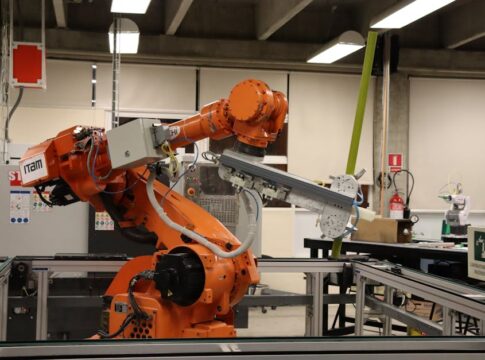
The first industrial robot, Unimate, was installed in a General Motors plant in New Jersey in 1961. Weighing approximately two tons, this groundbreaking machine was designed to handle hot pieces of metal from die-casting machines and perform spot welding on automobile bodies. Created by George Devol and Joseph Engelberger, often called the “father of robotics,” Unimate marked the beginning of the automation revolution in manufacturing. Today, there are over three million industrial robots operating in factories worldwide, with that number growing exponentially each year.
3. Surgical Robots Perform Thousands of Operations Daily
Medical robotics has advanced to the point where robots assist in over one million surgical procedures annually worldwide. The da Vinci Surgical System, one of the most widely used surgical robots, enables surgeons to perform minimally invasive procedures with enhanced precision, flexibility, and control. These robotic systems translate a surgeon’s hand movements into smaller, more precise movements of tiny instruments inside the patient’s body. This technology has reduced recovery times, minimized scarring, and improved patient outcomes across various surgical specialties.
4. Robots Can Withstand Extreme Environments
Robots have been deployed in environments that would be impossible or deadly for humans to explore. The Mars rovers, including Curiosity and Perseverance, have successfully operated on the Martian surface for years, withstanding temperatures ranging from minus 130 to plus 30 degrees Celsius. Deep-sea exploration robots have descended to the Mariana Trench, nearly 11 kilometers below the ocean’s surface, where pressure exceeds 1,000 atmospheres. Additionally, robots have been instrumental in disaster response, entering areas with high radiation levels, toxic gases, or structural instability where human rescue workers cannot safely operate.
5. Social Robots Are Changing Healthcare and Education
Social robots designed to interact with humans are making significant impacts in therapeutic and educational settings. Robots like Paro, a therapeutic seal robot, have shown remarkable success in reducing stress and anxiety in elderly patients with dementia. In education, robots such as NAO are being used to teach programming to children and assist in therapy for children with autism spectrum disorders. These robots can recognize faces, respond to emotions, and engage in natural conversations, creating meaningful connections with their human companions.
6. Swarm Robotics Mimics Nature’s Collective Intelligence
Inspired by the collective behavior of social insects like ants and bees, swarm robotics involves coordinating large numbers of simple robots to accomplish complex tasks. These robot swarms operate without centralized control, instead relying on local interactions and simple rules to achieve emergent collective behavior. Potential applications include search and rescue operations, environmental monitoring, and agricultural automation. Researchers have demonstrated swarms of tiny robots that can self-assemble into different configurations, work together to move objects much larger than themselves, and explore unknown territories efficiently.
7. Soft Robotics Opens New Possibilities
Unlike traditional rigid robots, soft robots are constructed from flexible, compliant materials that can bend, stretch, and deform. This revolutionary approach to robotics allows machines to safely interact with delicate objects and navigate through confined spaces. Soft robotic grippers can handle fragile items like fruit without causing damage, while soft robotic exosuits are being developed to assist people with mobility impairments. The octopus-inspired soft robots can squeeze through openings much smaller than their normal size, making them ideal for search and rescue missions in collapsed buildings or other confined environments.
8. Robots Are Becoming Autonomous Decision Makers
Modern robots increasingly incorporate artificial intelligence and machine learning, enabling them to make independent decisions based on their environment. Autonomous vehicles use sophisticated sensor arrays and AI algorithms to navigate roads, interpret traffic signs, and make split-second decisions to avoid obstacles. Warehouse robots can optimize their own routes, coordinate with other robots to avoid collisions, and adapt to changing inventory layouts without human programming. This autonomy represents a fundamental shift from robots that simply execute pre-programmed instructions to machines that can learn from experience and improve their performance over time.
9. The Global Robot Population Is Exploding
According to the International Federation of Robotics, the worldwide operational stock of industrial robots has grown by double-digit percentages annually in recent years. More remarkably, service robots for professional and domestic use have seen even more dramatic growth. Millions of robotic vacuum cleaners, lawn mowers, and pool cleaners operate in homes worldwide. The robot density in manufacturing, measured as the number of robots per 10,000 employees, has reached over 900 in some countries like South Korea and Singapore, fundamentally transforming their industrial landscapes and labor markets.
10. Humanoid Robots Are Approaching Human-Like Capabilities
Recent advances in humanoid robotics have produced machines with increasingly human-like movement and dexterity. Atlas, developed by Boston Dynamics, can run, jump, perform backflips, and navigate complex obstacle courses with remarkable agility. Honda’s ASIMO could recognize faces, understand and respond to commands, and navigate stairs and uneven terrain. These achievements represent decades of research in balance, locomotion, and control systems. While fully human-equivalent robots remain in the future, current humanoid robots demonstrate capabilities that seemed impossible just years ago, suggesting rapid continued advancement in the field.
Conclusion
These ten facts merely scratch the surface of the vast and rapidly evolving field of robotics. From their literary origins to their current sophisticated applications in surgery, space exploration, and daily life, robots have fundamentally altered human civilization. As artificial intelligence continues to advance and robotics technology becomes more accessible and affordable, the integration of robots into society will only deepen. Understanding these developments is essential for anyone seeking to comprehend the technological landscape of the 21st century. The future of robotics promises even more remarkable innovations that will continue to challenge our understanding of what machines can accomplish and how humans and robots will coexist and collaborate in the decades ahead.