
⏱️ 7 min read
Did You Know? 15 Facts About Arctic Wildlife
The Arctic represents one of Earth’s most extreme environments, where temperatures plummet to unimaginable lows and darkness reigns for months at a time. Yet despite these harsh conditions, a remarkable array of wildlife has not only survived but thrived in this frozen realm. From massive marine mammals to tiny birds, Arctic wildlife has evolved extraordinary adaptations that allow them to flourish where few other creatures can exist. These fascinating animals continue to captivate scientists and nature enthusiasts alike with their incredible survival strategies and unique behaviors. Here are 15 remarkable facts about Arctic wildlife that showcase the amazing biodiversity of the far north.
1. Polar Bears Have Black Skin Beneath Their White Fur
While polar bears appear white or cream-colored, their skin is actually jet black. This dark pigmentation helps them absorb and retain heat from the sun. Their fur appears white because each hair shaft is transparent and hollow, reflecting visible light. This combination of black skin and hollow fur provides exceptional insulation, allowing polar bears to maintain their body temperature even in temperatures that drop below -40 degrees Fahrenheit.
2. Arctic Foxes Change Color With the Seasons
The Arctic fox possesses one of nature’s most effective camouflage systems. During winter, their coat turns completely white to blend with snow and ice. As spring arrives, they molt into a brown or gray coat that matches the tundra’s rocky terrain. This seasonal transformation occurs twice yearly and is controlled by photoperiod—the length of daylight the fox experiences.
3. Narwhals’ Tusks Are Actually Teeth
The narwhal’s distinctive spiral tusk, which can grow up to 10 feet long, is actually an elongated canine tooth that protrudes through the upper lip. This tusk contains millions of nerve endings and serves as a sensory organ, helping narwhals detect changes in their environment, including water temperature, pressure, and salinity. Primarily males possess these tusks, though occasionally females develop them as well.
4. Caribou Eyes Change Color Between Seasons
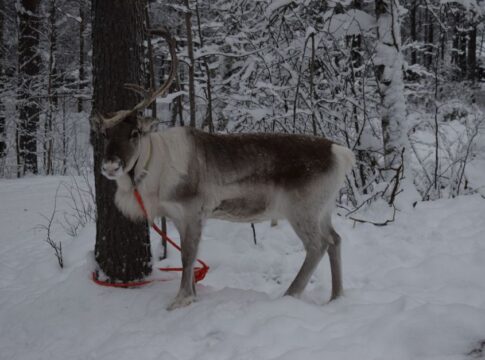
Reindeer, also known as caribou, have eyes that change color from gold in summer to blue in winter. This remarkable adaptation helps them see better during the Arctic’s dark winter months. The color change is caused by a layer of tissue in the eye called the tapetum lucidum, which reflects light and enhances night vision. The blue winter coloring allows them to see ultraviolet light, making predators and food sources more visible against the snow.
5. Snowy Owls Can Detect Prey Beneath Snow
Snowy owls possess extraordinarily acute hearing that enables them to detect lemmings and other small mammals moving beneath layers of snow. These magnificent white birds have asymmetrical ear openings that help them pinpoint the exact location of sounds. During breeding season, a single snowy owl family can consume more than 1,500 lemmings to feed their young.
6. Walruses Can Sleep While Floating Vertically
Walruses have developed pharyngeal pouches—air sacs in their throats that can be inflated like balloons. These pouches allow them to sleep while bobbing vertically in the water, keeping their heads above the surface to breathe. Walruses can sleep for extended periods this way, sometimes remaining afloat for up to 84 hours continuously.
7. Arctic Terns Undertake the Longest Migration on Earth
The Arctic tern holds the record for the longest migration of any animal on the planet, traveling approximately 44,000 miles annually. These remarkable birds fly from their Arctic breeding grounds to the Antarctic and back each year, experiencing two summers and more daylight than any other creature. Over their 30-year lifespan, an Arctic tern may travel more than 1.5 million miles.
8. Musk Oxen Have Prehistoric Origins
Musk oxen have remained virtually unchanged for thousands of years, having coexisted with woolly mammoths during the last Ice Age. Their remarkable qiviut undercoat is eight times warmer than sheep’s wool and is considered one of the finest natural fibers in the world. When threatened, musk oxen form defensive circles with their horns facing outward, protecting vulnerable calves in the center—a strategy that worked well against wolves but not against human hunters.
9. Beluga Whales Are Called “Sea Canaries”
Beluga whales are among the most vocal of all whale species, producing a wide variety of clicks, whistles, chirps, and squeals. This extensive vocal repertoire earned them the nickname “sea canaries” from early sailors. Belugas use these sounds for echolocation, communication, and social bonding. Their flexible necks, unusual among whales, allow them to nod and turn their heads, enhancing their ability to communicate through body language.
10. Arctic Hares Can Reach Speeds of 40 Miles Per Hour
Despite their stocky appearance and short limbs, Arctic hares are incredibly fast runners, capable of reaching speeds up to 40 miles per hour. They sometimes hop on their hind legs like kangaroos, allowing them to spot predators while traveling. Their oversized hind feet act like snowshoes, distributing their weight across the snow’s surface and preventing them from sinking.
11. Ringed Seals Build Snow Caves for Breeding
Ringed seals, the smallest of all seal species, construct elaborate breathing holes and birth lairs in the sea ice. Pregnant females excavate snow caves above these breathing holes, where they give birth and nurse their pups. These structures provide crucial protection from extreme cold and predators, particularly polar bears, who actively hunt for these hidden dens.
12. Peregrine Falcons Hunt in the Arctic Summer
Peregrine falcons, the fastest animals on Earth, migrate to the Arctic to breed during the summer months. These aerial predators can dive at speeds exceeding 200 miles per hour when hunting. The Arctic’s abundance of migratory birds during summer provides ample food for raising their young, despite the harsh conditions.
13. Wolverines Have Frost-Resistant Fur
Wolverines possess uniquely structured fur that resists frost accumulation, making it prized by Arctic peoples for parka hoods. Their powerful jaws and strong teeth allow them to crush frozen meat and bones that other predators cannot consume. Despite weighing only 20-40 pounds, wolverines are fearless and have been known to drive much larger predators, including bears, away from carcasses.
14. Bowhead Whales May Live Over 200 Years
Bowhead whales are believed to be the longest-living mammals on Earth, with some individuals estimated to be over 200 years old. Evidence for this extraordinary longevity comes from stone harpoon points found embedded in harvested whales—harpoons that hadn’t been manufactured since the 1800s. These massive whales have the thickest blubber of any animal, measuring up to 20 inches thick, allowing them to survive in frigid Arctic waters year-round.
15. Lemmings Don’t Actually Commit Mass Suicide
Contrary to popular myth, lemmings do not commit mass suicide by jumping off cliffs. This misconception was perpetuated by a 1958 documentary that staged such scenes. In reality, lemming populations undergo natural cycles of boom and bust, and during population peaks, they may migrate in large numbers seeking new territory. Some may accidentally fall or be pushed into water during these migrations, but this is not intentional or suicidal behavior.
Conclusion
Arctic wildlife represents some of nature’s most impressive examples of adaptation and survival. These 15 facts merely scratch the surface of the fascinating biology and behavior exhibited by creatures living at the top of the world. From color-changing foxes to centuries-old whales, from marathon-flying birds to deep-diving seals, Arctic animals have evolved remarkable strategies to thrive in one of Earth’s most challenging environments. As climate change continues to alter the Arctic landscape, understanding and appreciating these incredible animals becomes increasingly important for conservation efforts. The resilience and adaptability demonstrated by Arctic wildlife serve as powerful reminders of nature’s ingenuity and the importance of protecting these unique ecosystems for future generations.