
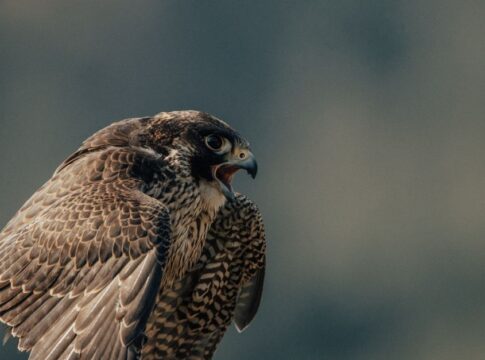
Peregrine Falcon Dive: Fastest Animal Speed on Earth
By Trivia Daily, Animals Desk — Published August 20, 2026
Table of Contents
- Key Takeaways
- How the Peregrine Falcon Dive Achieves Record Speed
- Physical Adaptations That Make Extreme Speed Possible
- Comparing Speed Records Across the Animal Kingdom
- Habitat and Global Distribution
- Conservation Success Story
- Frequently Asked Questions
When a peregrine falcon spots prey from high above, it folds its wings tight against its body and drops like a feathered missile. During this hunting dive—called a stoop—the bird reaches speeds that no other animal on the planet can match. The peregrine falcon dive represents nature’s most extreme example of velocity, with these remarkable predators clocking speeds over 240 miles per hour as they plummet toward unsuspecting birds below.
This breathtaking speed makes the peregrine falcon the fastest animal in the world, a record that has fascinated wildlife researchers and bird enthusiasts for generations. But raw speed is just one piece of the puzzle. The anatomy, behavior, and hunting strategy behind this incredible feat reveal how evolution has shaped a creature perfectly designed for high-velocity pursuit.
Key Takeaways
- Peregrine falcons reach speeds exceeding 240 miles per hour during their hunting stoop, making them the fastest animals on Earth.
- These birds have specialized physical adaptations including streamlined bodies, stiff feathers, and a third eyelid that protects their eyes at extreme speeds.
- Peregrines possess unique nostril baffles that regulate airflow and prevent lung damage during high-speed dives.
- The species hunts other birds mid-flight, striking prey with clenched talons to stun or kill them instantly.
- Peregrine falcons live on every continent except Antarctica, adapting to habitats from Arctic tundra to urban skyscrapers.
- Once endangered by DDT pesticide poisoning, successful conservation efforts have restored peregrine populations worldwide.
How the Peregrine Falcon Dive Achieves Record Speed
The mechanics of a peregrine’s stoop are engineering marvels. When the falcon identifies prey—typically pigeons, doves, or other medium-sized birds—it climbs to a position high above its target. Then it begins the dive.
The bird tucks its feet against its tail and pulls its wings close to its body, creating a teardrop shape that minimizes air resistance. Its sleek, bullet-shaped profile cuts through the air with minimal drag. The falcon’s stiff, pointed wings and tapered body are the result of millions of years of evolution favoring speed and precision.
Gravity does much of the work initially, but peregrines also use active wing beats to accelerate even faster. As the bird plummets, it makes minute adjustments to its wing and tail position, steering toward the moving target below while maintaining aerodynamic efficiency.
Physical Adaptations That Make Extreme Speed Possible
Flying at over 200 miles per hour would kill most creatures. Peregrines survive these speeds thanks to specialized anatomy that protects their bodies from the extreme forces involved.
One critical adaptation is a system of bony tubercles—small cone-shaped structures—inside the bird’s nostrils. These baffles slow incoming air and reduce pressure, preventing the falcon’s lungs from exploding or being damaged by the rushing wind. Fighter jet engines use similar cone-shaped structures for the same reason.
The peregrine’s eyes are equally remarkable. A transparent third eyelid, called a nictitating membrane, sweeps across the eye during the dive, protecting it from debris and wind while maintaining clear vision. The bird’s visual acuity is roughly eight times sharper than human vision, allowing it to track fast-moving prey from incredible distances.
Strong bones and powerful muscles absorb the impact when the falcon strikes its prey. The bird typically hits its target with clenched talons, delivering a blow that can instantly kill or stun the prey bird, which then tumbles toward the ground. The peregrine swoops down to catch its meal mid-air or retrieves it from the ground.
Comparing Speed Records Across the Animal Kingdom
While the peregrine falcon dominates the speed rankings during its dive, other animals hold impressive records in their own categories. Understanding these comparisons helps illustrate just how extraordinary the falcon’s achievement is.
| Animal | Maximum Speed | Method of Locomotion |
|---|---|---|
| Peregrine Falcon | 242+ mph | Diving (stoop) |
| Golden Eagle | 200 mph | Diving |
| Cheetah | 70 mph | Running |
| Sailfish | 68 mph | Swimming |
| Brazilian Free-Tailed Bat | 100 mph | Level flight |
The peregrine’s diving speed is more than three times faster than a cheetah’s sprint. Even in level flight—without the assist of gravity—peregrines can fly at speeds around 40 to 60 miles per hour, respectable but nowhere near their diving record.
Habitat and Global Distribution
Peregrine falcons are among the most widespread bird species on Earth. These adaptable predators thrive in diverse habitats, from remote cliff faces and mountain ranges to coastal areas and modern cities.
Natural peregrine habitat typically includes high cliffs or rock outcroppings that provide nesting sites and vantage points for hunting. But the species has proven remarkably flexible. Urban peregrines nest on skyscraper ledges, bridges, and church steeples, treating tall buildings as artificial cliffs. City environments offer abundant prey in the form of pigeons, making metropolitan areas surprisingly suitable for these birds.
The global range of peregrines is extraordinary. They breed on every continent except Antarctica, from the Arctic tundra to tropical regions. Some populations migrate thousands of miles seasonally, while others remain year-round residents in their territories.
Conservation Success Story
The peregrine falcon’s current abundance masks a near-catastrophic decline in the mid-20th century. DDT and other pesticides accumulated in the food chain, causing peregrine eggshells to become dangerously thin. Eggs broke before chicks could develop, and populations crashed across North America and Europe.
By the 1970s, peregrines had vanished from much of their former range. The species was listed as endangered, and scientists launched intensive recovery programs. Captive breeding efforts produced thousands of young falcons that were released into the wild. DDT was banned in many countries. Slowly, populations rebounded.
Today, the peregrine falcon is considered a conservation success. The species was removed from the U.S. endangered species list in 1999, though it remains protected under various wildlife laws. Monitoring programs continue to track populations and ensure these magnificent birds remain secure.
Frequently Asked Questions
How fast can a peregrine falcon fly in level flight?
During normal horizontal flight, peregrine falcons typically fly between 40 and 60 miles per hour. Their record-breaking speeds only occur during the hunting stoop, when they dive nearly vertically toward prey.
What do peregrine falcons eat?
Peregrines feed almost exclusively on other birds, including pigeons, doves, waterfowl, songbirds, and shorebirds. They occasionally take small mammals or bats, but birds make up roughly 90 percent of their diet.
Can peregrine falcons see better than humans?
Yes, significantly better. Peregrine falcons have visual acuity approximately eight times sharper than human vision, allowing them to spot a pigeon from over two miles away.
Where do peregrine falcons build their nests?
Peregrines don’t build traditional nests. They lay eggs in shallow scrapes on cliff ledges, building ledges, or other high structures. Urban peregrines commonly use skyscraper ledges, bridges, and tall towers as nesting sites.
The peregrine falcon’s dive remains one of nature’s most spectacular displays of speed, precision, and evolutionary refinement. Every stoop is a high-stakes gamble where physics, biology, and instinct converge in a blur of feathers and focused predatory intent. Next time you see a bird of prey circling overhead, consider that you might be watching the fastest animal on Earth preparing for its next breathtaking plunge.