








⏱️ 7 min read
Did You Know? 12 Facts About Crocodiles
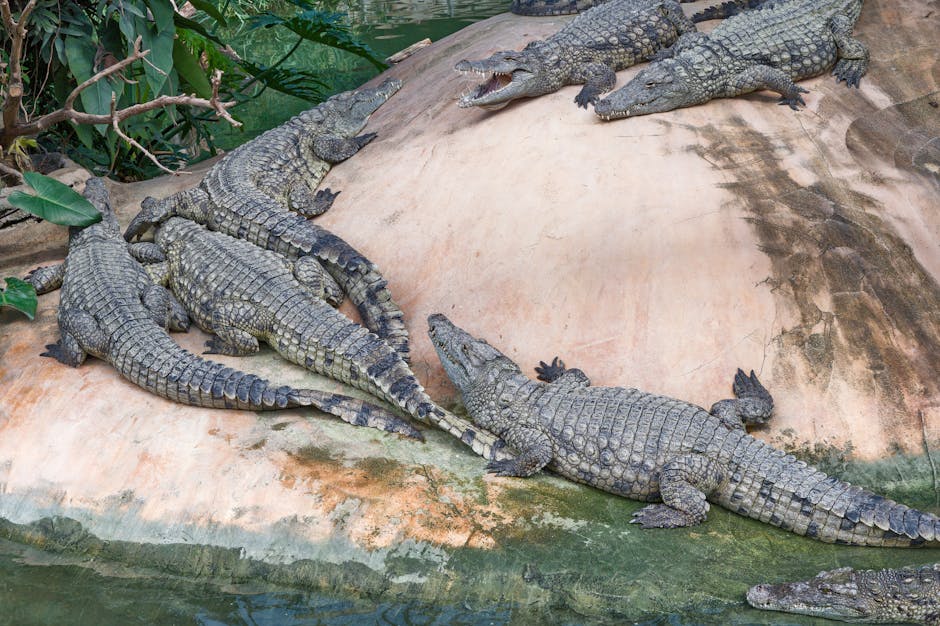
Crocodiles are among the most ancient and fascinating creatures on Earth, having survived for millions of years virtually unchanged. These powerful reptiles inspire both awe and fear, dominating freshwater and saltwater habitats across tropical regions worldwide. Despite their fearsome reputation, crocodiles possess remarkable biological adaptations and behaviors that showcase the complexity of nature's design. From their incredible bite force to their surprisingly tender parental care, these prehistoric predators continue to captivate scientists and wildlife enthusiasts alike. Here are twelve remarkable facts about crocodiles that reveal the extraordinary nature of these apex predators.
1. Ancient Survivors From the Age of Dinosaurs
Crocodiles have existed for approximately 200 million years, making them one of the oldest living species on the planet. They coexisted with dinosaurs during the Mesozoic Era and survived the mass extinction event that wiped out the dinosaurs 65 million years ago. Their body design has remained largely unchanged throughout this time, a testament to their evolutionary perfection. This incredible longevity makes crocodiles living fossils that provide scientists with invaluable insights into prehistoric life and evolutionary biology.
2. The Most Powerful Bite in the Animal Kingdom
Crocodiles possess the strongest bite force ever measured in any living animal. Saltwater crocodiles, the largest living reptiles, can exert a bite force of approximately 3,700 pounds per square inch (psi), far exceeding that of great white sharks, lions, or any other predator. This extraordinary crushing power allows them to overpower large prey and crack through turtle shells and bones with ease. Interestingly, while their jaw-closing muscles are incredibly strong, the muscles that open their jaws are relatively weak, which is why a simple rubber band or human hands can keep a crocodile's mouth shut.
3. Exceptional Parental Care
Contrary to the perception of crocodiles as mindless killing machines, they are actually devoted parents who display remarkable maternal and paternal care. Female crocodiles guard their nests fiercely for the entire incubation period, which lasts about three months. When the eggs begin to hatch, the mother carefully carries the hatchlings in her mouth to the water, a gentle act that seems contradictory to her powerful jaws. Both parents often protect their young for up to a year, which is unusually long for reptiles and demonstrates a level of parental investment rarely seen in the reptile world.
4. Temperature Determines Baby Gender
Crocodile offspring do not have their sex determined by chromosomes as humans do. Instead, the temperature at which the eggs are incubated determines whether hatchlings will be male or female. Generally, temperatures around 31.6 degrees Celsius produce males, while both cooler and warmer temperatures tend to produce females. This temperature-dependent sex determination makes crocodile populations potentially vulnerable to climate change, as shifting temperatures could create imbalanced sex ratios that threaten breeding success and population stability.
5. They Can't Chew Their Food
Despite their formidable teeth, crocodiles cannot chew their food. Their teeth are designed for gripping and holding prey, not for grinding or chewing. Instead, crocodiles tear their prey into manageable chunks by performing a maneuver called the "death roll," where they spin rapidly while gripping their prey. They swallow these pieces whole, and their highly acidic stomach acid breaks down everything, including bones, horns, and shells. This efficient digestive system allows crocodiles to extract maximum nutrition from their meals and survive long periods without eating.
6. Capable of Remarkable Speed
While crocodiles may appear sluggish when basking in the sun, they are capable of surprising bursts of speed both in water and on land. In water, crocodiles can reach speeds of up to 25 miles per hour in short bursts, propelling themselves with their powerful tails. On land, they can run up to 11 miles per hour for brief distances. This combination of aquatic and terrestrial mobility makes them effective ambush predators capable of launching explosive attacks from the water's edge.
7. Tears Are Not From Emotion
The expression "crocodile tears," meaning false or insincere emotion, actually has a basis in crocodile biology. Crocodiles do produce tears while eating, but not from any emotional response. These tears serve to keep their eyes moist and clean, especially since crocodiles have special glands near their eyes that help excrete excess salt from their bodies. The act of eating stimulates these glands, resulting in what appears to be crying but is simply a physiological response unrelated to emotion.
8. Multiple Species Across the Globe
There are 14 different species of true crocodiles distributed across Africa, Asia, Australia, and the Americas. These range from the massive saltwater crocodile, which can exceed 20 feet in length and weigh over 2,000 pounds, to the smaller dwarf crocodile of West Africa, which typically grows to only five feet long. Each species has adapted to its specific environment, with some thriving in freshwater rivers, others in coastal saltwater areas, and some capable of tolerating both environments.
9. They Can Hold Their Breath for Hours
Crocodiles have adapted to be patient ambush predators capable of remaining submerged for extended periods. While actively hunting or moving, they typically surface every few minutes to breathe. However, when resting underwater, crocodiles can hold their breath for up to two hours by slowing their heart rate and metabolism to conserve oxygen. This ability makes them nearly invisible to prey approaching the water's edge and allows them to wait motionless for the perfect moment to strike.
10. Complex Vocal Communication
Crocodiles are surprisingly vocal creatures with a sophisticated communication system. They produce various sounds including hisses, growls, roars, and bellows that serve different purposes. Adult males produce deep, infrasonic bellows during mating season that can travel long distances through water and air. Hatchlings begin vocalizing even before they emerge from their eggs, using chirps to signal to their mother that they are ready to hatch. Scientists have identified distinct vocalizations for alarm calls, territorial warnings, courtship, and parent-offspring communication.
11. Unique Heart Structure Allows for Diving
Crocodiles possess a sophisticated four-chambered heart similar to birds and mammals, but with a unique adaptation that allows them to thrive as aquatic predators. They have a special valve called the foramen of Panizza that can divert blood flow and reduce oxygen delivery to their bodies while diving. This adaptation allows them to stay submerged longer by reducing their metabolic needs and makes them more efficient hunters in their aquatic environment. This cardiovascular flexibility is one of the many adaptations that makes crocodiles such successful predators.
12. They Swallow Stones for Ballast
Crocodiles deliberately swallow stones, a behavior that has puzzled scientists for years. These gastroliths, or stomach stones, serve multiple purposes. The primary function appears to be as ballast, helping crocodiles control their buoyancy and remain stable in the water. The stones may also aid in grinding food in their stomachs, similar to the gizzard stones in birds, helping to break down tough prey items. Some researchers also suggest that the stones might provide essential minerals or help crocodiles adjust their center of gravity for more efficient swimming.
Conclusion
These twelve fascinating facts reveal that crocodiles are far more than simple predators; they are complex, highly adapted creatures that have perfected the art of survival over millions of years. From their unmatched bite force and exceptional parental devotion to their unique physiological adaptations and sophisticated communication systems, crocodiles represent a remarkable example of evolutionary success. Understanding these ancient reptiles not only satisfies our curiosity about the natural world but also underscores the importance of conserving these magnificent creatures and their habitats for future generations. As apex predators, crocodiles play crucial roles in maintaining the health and balance of their ecosystems, making their continued survival essential to the biodiversity of our planet.