









1 / 10 Questions
0 Points

What Instrument Has Black And White Keys?

Guitar

Trumpet

Piano

Violin

Points won
0
Correct score
0%

More Questions

The Truth About Coca-Cola Originally Being Green

Discover the truth about Coca-Cola's original color and debunk the persistent myth that the iconic beverage was once green instead of brown.

Why Owls Can Rotate Their Heads 270 Degrees

Owl anatomy reveals unique adaptations in neck vertebrae, blood vessels, and eye structure that allow these birds to turn their heads nearly full circle.

7 Surprising Facts About Dragon Myths Across Cultures

Dragon myths appear in civilizations worldwide with stunning similarities and differences. Discover how ancient cultures shaped these legendary creatures.

More Articles

Did You Know? 10 Facts About Artificial Organs

Did You Know? 10 Facts About Artificial Organs

⏱️ 7 min read

Did You Know? 10 Facts About Artificial Organs

Artificial organs represent one of the most remarkable achievements in modern medicine, offering hope to millions of patients worldwide who suffer from organ failure. These sophisticated biomedical devices are designed to replace, support, or augment failing biological organs, extending and improving the quality of countless lives. From the early experiments with mechanical hearts to today's advanced bioengineered tissues, the field of artificial organs has evolved dramatically. This article explores ten fascinating facts about artificial organs that demonstrate the incredible progress of medical science and the potential for future breakthroughs in this life-saving field.

1. The First Artificial Organ Was Developed Over a Century Ago

The history of artificial organs dates back much further than most people realize. The first successful artificial organ was the kidney dialysis machine, developed in 1943 by Dutch physician Willem Kolff during World War II. Using cellophane sausage casings, a washing machine, and orange juice cans, Kolff created a device that could filter toxins from blood. This revolutionary invention laid the groundwork for modern dialysis machines that now sustain millions of patients with kidney failure worldwide. The ingenuity displayed in this wartime invention demonstrates how necessity and innovation can combine to create life-saving technology.

2. Artificial Hearts Have Kept Patients Alive for Years

While early artificial hearts were intended only as temporary bridges to transplantation, modern devices can sustain patients for extended periods. The first total artificial heart implant in a human occurred in 1982 when Dr. William DeVries implanted the Jarvik-7 into patient Barney Clark, who survived for 112 days. Today's ventricular assist devices and total artificial hearts have enabled patients to live for several years, with some individuals surviving more than a decade. These devices have become increasingly sophisticated, featuring quieter operations, smaller sizes, and improved durability that significantly enhances patient quality of life.

3. Bioengineered Organs Are Grown Using Patient Cells

One of the most exciting developments in artificial organ technology involves bioengineering organs using a patient's own cells. Scientists have successfully created bladders, blood vessels, and skin grafts by seeding biodegradable scaffolds with patient cells. This approach offers two significant advantages: the organs are less likely to be rejected by the immune system, and it eliminates the need for lifelong immunosuppressive medications. Researchers have also grown functional windpipes, ears, and even simplified versions of kidneys in laboratory settings, pointing toward a future where custom-grown organs could become commonplace.

4. Cochlear Implants Have Restored Hearing to Hundreds of Thousands

The cochlear implant stands as one of the most successful artificial sensory organs, having restored functional hearing to over 700,000 people worldwide. Unlike hearing aids that amplify sound, cochlear implants bypass damaged portions of the ear and directly stimulate the auditory nerve with electrical impulses. First approved by the FDA in the 1980s, these devices have evolved to provide increasingly natural sound perception. Modern cochlear implants can even enable music appreciation and phone conversations, capabilities that seemed impossible in early versions of the technology.

5. Artificial Pancreas Systems Are Revolutionizing Diabetes Management

For individuals with type 1 diabetes, artificial pancreas systems represent a game-changing development. These hybrid closed-loop systems combine continuous glucose monitoring with insulin pumps and sophisticated algorithms to automatically regulate blood sugar levels. By mimicking the function of a healthy pancreas, these systems reduce the burden of constant monitoring and manual insulin adjustments. Recent FDA approvals of several artificial pancreas systems have made this technology increasingly accessible, offering improved glycemic control and quality of life for diabetes patients while reducing the risk of dangerous hypoglycemic episodes.

6. Three-Dimensional Printing Is Creating Custom Prosthetics and Implants

Three-dimensional printing technology has revolutionized the production of artificial organs and prosthetics. This manufacturing method allows for the creation of patient-specific devices tailored to individual anatomy, improving fit and function. Scientists have successfully 3D-printed titanium ribs, jaw bones, and skull sections for transplantation. Researchers are also working on bioprinting, which uses specialized printers to layer living cells and biomaterials to create functional tissue. While fully functional 3D-printed organs remain in development, the technology has already produced implantable structures like ear cartilage and bone segments that have been successfully transplanted into patients.

7. Artificial Lungs Can Provide Temporary Respiratory Support

Extracorporeal membrane oxygenation (ECMO) devices serve as temporary artificial lungs for patients with severe respiratory failure. These sophisticated machines oxygenate blood outside the body, giving damaged lungs time to heal. ECMO technology gained widespread attention during the COVID-19 pandemic when it became a critical tool for treating patients with severe acute respiratory distress syndrome. While not a permanent solution, these devices have saved countless lives by bridging patients through critical periods of lung failure. Researchers continue working toward developing implantable artificial lungs that could provide longer-term support for patients with chronic lung diseases.

8. Retinal Implants Are Restoring Vision to the Blind

Artificial retinas represent a breakthrough for individuals with certain types of blindness caused by retinal degeneration. These devices use cameras and electrode arrays to stimulate remaining retinal cells, creating visual perception. The Argus II retinal prosthesis, approved in Europe and the United States, has enabled previously blind individuals to perceive shapes, movement, and objects. While the vision provided is currently limited compared to natural sight, recipients can navigate environments, recognize large letters, and detect people and objects. Ongoing research aims to increase the resolution and field of view, potentially offering even greater visual restoration in the future.

9. The Global Artificial Organs Market Is Rapidly Expanding

The economic and medical significance of artificial organs is reflected in the market's substantial growth. Valued at billions of dollars annually, the artificial organs and bionics market is projected to continue expanding significantly over the coming decades. This growth is driven by aging populations, increasing prevalence of chronic diseases, technological advancements, and persistent organ donor shortages. The market encompasses a wide range of products, from dialysis machines and cochlear implants to ventricular assist devices and artificial joints. This economic investment translates into accelerated research and development, bringing new innovations to patients more quickly than ever before.

10. Xenotransplantation May Provide Animal Organs for Human Patients

One of the most controversial yet promising frontiers in artificial organ development involves xenotransplantation, the transplantation of animal organs into humans. Recent breakthroughs have demonstrated that genetically modified pig organs can function in human recipients for extended periods. In 2022, surgeons successfully transplanted a genetically modified pig heart into a human patient who survived for two months. Pigs are considered ideal donors because their organs are similar in size to human organs, and genetic modifications can reduce rejection risks. While ethical concerns and technical challenges remain, xenotransplantation could potentially address the severe shortage of donor organs that results in thousands of deaths annually.

Conclusion

The field of artificial organs represents one of medicine's most dynamic and hopeful frontiers. From the pioneering dialysis machines of the 1940s to today's sophisticated bioengineered tissues and xenotransplanted organs, the progress has been remarkable. These ten facts illustrate not only how far medical science has come but also the incredible potential that lies ahead. As technology continues to advance, artificial organs are becoming more effective, accessible, and sophisticated, offering improved outcomes for patients facing organ failure. While challenges remain, including cost, accessibility, and technical limitations, the trajectory of innovation suggests a future where organ failure may no longer carry the dire prognosis it does today. The continued development of artificial organs promises to save millions of lives and fundamentally transform the practice of medicine in the twenty-first century.
Did You Know? 10 Facts About Leidenfrost Effect

Did You Know? 10 Facts About Leidenfrost Effect

⏱️ 7 min read

Did You Know? 10 Facts About Leidenfrost Effect

Introduction: The Fascinating Leidenfrost Effect

Have you ever noticed how a droplet of water dances and skitters across a scorching hot pan instead of immediately evaporating? This mesmerizing phenomenon is known as the Leidenfrost effect, named after the German physician Johann Gottlob Leidenfrost who first documented it in 1756. This peculiar scientific occurrence happens when a liquid comes into near contact with a surface significantly hotter than its boiling point, creating an insulating vapor layer that prevents direct contact. The Leidenfrost effect is not just a kitchen curiosity—it has profound implications in various fields, from industrial applications to everyday life. Let's explore ten fascinating facts about this remarkable physical phenomenon that continues to captivate scientists and observers alike.

The Ten Remarkable Facts About the Leidenfrost Effect

1. The Insulating Vapor Cushion

At the heart of the Leidenfrost effect lies an incredibly thin layer of vapor that forms between the liquid and the hot surface. When the surface temperature exceeds what's called the Leidenfrost point—typically around 193°C (379°F) for water—the bottom layer of the liquid droplet instantly vaporizes. This vapor layer acts as an insulating cushion, preventing the rest of the liquid from making direct contact with the hot surface. The layer is typically only a fraction of a millimeter thick, yet it's powerful enough to support the entire droplet and significantly slow down the evaporation process. This counterintuitive result means that a water droplet can actually last longer on an extremely hot surface than on a merely hot one.

2. Historical Discovery and Documentation

Johann Gottlob Leidenfrost documented this phenomenon in his 1756 treatise "De Aquae Communis Nonnullis Qualitatibus Tractatus" (A Tract About Some Qualities of Common Water). While the effect had likely been observed by cooks and metalworkers for centuries before, Leidenfrost was the first to study it scientifically and describe it in detail. He conducted experiments by dropping water onto red-hot iron spoons and carefully documenting how the droplets behaved differently depending on the temperature. His work laid the foundation for understanding phase transitions and heat transfer, making him an important figure in thermal physics despite this being his only major contribution to science.

3. The Leidenfrost Point Varies by Liquid

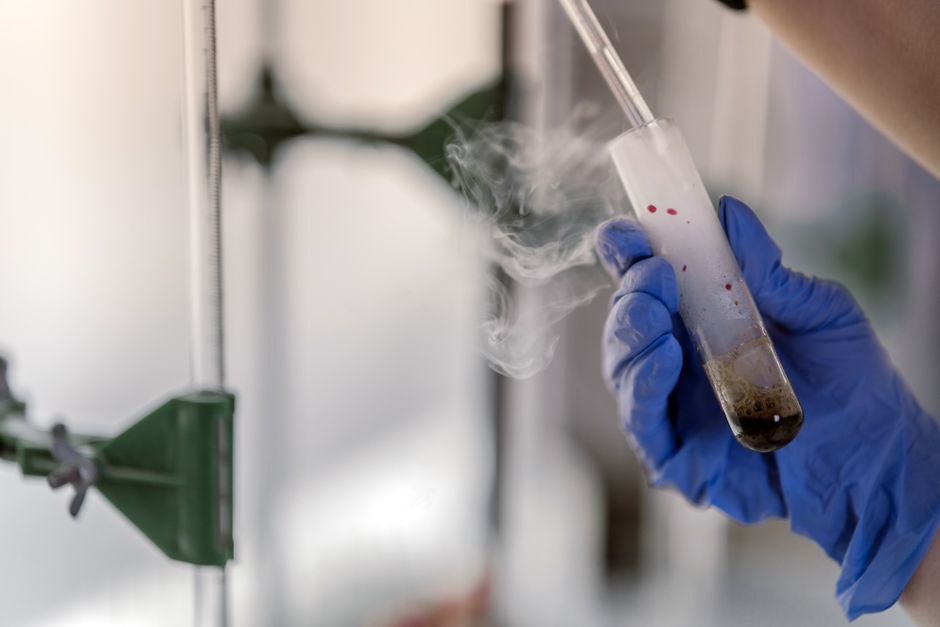
Different liquids have different Leidenfrost points depending on their unique physical and chemical properties. Water typically reaches its Leidenfrost point at around 193°C, but this temperature varies based on surface characteristics and atmospheric pressure. Liquid nitrogen, with its extremely low boiling point of -196°C, can demonstrate the Leidenfrost effect when poured onto surfaces at room temperature. Other liquids like alcohol, acetone, and various oils each have their own specific Leidenfrost points. The temperature required depends on factors such as the liquid's boiling point, surface tension, thermal conductivity, and viscosity, making each substance behave uniquely under these extreme conditions.

4. Application in Metallurgy and Manufacturing

The Leidenfrost effect plays a crucial role in industrial metalworking processes, particularly in quenching and tempering operations. When hot metal is plunged into water or oil for rapid cooling, understanding the Leidenfrost effect is essential for controlling the cooling rate and preventing defects. If the metal surface is hot enough to create a stable vapor blanket, it will cool much more slowly than desired, potentially affecting the material's final properties. Metallurgists must carefully control temperatures and use specific quenching media to either avoid or exploit the Leidenfrost effect, depending on the desired outcome. This knowledge has been instrumental in developing stronger, more durable metal components for everything from automotive parts to aerospace applications.

5. The Dancing Droplet Phenomenon

One of the most visually striking aspects of the Leidenfrost effect is how droplets appear to "dance" or "levitate" on hot surfaces. The vapor layer beneath the droplet is not uniform, and small disturbances create pressure variations that cause the droplet to move erratically across the surface. Additionally, the evaporating vapor escapes from beneath the droplet asymmetrically, creating tiny jet propulsion effects that push the droplet in various directions. This makes Leidenfrost droplets incredibly mobile, and they can travel considerable distances across a hot surface with minimal friction. Scientists have even created specially textured surfaces with microscopic ramps that can guide these droplets in specific directions, opening possibilities for novel cooling systems and microfluidic devices.

6. Self-Propelled Leidenfrost Motion

Researchers have discovered that by carefully designing surface textures and patterns, they can control and direct the movement of Leidenfrost droplets. When placed on asymmetrically textured surfaces, such as those with tiny ratchet-like structures, droplets will spontaneously move in a preferred direction without any external force. This happens because the asymmetric geometry creates unequal vapor flow underneath the droplet, generating a net propulsive force. This discovery has opened up exciting possibilities for self-cleaning surfaces, heat management systems, and even autonomous microfluidic devices that could manipulate tiny amounts of liquid without pumps or external power sources.

7. The Leidenfrost Effect and Human Safety

Surprisingly, the Leidenfrost effect can provide brief protection in certain dangerous situations. When a wet finger briefly touches a very hot surface—significantly hotter than the Leidenfrost point of water—the moisture can create a temporary protective vapor barrier that prevents immediate burning. This is why performers can sometimes briefly touch molten metal or why workers can quickly wet their hands before handling extremely hot objects for a fraction of a second. However, this is extremely dangerous and should never be attempted deliberately, as the protection only lasts for milliseconds and the consequences of miscalculation are severe. Understanding this effect has helped develop better safety protocols in industries dealing with extreme temperatures.

8. Impact on Firefighting and Fire Safety

The Leidenfrost effect has significant implications for firefighting strategies and fire safety equipment. When water droplets from fire hoses hit surfaces that are hot enough to induce the Leidenfrost effect, the water becomes less effective at cooling because the vapor layer reduces heat transfer. This is why firefighters must understand the phenomenon and sometimes use additives or different spray patterns to improve cooling efficiency on extremely hot surfaces. Additionally, researchers are studying how the Leidenfrost effect influences the behavior of fire suppression systems, particularly in scenarios involving liquid fires or hot industrial equipment. Some modern firefighting foams and water additives are specifically designed to lower the Leidenfrost point or disrupt the vapor layer to improve cooling effectiveness.

9. Leidenfrost Stars and Complex Shapes

Under certain conditions, Leidenfrost droplets don't remain spherical but instead form elaborate star-like shapes with multiple extending points. These "Leidenfrost stars" occur when the droplet is large enough and the vapor flow beneath creates oscillations that cause the liquid to develop symmetrical protrusions. The number of points on these stars depends on factors such as droplet size, liquid properties, and surface temperature. This phenomenon has fascinated physicists studying fluid dynamics and surface tension. High-speed photography has revealed that these stars are highly dynamic, with their points constantly growing, retracting, and sometimes breaking off into smaller droplets, creating mesmerizing patterns that demonstrate the complex interplay between thermal, hydrodynamic, and surface forces.

10. Future Applications in Technology

Scientists and engineers are actively exploring innovative applications of the Leidenfrost effect in emerging technologies. Researchers are developing advanced cooling systems for electronics that use controlled Leidenfrost conditions to efficiently move heat away from sensitive components. Others are investigating its potential in energy harvesting, where the kinetic energy of moving Leidenfrost droplets could be converted to electricity. In the medical field, the effect is being studied for its potential in creating more efficient cryogenic preservation systems and novel drug delivery mechanisms. There's also promising research into using Leidenfrost-based systems for water purification, where contaminated water could be purified through controlled evaporation and condensation processes. As our understanding of this phenomenon deepens, new applications continue to emerge across diverse fields of science and technology.

Conclusion

The Leidenfrost effect demonstrates how a seemingly simple observation in the kitchen can lead to profound scientific understanding with wide-ranging practical applications. From its historical documentation in the 18th century to cutting-edge research in modern laboratories, this phenomenon continues to reveal new secrets and possibilities. Whether it's improving industrial processes, enhancing safety protocols, or enabling future technologies, the Leidenfrost effect proves that fundamental physics can be both beautiful to observe and immensely useful to understand. The next time you see a water droplet dancing on a hot pan, remember that you're witnessing a complex interplay of thermodynamics, fluid dynamics, and surface physics—a small miracle of science happening right before your eyes. These ten facts only scratch the surface of this fascinating phenomenon, inviting us to look more closely at the extraordinary physics hidden within everyday experiences.