










1 / 10 Questions
0 Points

What invention did Johannes Gutenberg introduce around 1440?

Compass

Movable type printing press

Telescope

Mechanical clock

Points won
0
Correct score
0%

More Questions

The Truth About Left-Handed People Dying Younger

Left-handed myths about early death have persisted for decades. Discover what science actually reveals about longevity and handedness in this fact-check.

7 Bizarre Facts About Platypus Venom and Milk Sweat

Platypus facts reveal venomous spurs, milk-sweating skin, and other evolutionary oddities. Discover why this mammal defies biology's basic rules.

Why Dragon Legends Appear in Nearly Every Culture

Dragon legends appear across civilizations worldwide despite no contact. Discover the fascinating theories behind why dragons exist in nearly every

More Articles

Top 15 The Centaur Mysteries

Top 15 The Centaur Mysteries

⏱️ 5 min read

Top 15 The Centaur Mysteries

Centaurs, the legendary creatures of Greek mythology with the torso of a human and the body of a horse, have captivated human imagination for millennia. These hybrid beings represent a fascinating intersection of civilization and wilderness, wisdom and savagery. Despite their prominence in ancient tales, numerous mysteries surround their origins, symbolism, and cultural significance. This article explores fifteen of the most intriguing mysteries surrounding these enigmatic creatures that continue to puzzle scholars and enthusiasts alike.

1. The True Origin of Centaur Mythology

The exact origin of centaur mythology remains debated among historians and mythologists. Some scholars suggest centaurs emerged from early encounters between Greek settlers and nomadic horse-riding tribes, whose skilled horsemanship made them appear as one with their mounts. Others propose the concept arose independently as a symbolic representation of humanity's dual nature. Archaeological evidence hasn't definitively confirmed either theory, leaving the genesis of these creatures shrouded in mystery.

2. The Inconsistent Genealogy

Ancient sources provide conflicting accounts of centaur ancestry. The most common tale attributes their creation to Ixion, who mated with a cloud shaped like Hera, producing Centaurus, who then bred with Magnesian mares. However, other traditions claim different origins entirely, including divine births or separate creations. This genealogical confusion suggests multiple centaur traditions may have merged over time.

3. Chiron's Exceptional Nature

Chiron stands apart from other centaurs as wise, civilized, and immortal, tutoring heroes like Achilles and Asclepius. The mystery lies in why this particular centaur differed so dramatically from his wild brethren. Ancient texts explain he was born from different parentage—Cronus and the nymph Philyra—but this raises questions about whether multiple distinct species of centaur-like beings existed in mythology.

4. The Anatomical Impossibility

The physical structure of centaurs presents biological mysteries that ancient artists and writers never addressed. With both human and equine torsos, centaurs would require two sets of vital organs, dual respiratory and digestive systems, and an impossibly complex circulatory system. How ancient peoples reconciled this anatomical impossibility with their belief in these creatures remains an intriguing question.

5. Female Centaurs' Rare Appearances

Female centaurs, or centaurides, appear remarkably rarely in ancient art and literature compared to their male counterparts. When they do appear, it's often in later Roman works. This gender disparity raises questions about centaur reproduction and society in mythological contexts. Whether this absence reflects artistic convention, cultural attitudes, or deeper mythological reasoning remains unclear.

6. The Centauromachy's Deeper Meaning

The famous battle between centaurs and Lapiths at Pirithous's wedding holds symbolic significance that scholars continue to interpret. Beyond the surface narrative of drunken violence, this conflict may represent the eternal struggle between civilization and barbarism, the dangers of excess, or political conflicts between ancient Greek tribes. The true intended meaning of this pivotal myth remains subject to interpretation.

7. Regional Variations in Centaur Lore

Different regions of ancient Greece developed varying centaur traditions, with Thessaly, Arcadia, and other areas claiming different characteristics and stories for their local centaurs. Why these regional variations existed and what they reveal about local cultures and beliefs presents an ongoing mystery for researchers studying ancient Greek religious practices and folklore.

8. The Onocentaur Mystery

Ancient texts occasionally mention onocentaurs, creatures with human upper bodies and donkey lower bodies, distinct from horse-centaurs. Whether these represented a separate species, regional variation, or simply confusion in ancient sources remains uncertain. Their sporadic appearance in medieval bestiaries adds another layer of mystery to centaur taxonomy.

9. Centaurs in Non-Greek Cultures

Similar hybrid creatures appear in other ancient cultures, including Mesopotamian and Indian mythology, yet the connection between these traditions remains unclear. Whether these similarities represent cultural diffusion, independent invention, or universal human psychological archetypes continues to fascinate comparative mythologists and anthropologists.

10. The Transformation of Centaur Symbolism

Centaur symbolism evolved dramatically from ancient Greece through medieval Christianity to modern times. How and why these creatures transitioned from representing barbarism to sometimes symbolizing wisdom, and later becoming associated with astrology and alchemy, reflects mysterious cultural shifts in symbolic interpretation across millennia.

11. The Lost Centaur Cults

Evidence suggests possible religious cults dedicated to centaurs or centaur-like deities existed in ancient Thessaly and surrounding regions. However, information about these practices remains fragmentary and mysterious. What rituals, beliefs, and social structures these cults possessed has been largely lost to history.

12. Centaurs and Astronomical Connections

The constellation Centaurus has been recognized since ancient times, yet the specific connection between celestial observation and centaur mythology remains unclear. Whether the constellation inspired the creatures, the creatures inspired the constellation's naming, or both developed independently represents an astronomical and mythological mystery.

13. The Silence of Centaur Voices

Ancient sources rarely record centaurs speaking at length or expressing complex philosophical ideas, except for Chiron. This raises questions about how ancient peoples conceived of centaur intelligence and consciousness. Were they considered fully rational beings, or something between human and animal? This ambiguity reveals mysteries about ancient Greek concepts of personhood and intelligence.

14. Archaeological Ambiguities

While centaurs appear frequently in ancient art, archaeological interpretation of certain artifacts remains controversial. Some ancient artworks may depict actual horse-riding warriors rather than mythological centaurs, creating ambiguity about how literally ancient peoples regarded these creatures and how artists intended their representations to be understood.

15. The Modern Persistence of Centaur Mythology

The enduring appeal of centaurs in modern literature, film, and popular culture, from C.S. Lewis's Narnia to contemporary fantasy franchises, raises questions about what fundamental human concerns these creatures address. Why do these ancient hybrids continue resonating with contemporary audiences? Understanding this persistent appeal may reveal timeless aspects of human psychology and storytelling.

Conclusion

These fifteen mysteries surrounding centaurs demonstrate that despite thousands of years of cultural transmission, these legendary creatures retain their enigmatic power. From questions about their mythological origins and anatomical impossibilities to their symbolic transformations and enduring modern relevance, centaurs continue challenging our understanding of ancient belief systems and the human imagination. Whether representing humanity's dual nature, early cultural encounters, or timeless philosophical concepts, centaurs remain among mythology's most fascinating and mysterious beings. As scholarship continues and new evidence emerges, some of these mysteries may find resolution, while others will likely endure, ensuring centaurs maintain their captivating mystique for generations to come.
Mermaids Legend: What Manatees Started Sailor Stories

Mermaids Legend: What Manatees Started Sailor Stories

Mermaids Legend: What Manatees Started Sailor Stories

By Trivia Daily, Staff Writer — Published September 14, 2026

Table of Contents

For centuries, sailors returned from long voyages with tales of enchanting half-woman, half-fish creatures singing from rocky shores. The mermaids legend manatees actually inspired might surprise you. These mythical beings weren't born from pure imagination—they likely emerged from exhausted, lonely sailors glimpsing slow-moving marine mammals through salt spray and desperation. Christopher Columbus himself reported seeing "mermaids" off the coast of Hispaniola in 1493, though he noted they weren't as beautiful as depicted in stories. What he probably saw were manatees or their relatives, dugongs.

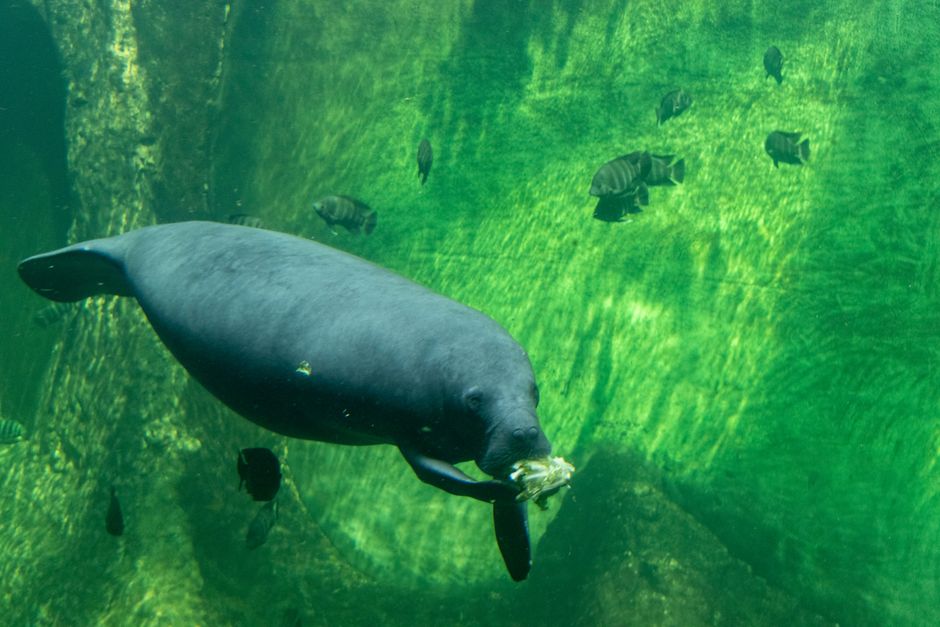
The disconnect between fantasy and reality seems laughable today. Manatees are rotund, whiskered creatures weighing up to 1,200 pounds, with paddle-like flippers and wrinkled gray skin. Yet these gentle herbivores possess certain features that, under the right conditions, could fool a desperate observer into seeing something more human.

Key Takeaways

  • Manatees and dugongs likely inspired mermaid legends when sailors mistook them for human-like creatures during long ocean voyages.
  • Christopher Columbus documented seeing "mermaids" in 1493 that were almost certainly manatees, noting they weren't as attractive as legends suggested.
  • Manatees can hold their flippers to their chest while nursing their young, creating a surprisingly human-like silhouette when viewed from a distance.
  • Female manatees nurse their calves while holding them close, a behavior that resembles a mother cradling an infant.
  • The scientific order name for manatees and dugongs—Sirenia—comes directly from the mythological sirens of Greek legend.
  • Manatees can remain submerged for up to 20 minutes but often surface every few minutes to breathe, creating brief viewing opportunities for passing ships.

The Mermaids Legend Manatees Connection: How Mistaken Identity Happened

Understanding how sailors confused manatees with mermaids requires examining both the conditions at sea and manatee anatomy. Months aboard wooden ships left crews vitamin-deficient, exhausted, and starved for human contact. Vision blurred by sea spray, distance, and wishful thinking transformed ordinary marine mammals into extraordinary beings.

Manatees possess several features that could appear human-like to the untrained eye. Their flippers contain bone structures similar to human hands, complete with fingernail-like remnants. When a mother manatee nurses her calf, she cradles it with these flippers pressed to her chest, where her mammary glands are located. From a distance, this posture resembles a woman holding a baby. The manatee's ability to move its flippers independently and even bring food to its mouth adds to the anthropomorphic illusion.

The animals' heads can rotate separately from their bodies, unlike most marine mammals. This flexibility allows them to look around in ways that seem eerily human. Their faces, while whiskered and bulbous up close, have forward-facing eyes positioned similarly to human eyes. When a manatee surfaces vertically to breathe—which they do frequently—the rounded head and chest area breaking the water's surface could suggest a human torso emerging from the depths.

Geographic Overlap Between Sightings and Species

Mermaid legends appear in cultures worldwide, and manatee and dugong populations historically ranged across the same tropical and subtropical waters where these stories flourished. Three manatee species inhabit different regions: the West Indian manatee in the Caribbean and Gulf of Mexico, the Amazonian manatee in South American rivers, and the West African manatee along Africa's western coast. Dugongs, the manatee's closest relatives, live in the Indo-Pacific region from East Africa to Australia.

Species Geographic Range Key Distinguishing Feature
West Indian Manatee Caribbean, Gulf of Mexico, Florida Rounded, paddle-shaped tail
Amazonian Manatee Amazon River basin Smallest species, freshwater only
West African Manatee West African coast and rivers Blunt snout, coastal and freshwater
Dugong Indo-Pacific coastal waters Forked, dolphin-like tail

Ancient Mesopotamian cultures told stories of fish-tailed gods and goddesses thousands of years before European sailors encountered manatees. The Syrian goddess Atargatis supposedly transformed into a mermaid, while Greek mythology featured sirens and nereids. These stories likely drew from multiple sources, but encounters with sirenians in Mediterranean and Red Sea waters may have reinforced existing mythologies.

Scientific Recognition of the Connection

The scientific community acknowledges this historical confusion in its classification system. When Carl Linnaeus established modern biological taxonomy in the 18th century, he placed manatees and dugongs in the order Sirenia, named after the sirens of Greek mythology. This wasn't mere whimsy—it reflected the widespread belief that these animals had inspired maritime legends.

Naturalists and explorers documented the connection repeatedly. When European scientists first examined manatee specimens, they noted features that could explain the legends. The animals' horizontal tail flukes, when glimpsed through murky water, might resemble a fish tail. Their gray, sometimes algae-covered skin could appear greenish or scaled from a distance. Even their vocalizations—chirps, whistles, and squeaks used for communication—might be interpreted as singing under the right circumstances.

Why the Myth Persisted Despite Reality

Even after sailors had clear views of manatees and recognized them as animals rather than mythical beings, mermaid legends endured. Human psychology explains this persistence. People tend to remember extraordinary claims more vividly than mundane corrections. A sailor's tale of seeing a beautiful mermaid makes for better storytelling than admitting he mistook a large aquatic mammal for a woman.

Cultural reinforcement played a role too. Mermaid imagery appeared in art, literature, and maritime symbolism throughout coastal communities. Ships' figureheads often depicted mermaids, keeping the mythology alive. The legends served purposes beyond entertainment—they warned of dangerous waters, explained mysterious disappearances, and provided cautionary tales about the perils of the sea.

Manatees' elusive nature contributed to ongoing confusion. These animals are difficult to observe clearly in their natural habitat. They inhabit murky coastal waters, rivers, and estuaries where visibility is poor. They surface briefly to breathe before submerging again. Even today, with modern equipment and knowledge, glimpsing a manatee in the wild requires patience and luck.

Modern Understanding and Conservation

Today, all manatee species and dugongs face significant threats from habitat loss, boat strikes, pollution, and climate change. The West Indian manatee was listed as endangered for decades before being reclassified to threatened status in 2017, though conservation efforts continue. Understanding these animals' role in cultural history adds another dimension to conservation arguments—we're protecting not just a species, but a living link to human mythology and maritime heritage.

Scientists have discovered fascinating facts about manatee biology that make them remarkable in their own right, no mythological associations needed. They're more closely related to elephants than to whales or dolphins. They can consume up to 10% of their body weight in vegetation daily. Their slow metabolism and low body temperature make them vulnerable to cold stress, which is why Florida manatees gather near warm-water springs in winter.

Frequently Asked Questions

Did Christopher Columbus really see manatees and think they were mermaids?

Yes, Columbus reported seeing three "mermaids" off the coast of Hispaniola in 1493, though he noted they weren't as beautiful as depicted and had somewhat masculine faces. Marine biologists believe he saw manatees or possibly monk seals.

Why are manatees called sea cows?

Manatees earned the nickname "sea cows" because they graze on underwater vegetation much like cattle graze on grass. They spend most of their waking hours eating aquatic plants and moving slowly through shallow waters.

What is the difference between a manatee and a dugong?

The most visible difference is the tail: manatees have rounded, paddle-shaped tails while dugongs have forked, dolphin-like tails. Dugongs also have shorter flippers and live exclusively in saltwater, while some manatees inhabit freshwater.

Are there any other animals that might have inspired mermaid legends?

Seals and sea lions might have contributed to mermaid myths, particularly in colder waters where manatees don't live. Their ability to balance upright in water and their dog-like faces could appear human-like from a distance, especially in fog or dim light.

The next time you see a mermaid in a storybook or movie, remember the whiskered, peaceful manatee that likely started it all. These gentle giants continue swimming through warm coastal waters, oblivious to their starring role in one of humanity's most enduring legends. Reality often proves stranger—and more wonderful—than the myths it inspires.