








1 / 10 Questions
0 Points

What kitchen appliance was originally powered by dogs?

Butter churn

Rotisserie spit

Grain mill

Ice cream maker

Points won
0
Correct score
0%

More Questions

More Articles

Top 10 Animals With Super Senses

Top 10 Animals With Super Senses

⏱️ 6 min read

Top 10 Animals With Super Senses

The natural world is filled with creatures that possess sensory abilities far beyond human comprehension. While humans rely primarily on sight and hearing, many animals have evolved extraordinary sensory adaptations that allow them to navigate, hunt, communicate, and survive in their respective environments. These remarkable abilities often seem like superpowers, enabling animals to detect stimuli that remain completely invisible to us. From echolocation to electroreception, the animal kingdom showcases a diverse array of sensory capabilities that demonstrate the incredible ingenuity of evolution. Here are ten animals with truly exceptional senses that push the boundaries of what we consider possible.

1. Bloodhound: The Ultimate Scent Detective

The bloodhound possesses one of the most powerful noses in the animal kingdom, with approximately 300 million scent receptors compared to humans' mere 5 million. This incredible olfactory system allows bloodhounds to detect and follow scent trails that are days or even weeks old. Their long, droopy ears help sweep scent particles toward their nose, while the wrinkles on their face trap these particles for analysis. Law enforcement agencies worldwide utilize bloodhounds for tracking missing persons and criminals because of their unparalleled ability to discriminate between individual human scents among thousands of competing odors.

2. Great White Shark: Masters of Electroreception

Great white sharks possess specialized organs called ampullae of Lorenzini, which are jelly-filled pores around their snouts that can detect the electrical fields generated by living organisms. This electroreception is so sensitive that sharks can detect electrical fields as weak as one billionth of a volt, allowing them to sense the heartbeat of prey buried beneath the sand. Combined with their acute sense of smell, which can detect a single drop of blood in 25 million drops of ocean water, great white sharks are supremely adapted predators that can hunt effectively even in murky waters or complete darkness.

3. Bats: Echolocation Experts

Many bat species have evolved sophisticated echolocation abilities that allow them to navigate and hunt in complete darkness. By emitting high-frequency sound waves and listening to the echoes that bounce back, bats can create detailed three-dimensional maps of their surroundings. Some species can detect objects as thin as a human hair and distinguish between different types of insects based solely on the quality of returning echoes. The processing power required for this real-time sonar system is extraordinary, with some bats making up to 200 calls per second while pursuing prey.

4. Eagles: Vision That Defies Belief

Eagles possess visual acuity that is roughly four to eight times sharper than that of humans. Their eyes contain approximately one million light-sensing cells per square millimeter of retina, compared to humans' 200,000. This extraordinary vision allows eagles to spot a rabbit from more than two miles away while soaring at high altitudes. Additionally, eagles can see a broader spectrum of colors, including ultraviolet light, which helps them track prey by following urine trails that reflect UV light. Their eyes also have two focal points, enabling them to focus on two objects simultaneously.

5. Elephants: Seismic Communication Specialists

Elephants possess remarkable sensory abilities, particularly their capacity to detect seismic vibrations through their feet and trunks. They can communicate with other elephants across distances of up to six miles by creating low-frequency rumbles that travel through the ground. These infrasonic calls, which are below the range of human hearing, allow elephants to maintain contact with their herd even when separated by vast distances. Their trunk, containing over 40,000 muscles, is also an incredibly sensitive tactile organ capable of detecting subtle changes in texture and temperature.

6. Star-Nosed Mole: Fastest Touch Sensor

The star-nosed mole possesses perhaps the most unusual sensory organ in the mammal world: a ring of 22 fleshy appendages surrounding its nose. These tentacles contain over 100,000 nerve fibers, making this nose the most sensitive touch organ of any mammal. The mole can identify and consume prey in as little as 120 milliseconds, making it one of the fastest-eating mammals on Earth. This extraordinary tactile sense compensates for the mole's poor vision, allowing it to hunt effectively in the dark, muddy environments where it lives.

7. Mantis Shrimp: Visual Complexity Beyond Compare

Mantis shrimp possess the most complex eyes in the animal kingdom, with 16 types of photoreceptor cells compared to humans' three. This allows them to see a spectacular array of colors, including ultraviolet, visible, and polarized light. Their eyes move independently and contain depth perception in each eye alone, meaning they can gauge distances with just one eye. They can also detect different types of polarized light, a ability that may help them recognize prey, predators, and mates. Each eye has trinocular vision, providing them with exceptional depth perception.

8. Platypus: Electroreception in Mammals

The platypus is one of the few mammals capable of electroreception, using approximately 40,000 electroreceptors distributed across its bill to detect the electrical fields generated by muscle contractions in prey. When hunting underwater with its eyes, ears, and nose closed, the platypus relies entirely on this electrical sense to locate crustaceans, worms, and insect larvae hidden in riverbed sediment. The platypus's bill also contains mechanoreceptors that detect water movement, creating a comprehensive sensory system that paints a detailed picture of its aquatic environment.

9. Snakes: Thermal Imaging Predators

Pit vipers, pythons, and boas possess specialized heat-sensing organs that function like thermal imaging cameras. Pit vipers have pit organs located between their eyes and nostrils that can detect temperature differences as small as 0.003 degrees Celsius. This thermoreception allows these snakes to "see" the heat signatures of warm-blooded prey in complete darkness, creating a thermal image that helps them strike with incredible accuracy. This sense is so refined that snakes can determine the size, distance, and direction of prey based solely on thermal information.

10. Dolphins: Sophisticated Sonar Systems

Dolphins possess echolocation abilities that rival and in some ways surpass those of bats. By producing clicking sounds and analyzing the returning echoes, dolphins can determine the size, shape, speed, distance, and even internal structure of objects in their environment. Research has shown that dolphins can detect a golf ball-sized object from over 200 feet away and can distinguish between objects made of different materials. Their sonar is so precise that they can effectively "see through" many objects, detecting prey hidden beneath sand or inside other fish. This biological sonar system is crucial for navigation and hunting in murky coastal waters.

Conclusion

The ten animals featured in this article represent just a fraction of the extraordinary sensory abilities that exist in nature. From the bloodhound's powerful nose to the mantis shrimp's complex visual system, from the shark's electroreception to the bat's echolocation, these creatures demonstrate that evolution has created countless solutions to the challenges of survival. These super senses remind us that the world contains far more information than humans can perceive with our limited sensory apparatus. Understanding these remarkable adaptations not only deepens our appreciation for biodiversity but also inspires technological innovations, from medical imaging devices to advanced robotics. The animal kingdom continues to reveal that nature's creativity in solving sensory challenges far exceeds anything we might imagine.
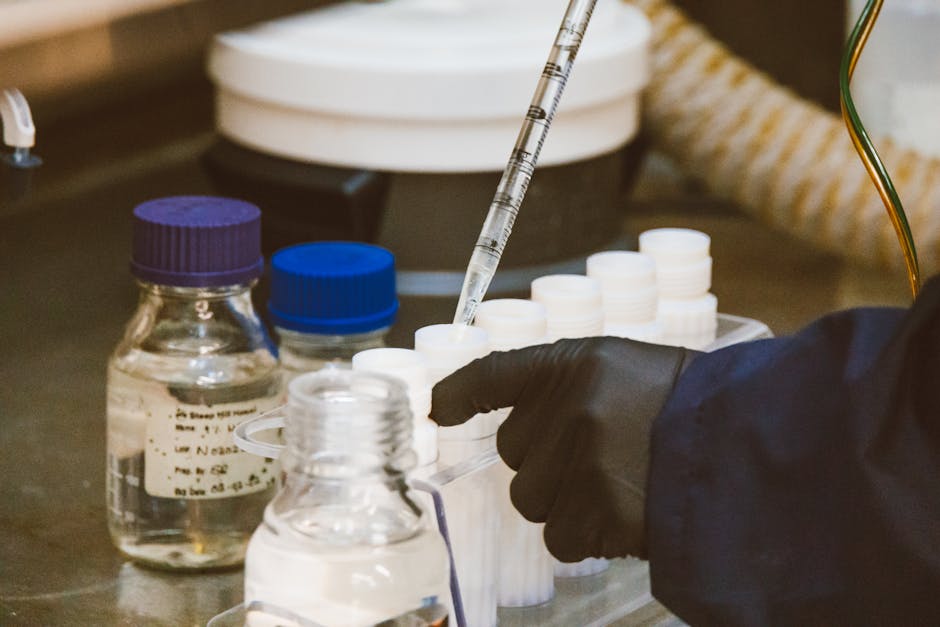
Top 10 Chemistry Facts

Top 10 Chemistry Facts

⏱️ 7 min read

Top 10 Chemistry Facts That Will Change How You See the World

Chemistry is often called the "central science" because it connects physics with biology and helps us understand the world at a molecular level. From the air we breathe to the technology we use daily, chemistry plays a fundamental role in virtually every aspect of our existence. The following ten fascinating facts about chemistry reveal the remarkable nature of matter, reactions, and the elements that make up our universe. These insights demonstrate why chemistry remains one of the most important and intriguing scientific disciplines.

1. Water Expands When It Freezes

Unlike most substances, water displays an unusual property: it expands when it freezes rather than contracts. This anomaly occurs because water molecules form a crystalline structure in ice that takes up more space than liquid water. Each water molecule bonds with four neighbors in a hexagonal pattern, creating spaces between molecules. This property is crucial for life on Earth, as ice floats on water, allowing aquatic life to survive beneath frozen surfaces during winter. If water behaved like most substances and became denser when frozen, ice would sink, potentially freezing entire bodies of water from the bottom up and making life as we know it impossible.

2. Helium Can Work Against Gravity

Helium possesses extraordinary properties that defy normal physical expectations. When cooled to extremely low temperatures (around -271°C or 2 Kelvin), helium becomes a superfluid, exhibiting zero viscosity and the ability to flow without friction. In this state, helium can actually climb up and over container walls, seemingly defying gravity. This quantum mechanical phenomenon occurs because helium atoms lose their individual identities and behave as a single quantum entity. Superfluid helium has practical applications in cooling superconducting magnets used in MRI machines and particle accelerators.

3. The Human Body Contains Enough Carbon to Make 900 Pencils

The human body is essentially a complex chemistry laboratory, containing approximately 18% carbon by mass. An average adult body contains roughly 16 kilograms of carbon, which is enough to manufacture around 900 standard pencils. Carbon is the foundation of organic chemistry and life itself, forming the backbone of proteins, fats, carbohydrates, and DNA. Beyond carbon, the human body also contains enough iron to make a 3-inch nail, enough sulfur to kill fleas on a dog, enough potassium to fire a toy cannon, and enough fat to make seven bars of soap. This demonstrates that humans are literally walking collections of chemical elements.

4. Glass Is Actually a Liquid

Despite appearing solid, glass is technically classified as an amorphous solid or supercooled liquid. Glass lacks the organized crystalline structure found in true solids; instead, its molecules are arranged in a random pattern similar to liquids. However, the common myth that old windows are thicker at the bottom because glass flows over time is false—this thickness variation resulted from imperfect historical manufacturing processes. Glass would take millions of years to show any observable flow at room temperature. Nevertheless, glass occupies a unique state of matter that challenges traditional classifications and continues to fascinate materials scientists.

5. Noble Gases Can Form Compounds

For decades, chemists believed that noble gases (helium, neon, argon, krypton, xenon, and radon) were completely inert and unable to form chemical bonds due to their full outer electron shells. This assumption was shattered in 1962 when Neil Bartlett synthesized xenon hexafluoroplatinate, the first noble gas compound. Since then, scientists have created hundreds of compounds involving xenon, krypton, and even argon. These discoveries revolutionized our understanding of chemical bonding and demonstrated that scientific "facts" must sometimes be revised when new evidence emerges. Noble gas compounds now have applications in lighting, medical imaging, and laser technology.

6. Honey Never Spoils

The chemical composition of honey makes it virtually immortal. Archaeologists have discovered 3,000-year-old honey in Egyptian tombs that was still perfectly edible. Honey's remarkable longevity results from several chemical factors: its low moisture content (usually below 18%), high acidity (pH between 3 and 4.5), and natural production of hydrogen peroxide through the enzyme glucose oxidase. These properties create an environment where bacteria and microorganisms cannot survive or reproduce. Additionally, honey's high sugar concentration creates osmotic pressure that draws water out of bacterial cells, effectively dehydrating and killing them. This natural preservation makes honey unique among food substances.

7. Oxygen Has Different Colors in Different States

While we typically think of oxygen as colorless and invisible, this element displays different colors depending on its physical state. In its gaseous form at normal conditions, oxygen appears colorless. However, liquid oxygen exhibits a pale blue color, while solid oxygen appears bright blue. These color variations occur due to oxygen molecules absorbing specific wavelengths of light differently at various densities and temperatures. Furthermore, the bluish tint of liquid oxygen is strong enough to be visible to the naked eye. This property demonstrates how the same element can exhibit dramatically different physical characteristics based on temperature and pressure conditions.

8. Stomach Acid Is Extremely Powerful

The hydrochloric acid in human stomachs has a pH between 1.5 and 3.5, making it strong enough to dissolve metal, including razor blades and nails (though this would take considerable time and is extremely dangerous to attempt). This powerful acid serves essential digestive functions, breaking down food and killing harmful bacteria that enter the body through ingestion. Despite its corrosive nature, the stomach lining is protected by a thick layer of mucus that regenerates constantly. Specialized cells in the stomach produce approximately two liters of hydrochloric acid daily. This remarkable chemical system demonstrates how living organisms have evolved sophisticated mechanisms to harness dangerous substances safely.

9. Bananas Are Radioactive

Bananas contain radioactive potassium-40, making them naturally radioactive fruits. This isotope is present in many potassium-containing foods, but bananas have become the standard reference point for measuring small amounts of radiation exposure. Scientists have even created a unit of measurement called the "Banana Equivalent Dose" (BED) to help people understand radiation levels in everyday terms. One banana produces approximately 0.1 microsieverts of radiation exposure. However, there is absolutely no health risk from eating bananas, as the body maintains a constant potassium level by excreting excess amounts. This fact illustrates that radiation is a natural part of our environment and not always dangerous.

10. Lightning Produces Ozone

When lightning strikes, it generates temperatures around 30,000 Kelvin (approximately five times hotter than the sun's surface), providing enough energy to split nitrogen and oxygen molecules in the air. These atoms then recombine to form various compounds, including ozone (O₃). The distinctive "fresh" smell after a thunderstorm is partially due to this newly formed ozone. Lightning strikes produce an estimated 10 million tons of ozone annually worldwide, contributing significantly to the planet's ozone budget. This natural process demonstrates how electrical energy can drive chemical reactions and how Earth's atmospheric chemistry involves dynamic, interconnected processes that maintain environmental balance.

Conclusion

These ten chemistry facts reveal the fascinating and often surprising nature of the molecular world surrounding us. From water's unusual freezing behavior to the radioactivity of common fruits, chemistry demonstrates that science is full of unexpected discoveries and counterintuitive truths. Understanding these chemical principles helps us appreciate the complexity of natural processes, the ingenuity of life's adaptations, and the fundamental rules governing matter and energy. Chemistry continues to unlock secrets about our universe while providing practical applications that improve human life. Whether examining the immortal nature of honey or the quantum behavior of superfluid helium, chemistry reminds us that reality is often stranger and more wonderful than fiction. These facts represent just a small fraction of chemistry's contributions to human knowledge, inspiring continued exploration and discovery in this central science.