









1 / 10 Questions
0 Points

What common food was once illegal in parts of Europe?

Coffee

Chocolate

Tea

Sugar

Points won
0
Correct score
0%

More Questions

Did You Know Greenland Sharks Live Over 400 Years

Greenland sharks can survive for more than 400 years in Arctic waters, making them Earth's longest-living vertebrates with extraordinary adaptations.

The Truth About Grizzly Bears Running Faster Than Horses

Grizzly bears can sprint up to 35 mph, outpacing many horses over short distances. Discover the shocking facts about grizzly bear speed and athleticism.

Did You Know Venus Spins Backward Compared to Other Planets

Venus rotation is unique in our solar system—the planet spins backward compared to most others. Discover the scientific theories behind this odd

More Articles

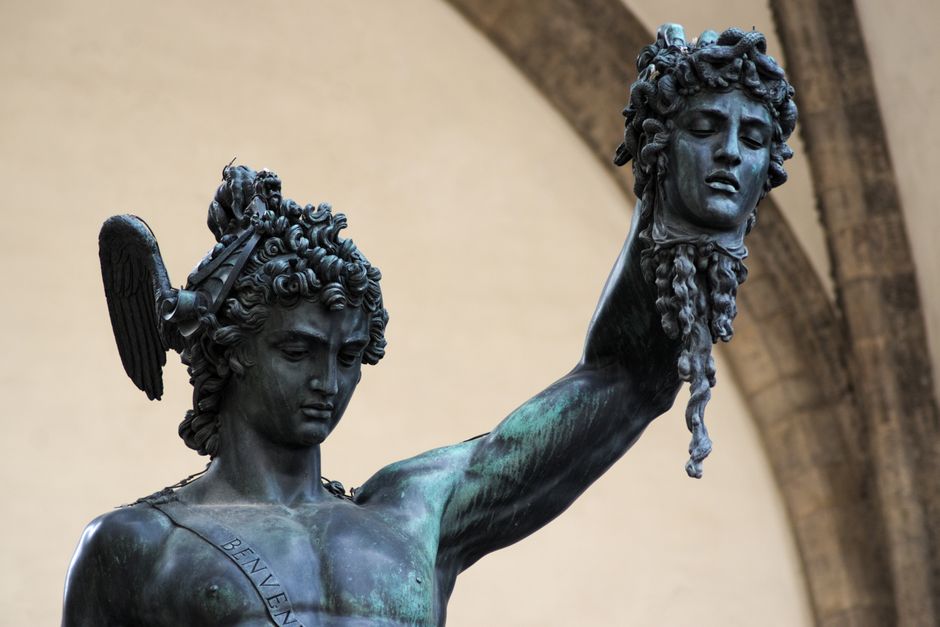
7 Surprising Facts About Medusa and Gorgon Mythology

7 Surprising Facts About Medusa and Gorgon Mythology

7 Surprising Facts About Medusa and Gorgon Mythology

By Trivia Owl, Staff Writer — Published September 18, 2026

Table of Contents

When most people think of Medusa, they picture a monster with snakes for hair who turns anyone who looks at her into stone. But the real medusa gorgon mythology runs far deeper and stranger than popular culture suggests. This snake-haired figure from ancient Greece has been misunderstood, reinterpreted, and transformed across millennia, and the original stories contain twists that might surprise even mythology enthusiasts.

The Gorgons weren't always villains, Medusa wasn't always monstrous, and the symbolism behind these figures reveals fascinating insights into ancient Greek culture, gender dynamics, and the evolution of storytelling itself.

Key Takeaways

  • Medusa was originally a beautiful mortal woman before her transformation into a monster, according to the most famous version of her story.
  • The Gorgons were three sisters, not a single creature, and only Medusa was mortal while her sisters were immortal.
  • Ancient Greeks used Gorgon imagery as protective symbols on shields, temples, and even ovens to ward off evil.
  • Perseus never looked directly at Medusa but used his polished shield as a mirror to avoid her petrifying gaze.
  • Medusa's blood possessed contradictory magical properties, with one side healing and the other killing instantly.
  • The Gorgon myth likely has roots in ancient protective deities that predate classical Greek civilization.

Interesting Facts About Medusa Gorgon Mythology

1. Medusa Was the Only Mortal Among the Three Gorgon Sisters

The Gorgons were three sisters named Medusa, Stheno, and Euryale, daughters of the ancient sea gods Phorcys and Ceto. While Stheno and Euryale were immortal and invulnerable, Medusa alone could be killed. This crucial difference made her the target of Perseus, who needed a Gorgon's head but could only obtain one from the mortal sister. Ancient sources suggest that Stheno was the fiercest of the three, while Euryale was known for her bellowing cries, but Medusa became the most famous precisely because of her vulnerability. The name "Medusa" itself comes from the Greek word meaning "guardian" or "protectress," hinting at a deeper protective role these figures originally played in ancient belief systems.

2. Medusa's Transformation Was Punishment for Being Assaulted

The Roman poet Ovid tells us that Medusa wasn't born a monster. She began as a beautiful mortal woman with gorgeous hair who served as a priestess in Athena's temple. According to Ovid's account in the Metamorphoses, the sea god Poseidon assaulted Medusa inside Athena's sacred temple. Rather than punishing Poseidon, Athena transformed Medusa into a hideous creature with snakes for hair and a gaze that turned living beings to stone. This disturbing narrative reflects ancient attitudes about defilement and purity, where the victim bore the consequences of violation. Modern interpretations have reexamined this myth through different lenses, seeing Medusa as a symbol of female rage and survival rather than simple monstrosity.

3. Gorgon Faces Served as Powerful Protective Symbols Throughout Ancient Greece

The terrifying Gorgon face, known as a Gorgoneion, appeared everywhere in ancient Greek society as an apotropaic device—a symbol meant to ward off evil and protect against harm. Warriors painted Gorgon faces on their shields, architects carved them above doorways and on temple pediments, and craftspeople decorated everyday objects from coins to cooking vessels with these fierce visages. The most famous example adorned the aegis, the protective cloak or shield associated with both Zeus and Athena. This widespread use suggests that Gorgons represented protective power rather than pure evil. The logic was simple: if Medusa's face could turn enemies to stone, her image might frighten away threats and malevolent spirits. Archaeological evidence shows these protective symbols persisted for centuries across the Mediterranean world.

4. Perseus Used Five Divine Gifts to Defeat Medusa

Perseus didn't face Medusa armed with only courage. The gods equipped him with an arsenal of magical items specifically for this dangerous quest. Athena gave him a polished bronze shield that he used as a mirror to view Medusa's reflection without meeting her petrifying gaze directly. Hermes provided winged sandals for swift flight and a adamantine sickle sharp enough to cut through Medusa's neck. Hades contributed his helmet of invisibility, while the nymphs supplied a special bag called a kibisis to safely carry the severed head. This divine assistance highlights how impossible the task would have been for an ordinary mortal and emphasizes the gods' investment in Medusa's destruction. The polished shield technique became one of mythology's most famous problem-solving moments, showing that indirect approaches sometimes succeed where direct confrontation fails.

5. Medusa's Blood Had Opposite Magical Properties on Each Side of Her Body

After Perseus beheaded Medusa, her blood became a substance of contradictory powers. According to ancient sources, blood taken from the left side of her body was a deadly poison that could kill instantly, while blood from the right side possessed miraculous healing properties and could even resurrect the dead. Athena collected this blood and gave portions to Asclepius, the god of medicine, who used the healing blood to cure diseases and bring people back to life. This dual nature reflects Greek philosophical concepts about the thin line between remedy and poison—a theme that resonates in the origin of the word "pharmacy," derived from the Greek word for both drug and poison. The contradictory properties of Medusa's blood suggest she embodied both destructive and generative forces, making her a more complex figure than a simple monster.

6. Pegasus and Chrysaor Sprang from Medusa's Severed Neck

When Perseus cut off Medusa's head, two remarkable offspring emerged from her neck: Pegasus, the famous winged horse, and Chrysaor, a giant or warrior with a golden sword. Both were children of Poseidon, conceived during the assault in Athena's temple. Pegasus went on to become one of mythology's most celebrated creatures, eventually serving the hero Bellerophon and being transformed into a constellation. Chrysaor's story is less developed in surviving myths, though some sources describe him as the father of the three-bodied giant Geryon. This bizarre birth scene—divine beings springing fully formed from a decapitated neck—demonstrates the generative power attributed to Medusa even in death. The image reinforces her connection to ancient fertility and creation symbolism that predated her portrayal as pure monster.

7. The Gorgon Myth Likely Evolved from Ancient Protective Deities

Scholars have traced Gorgon imagery to sources far older than classical Greek mythology. Similar fierce female faces with protruding tongues, wild hair, and apotropaic functions appear in art from ancient Egypt, the Near East, and pre-Greek Aegean cultures. Some researchers connect the Gorgons to ancient mother goddess figures or protective household deities that guarded against evil and chaos. The transformation from protective deity to defeated monster may reflect cultural shifts as newer pantheons replaced older religious systems. Archaeological evidence from Minoan Crete and other Bronze Age sites shows Gorgon-like imagery predating the classical Greek period by centuries. This suggests that Medusa and her sisters inherited characteristics from much older traditions, later reinterpreted through the lens of Greek heroic mythology where male heroes conquered female monsters as symbols of civilization triumphing over chaos.

Frequently Asked Questions

Why did Medusa have snakes for hair?

According to Ovid's account, Athena transformed Medusa's beautiful hair into serpents as part of her punishment after Poseidon assaulted Medusa in Athena's temple. Snakes carried symbolic weight in Greek culture, associated with both danger and regeneration, making them a fitting element for this transformed protective-yet-terrifying figure.

Could Medusa turn herself to stone by looking in a mirror?

Ancient sources don't address this paradox directly, but the logic of the myth suggests her power worked on others, not herself. Perseus safely used his polished shield as a mirror to view her reflection, which indicates the petrifying effect required direct eye contact between Medusa and her victim, not merely seeing her image.

What happened to Medusa's head after Perseus killed her?

Perseus used Medusa's severed head as a weapon several times, turning enemies to stone, including the sea monster threatening Andromeda. He eventually gave the head to Athena, who placed it on her aegis (shield or breastplate), where it remained as a permanent protective emblem. Some traditions say it was later buried under the marketplace in Athens.

Were there other Gorgons besides the three sisters?

Classical Greek mythology consistently describes exactly three Gorgons: Medusa, Stheno, and Euryale. However, the term "gorgon" in lowercase sometimes referred more generally to frightening female monsters or protective faces used in art, leading to some confusion. The canonical number remains three sisters, daughters of the primordial sea deities Phorcys and Ceto.

The story of Medusa continues to evolve in modern retellings, with contemporary writers and artists reclaiming her narrative as one of survival, transformation, and female power. What began as a cautionary tale in ancient Greece has become a symbol with meanings its original tellers never imagined, proving that the most enduring myths are those we never stop reinterpreting.
The Truth About Dragons Existing in Komodo Island Today

The Truth About Dragons Existing in Komodo Island Today

The Truth About Dragons Existing in Komodo Island Today

By Trivia Owl, Staff Writer — Published October 27, 2026

Table of Contents

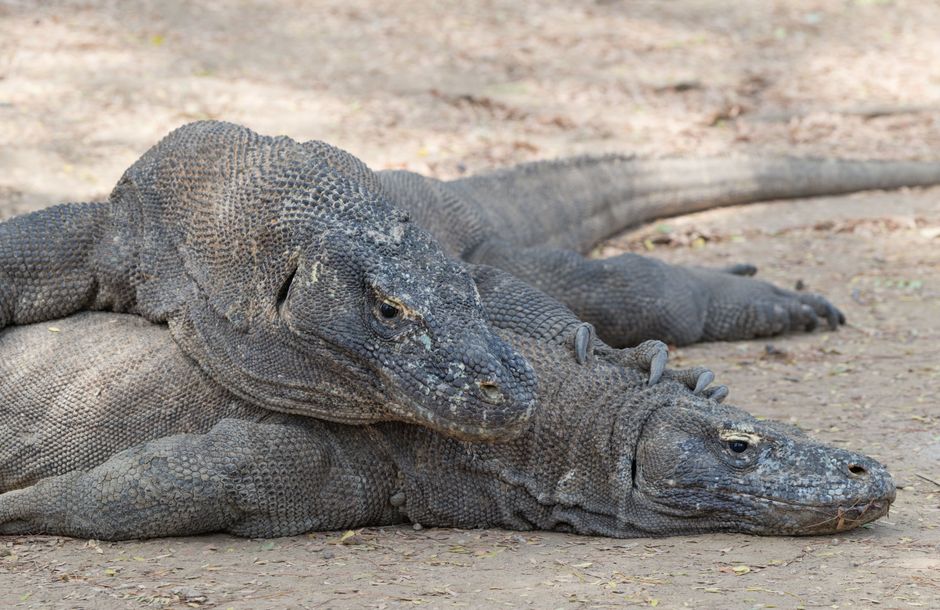
Dragons are real. Not the fire-breathing, treasure-hoarding creatures of medieval legend, but living, breathing apex predators that stalk the volcanic islands of Indonesia. The Komodo dragon, discovered by Western science only in the early 20th century, is the world's largest living lizard and a startling reminder that our planet still harbors surprising megafauna. When you explore the truth about dragons existing on Komodo Island today, you discover a creature whose venom, hunting prowess, and sheer size rival the most amazing beasts of myth.

These massive reptiles can grow to ten feet in length and weigh more than 150 pounds, with serrated teeth and a bite capable of bringing down water buffalo. Their existence proves that sometimes reality delivers creatures as fascinating as any legend.

Key Takeaways

  • Komodo dragons are the world's largest living lizards, reaching lengths of up to ten feet and weights exceeding 150 pounds.
  • They hunt using a combination of powerful jaws, serrated teeth, and toxic venom that prevents blood clotting in prey.
  • These "dragons" are found only on a handful of Indonesian islands, including Komodo, Rinca, Flores, and Gili Motang.
  • Komodo dragons can consume up to 80 percent of their body weight in a single feeding and survive on as few as 12 meals per year.
  • Female Komodo dragons are capable of parthenogenesis, reproducing without male fertilization in rare circumstances.
  • The species has existed in its current form for millions of years, making it a living link to the age of giant reptiles.

The Truth About Dragons Existing: From Myth to Scientific Discovery

For centuries, sailors and traders brought back tales of enormous lizards inhabiting remote Indonesian islands. Local communities had long known about these creatures, calling them "ora" or "land crocodiles." Western scientists remained skeptical until the early 1900s, when expeditions confirmed the existence of these remarkable reptiles. The scientific name Varanus komodoensis was assigned, but "Komodo dragon" captured popular imagination and stuck.

The dragon's range is remarkably limited. These predators inhabit only a few small islands in Indonesia's Lesser Sunda archipelago, with the largest populations on Komodo and Rinca islands. This restricted habitat makes them vulnerable, and conservation efforts have become critical to their survival. Komodo National Park, established in 1980 and later designated a UNESCO World Heritage Site, protects both the dragons and their island ecosystem.

What makes these creatures so dragon-like extends beyond their size. Their forked tongues flicker constantly, sampling the air for chemical signals. They can detect carrion from several miles away, using their extraordinary sense of smell to locate dead or dying animals. This ability, combined with their patient hunting style, makes them supremely adapted ambush predators.

Venom, Not Bacteria: Busting a Common Myth

For decades, scientists believed Komodo dragons killed primarily through bacterial infection. The theory held that their mouths harbored such virulent bacteria that even survivors of attacks would succumb to sepsis within days. This explanation seemed logical given the dragons' scavenging habits and the gruesome fates of their prey.

Research published in the early 21st century overturned this long-held belief. Scientists discovered that Komodo dragons possess venom glands in their lower jaws that secrete anticoagulants and compounds that induce shock and prevent blood clotting. The "toxic bite" isn't from bacteria at all—it's genuine venom, similar in function to that of some snakes. While bacteria may play a secondary role in some prey deaths, the primary mechanism is sophisticated biochemical warfare.

This discovery elevated Komodo dragons from mere scavengers with dirty mouths to highly evolved venomous predators. The venom allows them to bite prey once, then follow at a leisurely pace as the animal weakens from blood loss and shock. It's an energy-efficient hunting strategy perfected over millions of years.

Living Giants: Size, Diet, and Behavior

Male Komodo dragons typically outsize females, with the largest verified specimens measuring just over ten feet from snout to tail. Their muscular bodies, covered in rough, armor-like scales embedded with tiny bones called osteoderms, provide both protection and sensory information. The tail, nearly as long as the body, serves as a weapon and counterbalance during pursuit.

These reptiles are opportunistic carnivores with diverse diets. Young dragons hunt insects, small reptiles, and birds, often climbing trees to escape cannibalistic adults. As they grow, their prey size increases dramatically. Adults take deer, wild pigs, water buffalo, and even horses. They're also enthusiastic scavengers, able to locate and consume carrion across vast distances.

Characteristic Komodo Dragon Comparison
Maximum Length 10+ feet (3+ meters) Longer than most adult humans are tall
Maximum Weight 150+ pounds (70+ kg) Similar to an adult human
Top Speed 12 mph in short bursts Faster than most humans can sprint
Bite Force Moderate jaw strength + venom Strategy over pure power
Lifespan 30+ years in wild Comparable to many large mammals

Their metabolism is remarkably efficient. After gorging on a large kill, a Komodo dragon can survive for weeks or even months without eating again. This adaptation suits their island environment, where prey availability fluctuates seasonally.

Reproduction and the Mystery of Virgin Births

Komodo dragons typically reproduce sexually, with males competing violently for mating rights. During breeding season, males engage in ritualized combat, wrestling while standing on their hind legs. The victor earns access to females, while losers retreat to nurse their wounds.

Scientists have documented something truly surprising: female Komodo dragons held in captivity without males have produced viable eggs that hatched into healthy offspring. This process, called parthenogenesis, involves the egg developing without fertilization. Interestingly, parthenogenetic reproduction in Komodo dragons produces only male offspring due to their ZW sex-determination system.

Whether this occurs in wild populations remains uncertain, but the capability represents a potential survival mechanism for isolated individuals. If a single female reaches a new island, she could theoretically establish a population without a mate—though genetic diversity would suffer.

Conservation Status and Modern Threats

Despite their fearsome reputation, Komodo dragons face significant threats. Their limited range makes them vulnerable to habitat loss, natural disasters, and climate change. Rising sea levels pose a particular danger to these low-lying islands. The species is currently classified as Endangered by conservation organizations.

Human-wildlife conflict occasionally occurs when dragons enter villages or attack livestock. Tourism, while providing economic incentive for conservation, must be carefully managed to avoid disturbing breeding populations or habituating dragons to human presence. Park rangers work to balance protection with sustainable tourism that funds conservation efforts.

Illegal poaching and wildlife trafficking remain concerns, though Indonesian law strictly protects the species. International cooperation and local community engagement have proven essential to conservation success. The dragons have become a symbol of Indonesian natural heritage and a flagship species for broader conservation initiatives.

Frequently Asked Questions

Are Komodo dragons actually related to mythological dragons?

No direct relationship exists between Komodo dragons and dragon mythology, which predates their scientific discovery. However, ancient peoples may have encountered similar large reptiles, and fossils of extinct giant lizards could have inspired dragon legends across various cultures.

Can Komodo dragons really kill humans?

Fatal attacks on humans are rare but documented. Komodo dragons are wild predators capable of killing animals much larger than humans, and their venom makes even minor bites medically serious. Park visitors are required to maintain safe distances and follow ranger guidance.

How long have Komodo dragons existed?

Fossil evidence suggests the Komodo dragon lineage extends back roughly four million years, with the species in its modern form existing for at least one million years. They represent an ancient reptilian lineage that has survived numerous climate changes and extinction events.

Why are they found only on a few Indonesian islands?

Komodo dragons likely evolved on these islands or nearby landmasses when sea levels were lower, then became isolated as waters rose. Their limited swimming ability and specific habitat requirements prevented expansion to other regions, making them endemic to this small island chain.

The Komodo dragon stands as proof that Earth still harbors creatures worthy of legend—living dragons that stalk volcanic islands, hunt with venom, and reproduce through means that seem almost magical. In protecting these ancient reptiles, we preserve not just a species, but a living connection to a world where giants once walked, and where the line between myth and reality remains beautifully blurred.