










1 / 10 Questions
0 Points

What sport awards the Vince Lombardi Trophy?

Ice hockey

Baseball

Professional football

College basketball

Points won
0
Correct score
0%

More Questions

The Truth About Left-Handed People Dying Younger

Left-handed myths about early death have persisted for decades. Discover what science actually reveals about longevity and handedness in this fact-check.

7 Bizarre Facts About Platypus Venom and Milk Sweat

Platypus facts reveal venomous spurs, milk-sweating skin, and other evolutionary oddities. Discover why this mammal defies biology's basic rules.

Why Dragon Legends Appear in Nearly Every Culture

Dragon legends appear across civilizations worldwide despite no contact. Discover the fascinating theories behind why dragons exist in nearly every

More Articles

The Truth About Fingerprints: No Two Are Ever Identical

The Truth About Fingerprints: No Two Are Ever Identical

The Truth About Fingerprints: No Two Are Ever Identical

By Trivia Daily, Staff Writer — Published September 13, 2026

Table of Contents

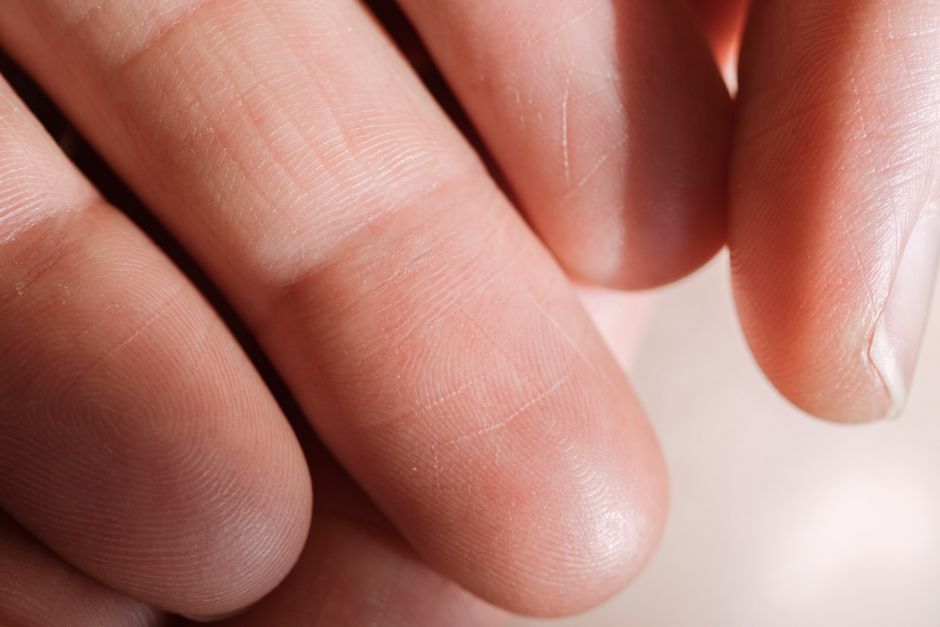
Press your fingertip against a window and take a close look at the pattern left behind. Those swirls, loops, and ridges are yours alone—a biological signature so unique that no one else on Earth shares it. Not even identical twins. The truth about fingerprints ever being duplicated? It simply doesn't happen. This remarkable fact has made fingerprints the gold standard for identification for more than a century, solving crimes, securing devices, and proving identities across the globe.

What makes this everyday feature of human anatomy so endlessly fascinating is the sheer impossibility of repetition. With roughly eight billion people alive today and countless billions who came before, the odds that two people share identical fingerprints remain effectively zero.

Key Takeaways

  • Fingerprints form in the womb between the 10th and 24th weeks of pregnancy, shaped by random factors including amniotic fluid movement, position in the womb, and blood pressure—ensuring uniqueness even between identical twins.
  • There are three basic fingerprint patterns—loops (about 60-65% of people), whorls (30-35%), and arches (5%)—but the specific arrangement of ridges within these patterns is what makes each print one-of-a-kind.
  • No two fingers on your own hands have the same print; each of your ten fingers carries a distinct pattern.
  • Fingerprints remain unchanged throughout your entire life, from before birth until decomposition after death, making them a permanent form of identification.
  • The chances of two people having identical fingerprints are estimated to be less than one in 64 billion, a number that exceeds Earth's current population.
  • Law enforcement agencies worldwide maintain databases containing hundreds of millions of fingerprints, yet no confirmed case of two identical prints from different people has ever been documented.

Discovering the Truth About Fingerprints Ever Being Duplicated

The scientific study of fingerprints began in earnest during the late 19th century, though humans had been using thumbprints as signatures for thousands of years in ancient civilizations. Researchers discovered that the ridge patterns on fingertips develop during fetal development through a complex interplay of genetic and environmental factors. While your DNA determines that you'll have fingerprints, it doesn't dictate their specific pattern.

Here's where it gets interesting. As a fetus develops, the skin on fingertips forms in response to multiple variables: the exact position of the baby in the womb, the density of amniotic fluid at any given moment, the length of the umbilical cord, and even the baby's blood pressure. These factors are never identical, not even for twins sharing the same womb. The result? Every person receives a unique set of ridge patterns that will never be replicated.

Scientists classify fingerprints by their general pattern type, but within each category exist millions of possible variations. The specific details—called minutiae—include the exact points where ridges end, split, or form small islands. A single fingerprint can contain anywhere from 75 to 175 of these minutiae points. When forensic experts compare prints, they examine these fine details, and matching just 12 to 15 points is typically considered sufficient for positive identification in many legal systems.

Why Identical Twins Have Different Fingerprints

Many people assume identical twins share fingerprints since they share DNA. They don't. While identical twins may have similar general pattern types—both might have loop patterns, for example—the specific details differ dramatically. This fact alone proves that fingerprints aren't purely genetic.

The developmental environment in the womb ensures variation. Even twins positioned side by side experience different pressures, different amounts of amniotic fluid contact, and different rates of growth at crucial moments when fingerprints form. These tiny environmental differences create permanent distinctions in their ridge patterns. Twin studies have been instrumental in helping researchers understand that fingerprints result from both nature and nurture—genetic instructions modified by random developmental events.

Comparing the Three Main Fingerprint Patterns

Pattern Type Percentage of Population Characteristics
Loop 60-65% Ridges enter from one side, curve around, and exit the same side; most common pattern
Whorl 30-35% Circular or spiral patterns with ridges forming complete circuits; includes plain whorls, central pocket loops, and double loops
Arch 5% Ridges enter from one side and exit the other with a rise in the center; rarest pattern type

Interesting Facts That Make Fingerprints Amazing

Beyond identification, fingerprints serve a practical purpose. Those ridges improve your grip by increasing friction between your skin and objects you touch. They also enhance your sense of touch by amplifying vibrations, helping you feel textures more acutely. Without these tiny ridges, you'd struggle to pick up smooth objects and couldn't detect subtle differences in surface textures.

Fingerprints are surprisingly resilient. Superficial cuts and burns don't permanently alter them—the pattern regenerates as the skin heals, following the original template. Only deep injuries that damage the dermal layer can cause permanent scarring that changes the pattern. Even then, the altered pattern becomes a new unique identifier.

Some rare genetic conditions can affect fingerprint development. People with adermatoglyphia, an extremely rare condition, are born without fingerprints entirely. Fewer than ten families worldwide are known to have this condition. Certain medications used in chemotherapy can also temporarily smooth fingerprints, occasionally causing problems for patients trying to pass through fingerprint scanners at airports or border crossings.

How Fingerprint Technology Continues to Evolve

Modern fingerprint analysis has come far from the ink-and-paper methods of the past. Digital scanners now capture prints in seconds, converting the physical ridges into mathematical algorithms that computers can quickly compare against massive databases. Your smartphone likely uses this technology dozens of times per day.

Law enforcement agencies worldwide rely on Automated Fingerprint Identification Systems that can search through millions of prints in minutes. The FBI's database alone contains more than 150 million fingerprint records. Despite this enormous collection spanning decades of crime-solving, no two identical prints from different individuals have ever been found. This remarkable track record continues to validate what scientists discovered more than a century ago: fingerprints are truly unique.

Surprising Trivia About Your Fingertips

  • Your fingerprints formed before you were born and will remain essentially unchanged until after your death
  • Koalas and some primates also have fingerprints with ridge patterns remarkably similar to humans
  • The word "dermatoglyphics" (the study of fingerprints) contains no repeated letters, making it one of the longest English words with this property
  • Fingerprints can be left on surfaces for decades under the right conditions, with some crime scene prints being recovered and identified years after being deposited
  • Even if your hands are wet, you still leave fingerprints—though they may be harder to detect visually

Frequently Asked Questions

Can fingerprints wear away or change over time?

The ridge patterns remain constant throughout life, though the skin itself ages and may become less defined. Heavy manual labor, certain chemicals, or medical conditions can temporarily affect print quality, but the underlying pattern doesn't change.

Do fingerprints grow back if burned or cut?

Superficial damage heals completely, regenerating the original pattern. Only deep injuries that destroy the dermal layer create permanent scars that alter the print, though even scarred prints remain unique and identifiable.

How accurate is fingerprint identification in solving crimes?

When properly analyzed by trained experts, fingerprint identification is extremely reliable. Most jurisdictions require a minimum of 8 to 16 matching minutiae points for positive identification, making false matches exceptionally rare.

Are there people born without fingerprints?

Yes, but it's extremely rare. A genetic condition called adermatoglyphia affects fewer than ten known families worldwide, causing people to be born with smooth fingertips lacking the typical ridge patterns.

The next time you unlock your phone with a fingertip or watch a crime drama where prints crack the case, remember you're witnessing one of nature's most elegant solutions to the problem of identity. Your fingertips carry a pattern that has never existed before and will never exist again—a small biological miracle hiding in plain sight at the ends of your hands.

7 Bizarre Facts About How Octopuses Change Color

7 Bizarre Facts About How Octopuses Change Color

7 Bizarre Facts About How Octopuses Change Color

By TriviaOwl, Staff Writer — Published August 6, 2026

Table of Contents

Octopuses are the shapeshifters of the ocean, capable of transforming their appearance in less than a second. While you might know they change color to hide from predators, the reality is far stranger and more complex. These eight-armed marvels possess one of nature's most sophisticated camouflage systems, and the bizarre facts about how octopuses change color reveal abilities that seem almost supernatural. From skin that "sees" light independently to color-changing tricks they use while dreaming, these creatures continue to astound marine biologists around the world.

The mechanisms behind this rapid transformation involve millions of specialized cells working in concert, controlled by one of the most unusual nervous systems in the animal kingdom. Prepare to discover why octopuses are considered among the most fascinating and alien-like creatures on our planet.

Key Takeaways

  • Octopuses control millions of color-changing cells called chromatophores using direct neural connections, allowing transformation in under a second.
  • Their skin contains light-sensitive proteins similar to those in their eyes, enabling the skin to detect light independently of the brain.
  • Despite being colorblind with single-channel vision, octopuses achieve perfect color matching through an entirely different mechanism than color-seeing animals.
  • Octopuses change color during sleep, suggesting they may experience something similar to visual dreams.
  • Two-thirds of an octopus's neurons are located in its arms, not its brain, giving each arm semi-independent control over color changes.
  • The color-changing system is so energy-intensive that it requires constant neural input—when an octopus dies, it immediately loses all color.

The Science Behind Bizarre Octopuses Change

An octopus's skin contains three distinct layers of specialized cells that work together to create its remarkable transformations. The top layer houses chromatophores—tiny sacs filled with pigment that can be red, yellow, orange, brown, or black. Each chromatophore is surrounded by muscle cells that the octopus can contract or relax, expanding or shrinking the pigment sac like a pixelated display with millions of individual dots.

Beneath the chromatophores lie iridophores and leucophores, cells that reflect and scatter light to create iridescent blues, greens, and whites. Unlike chromatophores, which contain actual pigment, these cells manipulate light itself through microscopic structures. The combination of all three layers allows octopuses to produce an astonishing range of colors and patterns, from smooth gradients to high-contrast geometric shapes.

What makes this system truly bizarre is the direct neural control. Each chromatophore receives its own nerve connection from the octopus's extensive nervous system. This means the animal is actively "painting" its skin in real-time, consciously or unconsciously controlling millions of individual pixels across its body.

Why Octopuses Are Masters of Disguise

The speed of octopus color change puts even the most advanced human technology to shame. While a chameleon might take twenty seconds to change color, an octopus completes the transformation in roughly three-tenths of a second. This incredible speed is essential for survival in the open ocean, where hesitation means becoming lunch for a passing shark or seal.

Octopuses use their color-changing abilities for multiple purposes beyond simple camouflage. They flash warning colors when threatened, create moving wave patterns to hypnotize prey, and even produce false eyespots to confuse predators about which end is which. Some species can create a "moving stone" effect, where they match the color and texture of rocks while simultaneously creating a flowing pattern that mimics water movement over the seafloor.

Researchers have documented octopuses using their color changes for communication as well, though this remains less understood than their camouflage abilities. Males often display bold patterns during courtship, and aggressive encounters between octopuses involve rapid color flashing that appears to signal intent and emotional state.

1. Their Skin Can "See" Light Without Using Eyes

Perhaps the most mind-bending discovery about octopus color change came from research showing that octopus skin contains the same light-sensitive proteins—opsins—found in their eyes. This means octopus skin can detect light independently of the brain or eyes. Scientists demonstrated this by shining light on isolated patches of octopus skin, which changed color in response even when completely separated from the animal's visual system. The skin essentially acts as a distributed visual system, allowing the octopus to sense light across its entire body surface and adjust camouflage accordingly without conscious thought.

2. They're Colorblind Yet Match Colors Perfectly

Octopuses have a single type of light receptor in their eyes, making them functionally colorblind—they see the world in monochrome. Yet they can match the colors of their surroundings with remarkable accuracy, a paradox that baffled scientists for years. The current theory suggests octopuses use chromatic aberration, the same optical flaw that causes cheap cameras to produce color fringes around objects. Their unusually shaped pupils may split light into different wavelengths, allowing them to detect color information despite having only one receptor type. They may also rely heavily on texture and brightness matching rather than true color perception, achieving camouflage through pattern rather than precise color replication.

3. Two-Thirds of Their Neurons Are in Their Arms

An octopus possesses approximately 500 million neurons, comparable to a dog, but roughly 350 million of those neurons are distributed throughout its eight arms rather than concentrated in its central brain. Each arm operates with significant autonomy, capable of independently solving problems, exploring crevices, and even changing color without direct oversight from the brain. This distributed intelligence means that color changes can be initiated and controlled at a local level. An arm touching a textured surface can trigger localized pattern changes without the central brain processing the information, creating a remarkably efficient and responsive camouflage system.

4. They Change Color While Sleeping

Researchers have observed octopuses cycling through dramatic color changes during sleep, shifting from camouflage patterns to vivid displays and back again in what appears to be sleep-stage cycling. These color changes occur during periods of eye movement and arm twitching, suggesting the octopus may be experiencing something analogous to REM sleep and possibly even visual dreams. One viral video showed a sleeping octopus transitioning through multiple colors and patterns in sequence, as if reliving a hunting expedition or escape from a predator. This phenomenon suggests that the neural pathways controlling color change remain active during sleep and may be linked to memory consolidation or dream states.

5. The System Requires Constant Energy and Neural Input

Unlike some animals that can "lock in" a color change, octopus camouflage demands continuous active control. The muscles surrounding each chromatophore must remain contracted to keep the pigment sac expanded, requiring constant neural signals and energy expenditure. When an octopus dies, the muscles immediately relax, and the animal fades to pale white or mottled gray within seconds. This high-maintenance system explains why octopuses cannot maintain complex patterns indefinitely and why they sometimes "rest" in simple color states when not actively camouflaging. The energetic cost of maintaining elaborate disguises is substantial, potentially influencing when and how long octopuses choose to remain camouflaged.

6. They Can Create Three-Dimensional Texture Changes

Color change is only part of the octopus's disguise toolkit. Beneath the skin lies a layer of muscles called papillae that can be erected to create three-dimensional textures, transforming smooth skin into spiky coral-like projections, bumpy rock textures, or flowing algae shapes. These muscular structures work in coordination with color changes to create truly convincing disguises. An octopus can simultaneously match the color of a piece of coral while reshaping its body surface to mimic the coral's texture and form. Some species can create a single large false eyespot by raising a cone-shaped papilla and surrounding it with contrasting color rings, effectively creating a sculptural element to their camouflage.

7. Different Species Have Vastly Different Color Repertoires

Not all octopuses are created equal when it comes to color-changing abilities. The mimic octopus of Southeast Asia can impersonate at least fifteen different species, from lionfish to sea snakes, by combining color, texture, and body posture changes. The Caribbean reef octopus maintains a library of roughly a dozen distinct camouflage patterns that it switches between depending on the environment. In contrast, some deep-sea octopus species have lost much of their color-changing ability entirely, appearing translucent or monotone red in the darkness where camouflage provides little advantage. The diversity of color-changing abilities across octopus species reflects their varied ecological niches and evolutionary pressures.

Comparing Octopus Color Change to Other Animals

Animal Color Change Speed Mechanism Primary Purpose
Octopus 0.3 seconds Neural-controlled chromatophores Camouflage, communication
Chameleon 20 seconds Hormone-controlled chromatophores Communication, temperature regulation
Cuttlefish 0.3 seconds Neural-controlled chromatophores Camouflage, hunting
Flounder 2-8 seconds Hormone and neural control Camouflage

Frequently Asked Questions

Can octopuses control their color change consciously?

Octopuses appear to have both conscious and unconscious control over color changes. They deliberately create specific patterns for communication or hunting, but also exhibit automatic camouflage responses and color changes during sleep, suggesting some changes occur without conscious thought.

How many colors can an octopus display?

While the exact number varies by species, octopuses can produce millions of color combinations by mixing pigments in their chromatophores and manipulating light with their iridophores and leucophores. However, they typically use a smaller repertoire of practical patterns for camouflage and communication.

Do baby octopuses know how to change color?

Baby octopuses can change color from the moment they hatch, but they improve their camouflage accuracy through practice and learning. Young octopuses experiment with different patterns and gradually build a repertoire of effective disguises as they mature.

What happens to octopus color-changing ability as they age?

Octopus color-changing abilities generally remain strong throughout their short lifespans, though older individuals may show slightly slower response times. Since most octopuses live only one to two years, age-related decline is less pronounced than in longer-lived animals.

The octopus's color-changing system represents one of evolution's most sophisticated solutions to the problem of survival in a world full of predators and prey. Every transformation, whether a lightning-fast escape disguise or a slow color ripple during sleep, reminds us that intelligence and perception can evolve along pathways radically different from our own. These alien-like creatures continue to challenge our understanding of consciousness, vision, and the very nature of what it means to see.