









1 / 10 Questions
0 Points

Which ancient board game has more possible positions than atoms in the universe?

Chess

Go

Backgammon

Checkers

Points won
0
Correct score
0%

More Questions

The Truth About Banshees Being Ancient Irish Mourners

Banshee legends reveal these spirits were once real Irish mourners who wailed at funerals. Discover the historical truth behind the supernatural myth.

9 Bizarre Facts About Mantis Shrimp Seeing Colors

Mantis shrimp possess the most complex eyes in nature with 16 color receptors. Discover how their vision works and why it defies expectations.

What Actually Causes The Boom Of Thunder?

What Actually Causes The Boom Of Thunder? Question 1: What Actually Causes The Boom Of Thunder? A. Ice crystals shattering B. Lightning rapidly heating the air C. Clouds...

More Articles

Top 10 Fun Facts About Numbers

Top 10 Fun Facts About Numbers

⏱️ 6 min read

Top 10 Fun Facts About Numbers

Introduction

Numbers are far more than simple tools for counting and calculation—they're fascinating mathematical entities with surprising properties, intriguing patterns, and remarkable histories. From ancient civilizations to modern mathematics, numbers have captivated human curiosity and revealed unexpected connections throughout our universe. Whether you're a mathematics enthusiast or simply appreciate the wonder of numerical phenomena, these ten fun facts about numbers will expand your appreciation for the mathematical world around us. Each fact demonstrates that numbers possess personalities, quirks, and characteristics that make them truly extraordinary.

1. Zero Was a Revolutionary Invention

While we take zero for granted today, this number was actually invented rather than discovered. Ancient civilizations like the Romans had no symbol for zero, making complex calculations incredibly difficult. The concept of zero as both a placeholder and a number in its own right was developed independently by ancient Indian mathematicians around the 5th century and by Mayan mathematicians around the same period. The introduction of zero revolutionized mathematics, enabling the development of calculus, computer science, and countless other mathematical advances that shape our modern world.

2. Seven Is the Most Popular Favorite Number

When people are asked to choose their favorite number, seven consistently wins across cultures and demographics. This preference appears to be nearly universal, with studies showing that approximately one in ten people choose seven as their favorite number. Researchers attribute this phenomenon to several factors: seven appears frequently in nature (colors of the rainbow, days of the week, continents), holds significance in many religions and mythologies, and is considered lucky in numerous cultures. Additionally, seven is the lowest natural number that cannot be easily represented in physical form, making it seem more abstract and special.

3. The Number 142857 Has Magical Properties

The number 142857 is known as a cyclic number with truly remarkable properties. When multiplied by 2, 3, 4, 5, or 6, it produces the same digits in a different order: 142857 × 2 = 285714, 142857 × 3 = 428571, and so on. Even more amazingly, when you multiply it by 7, you get 999999. This number is also the repeating sequence in the decimal expansion of 1/7 (0.142857142857...). These unusual properties make 142857 one of the most interesting numbers in recreational mathematics.

4. Googol and Googolplex Are Astronomically Large

A googol is the number 1 followed by 100 zeros, or 10^100. This number is so large that there aren't enough particles in the observable universe to represent it physically. Even more mind-boggling is the googolplex, which is 10 raised to the power of a googol—essentially a 1 followed by a googol of zeros. You couldn't write out a googolplex even if you wrote one digit on every particle in the universe. Interestingly, the search engine Google is a play on the word "googol," representing the vast amount of information it aims to organize.

5. Pi Is Both Infinite and Irrational

The mathematical constant pi (π), approximately 3.14159, is perhaps the most famous irrational number. Its decimal representation goes on forever without repeating, and mathematicians have calculated it to trillions of digits using supercomputers. Pi appears throughout mathematics and nature, not just in circles but in probability theory, quantum mechanics, and even in the pattern of rivers. March 14th (3/14) is celebrated as Pi Day by mathematics enthusiasts worldwide. Despite being studied for over 4,000 years, pi continues to reveal new properties and applications.

6. Thirteen Is Feared Across Many Cultures

The fear of the number 13, called triskaidekaphobia, is so prevalent that many buildings skip the 13th floor, airlines avoid having a 13th row, and some people genuinely dread Friday the 13th. This superstition has ancient roots, possibly stemming from the Last Supper having 13 attendees or from Norse mythology where the god Loki was the 13th guest at a feast in Valhalla. Despite its ominous reputation in Western cultures, the number 13 is considered lucky in some other societies, demonstrating how cultural perspectives shape our relationship with numbers.

7. Perfect Numbers Are Rare and Ancient

A perfect number equals the sum of its proper divisors (divisors excluding the number itself). The smallest perfect number is 6 (1 + 2 + 3 = 6), followed by 28 (1 + 2 + 4 + 7 + 14 = 28). These numbers fascinated ancient Greek mathematicians, particularly the Pythagoreans, who attributed mystical significance to them. The next perfect numbers are 496 and 8,128. Only 51 perfect numbers have been discovered to date, with the largest containing nearly 50 million digits. Mathematicians still don't know if odd perfect numbers exist or if perfect numbers are infinite.

8. Fibonacci Numbers Appear Throughout Nature

The Fibonacci sequence (1, 1, 2, 3, 5, 8, 13, 21, 34...) is created by adding the two previous numbers to get the next one. This simple pattern appears remarkably often in nature: the spiral arrangements of sunflower seeds, pinecone scales, pineapple segments, and nautilus shells all follow Fibonacci numbers. The ratio between consecutive Fibonacci numbers approaches the golden ratio (approximately 1.618), which has been used in art and architecture for centuries. This connection between a mathematical sequence and natural growth patterns demonstrates the profound mathematical order underlying our world.

9. Prime Numbers Are the Building Blocks of Mathematics

Prime numbers—those divisible only by themselves and 1—are fundamental to number theory and have practical applications in cryptography and computer security. While the first few primes (2, 3, 5, 7, 11) are simple, they become increasingly sparse and unpredictable as numbers grow larger. Despite being studied for over 2,000 years since Euclid proved there are infinitely many primes, these numbers continue to mystify mathematicians. The largest known prime number, discovered in 2018, has over 24 million digits. The distribution of primes remains one of mathematics' greatest mysteries, including the unsolved Riemann Hypothesis.

10. The Number 1729 Is the Hardy-Ramanujan Number

The number 1729 gained fame from a conversation between mathematicians G.H. Hardy and Srinivasa Ramanujan. Hardy mentioned arriving in taxi number 1729, calling it "rather dull." Ramanujan immediately responded that it was actually very interesting: it's the smallest number that can be expressed as the sum of two cubes in two different ways (1³ + 12³ = 9³ + 10³ = 1729). This anecdote illustrates Ramanujan's extraordinary mathematical intuition and has made 1729 beloved among mathematicians. Such "taxicab numbers" represent a fascinating category of numbers with unique properties.

Conclusion

These ten fascinating facts reveal that numbers are far more than abstract symbols—they're entities with remarkable properties, cultural significance, and surprising appearances in nature and human society. From the revolutionary concept of zero to the mysterious patterns of prime numbers, from superstitious fears to perfect mathematical ratios found in nature, numbers tell stories that span mathematics, history, and human psychology. Understanding these numerical curiosities not only enriches our appreciation of mathematics but also demonstrates the deep connections between abstract mathematical concepts and the tangible world we inhabit. Whether you're calculating everyday problems or contemplating the infinite decimal expansion of pi, remembering these fun facts can transform your relationship with the numbers that surround us constantly.
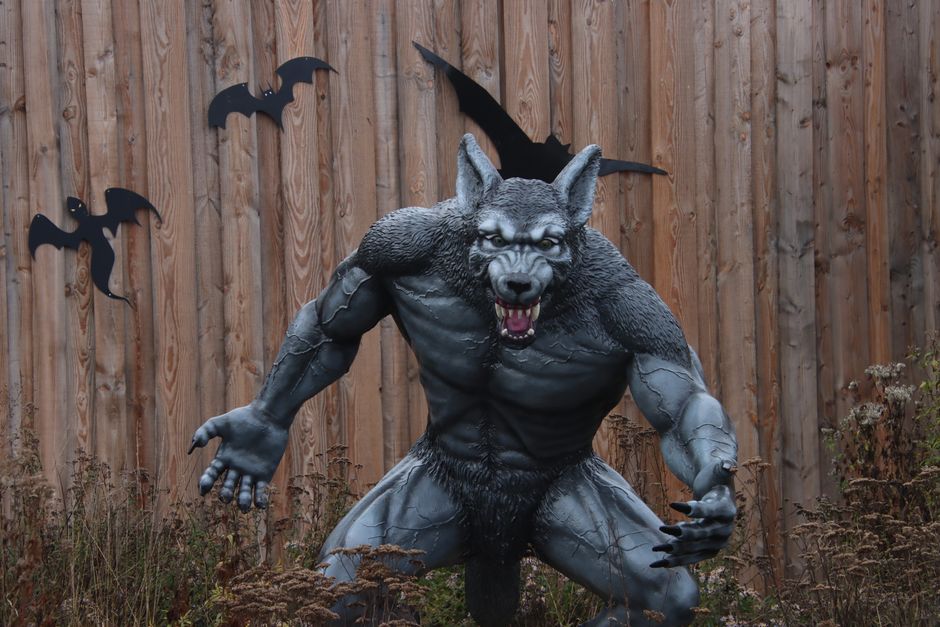
Werewolf Legend: Why Full Moons Became Part of the Myth

Werewolf Legend: Why Full Moons Became Part of the Myth

Werewolf Legend: Why Full Moons Became Part of the Myth

By TriviaOwl, Staff Writer — Published August 1, 2026

Table of Contents

The werewolf legend and full moons are inseparable in popular imagination, but this connection is surprisingly modern. For centuries, European folklore described people transforming into wolves with no mention of lunar phases at all. The full moon became central to werewolf mythology largely through 20th-century fiction and film, not ancient tradition. Discover the fascinating evolution of this myth and explore the interesting facts behind one of horror's most enduring symbols.

The real history of werewolf beliefs reveals a complex tapestry of medical misunderstanding, religious persecution, and cultural anxiety that had little to do with the night sky. Understanding where the full moon entered the story offers amazing insights into how modern media shapes our perception of ancient legends.

Key Takeaways

  • Medieval European werewolf legends rarely mentioned the moon at all—transformations were often voluntary or curse-based
  • The full moon connection became prominent in 1941 with the Hollywood film "The Wolf Man"
  • Ancient Greek and Roman werewolf stories focused on divine punishment and cannibalism, not lunar cycles
  • Clinical lycanthropy, a real psychiatric condition, involves people believing they transform into animals regardless of moon phases
  • The word "lunatic" derives from Latin "luna" (moon), reflecting old beliefs about the moon affecting mental states
  • Wolf behavior shows no correlation with full moons, despite persistent folklore

The Werewolf Legend and Full Moon Origins: A Hollywood Invention

Ancient werewolf stories span cultures from Greece to Scandinavia, yet the full moon is conspicuously absent from most original tales. In Greek mythology, King Lycaon was transformed into a wolf by Zeus as punishment for serving human flesh at a banquet. No moon involved. Medieval European accounts describe werewolves as people who wore wolf belts, applied magical ointments, or suffered from curses—transformations that could happen any night of the month.

The pivotal shift came with early 20th-century literature and cinema. While some Gothic novels toyed with lunar themes, the 1941 Universal Pictures film "The Wolf Man" cemented the full moon as the trigger for transformation in public consciousness. The movie's famous rhyme—"Even a man who is pure in heart and says his prayers by night, may become a wolf when the wolfsbane blooms and the autumn moon is bright"—became more influential than centuries of folklore.

This Hollywood convention proved irresistible. The full moon offered visual drama, a predictable timeline for storytelling, and a cosmic inevitability that heightened tragedy. Soon, virtually every werewolf story adopted this framework, retroactively rewriting the mythology in the cultural imagination.

What Medieval Europeans Actually Believed About Werewolves

Historical records from werewolf trials in 16th and 17th century Europe reveal startling details. Accused werewolves were often described as using wolf skins or magical salves to transform. Some confessed (under torture) to making pacts with the devil. The transformation was portrayed as deliberate, not an involuntary monthly affliction.

The trials themselves reflected anxieties about wilderness, paganism, and social outcasts. Serial killers and violent criminals were sometimes labeled werewolves, blending supernatural fears with real crimes. One of the most documented cases involved Peter Stumpp in 1589 Germany, who was executed for alleged murders committed in wolf form—but contemporary accounts describe his transformations as occurring through a magical belt, with no lunar schedule.

Religious authorities viewed lycanthropy through the lens of demonic possession or delusion. The Catholic Church generally held that physical transformation was impossible, but that the devil could create the illusion of transformation or drive people to wolf-like savagery. This theological position left little room for astronomical triggers.

The Science Behind Moon Myths and Human Behavior

The belief that full moons affect human behavior predates werewolf legends by millennia. The word "lunacy" itself testifies to this ancient assumption. Hospitals, police departments, and emergency rooms have long reported anecdotal increases in unusual incidents during full moons. But does science support this?

Research consistently shows no correlation. Studies examining psychiatric admissions, emergency room visits, violent crime rates, and suicide attempts find no statistically significant pattern linked to lunar phases. A comprehensive analysis of decades of data reveals that confirmation bias drives the myth—people notice and remember unusual events that coincide with full moons while forgetting the countless uneventful full moons.

The moon does exert real gravitational effects on Earth, most notably in ocean tides. Human bodies are roughly 60% water, leading some to speculate about biological influences. However, the gravitational force the moon exerts on an individual human is infinitesimally small—far less than the gravitational pull of a nearby building or parked car. The tidal effect requires vast bodies of water to become measurable.

Comparing Werewolf Traditions Across Cultures

Culture/Region Transformation Trigger Key Characteristics
Ancient Greece Divine curse or punishment Permanent or long-term transformation; associated with cannibalism
Medieval Europe Magic belts, ointments, or devil's pact Voluntary transformation; retained human intelligence
Norse/Germanic Wearing wolf pelts (berserkers) Battle frenzy; spiritual rather than physical transformation
Slavic Folklore Curse, usually hereditary Often involuntary; vulnerable to specific remedies
Modern Fiction Full moon (post-1941) Involuntary monthly transformation; loss of human consciousness

Clinical Lycanthropy: The Real Medical Condition

Clinical lycanthropy is a rare psychiatric syndrome where patients believe they can or have transformed into animals, most commonly wolves. This condition has been documented in medical literature for centuries and continues to appear in modern psychiatric case studies. Patients may exhibit animal-like behaviors, including walking on all fours, howling, or refusing cooked food.

The condition typically occurs alongside other psychiatric disorders such as schizophrenia, bipolar disorder, or severe depression. Unlike the Hollywood werewolf, these episodes show no correlation with lunar cycles. Treatment usually involves antipsychotic medications and psychotherapy, with many patients responding well to intervention.

Historical accounts of werewolves may have included individuals suffering from this condition, rabies (which causes aggression and hydrophobia), or hypertrichosis (excessive hair growth). Medical understanding was primitive, and unusual symptoms were often interpreted through supernatural frameworks available in the culture.

Why Wolves Don't Howl More at Full Moons

The image of wolves howling at the full moon is iconic but misleading. Wolves do howl—to communicate with pack members, mark territory, and coordinate hunts. But research on wolf behavior shows no increase in howling during full moons compared to other nights.

Wolves are crepuscular, meaning they're most active during twilight hours of dawn and dusk. Their activity patterns are driven by prey behavior and pack dynamics, not lunar phases. The association between wolves and moon-howling likely stems from human observation bias: on clear nights with full moons, people are more likely to be outside and able to see and hear wolves in the distance.

Frequently Asked Questions

When did werewolves become associated with full moons?

The full moon connection became widespread primarily through 20th-century fiction and film, particularly the 1941 movie "The Wolf Man." Earlier werewolf legends rarely mentioned the moon as a transformation trigger.

Are there real medical conditions that inspired werewolf legends?

Yes, several conditions may have contributed: clinical lycanthropy (believing you're transforming into an animal), hypertrichosis (excessive hair growth), rabies (causing aggression and unusual behavior), and porphyria (a blood disorder causing photosensitivity). None of these conditions relate to lunar cycles.

Do hospital emergency rooms really get busier during full moons?

No. Multiple scientific studies examining hospital admissions, emergency room visits, and psychiatric episodes have found no statistically significant correlation with lunar phases. The belief persists due to confirmation bias and cultural expectations.

What is the oldest known werewolf story?

The Epic of Gilgamesh, one of humanity's oldest written stories from ancient Mesopotamia, includes a goddess transforming a shepherd into a wolf. Greek mythology's tale of King Lycaon, turned into a wolf by Zeus, is another ancient example dating back over 2,000 years.

The werewolf legend continues to evolve, each generation adding new layers while forgetting old ones. What we consider "traditional" werewolf mythology is often less than a century old, a reminder that folklore is never static. The next time you see a full moon, remember that its association with transformation says more about Hollywood's influence than about ancient fears—though the moon's beauty needs no mythological enhancement to inspire wonder.