











Ad Space
1 / 10 Questions
0 Points

Which national park draws more visitors than any other in America?

Grand Canyon

Yosemite

Great Smoky Mountains

Yellowstone

Points won
0
Correct score
0%
Ad Space

More Questions

Did You Know? 10 Facts About Celtic Myths

⏱️ 6 min read Did You Know? 10 Facts About Celtic Myths Celtic mythology represents one of the richest and most enchanting tapestries of ancient folklore...

Did You Know? 12 Facts About Black Holes

⏱️ 6 min read Did You Know? 12 Facts About Black Holes Introduction Black holes are among the most fascinating and mysterious objects in the universe. These...

What gene-editing technology, developed in 2012, uses a bacterial immune system to precisely modify …

What gene-editing technology, developed in 2012, uses a bacterial immune system to precisely modify ... Question 1: What gene-editing technology, developed in 2012, uses a...

More Articles

Did You Know? 10 Facts About Loki

Did You Know? 10 Facts About Loki

⏱️ 7 min read

Did You Know? 10 Fascinating Facts About Loki

Loki stands as one of the most complex and intriguing figures in Norse mythology. Often misunderstood as simply a villain, this enigmatic deity embodies contradictions and complexities that have captivated storytellers for over a millennium. From his ambiguous origins to his pivotal role in Ragnarök, Loki's tales weave through Norse mythology like a thread of chaos and cunning. Here are ten remarkable facts about the trickster god that reveal the depth and nuance of his mythological significance.

1. Loki Was Not Technically a God

Despite being commonly referred to as a god, Loki was actually a Jötunn, or giant, by birth. His father was Fárbauti, a giant, and his mother was Laufey or Nál. This giant heritage placed Loki outside the divine lineage of the Aesir gods, making his close association with them particularly unusual. He became a blood brother to Odin, the All-Father, through a sacred ritual, which granted him a place among the gods of Asgard. This outsider status proved significant throughout Norse mythology, as Loki never fully belonged to either the giants or the gods, existing perpetually between two worlds.

2. The Master Shapeshifter Had No Limits

Loki possessed extraordinary shapeshifting abilities that surpassed those of other Norse deities. He could transform not only into different human forms and animals but also change his gender at will. In various myths, Loki appeared as a salmon, a mare, a fly, an old woman, and even a seal. His most notable transformation occurred when he became a mare to distract the stallion Svaðilfari, ultimately giving birth to Sleipnir, Odin's eight-legged horse. This unparalleled shapeshifting ability made Loki an invaluable asset to the gods when solving problems, though it also enabled his most devious schemes.

3. Loki Had Three Monstrous Children

With the giantess Angrboda, Loki fathered three children who would play crucial roles in Norse eschatology: Fenrir the wolf, Jörmungandr the world serpent, and Hel, the ruler of the underworld realm that bears her name. The gods, fearing prophecies about these offspring, took drastic measures against them. Fenrir was bound with magical chains, Jörmungandr was cast into the ocean where he grew to encircle the world, and Hel was banished to the underworld. Despite these precautions, all three children were prophesied to participate in Ragnarök, the end of the world, fighting against the gods who had rejected them.

4. He Was Both Problem and Solution

A recurring pattern in Norse mythology shows Loki creating problems for the gods, only to devise clever solutions to fix them. When he cut off Sif's golden hair as a prank, he resolved the crisis by commissioning the dwarves to create magical treasures, including new hair for Sif and several powerful artifacts for other gods. Similarly, when his scheme involving the master builder threatened Asgard's security, Loki transformed into a mare to sabotage the construction. This duality made Loki simultaneously indispensable and dangerous, a source of both innovation and chaos in the Norse cosmos.

5. The Death of Baldr Was His Ultimate Crime

Loki's most unforgivable act was orchestrating the death of Baldr, the beloved god of light and purity. When Baldr's mother, Frigg, secured oaths from all things not to harm her son, she overlooked the mistletoe, deeming it too young and harmless. Loki discovered this oversight and fashioned a dart from mistletoe, which he gave to the blind god Höðr, guiding his hand to throw it at Baldr during what the gods thought was harmless sport. The dart killed Baldr instantly, plunging the gods into grief and setting in motion the events leading to Loki's punishment and eventually Ragnarök.

6. His Punishment Was Extraordinarily Cruel

Following Baldr's death, the gods captured Loki and devised a horrific punishment. They transformed one of his sons, Váli, into a wolf who then killed his brother Narfi. The gods used Narfi's entrails to bind Loki to three rocks deep within a cave. The giantess Skaði placed a venomous serpent above him, arranged so that its poison would drip onto his face. Loki's faithful wife, Sigyn, remained by his side, catching the venom in a bowl, but when she turned to empty it, the poison fell upon Loki, causing him to writhe in agony so violently that the earth itself shook, creating earthquakes.

7. Loki's Name Meaning Remains Debated

The etymology of Loki's name continues to puzzle scholars. Some researchers suggest it derives from the Old Norse word "loka," meaning "to close" or "to end," which would be fitting given his role in bringing about Ragnarök. Others propose connections to words meaning "flame" or "lightning," associating him with fire and destruction. Another theory links his name to "lúka," meaning "loop" or "knot," reflecting his tendency to create and untangle complicated situations. This linguistic ambiguity mirrors the god's own elusive and multifaceted nature, resisting simple categorization or understanding.

8. He Led the Forces of Chaos at Ragnarök

In the prophesied end of the world, Loki would break free from his bonds and assume leadership of the forces opposing the gods. He would captain the ship Naglfar, constructed from the fingernails and toenails of the dead, carrying giants and the dishonored dead to the final battlefield. There, Loki would face Heimdallr, the watchman of the gods, in single combat. According to prophecy, these two ancient adversaries would slay each other, their mutual destruction symbolizing the complete dissolution of the old cosmic order and the cyclical nature of Norse cosmology.

9. Loki Had a Complex Family Beyond His Monstrous Children

Besides his infamous offspring with Angrboda, Loki had a legitimate family with his wife Sigyn, with whom he had two sons: Narfi and Váli. Sigyn represented unwavering loyalty and devotion, standing by Loki even through his imprisonment and torture. Additionally, as mentioned earlier, Loki himself gave birth to Sleipnir after his transformation into a mare, making him the mother of Odin's steed. This complicated family tree, involving multiple partners and gender transformations, reflected the fluid and transgressive nature of Loki's character within Norse mythology.

10. Loki's Character Evolved Over Time

Early Norse sources present Loki as more of a mischievous trickster than an outright villain, someone whose cunning helped the gods as often as it hindered them. However, later sources, particularly those written after Christianization, increasingly portrayed him as an evil figure, possibly influenced by Christian concepts of the devil. The Prose Edda, compiled by Snorri Sturluson in the 13th century, presents a more negative view of Loki than earlier skaldic poetry suggests. This evolution reflects how mythological figures transform through retelling and cultural change, making it challenging to identify a single "authentic" version of Loki's character.

Conclusion

These ten facts reveal Loki as far more than a simple antagonist in Norse mythology. He emerges as a deeply complex figure whose very existence challenged the boundaries between categories: neither fully god nor giant, neither purely helpful nor completely destructive, neither exclusively male nor female. His cunning intelligence, shapeshifting abilities, and willingness to transgress social boundaries made him simultaneously valuable and dangerous to the cosmic order. From his mysterious origins and his monstrous progeny to his terrible punishment and his destined role in the world's end, Loki embodies the chaos and unpredictability that lurked at the edges of the Norse cosmos. Understanding these facets of his character provides crucial insight into how the Norse peoples understood the forces of disruption, change, and transformation in their world, making Loki one of mythology's most enduringly fascinating figures.
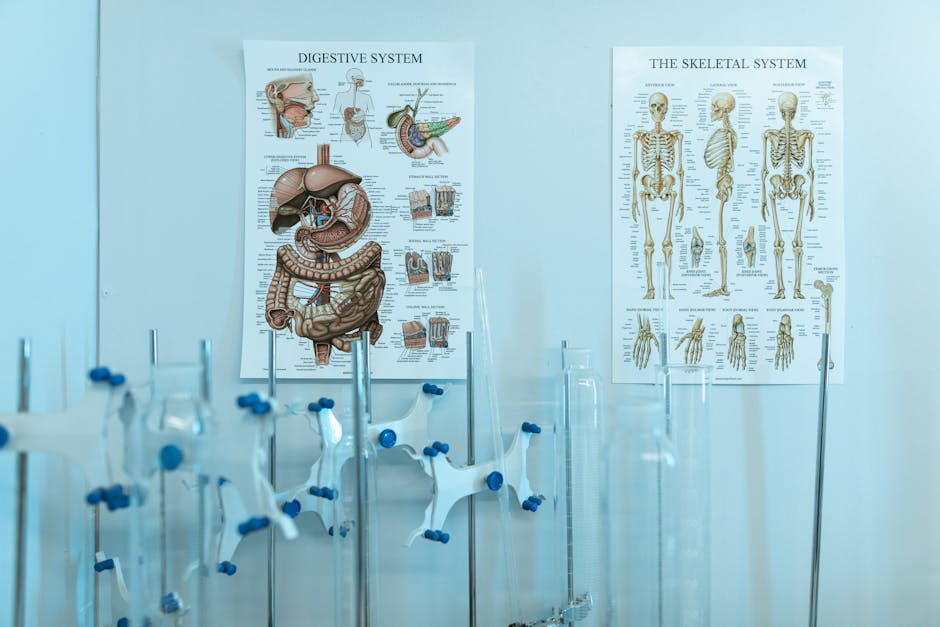
Did You Know? 10 Facts About Artificial Organs

Did You Know? 10 Facts About Artificial Organs

⏱️ 7 min read

Did You Know? 10 Facts About Artificial Organs

Artificial organs represent one of the most remarkable achievements in modern medicine, offering hope to millions of patients worldwide who suffer from organ failure. These sophisticated biomedical devices are designed to replace, support, or augment failing biological organs, extending and improving the quality of countless lives. From the early experiments with mechanical hearts to today's advanced bioengineered tissues, the field of artificial organs has evolved dramatically. This article explores ten fascinating facts about artificial organs that demonstrate the incredible progress of medical science and the potential for future breakthroughs in this life-saving field.

1. The First Artificial Organ Was Developed Over a Century Ago

The history of artificial organs dates back much further than most people realize. The first successful artificial organ was the kidney dialysis machine, developed in 1943 by Dutch physician Willem Kolff during World War II. Using cellophane sausage casings, a washing machine, and orange juice cans, Kolff created a device that could filter toxins from blood. This revolutionary invention laid the groundwork for modern dialysis machines that now sustain millions of patients with kidney failure worldwide. The ingenuity displayed in this wartime invention demonstrates how necessity and innovation can combine to create life-saving technology.

2. Artificial Hearts Have Kept Patients Alive for Years

While early artificial hearts were intended only as temporary bridges to transplantation, modern devices can sustain patients for extended periods. The first total artificial heart implant in a human occurred in 1982 when Dr. William DeVries implanted the Jarvik-7 into patient Barney Clark, who survived for 112 days. Today's ventricular assist devices and total artificial hearts have enabled patients to live for several years, with some individuals surviving more than a decade. These devices have become increasingly sophisticated, featuring quieter operations, smaller sizes, and improved durability that significantly enhances patient quality of life.

3. Bioengineered Organs Are Grown Using Patient Cells

One of the most exciting developments in artificial organ technology involves bioengineering organs using a patient's own cells. Scientists have successfully created bladders, blood vessels, and skin grafts by seeding biodegradable scaffolds with patient cells. This approach offers two significant advantages: the organs are less likely to be rejected by the immune system, and it eliminates the need for lifelong immunosuppressive medications. Researchers have also grown functional windpipes, ears, and even simplified versions of kidneys in laboratory settings, pointing toward a future where custom-grown organs could become commonplace.

4. Cochlear Implants Have Restored Hearing to Hundreds of Thousands

The cochlear implant stands as one of the most successful artificial sensory organs, having restored functional hearing to over 700,000 people worldwide. Unlike hearing aids that amplify sound, cochlear implants bypass damaged portions of the ear and directly stimulate the auditory nerve with electrical impulses. First approved by the FDA in the 1980s, these devices have evolved to provide increasingly natural sound perception. Modern cochlear implants can even enable music appreciation and phone conversations, capabilities that seemed impossible in early versions of the technology.

5. Artificial Pancreas Systems Are Revolutionizing Diabetes Management

For individuals with type 1 diabetes, artificial pancreas systems represent a game-changing development. These hybrid closed-loop systems combine continuous glucose monitoring with insulin pumps and sophisticated algorithms to automatically regulate blood sugar levels. By mimicking the function of a healthy pancreas, these systems reduce the burden of constant monitoring and manual insulin adjustments. Recent FDA approvals of several artificial pancreas systems have made this technology increasingly accessible, offering improved glycemic control and quality of life for diabetes patients while reducing the risk of dangerous hypoglycemic episodes.

6. Three-Dimensional Printing Is Creating Custom Prosthetics and Implants

Three-dimensional printing technology has revolutionized the production of artificial organs and prosthetics. This manufacturing method allows for the creation of patient-specific devices tailored to individual anatomy, improving fit and function. Scientists have successfully 3D-printed titanium ribs, jaw bones, and skull sections for transplantation. Researchers are also working on bioprinting, which uses specialized printers to layer living cells and biomaterials to create functional tissue. While fully functional 3D-printed organs remain in development, the technology has already produced implantable structures like ear cartilage and bone segments that have been successfully transplanted into patients.

7. Artificial Lungs Can Provide Temporary Respiratory Support

Extracorporeal membrane oxygenation (ECMO) devices serve as temporary artificial lungs for patients with severe respiratory failure. These sophisticated machines oxygenate blood outside the body, giving damaged lungs time to heal. ECMO technology gained widespread attention during the COVID-19 pandemic when it became a critical tool for treating patients with severe acute respiratory distress syndrome. While not a permanent solution, these devices have saved countless lives by bridging patients through critical periods of lung failure. Researchers continue working toward developing implantable artificial lungs that could provide longer-term support for patients with chronic lung diseases.

8. Retinal Implants Are Restoring Vision to the Blind

Artificial retinas represent a breakthrough for individuals with certain types of blindness caused by retinal degeneration. These devices use cameras and electrode arrays to stimulate remaining retinal cells, creating visual perception. The Argus II retinal prosthesis, approved in Europe and the United States, has enabled previously blind individuals to perceive shapes, movement, and objects. While the vision provided is currently limited compared to natural sight, recipients can navigate environments, recognize large letters, and detect people and objects. Ongoing research aims to increase the resolution and field of view, potentially offering even greater visual restoration in the future.

9. The Global Artificial Organs Market Is Rapidly Expanding

The economic and medical significance of artificial organs is reflected in the market's substantial growth. Valued at billions of dollars annually, the artificial organs and bionics market is projected to continue expanding significantly over the coming decades. This growth is driven by aging populations, increasing prevalence of chronic diseases, technological advancements, and persistent organ donor shortages. The market encompasses a wide range of products, from dialysis machines and cochlear implants to ventricular assist devices and artificial joints. This economic investment translates into accelerated research and development, bringing new innovations to patients more quickly than ever before.

10. Xenotransplantation May Provide Animal Organs for Human Patients

One of the most controversial yet promising frontiers in artificial organ development involves xenotransplantation, the transplantation of animal organs into humans. Recent breakthroughs have demonstrated that genetically modified pig organs can function in human recipients for extended periods. In 2022, surgeons successfully transplanted a genetically modified pig heart into a human patient who survived for two months. Pigs are considered ideal donors because their organs are similar in size to human organs, and genetic modifications can reduce rejection risks. While ethical concerns and technical challenges remain, xenotransplantation could potentially address the severe shortage of donor organs that results in thousands of deaths annually.

Conclusion

The field of artificial organs represents one of medicine's most dynamic and hopeful frontiers. From the pioneering dialysis machines of the 1940s to today's sophisticated bioengineered tissues and xenotransplanted organs, the progress has been remarkable. These ten facts illustrate not only how far medical science has come but also the incredible potential that lies ahead. As technology continues to advance, artificial organs are becoming more effective, accessible, and sophisticated, offering improved outcomes for patients facing organ failure. While challenges remain, including cost, accessibility, and technical limitations, the trajectory of innovation suggests a future where organ failure may no longer carry the dire prognosis it does today. The continued development of artificial organs promises to save millions of lives and fundamentally transform the practice of medicine in the twenty-first century.