










1 / 10 Questions
0 Points

Which US State Lets You Dig For Diamonds And Keep What You Find?

Arkansas

Nevada

Montana

Colorado

Points won
0
Correct score
0%

More Questions

Why Airplane Windows Are Round: Safety Engineering Story

Airplane windows switched from square to round after fatal crashes in the 1950s. Discover the engineering breakthrough that saved countless lives.

13 Bizarre Facts About Platypus Venom and Egg-Laying

Discover surprising platypus facts about their venomous spurs, egg-laying habits, and other strange adaptations that make them one of nature's oddities.

Which Chuck Berry Hit Features A Guitar-Playing Country Boy?

Which Chuck Berry Hit Features A Guitar-Playing Country Boy? Question 1: Which Chuck Berry Hit Features A Guitar-Playing Country Boy? A. Johnny B. Goode B. Sweet Little...

More Articles

Why Crows Hold Funerals: Animal Behavior Mystery Solved

Why Crows Hold Funerals: Animal Behavior Mystery Solved

Why Crows Hold Funerals: Animal Behavior Mystery Solved

By Trivia Daily, Animals Desk — Published September 13, 2026

Table of Contents

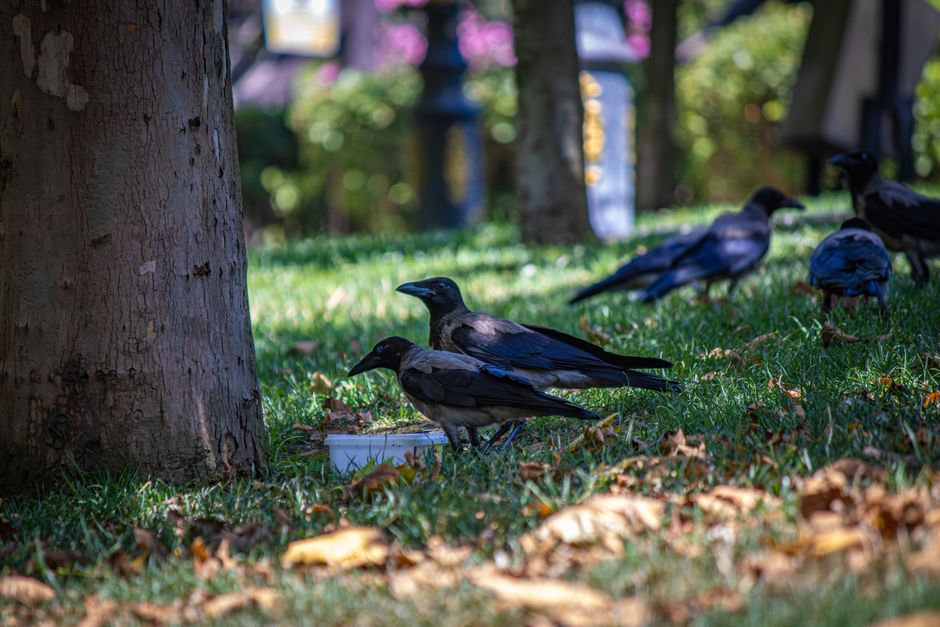
When a crow dies, something remarkable happens. Other crows gather around the body, calling loudly and appearing to mourn their fallen companion. For years, people observed this behavior and wondered: do crows hold funerals for their dead? Scientists have now uncovered the truth behind these haunting gatherings, and the answer reveals just how intelligent these creatures really are. Far from being simple mourning rituals, these "crow funerals" serve a crucial survival purpose that showcases the sophisticated nature of corvid intelligence.

The phenomenon isn't just folklore. Crows genuinely congregate around deceased members of their species, creating noisy assemblies that can last for hours. But calling them funerals misses the point entirely. What looks like grief is actually a masterclass in animal learning and threat assessment.

Key Takeaways

  • Crows gather around dead crows not to mourn, but to learn about potential dangers in their habitat and remember the location where death occurred.
  • These gatherings involve loud calling that alerts other crows in the area to come investigate the threat, creating a community-wide learning experience.
  • Crows can remember human faces associated with dead crows for years, demonstrating remarkable long-term memory and threat recognition.
  • This behavior helps the entire crow population avoid predators and dangerous locations, providing a survival advantage to the species.
  • Similar behavior has been observed in other intelligent animals including elephants, dolphins, and some primate species.
  • The gatherings typically last between 15 minutes to several hours, depending on the perceived threat level and number of crows involved.

Why Crows Hold Funerals: The Science Behind the Behavior

Researchers have conducted careful experiments to understand what drives crows to gather around their dead. The key insight? These assemblies function as danger-learning events. When crows encounter a dead member of their species, they're hardwired to treat it as a red flag. Something killed this bird, and that something might still be nearby.

The behavior unfolds in a predictable pattern. One crow spots the body and begins calling—a distinctive alarm vocalization that other crows recognize immediately. More crows arrive. They circle overhead, perch in nearby trees, and vocalize intensely. Some approach the body cautiously. The entire event creates a vivid, emotionally charged memory that embeds crucial information: this place is dangerous.

Studies using taxidermied crows have demonstrated just how specific this learning becomes. When researchers presented crows with a mounted dead crow while wearing a particular mask, the living crows not only mobbed the area but remembered that specific human face. Years later, those same crows would scold and dive-bomb anyone wearing that mask, even if no dead crow was present. The animals had formed a lasting association between the face and danger.

The Intelligence Behind Crow Gatherings

This behavior reveals multiple layers of cognitive sophistication. Crows must recognize death itself—no small feat in the animal kingdom. They must communicate the discovery to others through specific vocalizations. They need the memory capacity to store and recall threatening locations and associated cues. And they demonstrate something resembling teaching, as experienced crows pass on danger information to younger, naive birds.

Corvids, the family that includes crows, ravens, jays, and magpies, rank among the most intelligent animals on Earth. Their brain-to-body ratio rivals that of great apes. They use tools, solve multi-step problems, and even engage in play. The funeral behavior fits perfectly into this picture of animal intelligence. It's not mystical mourning—it's practical, life-saving education.

The social structure of crow communities makes this behavior even more valuable. Crows live in complex societies with family groups that recognize and remember each other. When one crow learns about a danger, that knowledge can spread through social networks. Young crows learning from adults can avoid threats they've never personally encountered. This cultural transmission of information gives crow populations a significant survival edge.

Comparing Crow Intelligence to Other Wildlife

Species Response to Dead Memory Duration Social Learning
Crows Gather, vocalize, investigate Years Extensive
Elephants Touch bones, stand vigil Decades Extensive
Dolphins Support dying individuals Years Moderate
Chimpanzees Inspect, groom body Years Extensive
Magpies Place grass near body Unknown Moderate

What Crow Funerals Teach Us About Nature

The misunderstanding about crow funerals highlights how easily humans project their own emotions onto wildlife. We see birds gathering around a body and imagine grief, sadness, and ritual. The reality is simultaneously more mundane and more impressive. Crows have evolved a sophisticated danger-detection system that happens to involve their dead.

This doesn't mean crows lack emotion entirely. They form pair bonds, cooperate in raising young, and show signs of stress when separated from family members. But the funeral behavior specifically serves threat assessment rather than emotional processing. Evolution shaped this response because it works—crows that learn from death scenes survive better than those that ignore them.

The behavior also demonstrates how nature solves problems with elegant efficiency. Rather than each crow learning about every danger through personal experience—a potentially fatal approach—the species has developed a way to turn every death into a community learning opportunity. One crow's misfortune becomes a lesson for dozens or even hundreds of others.

Crow Behavior in Different Habitats

Urban crows display this funeral behavior just as readily as their rural counterparts, though the threats they learn about differ. City crows might associate danger with specific streets, buildings, or vehicles. Rural crows learn about predators like hawks, owls, and foxes. The behavior adapts to the environment while maintaining its core function.

Interestingly, crows in areas with heavy human activity have learned to distinguish between people who pose threats and those who don't. They recognize individual humans, remember which ones have interfered with nests or harmed crows, and spread that information through their social networks. This remarkable facial recognition ability extends the funeral behavior's protective value into everyday life.

Frequently Asked Questions

Do crows actually feel sad when another crow dies?

While crows may experience emotions, the funeral gatherings primarily serve as danger-learning events rather than mourning rituals. The behavior is driven by survival instinct—investigating what caused the death to avoid similar threats—though this doesn't rule out some emotional component that science hasn't yet fully measured.

How long can crows remember a dangerous person or place?

Crows can remember threatening human faces and dangerous locations for at least five years, and possibly much longer. They can also teach their offspring to recognize these threats, meaning the memory can persist across generations even if the original witness dies.

Do other birds hold funerals like crows?

Ravens, jays, and magpies—all corvids—show similar behavior around dead members of their species. Some other intelligent bird species display related responses, but the elaborate gathering and vocalization pattern is most pronounced in the corvid family.

Will crows gather around any dead bird or only other crows?

Crows respond most strongly to dead crows, though they may show interest in dead ravens or other corvids. They generally ignore dead birds of other species unless those birds are prey items, demonstrating that the funeral behavior is specifically triggered by recognizing their own kind.

The next time you see crows gathering noisily around something on the ground, you're witnessing evolution in action. These clever creatures are running a real-time threat assessment seminar, turning tragedy into education. In a world full of dangers, crows have learned that the dead can teach the living—a lesson that keeps their populations thriving across every continent except Antarctica.
Top 10 Animals That Live the Longest

Top 10 Animals That Live the Longest

⏱️ 7 min read

Top 10 Animals That Live the Longest

The concept of longevity has fascinated humans throughout history, and the animal kingdom offers remarkable examples of creatures that far surpass human lifespans. While the average human life expectancy hovers around 70-80 years, certain animals have evolved to survive for centuries, and in some cases, even millennia. These extraordinary organisms have developed unique biological mechanisms that allow them to resist aging, regenerate tissues, and endure environmental challenges that would be fatal to most other species. Understanding these animals not only satisfies our curiosity but also provides valuable insights into the biology of aging and longevity. Here are the top ten animals that hold records for living the longest on Earth.

1. Glass Sponge (Monorhaphis chuni)

Topping the list of Earth's longest-living animals is the glass sponge, with some specimens estimated to be over 11,000 years old. These remarkable deep-sea creatures are found in the cold waters of the Antarctic and other ocean depths. Glass sponges have a skeletal structure made of silica, giving them their characteristic glass-like appearance. Their extremely slow metabolism and the stable, cold environment they inhabit contribute to their exceptional longevity. Scientists determine their age by examining the layers of their silica skeletons, similar to counting tree rings. These ancient organisms serve as living records of oceanic history, having survived through multiple climate changes and geological events.

2. Ocean Quahog Clam (Arctica islandica)

The ocean quahog clam holds the record as the longest-lived non-colonial animal with a confirmed age. One specimen, nicknamed "Ming," was discovered to be 507 years old when it was collected in 2006. These bivalve mollusks inhabit the North Atlantic Ocean and can be found at depths ranging from shallow waters to several hundred meters. Scientists determine their age by counting growth rings on their shells, similar to dendrochronology used for trees. Their remarkable longevity is attributed to their slow metabolism, efficient cellular repair mechanisms, and resistance to oxidative stress. Unfortunately, Ming's life was ended during the research process, highlighting the delicate nature of studying these ancient creatures.

3. Greenland Shark (Somniosus microcephalus)

The Greenland shark is the longest-living vertebrate known to science, with some individuals estimated to live for at least 400 years. These massive predators inhabit the cold, deep waters of the North Atlantic and Arctic Oceans. Growing at an incredibly slow rate of about one centimeter per year, these sharks don't reach sexual maturity until they're approximately 150 years old. Scientists determine their age through radiocarbon dating of the proteins in their eye lenses. Their extreme longevity is likely related to their frigid habitat, which slows their metabolism significantly. These ancient sharks may have been swimming through Arctic waters since before the founding of the United States.

4. Bowhead Whale (Balaena mysticetus)

Bowhead whales are among the longest-living mammals on Earth, with some individuals reaching ages exceeding 200 years. One specimen was discovered with a harpoon fragment embedded in its blubber that dated back to the 1800s, providing dramatic evidence of their longevity. These massive Arctic whales possess unique genetic adaptations that may protect them from age-related diseases, including cancer. Scientists study the amino acid changes in their eye tissue to estimate age. Their slow metabolism, large body size, and cold-water habitat all contribute to their exceptional lifespan. Researchers continue to study bowhead whales intensively, hoping to unlock secrets about aging that could benefit human health.

5. Galápagos Giant Tortoise (Chelonoidis niger)

These iconic reptiles are among the most famous long-lived animals, regularly exceeding 100 years of age, with some individuals confirmed to have lived over 170 years. The most famous example was Harriet, who lived to be approximately 175 years old and was reportedly collected by Charles Darwin himself. These massive tortoises are native to the Galápagos Islands and can weigh over 400 kilograms. Their longevity is attributed to their slow metabolism, herbivorous diet, and ability to survive extended periods without food or water. These gentle giants continue to captivate researchers and conservationists, serving as flagship species for wildlife protection efforts in the Galápagos.

6. Rougheye Rockfish (Sebastes aleutianus)

The rougheye rockfish, found in deep Pacific Ocean waters, can live for more than 200 years, making it one of the longest-lived fish species. These fish inhabit depths ranging from 150 to 450 meters and are characterized by the small spines under their eyes that give them their name. Their longevity is determined by counting growth rings in their ear bones, called otoliths. Like other long-lived species, rougheye rockfish grow slowly and reproduce late in life, which makes them particularly vulnerable to overfishing. Their extended lifespan allows them to adapt to long-term environmental changes but also means that population recovery from fishing pressure takes decades.

7. Red Sea Urchin (Strongylocentrotus franciscanus)

These spiny echinoderms found along the Pacific coast of North America can live for over 200 years, with some estimates suggesting they might reach 300 years or more. Red sea urchins show little evidence of aging, exhibiting consistent reproductive capacity throughout their lives—a phenomenon called negligible senescence. They maintain the ability to regenerate tissues and show no decline in cellular function as they age. Their longevity is determined by growth band analysis, though this method becomes less accurate for very old specimens. These creatures play crucial ecological roles in marine ecosystems, particularly in kelp forest dynamics, where they serve as both grazers and prey.

8. Tuatara (Sphenodon punctatus)

The tuatara, a reptile endemic to New Zealand, can live for well over 100 years, with some individuals estimated to reach 150 years or more. Despite resembling lizards, tuataras are the sole survivors of an ancient order of reptiles that thrived during the dinosaur era. These "living fossils" have extremely slow metabolism and growth rates, taking 10-20 years to reach sexual maturity. They continue to grow throughout their lives and remain reproductively active even in old age. The oldest known tuatara, named Henry, fathered offspring at the age of 111. Their remarkable longevity provides scientists with opportunities to study ancient evolutionary adaptations in a living animal.

9. Koi Fish (Cyprinus rubrofuscus)

Ornamental koi fish, varieties of domesticated carp originally from Japan, can live for over 200 years under optimal conditions. The oldest verified koi, named Hanako, died in 1977 at the age of 226 years. Age determination in koi is conducted through scale analysis, where growth rings similar to tree rings can be counted. These colorful fish are prized in Japanese culture and have been bred for centuries for their aesthetic qualities. Their longevity depends heavily on water quality, diet, genetics, and care. While most koi in typical pond settings live 25-35 years, those maintained in ideal conditions with excellent genetics can achieve truly remarkable ages.

10. Macaw Species (Various Ara species)

Several species of large macaws, particularly the blue and gold macaw and the scarlet macaw, can live 60-80 years in the wild and have been documented living over 100 years in captivity. These intelligent, social birds form lifelong pair bonds and exhibit complex cognitive abilities that some researchers compare to young children. Their longevity among birds is attributed to their large body size, omnivorous diet, and social complexity. Captive macaws often outlive their wild counterparts due to protection from predators, consistent food supply, and veterinary care. However, their extended lifespan in captivity raises ethical considerations about the long-term commitment required to care for these birds properly.

Conclusion

The ten animals featured in this list represent nature's most successful experiments in longevity, spanning multiple phyla and demonstrating various strategies for extending lifespan. From the ancient glass sponges dwelling in ocean depths to the intelligent macaws soaring through tropical forests, these creatures have evolved remarkable biological mechanisms to resist aging and survive for extraordinary periods. Common factors contributing to their longevity include slow metabolism, cold environments, large body size, efficient DNA repair mechanisms, and resistance to oxidative stress. Studying these animals provides invaluable insights into the fundamental biology of aging and may eventually help humans develop interventions to extend healthy lifespan. As we continue to face environmental challenges and habitat loss, protecting these long-lived species becomes even more critical, as their extended lifespans make them particularly vulnerable to rapid ecological changes and population recovery from decline takes generations.