









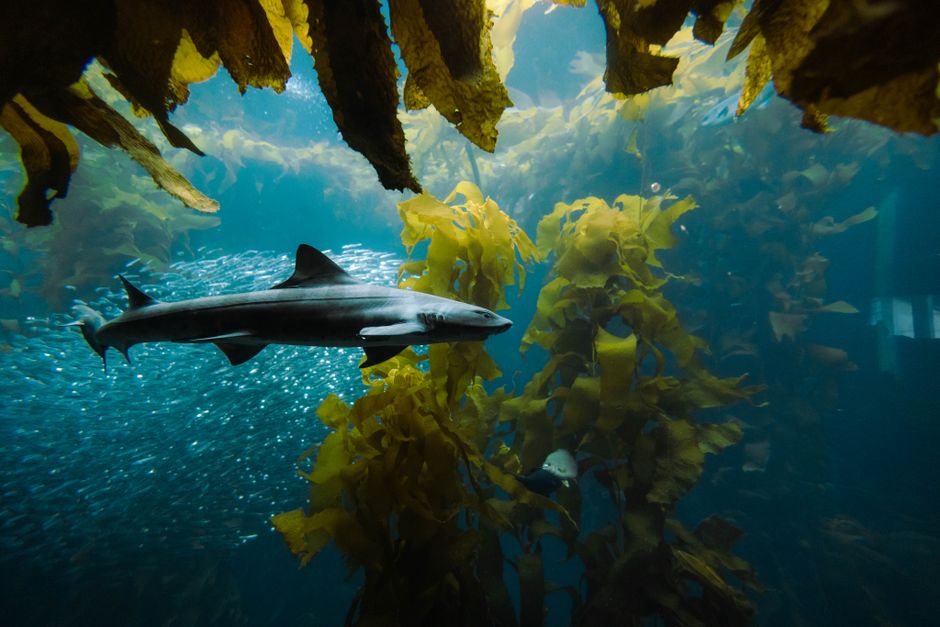
Did You Know Greenland Sharks Live Over 400 Years
By Trivia Owl, Staff Writer — Published November 11, 2026
Table of Contents
- Key Takeaways
- How Scientists Discovered Greenland Sharks Live for Centuries
- The Biology Behind Extreme Longevity
- Life in the Deep: Habitat and Behavior
- Comparing Longevity Champions
- Conservation and the Challenge of Slow Reproduction
- Frequently Asked Questions
Deep in the icy waters of the North Atlantic and Arctic Ocean swims a creature that was already old when the United States declared independence. Greenland sharks live longer than any other known vertebrate on Earth, with some individuals reaching ages that exceed 400 years. These slow-moving giants navigate the frigid depths at a pace so leisurely they're sometimes called "sleeper sharks," yet their remarkable longevity makes them one of the most fascinating and surprising animals in the ocean. Scientists only recently discovered just how ancient these sharks can become, revealing facts that challenge everything we thought we knew about aging in the animal kingdom.
The discovery of their extreme lifespan came as a genuine shock to researchers. For decades, marine biologists had no reliable way to determine the age of these elusive creatures, until new techniques involving radiocarbon dating of eye lens tissue finally unlocked the secret.
Key Takeaways
- Greenland sharks can live over 400 years, making them the longest-lived vertebrates known to science.
- These sharks don't reach sexual maturity until they're approximately 150 years old, one of the slowest reproductive cycles in the animal kingdom.
- They grow at an extremely slow rate of about one centimeter per year, which contributed to the initial underestimation of their age.
- Greenland sharks inhabit some of the coldest ocean waters on Earth, typically found at depths between 600 and 2,200 feet.
- Nearly all Greenland sharks are blind or partially blind due to parasitic copepods that attach to their eyes.
- Their slow metabolism and cold-water habitat are believed to be key factors in their amazing longevity.
How Scientists Discovered Greenland Sharks Live for Centuries
The breakthrough came through an innovative application of radiocarbon dating. During the Cold War era, nuclear weapons testing released specific radiocarbon signatures into the atmosphere and oceans. These signatures became incorporated into living tissues at known points in time, creating a sort of temporal marker.
Researchers examined the eye lenses of Greenland sharks, which form before birth and don't change afterward. The proteins in the lens nucleus preserve a record of the water chemistry at the time of the shark's birth. By analyzing 28 female Greenland sharks that had been caught as bycatch, scientists determined that the largest specimen—measuring 16.5 feet long—was approximately 392 years old, give or take 120 years. Even accounting for the margin of error, this places the shark's birth sometime around the early 1600s.
This method revealed something astonishing. Previous age estimates had been wildly inaccurate because researchers assumed these sharks aged similarly to other shark species. They don't.
The Biology Behind Extreme Longevity
What allows Greenland sharks to live so incredibly long? The answer lies in their unique physiology and environment. Cold water dramatically slows metabolic processes. While warm-blooded animals burn energy maintaining body temperature, these sharks exist in near-freezing waters where their metabolism operates at a fraction of the pace seen in tropical species.
Their growth rate reflects this sluggish metabolism. Adding roughly one centimeter to their length each year, a five-meter Greenland shark has been growing for centuries. This glacial pace extends to every aspect of their biology. They swim at an average speed of less than one mile per hour, making them one of the slowest-swimming sharks in existence.
The extreme cold also appears to preserve cellular structures and reduce the accumulation of age-related damage. Scientists are now studying Greenland shark tissues to understand the molecular mechanisms that prevent or repair the cellular deterioration typically associated with aging. The interesting discoveries could potentially inform human longevity research, though these sharks operate under conditions no mammal could survive.
Life in the Deep: Habitat and Behavior
Greenland sharks inhabit one of Earth's harshest environments. They thrive in waters where temperatures hover just above freezing, typically between 30 and 50 degrees Fahrenheit. While they occasionally venture into shallower coastal waters, they spend most of their time in the deep ocean, sometimes diving to depths exceeding 7,000 feet.
Despite their lethargic swimming speed, they're apex predators. Their diet includes fish, seals, and even polar bears and reindeer—though whether they actively hunt these mammals or scavenge carcasses remains a subject of scientific curiosity and debate. Their hunting strategy likely relies on ambush rather than pursuit, using their slow approach to conserve energy in an environment where food can be scarce.
Nearly every adult Greenland shark carries a parasitic copepod called Ommatokoita elongata attached to its cornea. These parasites damage the eye tissue, leaving most sharks functionally blind. Yet this doesn't seem to hinder them significantly. In the perpetual darkness of the deep ocean, vision provides limited advantage anyway. The sharks navigate and hunt using other senses, particularly their acute ability to detect chemical signals and vibrations in the water.
Comparing Longevity Champions
| Species | Maximum Known Lifespan | Notable Feature |
|---|---|---|
| Greenland Shark | 400+ years | Longest-lived vertebrate |
| Bowhead Whale | 200+ years | Longest-lived mammal |
| Galapagos Tortoise | 190+ years | Longest-lived land animal |
| Rougheye Rockfish | 205 years | Long-lived bony fish |
| Ocean Quahog Clam | 500+ years | Longest-lived non-colonial animal |
Conservation and the Challenge of Slow Reproduction
The same biological traits that grant Greenland sharks their extraordinary lifespan also make them vulnerable. Not reaching sexual maturity until around 150 years of age means populations recover extremely slowly from any decline. If fishing pressure or environmental changes reduce their numbers, it could take centuries for populations to rebound.
These sharks face threats from commercial fishing, particularly as bycatch in fisheries targeting other species. Climate change poses additional risks, as warming Arctic waters may alter the cold-water ecosystems these ancient creatures depend upon. Scientists have classified the Greenland shark as "near threatened," recognizing that their slow life history makes them particularly susceptible to overfishing.
The flesh of Greenland sharks contains high concentrations of trimethylamine oxide and urea, making it toxic to humans unless processed through extended fermentation. This has historically limited intentional hunting, though they were once harvested for liver oil.
Frequently Asked Questions
What is the oldest Greenland shark ever found?
The oldest Greenland shark examined by scientists was estimated to be approximately 392 years old, though the dating method's margin of error means it could have been between 272 and 512 years old. This individual was caught near Greenland and measured over 16 feet in length.
How do Greenland sharks survive being blind?
Greenland sharks rely primarily on their other senses, including an acute ability to detect chemical signals and vibrations in the water. In the deep, dark waters where they live, vision provides minimal advantage, so their blindness doesn't significantly impair their ability to hunt and navigate.
Are Greenland sharks dangerous to humans?
Greenland sharks pose virtually no threat to humans. They live in extremely cold, deep waters where people rarely venture, and their slow swimming speed makes them unlikely to pursue any prey they couldn't ambush. There are no recorded attacks on humans.
Can you eat Greenland shark meat?
Greenland shark meat is toxic when fresh due to high levels of trimethylamine oxide, which breaks down into trimethylamine, causing symptoms similar to extreme intoxication. In Iceland, the fermented dish "hákarl" is made from Greenland shark after months of processing to remove the toxins, though it's considered an acquired taste.
A creature swimming in today's Arctic waters may have been born before the invention of the telescope, witnessing centuries of ocean changes we can only imagine. These remarkable sharks remind us how much we still have to explore and discover in Earth's oceans, and how life finds extraordinary ways to endure in the planet's most extreme environments.