










1 / 10 Questions
0 Points

What unexpected skill did Olympic swimmers develop that became popular worldwide?

Synchronized diving

Water ballet

Underwater photography

Competitive swimming

Points won
0
Correct score
0%

More Questions

The Hidden Story of Why Sloths Move So Incredibly Slow

Sloth behavior reveals a fascinating survival strategy. Discover the metabolic and evolutionary reasons behind their famously slow movements in the wild.

Air conditioning was invented to fix what problem in a printing plant?

Air conditioning was invented to fix what problem in a printing plant? Question 1: Air conditioning was invented to fix what problem in a printing...

What do the first three digits of a ZIP code identify?

What do the first three digits of a ZIP code identify? Question 1: What do the first three digits of a ZIP code identify? A. A...

More Articles

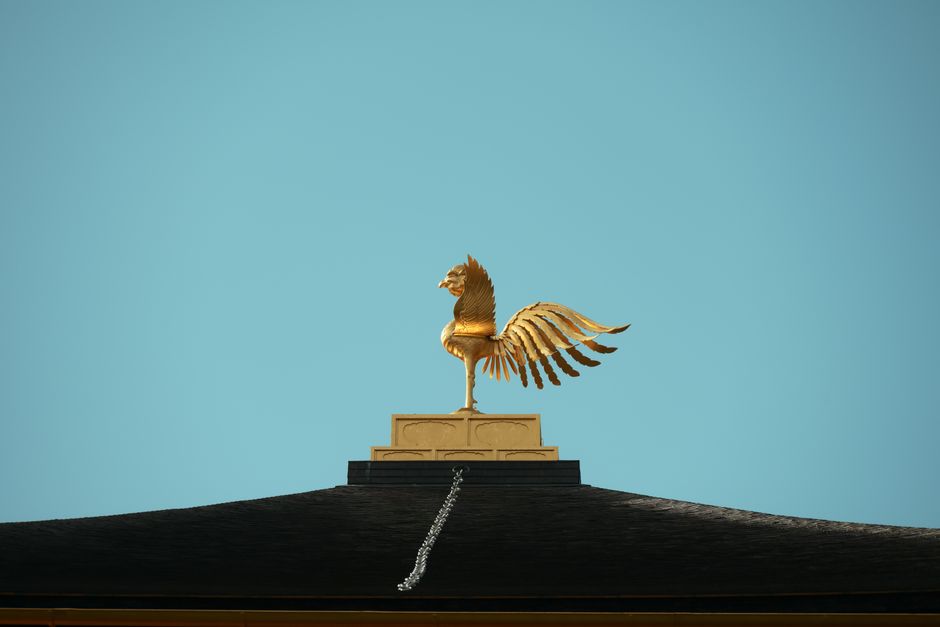
The Truth About Phoenix Birds Being Based on Real Ostriches

The Truth About Phoenix Birds Being Based on Real Ostriches

The Truth About Phoenix Birds Being Based on Real Ostriches

By Trivia Owl, Staff Writer — Published November 2, 2026

Table of Contents

The phoenix, that legendary bird that bursts into flames and rises from its own ashes, may owe its existence to ancient travelers' encounters with a very real—and very large—bird. While the phoenix has captivated imaginations for millennia, scholars have long debated whether this mythical creature was inspired by actual animals. The truth about phoenix birds reveals a surprising connection to ostriches, the world's largest living birds, whose unusual behaviors and dramatic appearance may have sparked one of mythology's most enduring legends.

Ancient trade routes brought Mediterranean peoples into contact with exotic African wildlife, and the ostrich—with its impressive size, fiery plumage, and bizarre habits—left quite an impression. What seemed magical to ancient observers often had a perfectly natural explanation, though the facts got embellished with each retelling.

Key Takeaways

  • Ancient Greek and Roman historians described the phoenix with characteristics strikingly similar to ostriches, including size, coloring, and geographic origin in Arabia or Ethiopia.
  • Ostriches display behaviors that could easily be misinterpreted as mystical, including their habit of sitting on nests that appear like funeral pyres and their reddish-orange plumage.
  • The phoenix legend appears in multiple ancient cultures, with the earliest known written accounts dating to the 5th century BCE by Greek historian Herodotus.
  • Male ostriches perform elaborate courtship displays involving wing-spreading and ground-sitting that, from a distance, could resemble a bird surrounded by flames.
  • Ancient confusion between different bird species and second-hand accounts likely contributed to the transformation of real ostriches into immortal phoenixes.
  • Modern scholars have identified interesting parallels between ostrich biology and phoenix mythology that suggest a basis in observable natural phenomena.

Discover the Truth About Phoenix Birds and Ancient Encounters

Herodotus, often called the father of history, wrote about the phoenix in the 5th century BCE. He described it as a bird from Arabia with gold and red plumage that lived for 500 years. When it died, the phoenix supposedly carried its parent's body to the Temple of the Sun in Heliopolis, Egypt, encased in myrrh. Herodotus himself expressed skepticism about the story, noting he had never seen one and was merely reporting what he'd been told.

The description, however, aligns remarkably well with ostriches. These birds can stand up to nine feet tall and weigh over 300 pounds. Male ostriches sport dramatic black and white plumage with hints of reddish-brown, while their skin can flush pink during mating season. In the harsh sunlight of desert regions, a male ostrich sitting on its nest could appear to glow with warm, fiery colors.

Ostriches were native to Arabia and North Africa in ancient times, exactly the regions associated with phoenix sightings. They also exhibit behaviors that ancient observers might have found mystical. During breeding season, male ostriches dig shallow nests in the ground and take turns with females incubating eggs. These nests, surrounded by dried vegetation in desert settings, could resemble the "funeral pyre" described in phoenix legends.

Amazing Facts Behind the Fiery Transformation

The phoenix's supposed ability to burst into flames and be reborn finds an interesting parallel in ostrich behavior. When threatened or during courtship, male ostriches perform dramatic displays. They spread their wings wide, revealing the white plumage underneath, and drop to the ground in a swaying motion. Their wings beat rhythmically while they rock back and forth. Witnessed at sunset or in shimmering heat waves, this display could easily appear supernatural to someone unfamiliar with the bird.

Ancient peoples also observed ostriches eating strange objects—stones, metal, and other hard materials. Ostriches swallow rocks to aid digestion in their gizzards, but to ancient observers, a bird that consumed seemingly indestructible materials might appear equally indestructible itself. The idea of a bird that could not truly die may have grown from this misunderstanding of digestive biology.

The ostrich's famous speed—they can run up to 45 miles per hour—contributed to their mystique. A bird that could outrun horses and disappear into the desert horizon might seem to vanish and reappear magically, reinforcing ideas about resurrection and rebirth.

Explore How Mythology Transformed Reality

The transformation from ostrich to phoenix involved layers of cultural storytelling. Egyptian priests at Heliopolis may have kept exotic birds, including ostriches, as sacred animals. Travelers hearing stories about these rare, impressive birds would embellish details with each retelling. The human tendency to make stories more exciting meant that an unusually long-lived bird became immortal, a bird with colorful plumage became wreathed in flames, and a bird that nested in the desert became one that built its own funeral pyre.

Roman naturalist Pliny the Elder wrote about the phoenix in the 1st century CE, describing it as the size of an eagle with gold around its neck and a rosy body. This description differs from earlier accounts and shows how the legend evolved. Later medieval bestiaries depicted phoenixes as increasingly fantastical, moving further from any real animal basis.

Phoenix Characteristic Possible Ostrich Origin
Large size, impressive stature Ostriches stand up to 9 feet tall, largest living bird
Gold and red plumage Male ostriches have reddish-brown and black feathers that glow in sunlight
Associated with Arabia and Ethiopia Ostriches native to these exact regions in ancient times
Sits on nest resembling a pyre Males incubate eggs in shallow ground nests surrounded by vegetation
Appears to burst into flames Courtship displays with wing-spreading and ground movements
Extremely long-lived or immortal Ostriches can live 40-45 years, exceptional for birds

Surprising Trivia About Real Birds and Mythical Legends

The phoenix wasn't the only mythical bird with possible real-world origins. The roc, a giant bird from Arabian Nights, may have been inspired by the elephant bird of Madagascar, which stood over ten feet tall. The griffin, part eagle and part lion, might have originated from Central Asian fossil discoveries of Protoceratops, whose beaked skulls resembled bird heads.

Ostriches themselves have remarkable characteristics that seem almost mythical. Their eyes are larger than their brains. They can go without water for days, extracting moisture from desert plants. A single ostrich egg weighs about three pounds and is equivalent to roughly two dozen chicken eggs. These genuine facts are impressive enough without embellishment.

Ancient confusion between different bird species also played a role. Flamingos, also native to the region, display pink and red coloring and gather in large groups. Herons and other wading birds were sacred in Egyptian culture. The phoenix legend may represent a composite of several real birds filtered through cultural mythology and limited zoological knowledge.

Frequently Asked Questions

Did ancient people really mistake ostriches for phoenixes?

Ancient writers likely heard descriptions of ostriches from travelers and traders, then embellished these accounts with mythological elements. Herodotus himself expressed doubt about the phoenix stories, suggesting even ancient people distinguished between real birds and legends, though the line blurred through cultural storytelling.

Are there any other animals that inspired famous mythical creatures?

Yes, many mythical creatures have real-world origins. Narwhal tusks inspired unicorn legends, manatees likely inspired mermaid stories, and fossil discoveries of extinct megafauna contributed to dragon myths across multiple cultures.

Why did the phoenix become associated with fire specifically?

The fire association likely came from multiple sources: the reddish-gold coloring of male ostriches in sunlight, their dramatic courtship displays, their desert habitat where heat shimmers create optical illusions, and the symbolic connection between the sun-worshiping cultures of Egypt and rebirth mythology.

Do ostriches actually live for hundreds of years?

No, ostriches typically live 40 to 45 years in the wild, though some in captivity have reached 50 years. While impressive for birds, this is far shorter than the 500 or 1,000 years attributed to phoenixes in various legends.

The next time you see an ostrich at a zoo or in nature footage, imagine encountering one for the first time in the ancient world—a towering bird with fiery plumage, bizarre habits, and supernatural speed. The truth about phoenix birds reminds us that reality, properly observed, can be just as captivating as any myth.

7 Record-Breaking Facts About the Mantis Shrimp

7 Record-Breaking Facts About the Mantis Shrimp

7 Record-Breaking Facts About the Mantis Shrimp

By Trivia Owl, Staff Writer — Published October 1, 2026

Table of Contents

Deep in tropical oceans lives a creature that defies belief. The mantis shrimp—neither mantis nor shrimp, but a stomatopod crustacean—holds more biological records than almost any other marine animal. With eyes that put our visual system to shame and a punch that rivals a bullet's acceleration, this colorful predator has fascinated marine biologists for decades. Discover the record breaking mantis facts that make this small creature one of the ocean's most surprising wonders.

From vision systems that inspired new camera technology to strikes measured in milliseconds, the mantis shrimp shatters expectations at every turn. These amazing facts reveal why scientists consider this animal one of nature's most curious achievements.

Key Takeaways

  • Mantis shrimp possess the most complex eyes in the animal kingdom, with 16 color receptors compared to humans' three
  • Their strike reaches speeds of roughly 50 miles per hour underwater, creating cavitation bubbles that generate light
  • Some species can see polarized and ultraviolet light invisible to human eyes
  • The impact force of their raptorial appendages can break aquarium glass and split prey shells instantly
  • They've existed for approximately 400 million years, predating dinosaurs by more than 150 million years
  • Their punch accelerates at over 10,000 times the force of gravity

Record Breaking Mantis Vision: The Most Complex Eyes on Earth

The mantis shrimp's eyes represent an evolutionary marvel that scientists are still working to fully understand. While humans have three types of color receptors (red, green, and blue), mantis shrimp have between 12 and 16, depending on the species. This gives them the most complex color vision system known to science.

Each eye moves independently and contains trinocular vision—meaning each eye has depth perception on its own. The eyes sit on mobile stalks, scanning the environment constantly. They can detect polarized light, which helps them spot transparent prey, and some species perceive ultraviolet and infrared wavelengths. Researchers at the University of Queensland and other institutions have studied these eyes to develop better camera sensors and satellite imaging technology.

Interestingly, despite having far more color receptors than humans, mantis shrimp may not actually see more colors. Recent research suggests their visual system processes color information differently, trading fine discrimination for incredibly fast recognition—a survival advantage when hunting or avoiding predators in complex reef environments.

The Fastest Punch in the Ocean

1. The Strike That Breaks the Sound Barrier Underwater

Mantis shrimp strike with their raptorial appendages—specialized front limbs that function like spring-loaded hammers or spears. The peacock mantis shrimp, one of the most studied species, can unleash this appendage at speeds reaching approximately 50 miles per hour in water. The acceleration is even more impressive: over 10,000 times the force of gravity, comparable to a .22 caliber bullet.

The strike happens in roughly three milliseconds. That's 50 times faster than a human eye blink. The speed creates such low pressure in the water that cavitation bubbles form and immediately collapse, producing a secondary shockwave, heat, and even a flash of light called sonoluminescence. This double impact—the physical strike plus the cavitation bubble collapse—can kill or stun prey even if the first blow misses.

2. Appendages Built Like Biological Hammers

The mantis shrimp's striking appendages contain a saddle-shaped spring made of elastic biological materials. When the muscles contract, they compress this spring, storing energy. A latch mechanism holds everything in place until the optimal moment, then releases catastrophically. The entire system works like a crossbow, allowing a small creature to generate enormous force.

The impact surface—called the dactyl—endures repeated blows that would shatter most biological materials. Scientists have discovered that the dactyl's structure consists of a highly organized arrangement of hydroxyapatite crystals wrapped in organic material, creating a composite stronger than many synthetic materials. Engineers now study this structure to design better body armor and impact-resistant materials.

3. Two Hunting Strategies: Smashers and Spearers

Mantis shrimp species divide into two main types based on their appendage shape. "Smashers" have club-like appendages perfect for breaking open hard-shelled prey like snails, crabs, and mollusks. "Spearers" possess sharp, barbed appendages that impale soft-bodied prey such as fish and worms.

Smasher species typically live in rock crevices on reefs, where hard-shelled prey is abundant. Spearers prefer sandy or muddy burrows, ambushing passing prey. Both types exhibit the same incredible strike speed, but the appendage morphology reflects their different ecological niches. This specialization has evolved over millions of years, creating dozens of species adapted to specific hunting strategies.

4. Ancient Predators With a 400-Million-Year History

Mantis shrimp ancestors appeared in the fossil record during the Devonian period, roughly 400 million years ago. This makes them older than dinosaurs by more than 150 million years. They survived multiple mass extinction events that wiped out countless other species, suggesting their body plan and hunting strategy offer significant evolutionary advantages.

Fossil evidence shows that early stomatopods already possessed specialized raptorial appendages, indicating this hunting adaptation evolved very early in their lineage. Today, approximately 450 species inhabit tropical and subtropical waters worldwide, from shallow coral reefs to depths exceeding 1,500 feet. Their longevity as a group demonstrates remarkable adaptability across changing ocean conditions.

5. Communication Through Polarized Light Signals

Beyond detecting polarized light for hunting, mantis shrimp use it for communication. Their bodies can reflect polarized light in specific patterns invisible to most predators but clear to other mantis shrimp. This creates a secret visual language that helps them signal aggression, establish territories, and possibly attract mates.

Different body parts reflect light with different polarization patterns. During territorial disputes, mantis shrimp display these patterns in ritualized dances that often resolve conflicts without physical combat. When fights do occur, the loser typically retreats rather than risk serious injury from those devastating strikes. This sophisticated visual communication system represents another record—no other known animal uses polarized light signals so extensively.

6. Cavitation Bubbles That Generate Light and Heat

The cavitation bubbles created by mantis shrimp strikes collapse with such force that they briefly reach temperatures of several thousand degrees Celsius—comparable to the surface of the sun. This extreme condition, combined with the rapid pressure change, produces sonoluminescence: the emission of light from collapsing bubbles.

The phenomenon occurs because the bubble collapse happens faster than heat can dissipate, creating a tiny point of extreme energy. While the light flash lasts only picoseconds and produces minimal actual damage, it demonstrates the extraordinary physics at play. Researchers study mantis shrimp cavitation to better understand fluid dynamics, shock waves, and high-speed impacts in liquid environments.

7. Aquarium Glass Breakers and Escape Artists

Mantis shrimp present unique challenges for aquarium keepers. Their strikes can shatter standard glass tanks, requiring specialized acrylic enclosures. Public aquariums that display these creatures use extra-thick viewing panels and carefully monitor the animals' behavior. Home aquarists often discover mantis shrimp as hitchhikers in live rock, where they've earned the nickname "thumb splitters" for obvious reasons.

They're also remarkably intelligent for invertebrates. Studies show they can learn to recognize individual humans, remember the locations of multiple burrows, and solve simple puzzles to obtain food. Some species exhibit complex behaviors like decorating burrow entrances with shells or maintaining multiple escape routes. This combination of physical power and cognitive ability makes them uniquely formidable among crustaceans.

Comparing Mantis Shrimp Strike Force to Other Animals

Animal Strike Speed Acceleration (G-force) Special Features
Mantis Shrimp ~50 mph underwater 10,000+ G Cavitation bubbles, double impact
Trap-Jaw Ant 145 mph in air 100,000+ G Fastest animal movement recorded
Chameleon Tongue ~13 mph 264 G Specialized for sticky capture
Human Punch ~25 mph in air ~30 G Trained boxer maximum

Frequently Asked Questions

Can a mantis shrimp hurt a human?

Yes, larger mantis shrimp species can inflict painful wounds that sometimes require medical attention. Their strikes can break through skin and potentially crack finger bones. Divers and aquarium workers handle them with thick gloves or specialized tools to avoid injury.

How do mantis shrimp survive their own powerful strikes?

Their striking appendages contain sophisticated shock-absorbing structures that dissipate impact energy. The composite material in their clubs includes regions of varying stiffness that prevent cracks from propagating, and they regularly molt to repair accumulated damage.

Are mantis shrimp actually shrimp or mantises?

Neither. They're stomatopods, a distinct order of crustaceans only distantly related to true shrimp. The name comes from their superficial resemblance to praying mantises (raptorial appendages) and shrimp (general body shape), but they've evolved separately for hundreds of millions of years.

Why don't mantis shrimp dominate ocean ecosystems with these abilities?

Despite their impressive adaptations, mantis shrimp remain vulnerable to larger predators and compete for limited burrow space. Their energy-intensive lifestyle requires substantial food intake, and they're relatively small compared to many ocean predators. They excel in their specific niches but face the same ecological constraints as other animals.

The mantis shrimp reminds us that evolution creates solutions we'd never imagine. In the quest to see better, strike faster, and survive longer, nature engineered a creature that breaks physics records we're only beginning to measure. Next time you consider what makes an animal "advanced," remember that a colorful crustacean hiding in a reef burrow may possess capabilities that still puzzle our best scientists.