
The Hidden Story of Why Sloths Move So Incredibly Slow
By Trivia Daily, Animals Desk — Published November 24, 2026
Table of Contents
- Key Takeaways
- The Hidden Story of Sloths and Their Remarkable Metabolism
- How Slowness Becomes Invisibility in Nature
- Temperature Regulation and Energy Conservation
- Comparing Sloth Species and Their Speeds
- The Weekly Bathroom Trip: Slowness Meets Vulnerability
- Ancient Relatives and Modern Success
- Frequently Asked Questions
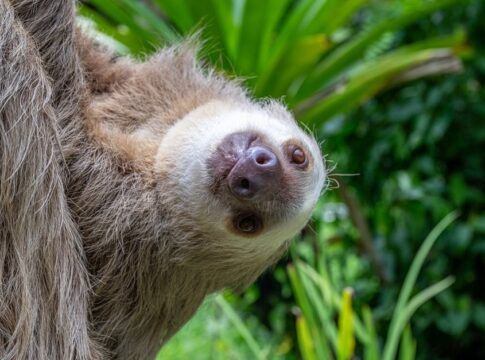
Sloths are famous for one thing above all else: their extraordinary slowness. These curious creatures move so deliberately that algae literally grows on their fur, turning them into mobile gardens. But the hidden story of sloths reveals that their glacial pace isn’t laziness or a quirk of nature—it’s one of the most successful survival strategies in the animal kingdom. What looks like slow motion is actually a masterclass in energy efficiency that has kept these remarkable animals thriving in Central and South American rainforests for millions of years.
Understanding why sloths move slowly requires looking beyond simple behavior to examine how their entire biology has evolved around an ultra-low-energy lifestyle. These animals have rewritten the rules of mammalian metabolism.
Key Takeaways
- Sloths have the slowest metabolic rate of any mammal, processing food so slowly that digestion can take up to a month.
- Moving slowly helps sloths avoid detection by predators like harpy eagles and jaguars that hunt by spotting movement.
- Their low-energy diet of leaves provides minimal calories, making efficiency essential for survival.
- Sloths maintain body temperatures lower than most mammals, sometimes dropping to match their surroundings.
- This lifestyle is so successful that six species of sloths currently inhabit rainforest habitats across the Americas.
- A sloth can take up to a minute to move just six feet through the forest canopy.
The Hidden Story of Sloths and Their Remarkable Metabolism
At the heart of sloth slowness lies an astonishingly slow metabolism. While most mammals burn through calories rapidly to maintain constant body temperatures and fuel active lifestyles, sloths have taken the opposite approach. Their metabolic rate is roughly 40 to 45 percent of what would be expected for a mammal of their size. This isn’t a deficiency—it’s a deliberate evolutionary adaptation.
This reduced metabolism means sloths need far less food than other mammals. They survive almost entirely on leaves, one of the least nutritious food sources in the rainforest. Leaves offer minimal calories and are difficult to digest, but they’re abundant and rarely contested by other wildlife. By slowing everything down, sloths can thrive on this meager diet while other animals would starve.
The digestive process in sloths is remarkably slow. Food moves through their multi-chambered stomachs at such a leisurely pace that a single meal can take two weeks to a month to fully digest. Their stomachs can account for up to 30 percent of their body weight when full. This extended digestion extracts every possible nutrient from their leafy meals, but it also means sloths must be extremely selective about energy expenditure.
How Slowness Becomes Invisibility in Nature
Speed isn’t always an advantage in the animal kingdom. For sloths, moving slowly is a form of camouflage. Many predators, including the powerful harpy eagle and stealthy jaguars, detect prey primarily through movement. A sloth hanging motionless in a tree, covered in greenish algae that grows in the grooves of its fur, becomes nearly invisible against the dappled forest canopy.
This strategy works remarkably well. Sloths spend most of their lives in trees, moving so slowly and infrequently that they essentially disappear into their habitat. When they do move, it’s with such deliberate slowness that they remain difficult to spot. The algae growing on their fur isn’t just incidental—it’s encouraged by the sloth’s lifestyle and provides additional camouflage, helping them blend seamlessly with the green foliage.
Three-toed sloths move even more slowly than their two-toed cousins, typically traveling only about 40 yards per day. Two-toed sloths are slightly more active but still remarkably slow by mammalian standards. Both species have evolved to make slowness work as their primary defense mechanism.
Temperature Regulation and Energy Conservation
Unlike most mammals, sloths don’t maintain a constant body temperature. Their internal temperature can fluctuate by several degrees depending on their environment, sometimes dropping as low as 86 degrees Fahrenheit. This is exceptionally cool for a mammal and would be dangerous for most species. For sloths, it’s another energy-saving measure.
Maintaining a constant high body temperature requires significant caloric expenditure. By allowing their temperature to vary, sloths conserve precious energy. They compensate by moving into sunny patches when they need warmth and retreating to shade when they need to cool down. This behavioral thermoregulation replaces the metabolic furnace that keeps other mammals warm.
Their muscle mass is also about half that of other mammals of similar size. Less muscle means less tissue to maintain and fuel, but it also means sloths simply cannot move quickly even if they wanted to. Their muscles contract at roughly half the speed of typical mammalian muscle tissue.
Comparing Sloth Species and Their Speeds
| Species Type | Average Speed | Daily Distance | Primary Habitat |
|---|---|---|---|
| Three-toed Sloth | 0.15 mph (in trees) | 40 yards | Rainforest canopy |
| Two-toed Sloth | 0.16 mph (in trees) | 50-80 yards | Rainforest canopy |
| Ground Movement (both) | 0.10 mph | Minimal (weekly bathroom trips) | Forest floor |
The Weekly Bathroom Trip: Slowness Meets Vulnerability
Perhaps the most puzzling behavior in sloth ecology is their bathroom routine. Roughly once a week, sloths descend from the safety of the trees to defecate on the forest floor. This journey is dangerous—sloths are extremely vulnerable on the ground, where they can barely move and have few defenses. Yet they make this risky trip regularly.
Scientists believe this behavior may serve multiple purposes. It likely helps fertilize the trees where sloths live, creating a mutually beneficial relationship. The trek may also play a role in the lifecycle of moths that live in sloth fur, though the full ecological picture remains an active area of research. What’s certain is that even this necessary weekly journey is conducted with characteristic slowness, taking hours to complete.
Ancient Relatives and Modern Success
Today’s sloths are small, weighing between 8 and 17 pounds depending on the species. Their prehistoric relatives were dramatically different. Giant ground sloths once roamed the Americas, with some species growing as large as elephants. These massive creatures went extinct around 10,000 years ago, but the smaller tree-dwelling sloths survived and continue to thrive.
The survival of modern sloths while their giant relatives disappeared suggests that the slow, low-energy lifestyle offers genuine advantages in certain environments. Rainforest canopies provide the perfect habitat where food is abundant, predators can be avoided through camouflage, and competition from faster mammals is minimal.
Frequently Asked Questions
How slow is a sloth compared to other animals?
Sloths are the slowest mammals on Earth, moving at a maximum speed of about 0.17 miles per hour through trees. For comparison, the average human walks at 3-4 miles per hour, making sloths roughly 20 times slower than a casual human stroll.
Can sloths move quickly if they’re in danger?
No, sloths cannot move quickly even in emergencies due to their muscle composition and low metabolic rate. Their defense strategy relies entirely on remaining undetected rather than fleeing, which is why predators that do spot them can easily catch them on the ground.
Do sloths sleep all day because they’re slow?
While sloths were once thought to sleep 15-20 hours daily, research on wild sloths shows they actually sleep about 9-10 hours per day, similar to humans. They appear inactive while awake because they remain motionless to avoid predator detection.
Why don’t sloths starve on their low-calorie diet?
Sloths avoid starvation through their extremely slow metabolism, which requires far fewer calories than typical mammals need. Their extended digestion time and large, multi-chambered stomachs extract maximum nutrition from leaves that would be inadequate for most other animals.
The sloth’s incredible slowness isn’t a limitation—it’s a finely tuned survival strategy millions of years in the making. In a world where speed and aggression often dominate, these gentle creatures prove that sometimes the best way to win is to barely move at all.