











1 / 10 Questions
0 Points

Which Unusual Color Hides Inside A Giraffe's Mouth?

Gray

Blue-black

Red

Pink

Points won
0
Correct score
0%

More Questions

What Shakespeare character says ‘To be or not to be’?

What Shakespeare character says 'To be or not to be'? Question 1: What Shakespeare character says 'To be or not to be'? A. Hamlet B. Macbeth C. Romeo D....

Which Mail Service Ended When The Telegraph Reached California?

Which Mail Service Ended When The Telegraph Reached California? Question 1: Which Mail Service Ended When The Telegraph Reached California? A. Pony Express B. Butterfield Overland Mail C....

Which Unusual Color Hides Inside A Giraffe’s Mouth?

Which Unusual Color Hides Inside A Giraffe's Mouth? Question 1: Which Unusual Color Hides Inside A Giraffe's Mouth? A. Gray B. Blue-black C. Red D. Pink Explanation: Giraffes have blue-black...

More Articles

Did You Know? 12 Facts About Neptune

Did You Know? 12 Facts About Neptune

⏱️ 7 min read

Did You Know? 12 Facts About Neptune

Neptune, the eighth and farthest planet from the Sun in our solar system, remains one of the most mysterious and fascinating celestial bodies in our cosmic neighborhood. Discovered in 1846, this ice giant has captivated astronomers and space enthusiasts alike with its brilliant blue color, violent storms, and extreme conditions. Despite being visited by only one spacecraft in history, Neptune continues to reveal surprising secrets about the outer reaches of our solar system. Here are twelve remarkable facts about this distant world that showcase why Neptune deserves its place among the most intriguing planets orbiting our Sun.

1. Neptune Was the First Planet Discovered Through Mathematical Prediction

Unlike other planets that were discovered through direct observation, Neptune was found through mathematical calculations. When astronomers noticed irregularities in Uranus's orbit, they hypothesized that another planet's gravitational pull was causing these disturbances. French mathematician Urbain Le Verrier and English mathematician John Couch Adams independently calculated where this unknown planet should be located. On September 23, 1846, German astronomer Johann Galle found Neptune within one degree of Le Verrier's predicted position, marking a triumph of mathematical astronomy and theoretical physics.

2. Neptune Takes 165 Earth Years to Complete One Orbit

Due to its immense distance from the Sun, Neptune has an extraordinarily long orbital period. It takes approximately 165 Earth years for Neptune to complete a single journey around the Sun. This means that since its discovery in 1846, Neptune has only completed one full orbit in 2011, and won't complete its second observed orbit until 2176. This lengthy year is a consequence of Neptune's average distance of about 2.8 billion miles from the Sun, making it thirty times farther from our star than Earth.

3. The Planet Features the Strongest Winds in the Solar System

Neptune holds the record for the most powerful winds ever detected in our solar system. These supersonic winds can reach speeds of up to 1,200 miles per hour, nearly five times faster than the strongest hurricanes on Earth. Scientists are still puzzled by what generates such extreme wind speeds on a planet so far from the Sun's heat. The leading theory suggests that Neptune's internal heat source, combined with its rapid rotation and atmospheric composition, creates the conditions necessary for these violent atmospheric phenomena.

4. Neptune's Striking Blue Color Comes from Methane

Neptune's vivid azure appearance is the result of methane gas in its atmosphere. The methane molecules absorb red light from the Sun while reflecting blue light back into space, giving Neptune its distinctive color. However, Neptune appears significantly bluer than Uranus, despite both planets having similar atmospheric methane concentrations. Recent research suggests that an unknown component in Neptune's atmosphere may be responsible for its deeper blue hue, adding another mystery to this enigmatic planet.

5. Only One Spacecraft Has Ever Visited Neptune

Voyager 2 remains the only spacecraft to have visited Neptune, conducting a flyby on August 25, 1989. During its brief encounter, Voyager 2 came within 3,000 miles of Neptune's north pole and discovered six previously unknown moons, four rings, and a massive storm system called the Great Dark Spot. The spacecraft sent back invaluable data and stunning images that transformed our understanding of Neptune. No return missions have been launched since, though several proposals for future Neptune missions are under consideration by space agencies.

6. Neptune Has at Least 14 Known Moons

Neptune possesses a diverse family of at least fourteen confirmed moons, with Triton being by far the largest. These natural satellites vary dramatically in size, orbital characteristics, and composition. Most of Neptune's smaller moons were discovered through observations by the Voyager 2 spacecraft and ground-based telescopes, with the most recent moon, Hippocamp, being identified in 2013 through analysis of Hubble Space Telescope images. Each of these moons provides clues about Neptune's formation and the dynamic history of the outer solar system.

7. Triton Orbits Neptune Backward

Triton, Neptune's largest moon, has a retrograde orbit, meaning it travels around Neptune in the opposite direction to the planet's rotation. This unusual characteristic strongly suggests that Triton was not formed alongside Neptune but was instead a captured object from the Kuiper Belt, the region of icy bodies beyond Neptune's orbit. Triton is also one of the coldest objects in the solar system, with surface temperatures reaching minus 391 degrees Fahrenheit, and features active geysers that spew nitrogen ice and dust several miles into its thin atmosphere.

8. Neptune Generates More Heat Than It Receives from the Sun

Despite its great distance from the Sun, Neptune radiates approximately 2.6 times more energy than it absorbs from solar radiation. This internal heat source drives the planet's dynamic weather systems and contributes to its powerful winds. Scientists believe this heat may come from the slow gravitational compression of the planet, leftover heat from Neptune's formation, or possibly from chemical reactions occurring deep within its interior. This internal energy makes Neptune more thermally active than its closer neighbor, Uranus.

9. A Day on Neptune Lasts Only 16 Hours

While Neptune takes 165 Earth years to orbit the Sun, the planet rotates remarkably quickly on its axis. One complete rotation takes approximately 16 hours and 7 minutes, making a Neptunian day significantly shorter than an Earth day. This rapid rotation contributes to the planet's oblate shape and plays a role in generating its extreme wind speeds. The combination of rapid rotation and internal heat creates the dynamic atmospheric conditions that characterize this distant ice giant.

10. Neptune Has a Faint Ring System

Like all the gas giants in our solar system, Neptune possesses a ring system, though its rings are much fainter and less prominent than Saturn's spectacular bands. Neptune has five main rings, named after astronomers who contributed to the planet's discovery and study: Galle, Le Verrier, Lassell, Arago, and Adams. These rings are composed primarily of ice particles and dust, with some containing unusually high concentrations of microscopic dust. The Adams ring features peculiar clumps of material called arcs, whose stability remains unexplained by current orbital mechanics theories.

11. The Great Dark Spot Has Disappeared

When Voyager 2 flew past Neptune in 1989, it photographed a massive storm system comparable in relative size to Jupiter's Great Red Spot, which astronomers named the Great Dark Spot. However, when the Hubble Space Telescope observed Neptune in 1994, the Great Dark Spot had completely vanished. This discovery revealed that Neptune's atmospheric features are much more transient than Jupiter's long-lived storms. Since then, other dark spots have appeared and disappeared on Neptune, suggesting that the planet has a highly dynamic and changeable atmosphere.

12. Neptune Is Gradually Losing Its Moon Triton

Triton's retrograde orbit means it is slowly spiraling inward toward Neptune. Tidal forces between the planet and its largest moon are causing Triton to lose orbital energy, bringing it progressively closer to Neptune at a rate of about 1.5 inches per year. In approximately 3.6 billion years, Triton will reach the Roche limit, the distance at which Neptune's gravitational forces will overcome Triton's structural integrity. When this occurs, Triton will be torn apart, potentially creating a spectacular ring system around Neptune that could rival or even surpass Saturn's famous rings in magnificence.

Conclusion

These twelve fascinating facts about Neptune demonstrate why this distant ice giant continues to captivate scientists and astronomy enthusiasts worldwide. From its mathematical discovery to its supersonic winds, from its captured moon to its mysterious deep blue color, Neptune represents both the achievements of astronomical science and the many mysteries that remain to be solved. As technology advances and new missions are planned, our understanding of Neptune will undoubtedly deepen, potentially revealing even more surprising facts about this remarkable planet at the edge of our solar system. Neptune reminds us that even in our own cosmic backyard, there are still wonders waiting to be discovered and understood.
Did You Know? 10 Facts About Camels

Did You Know? 10 Facts About Camels

⏱️ 7 min read

Did You Know? 10 Fascinating Facts About Camels

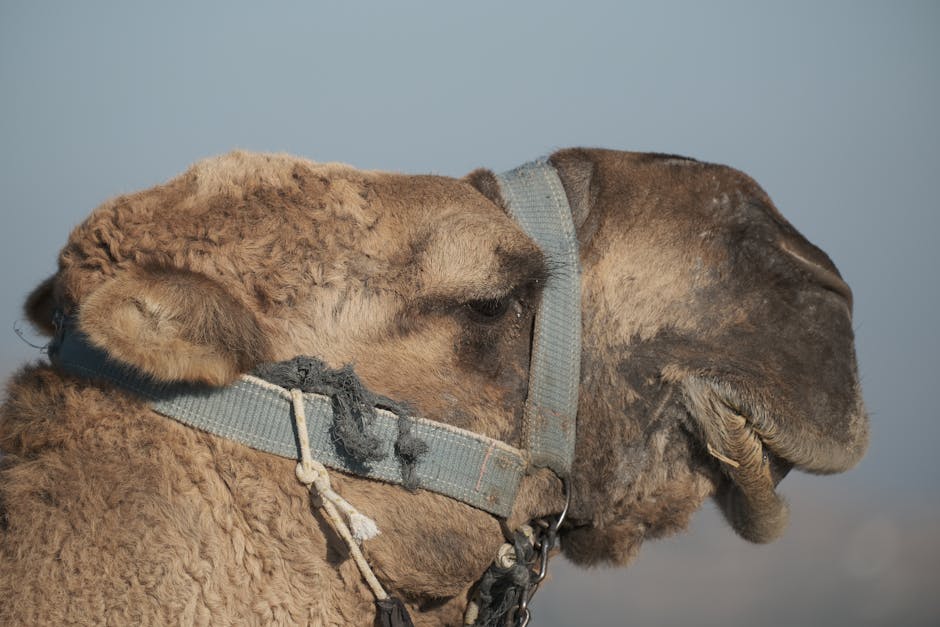
Camels have captivated human imagination for thousands of years, serving as essential companions in some of the world's harshest environments. These remarkable creatures, often called "ships of the desert," possess extraordinary adaptations that enable them to thrive where few other large mammals can survive. From their distinctive humps to their incredible endurance, camels are far more complex and fascinating than many people realize. This article explores ten remarkable facts about these desert-dwelling mammals that showcase their unique biology, behavior, and importance to human civilization.

1. Camels Don't Store Water in Their Humps

Contrary to popular belief, camels do not store water in their humps. The humps are actually composed of fatty tissue that serves as an energy reserve. When food is scarce, camels metabolize this fat for nutrition and energy. A well-fed camel has firm, upright humps, while a malnourished camel's humps will shrink and even flop to one side. This fat storage system is remarkably efficient, allowing camels to survive for extended periods without eating. The ability to store energy in concentrated areas rather than throughout their bodies also helps camels regulate their body temperature more effectively in extreme desert conditions.

2. Two Main Species With Different Hump Configurations

There are two distinct species of camels: the dromedary (one-humped camel) and the Bactrian (two-humped camel). Dromedaries, which account for approximately 94% of the world's camel population, are found primarily in hot desert regions of the Middle East, Africa, and Australia. Bactrian camels inhabit the colder desert regions of Central Asia, particularly Mongolia and China. The wild Bactrian camel is critically endangered, with fewer than 1,000 individuals remaining in remote areas of the Gobi Desert. Each species has evolved specific adaptations suited to their particular environments, with Bactrian camels developing thicker coats to withstand freezing temperatures.

3. Extraordinary Water Conservation Abilities

Camels possess some of the most impressive water conservation mechanisms in the animal kingdom. They can lose up to 25% of their body weight through dehydration without suffering ill effects, whereas most mammals would die after losing just 15% of their water content. Their kidneys are highly efficient at concentrating urine, and their intestines extract maximum moisture from food. Camels also produce extremely dry feces, minimizing water loss. When water becomes available, camels can drink up to 40 gallons in a single session, rehydrating rapidly. Their red blood cells are oval-shaped rather than round, which allows blood to continue flowing even when dehydrated.

4. Specialized Feet for Desert Terrain

Camels have evolved unique feet perfectly adapted for walking on sand and rocky terrain. Their feet consist of two toes connected by a tough, leathery web that spreads when they step down, creating a snowshoe-like effect that prevents them from sinking into soft sand. The bottom of their feet is covered with thick, callused pads that protect against hot sand and sharp rocks. These specialized feet allow camels to travel long distances across desert landscapes that would be impassable for most other large animals. The broad surface area also provides excellent traction on loose terrain.

5. Temperature Regulation Masters

Camels have developed sophisticated temperature regulation mechanisms that allow them to survive extreme desert conditions. They can tolerate body temperature fluctuations ranging from 93°F to 106°F, reducing the need for cooling through sweating or panting. During cold desert nights, their body temperature drops, and during hot days, it rises gradually, minimizing water loss. Their thick coat provides insulation against both heat and cold, reflecting sunlight and trapping cooler air near their skin. Camels also orient their bodies to minimize sun exposure and huddle together in groups to reduce heat absorption.

6. Remarkable Eyelashes and Protective Features

Camels possess exceptional protective features adapted for sandstorms and harsh desert conditions. They have three eyelids, including a thin, translucent third eyelid that moves sideways across the eye, protecting it from sand while still allowing the camel to see during sandstorms. Their eyes are equipped with two rows of long, thick eyelashes that provide additional protection from sand and intense sunlight. Camels can also close their nostrils completely, forming an airtight seal that prevents sand from entering their respiratory system during storms. Their ears are small and covered with hair, both inside and out, offering further protection from blowing sand.

7. Impressive Speed and Endurance

Despite their large size and seemingly ungainly appearance, camels are remarkably fast and have extraordinary endurance. Dromedary camels can run at speeds up to 40 miles per hour in short bursts and maintain a steady pace of 25 miles per hour for extended periods. More impressively, they can travel up to 100 miles in a single day without water. Their unique gait, called pacing, involves moving both legs on one side of their body simultaneously, creating the swaying motion that gives riders the sensation of being on a ship. This efficient movement pattern allows camels to cover vast distances while conserving energy.

8. Complex Social Structure and Communication

Camels are highly social animals with complex herd structures and communication systems. Wild and feral camels typically live in groups led by a dominant male, with females and their young forming the core of the herd. They communicate through various vocalizations, including moans, bellows, and bleats, each conveying different messages about danger, mating readiness, or distress. Camels also use body language extensively, with ear position, tail movement, and posture indicating their emotional state. They can recognize individual members of their herd and maintain long-term social bonds. During mating season, males become territorial and engage in elaborate displays of dominance.

9. Diverse Diet and Efficient Digestion

Camels are remarkably adaptable browsers and grazers capable of consuming plants that most other animals cannot digest. Their tough mouths and split upper lips allow them to eat thorny desert vegetation, including cacti, dry grasses, and saltbush. They can consume plants high in salt content that would be toxic to other animals. Camels are pseudo-ruminants with three-chambered stomachs that efficiently extract nutrients from poor-quality vegetation. They regurgitate their food and chew cud like true ruminants, maximizing nutrient absorption. This dietary flexibility allows camels to survive in environments where food resources are scarce and of low nutritional value.

10. Historical and Economic Importance to Humans

Camels have been domesticated for approximately 4,000 years and have played crucial roles in human civilization, particularly in arid regions. They have served as primary transportation for people and goods across desert trade routes, including the famous Silk Road. Camels provide humans with milk, which is more nutritious than cow's milk and can be made into cheese and butter. Their meat is consumed in many cultures, their hide produces leather, and their hair is woven into textiles. In modern times, camels continue to be economically important for tourism, racing, and sustainable agriculture in desert regions. They remain essential to the livelihoods of millions of people worldwide.

Conclusion

These ten remarkable facts demonstrate that camels are far more than simply desert survivors—they are highly evolved, complex animals with extraordinary adaptations that enable them to thrive in some of Earth's most challenging environments. From their efficient water conservation systems and specialized physical features to their social intelligence and historical significance to humanity, camels represent a pinnacle of evolutionary adaptation. Understanding and appreciating these magnificent creatures helps us recognize the importance of preserving both wild camel populations and the desert ecosystems they inhabit. As climate change continues to impact global environments, the camel's remarkable resilience and adaptability offer valuable insights into survival in extreme conditions.