










1 / 10 Questions
0 Points

Which Mail Service Ended When The Telegraph Reached California?

Pony Express

Butterfield Overland Mail

Wells Fargo Stagecoach

Central Overland Route

Points won
0
Correct score
0%

More Questions

What Shakespeare character says ‘To be or not to be’?

What Shakespeare character says 'To be or not to be'? Question 1: What Shakespeare character says 'To be or not to be'? A. Hamlet B. Macbeth C. Romeo D....

Which Mail Service Ended When The Telegraph Reached California?

Which Mail Service Ended When The Telegraph Reached California? Question 1: Which Mail Service Ended When The Telegraph Reached California? A. Pony Express B. Butterfield Overland Mail C....

Which Unusual Color Hides Inside A Giraffe’s Mouth?

Which Unusual Color Hides Inside A Giraffe's Mouth? Question 1: Which Unusual Color Hides Inside A Giraffe's Mouth? A. Gray B. Blue-black C. Red D. Pink Explanation: Giraffes have blue-black...

More Articles

Did You Know? 10 Facts About The Loch Ness Monster

Did You Know? 10 Facts About The Loch Ness Monster

⏱️ 6 min read

Did You Know? 10 Facts About The Loch Ness Monster

The Loch Ness Monster, affectionately known as "Nessie," stands as one of the world's most enduring and captivating cryptozoological mysteries. For nearly a century, this alleged creature has sparked imagination, scientific inquiry, and heated debate about what might lurk beneath the murky waters of Scotland's most famous loch. Whether believer or skeptic, the legend of Nessie has woven itself into the fabric of popular culture and Scottish heritage. Here are ten fascinating facts about this legendary beast that continue to intrigue people worldwide.

1. Ancient Origins Predate Modern Sightings

While many associate the Loch Ness Monster with 20th-century accounts, references to mysterious creatures in the loch date back much further. The earliest recorded sighting appears in a biography of Saint Columba from 565 AD, written by Adomnán. According to the text, the Irish monk encountered a large beast in the River Ness and commanded it to retreat, saving a swimmer from attack. This ancient account suggests that tales of strange creatures in these Scottish waters have persisted for over 1,400 years, long before modern monster hunters arrived with cameras and sonar equipment.

2. The Famous 1934 "Surgeon's Photograph" Was a Hoax

Perhaps the most iconic image associated with Nessie is the 1934 photograph taken by London physician Robert Kenneth Wilson. The picture appeared to show a long-necked creature emerging from the water and became the definitive representation of the monster for decades. However, in 1994, Christian Spurling confessed on his deathbed that the photograph was an elaborate hoax. The "monster" was actually a toy submarine fitted with a sculpted head and neck, created by Marmaduke Wetherell and his stepson Spurling as revenge against the Daily Mail, which had humiliated Wetherell over a prior Nessie investigation.

3. Loch Ness Contains More Freshwater Than All Lakes in England and Wales Combined

Understanding the sheer size and depth of Loch Ness helps explain why the mystery has endured so long. The loch stretches approximately 23 miles in length and reaches depths of nearly 800 feet at its deepest point. It contains an estimated 263 billion cubic feet of water, more than all the freshwater lakes in England and Wales combined. The water's high peat content makes it extremely murky, with visibility often limited to just a few feet. These conditions create the perfect environment for a legend to thrive, as comprehensive searches remain extraordinarily challenging despite modern technology.

4. Over 1,000 Sightings Have Been Recorded

Since systematic record-keeping began, more than 1,000 eyewitness accounts of the Loch Ness Monster have been documented. These reports describe various characteristics, though most commonly mention a large body, long neck, and one or more humps breaking the water's surface. Witnesses range from local residents to tourists, police officers to scientists. The Official Loch Ness Monster Sightings Register maintains detailed records of these encounters, including dates, locations, and descriptions. While skeptics attribute most sightings to misidentified logs, boat wakes, or swimming deer, the sheer volume of reports keeps the legend alive.

5. Scientific Expeditions Have Used Cutting-Edge Technology

Numerous scientific investigations have attempted to solve the Loch Ness mystery using increasingly sophisticated equipment. In 1987, Operation Deepscan employed a flotilla of boats equipped with sonar to sweep the entire loch. In 2003, the BBC funded an extensive search using 600 sonar beams and satellite tracking. Most recently, in 2018, scientists conducted environmental DNA sampling throughout the loch to catalog all biological organisms present. While these expeditions have ruled out the presence of large, unknown animals according to most scientists, they have failed to completely extinguish speculation and belief in Nessie's existence.

6. The Plesiosaur Theory Remains Popular Despite Scientific Impossibility

Many Nessie enthusiasts believe the creature could be a surviving plesiosaur, a marine reptile that lived during the age of dinosaurs and went extinct approximately 66 million years ago. The long-necked appearance described in many sightings aligns with plesiosaur anatomy, making this theory appealing. However, scientists reject this hypothesis for several reasons: plesiosaurs were marine creatures that couldn't survive in freshwater, they were air-breathing reptiles that would need to surface regularly (making them easily observable), and Loch Ness was formed only about 10,000 years ago after the last Ice Age, making continuous habitation impossible.

7. Nessie Generates Significant Economic Impact

The Loch Ness Monster has become an economic powerhouse for the Scottish Highlands. Tourism related to Nessie generates an estimated £41 million annually for the local economy, supporting hotels, restaurants, tour operators, and gift shops throughout the region. The village of Drumnadrochit alone hosts multiple Nessie-themed attractions, including museums and exhibition centers. Boat tours of the loch specifically marketed as monster-hunting expeditions remain consistently popular. This economic incentive ensures that whether or not Nessie exists, the legend will continue to be promoted and celebrated as an integral part of Scottish tourism.

8. Seismic Activity Could Explain Some Sightings

Loch Ness sits along the Great Glen Fault, a major geological fault line that runs through the Scottish Highlands. Scientists have proposed that seismic activity along this fault could create unusual water disturbances, including standing waves or seiches that might be misinterpreted as a large creature moving through the water. Additionally, underwater landslides caused by seismic activity could generate sudden surface disturbances. Pockets of gas released from the loch bottom due to geological processes might also create bubbling effects or floating debris that witnesses could mistake for a living creature.

9. The 2019 DNA Study Suggested Giant Eels

The comprehensive environmental DNA study conducted by Professor Neil Gemmell from New Zealand's University of Otago in 2019 yielded intriguing results. While the study found no evidence of plesiosaurs, prehistoric reptiles, sharks, or sturgeon, it did detect significant amounts of eel DNA throughout the loch at various depths. Gemmell suggested that some sightings might be explained by exceptionally large eels, though he emphasized that the DNA evidence cannot determine the size of the organisms present. European eels are common in Loch Ness, and while they typically grow to moderate sizes, the possibility of unusually large specimens cannot be completely dismissed.

10. Nessie Has Legal Protection

In a quirky legal twist, the Loch Ness Monster enjoys official protection under Scottish law. In 1933, the same year modern Nessie mania began, the Secretary of State for Scotland expressed concern that hunters might harm the creature and issued instructions that it should not be killed. This protection was never formally revoked. Additionally, if Nessie were proven to exist, it would automatically receive protection under various wildlife conservation laws. This legal status reflects the cultural significance of the legend and Scotland's commitment to preserving its most famous mythical resident, whether real or imagined.

Conclusion

The Loch Ness Monster represents far more than a simple cryptozoological curiosity. These ten facts reveal a phenomenon that intersects history, science, economics, and cultural identity. From ancient monastic texts to modern DNA analysis, from admitted hoaxes to unexplained sonar readings, the legend of Nessie continues to evolve while maintaining its essential mystery. Whether the monster exists as a flesh-and-blood creature, a series of misidentifications, or purely as a cultural construct, its impact on our collective imagination remains undeniable. The murky waters of Loch Ness guard their secrets well, ensuring that debates about what might or might not lurk in the depths will continue to captivate future generations of believers, skeptics, and the simply curious.
Top 10 Mythical Creatures of Asia

Top 10 Mythical Creatures of Asia

⏱️ 7 min read

Top 10 Mythical Creatures of Asia

Asia, the world's largest and most populous continent, boasts a rich tapestry of mythological traditions spanning thousands of years. From the snow-capped peaks of the Himalayas to the tropical islands of Southeast Asia, diverse cultures have created fascinating legends about supernatural beings that continue to captivate imaginations worldwide. These mythical creatures often embody cultural values, natural phenomena, and moral lessons that have been passed down through countless generations. This article explores ten of the most remarkable mythical creatures from Asian folklore, each representing unique aspects of the continent's extraordinary cultural heritage.

1. The Dragon (Long)

Unlike their Western counterparts, Asian dragons are typically portrayed as benevolent, wise, and auspicious creatures associated with water, weather, and imperial power. In Chinese mythology, the dragon is one of the most powerful and revered creatures, symbolizing strength, good fortune, and divine authority. These serpentine beings possess the ability to control rain, rivers, and seas, making them essential figures in agricultural societies dependent on favorable weather. Dragons feature prominently in Chinese, Japanese, Korean, and Vietnamese traditions, often depicted with deer antlers, fish scales, eagle claws, and a long, undulating body that can soar through clouds without wings.

2. The Phoenix (Fenghuang)

The Asian phoenix, known as Fenghuang in Chinese mythology, represents virtue, grace, and the union of yin and yang. This magnificent bird symbolizes the empress in Chinese culture, complementing the dragon that represents the emperor. The Fenghuang possesses the head of a golden pheasant, the body of a mandarin duck, the tail of a peacock, the legs of a crane, the mouth of a parrot, and the wings of a swallow. According to legend, this immortal bird appears only during times of peace and prosperity, making its presence a harbinger of harmony and good governance throughout the realm.

3. The Kitsune

In Japanese folklore, the kitsune is an intelligent fox spirit capable of shapeshifting, typically into human form. These supernatural foxes gain additional tails as they age and acquire wisdom, with the most powerful possessing nine tails. Kitsune can be either benevolent guardians associated with the Shinto deity Inari or mischievous tricksters who enjoy playing pranks on humans. They possess magical abilities including creating illusions, generating fire, entering dreams, and achieving near-immortality. Stories often feature kitsune taking human form to interact with people, sometimes falling in love with mortals or serving as loyal companions to deserving individuals.

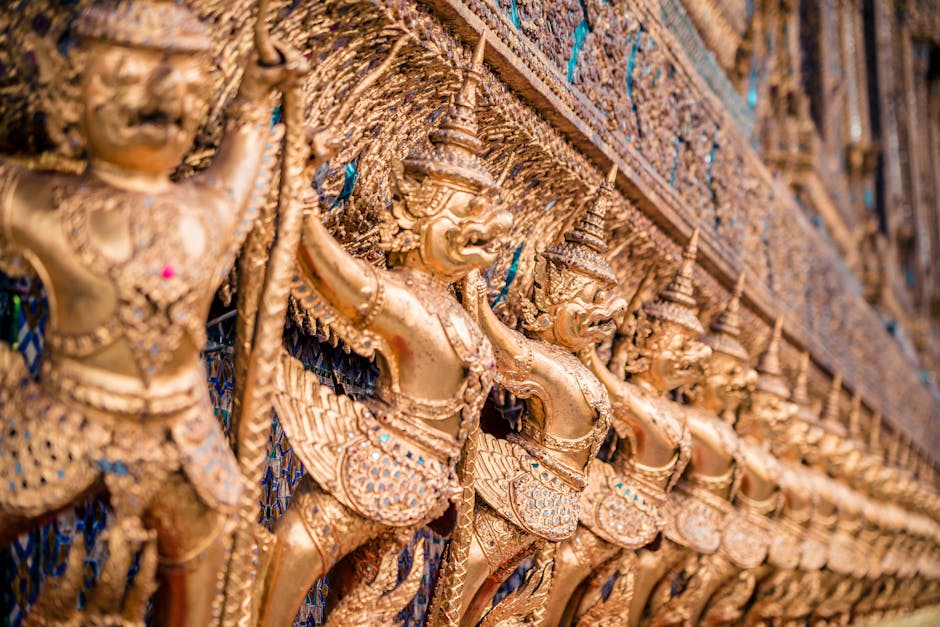
4. The Garuda

Originating from Hindu and Buddhist mythology, the Garuda is a massive bird-like creature with human characteristics, serving as the mount of the god Vishnu. This powerful being features prominently throughout South and Southeast Asian cultures, particularly in India, Thailand, Indonesia, and Myanmar. The Garuda possesses the body, wings, and talons of an eagle combined with human arms and a humanoid face. Known for its immense strength and speed, the Garuda is the sworn enemy of nagas (serpents) and represents courage, power, and martial prowess. Many Southeast Asian nations have adopted the Garuda as a national symbol, representing freedom and divine protection.

5. The Naga

Nagas are divine serpent beings found throughout Hindu, Buddhist, and Jain traditions across South and Southeast Asia. These semi-divine creatures typically appear as giant cobras or as beings with human upper bodies and serpentine lower halves. Nagas are associated with water sources such as rivers, lakes, springs, and wells, serving as their guardians and controllers. They inhabit magnificent underwater kingdoms filled with precious gems and treasures. While generally benevolent toward humans who respect nature and waterways, nagas can become dangerous when angered or disrespected. They play significant roles in creation myths, religious texts, and royal lineages throughout the region.

6. The Qilin

The Qilin, sometimes called the Chinese unicorn, is an auspicious creature combining features of various animals into a harmonious whole. This gentle beast possesses the body of a deer, the tail of an ox, the hooves of a horse, and a single horn on its head. Despite its fearsome appearance with scales covering its body and flames emanating from its shoulders, the Qilin is fundamentally peaceful, refusing to harm any living creature and walking so carefully that it never crushes a single blade of grass. The appearance of a Qilin signals the birth or death of a great sage or benevolent ruler, making it a symbol of good governance, justice, and prosperity.

7. The Rakshasa

In Hindu and Buddhist mythology, Rakshasas are powerful demonic beings known for their shapeshifting abilities and supernatural powers. These creatures typically appear as fierce humanoid beings with sharp fangs, claw-like nails, and sometimes multiple heads or arms. Rakshasas possess the ability to transform into various animals or attractive humans to deceive their victims. They are known for disturbing religious rituals, desecrating graves, harassing priests, and consuming human flesh. However, not all Rakshasas are purely evil; some serve as devoted followers of gods or protectors of Buddhist teachings, demonstrating the complex nature of morality in Asian mythology.

8. The Tengu

Tengu are legendary creatures from Japanese folklore, traditionally depicted as birds of prey with human characteristics or as humans with distinctly avian features. These supernatural beings inhabit mountainous regions and forests, serving as protectors of Buddhist and Shinto sacred spaces. The most recognizable feature of many Tengu is their extremely long nose, though earlier depictions showed them with bird-like beaks. Renowned as skilled warriors and martial artists, Tengu are said to have taught swordsmanship to legendary samurai. They can be either mischievous troublemakers or wise spiritual guardians, depending on how humans treat them and their forest domains.

9. The Yeti

The Yeti, also known as the Abominable Snowman, is a legendary ape-like creature said to inhabit the Himalayan mountains of Nepal, Tibet, and Bhutan. Descriptions typically portray the Yeti as a large, bipedal creature covered in thick white, brown, or reddish fur, standing between six and ten feet tall. Local Sherpa communities have maintained traditions about the Yeti for centuries, considering it a guardian of the mountains. While Western explorers have sought physical evidence of this cryptid since the early twentieth century, the Yeti remains an important figure in Himalayan folklore, representing the mysterious and dangerous nature of high mountain environments.

10. The Pontianak

The Pontianak, also known as Kuntilanak, is a vampiric ghost from Malay and Indonesian folklore, representing the spirit of a woman who died during pregnancy or childbirth. This vengeful entity appears as a beautiful woman with long black hair, dressed in white robes, but her true form is horrifying with hollow eyes, sharp claws, and fangs. The Pontianak announces her presence through the cry of an infant or the fragrant smell of plumeria flowers. She preys primarily on men, though she may also harm pregnant women and newborn children. According to tradition, driving a nail into the back of her neck can temporarily transform a Pontianak into a normal woman, though removing the nail restores her supernatural nature.

Conclusion

The mythical creatures of Asia reflect the continent's incredible cultural diversity and the universal human need to explain, personify, and find meaning in the natural and supernatural worlds. From the benevolent dragons that bring rain and prosperity to the terrifying Pontianak that embodies fears surrounding childbirth, these ten legendary beings represent just a fraction of Asia's vast mythological heritage. Each creature carries within its legend the values, fears, hopes, and wisdom of the cultures that created them. Whether serving as moral teachers, symbols of natural forces, or guardians of sacred spaces, these mythical beings continue to influence art, literature, film, and cultural identity across Asia and beyond, ensuring their relevance for generations to come.