
9 Bizarre Facts About Antarctica’s Blood Falls Phenomenon
By Trivia Owl, Staff Writer — Published August 23, 2026
Table of Contents
- Key Takeaways
- The Bizarre Antarctica Blood Phenomenon: Where Science Meets Spectacle
- Comparing Blood Falls to Other Extreme Earth Environments
- Frequently Asked Questions
Imagine a crimson waterfall pouring down a glacier in the coldest place on Earth. Antarctica’s Blood Falls looks like something from a horror film—a vivid red cascade staining the pristine white ice of Taylor Glacier. This bizarre Antarctica blood phenomenon has puzzled scientists and captivated explorers for over a century. What appears to be a gruesome scene is actually one of nature’s most fascinating geological and biological mysteries, offering clues about life in extreme environments and even the possibility of life on other planets.
The striking red color isn’t what you might think. Discover the surprising truths behind this natural wonder that challenges our understanding of where life can exist.
Key Takeaways
- Blood Falls flows from a subglacial lake trapped beneath Taylor Glacier for approximately two million years, creating a unique isolated ecosystem.
- The blood-red color comes from iron-rich saltwater that oxidizes when exposed to air, not from algae or other organisms.
- Microbes living in the falls survive without sunlight or oxygen, using sulfur and iron compounds for energy in near-freezing conditions.
- The brine beneath the glacier is roughly three times saltier than seawater, preventing it from freezing despite temperatures below zero degrees Celsius.
- This extreme environment serves as an analog for potential life on Mars and Jupiter’s moon Europa, where similar conditions may exist.
- Blood Falls was first documented in 1911 by Australian geologist Griffith Taylor, who initially attributed the color to red algae.
The Bizarre Antarctica Blood Phenomenon: Where Science Meets Spectacle
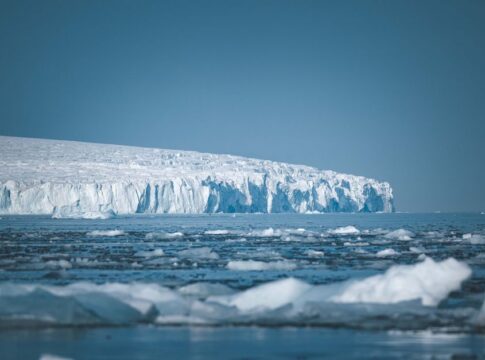
Blood Falls emerges from the terminus of Taylor Glacier in Antarctica’s McMurdo Dry Valleys, one of the driest places on the planet. The five-story waterfall doesn’t flow continuously—it appears intermittently when pressure builds beneath the glacier, forcing the iron-rich brine through fissures in the ice. The dramatic contrast between the blood-red liquid and the white glacier creates one of Antarctica’s most photographed natural features.
The McMurdo Dry Valleys receive so little precipitation that they’re classified as polar deserts. Snow rarely accumulates here. Yet beneath the ice lies a different world entirely—a liquid saltwater reservoir that has remained isolated from the atmosphere and sunlight for millennia. This hidden aquatic system supports microbial life that has adapted to conditions once thought impossible for any organism to survive.
1. Ancient Seawater Trapped for Two Million Years
The water feeding Blood Falls originated from an ancient ocean that covered the region millions of years ago. As glaciers advanced during climate shifts, they trapped pockets of seawater beneath the ice. This subglacial lake has remained sealed for roughly two million years, creating a time capsule of marine conditions from Antarctica’s distant past. The microorganisms living in this brine are descendants of ancient marine life, evolving in complete isolation from the rest of Earth’s biosphere. Scientists study this ecosystem to understand how life adapts when cut off from external influences for geological timescales.
2. Iron Oxidation Creates the Blood-Red Color
The dramatic crimson color results from a simple chemical reaction. The subglacial brine contains high concentrations of dissolved iron that remains in a reduced state while trapped beneath the glacier. When this iron-rich water reaches the surface and contacts oxygen in the atmosphere, it rapidly oxidizes—essentially rusting in real time. The same process that turns old nails reddish-brown creates Blood Falls’ striking appearance. Early explorers incorrectly attributed the color to red algae, but no photosynthetic organisms could survive in the perpetual darkness beneath the glacier.
3. Microbes Survive Without Oxygen or Sunlight
The microorganisms dwelling in Blood Falls’ source water represent one of Earth’s most remarkable examples of extremophile life. These bacteria survive in complete darkness, without access to oxygen, in temperatures that would freeze freshwater solid. They’ve evolved to use sulfate as an electron acceptor instead of oxygen, metabolizing sulfur and iron compounds to generate energy. This chemosynthetic lifestyle—deriving energy from chemical reactions rather than sunlight—demonstrates that life doesn’t require the conditions we typically associate with habitability. The discovery has profound implications for astrobiology and the search for life beyond Earth.
4. The Brine Is Three Times Saltier Than Ocean Water
The liquid beneath Taylor Glacier maintains its unfrozen state despite subzero temperatures because of its extreme salinity. The brine is approximately three times saltier than typical seawater, which dramatically lowers its freezing point. While freshwater freezes at zero degrees Celsius, this hypersaline solution remains liquid at temperatures around negative five degrees Celsius. The salt concentration has increased over millions of years as water gradually freezes at the margins of the subglacial lake, leaving dissolved minerals behind in the remaining liquid—a process called cryoconcentration. This creates an increasingly salty, dense brine that can flow beneath the glacier’s immense weight.
5. Blood Falls Flows Through a Complex Underground Network
Scientists using radar imaging and other remote sensing techniques have mapped an intricate system of channels and reservoirs beneath Taylor Glacier. The brine doesn’t sit in a single static pool but flows through a network of pathways carved through and beneath the ice. Pressure fluctuations in this subglacial plumbing system determine when Blood Falls flows visibly at the surface. The water travels through fractures in the ice, sometimes moving several kilometers from its source before emerging at the glacier’s terminus. Understanding this hidden hydrological system helps scientists model how water moves beneath ice sheets—knowledge crucial for predicting how glaciers will respond to climate change.
6. The Ecosystem Provides Clues About Life on Other Worlds
NASA and other space agencies study Blood Falls as an analog for potential habitats on Mars and icy moons like Europa and Enceladus. These extraterrestrial bodies may harbor subsurface oceans beneath thick ice shells, isolated from sunlight just like the reservoir beneath Taylor Glacier. If microbes can thrive in Blood Falls’ extreme conditions—no light, no oxygen, freezing temperatures, and crushing pressure—similar life might exist in comparable environments elsewhere in the solar system. The metabolic strategies these bacteria employ could represent a template for detecting biosignatures on other worlds. Scientists have even tested life-detection instruments at Blood Falls before deploying them on planetary missions.
7. The Falls Were Misidentified for Decades
When Griffith Taylor first encountered the phenomenon during Robert Falcon Scott’s 1911 Terra Nova Expedition, he hypothesized that red algae caused the distinctive coloration. This explanation seemed logical at the time, and it persisted in scientific literature for decades. Not until modern geochemical analysis in the early 2000s did researchers conclusively determine that iron oxidation, not biological pigments, created the red color. The microbes living in the source water are actually colorless—they contribute to the iron chemistry that ultimately produces the vivid hue, but they don’t directly create the red pigmentation themselves. This correction demonstrates how scientific understanding evolves as analytical techniques improve.
8. Blood Falls Challenges Assumptions About Habitable Zones
Traditional definitions of habitable zones focus on regions where liquid water can exist on a planet’s surface, typically requiring moderate temperatures and atmospheric pressure. Blood Falls demonstrates that life can flourish in liquid water environments far outside these conventional parameters. The subglacial ecosystem thrives in perpetual darkness, in chemically harsh conditions, beneath hundreds of meters of ice, in one of Earth’s most inhospitable regions. This discovery has expanded scientists’ conception of where life might arise and persist, suggesting that habitable niches may be far more common throughout the universe than previously assumed. Subsurface environments, shielded from harsh surface conditions, might represent prime real estate for extraterrestrial life.
9. The Glacier’s Movement Could Eventually Seal the Falls
Taylor Glacier, like all glaciers, constantly flows and deforms under its own weight. The specific fractures and channels that currently allow Blood Falls to reach the surface may not remain open indefinitely. As the ice shifts and flows toward the sea, new cracks may open while existing pathways close. The phenomenon could cease flowing at its current location, only to emerge elsewhere along the glacier’s terminus—or it might become completely sealed beneath the ice. Glaciologists monitor these changes to understand ice dynamics, but the transient nature of the falls reminds us that even Antarctica’s seemingly permanent features are constantly evolving. Future generations of scientists may need to search for new outlets where the ancient brine finds its way to the surface.
Comparing Blood Falls to Other Extreme Earth Environments
| Environment | Location | Extreme Condition | Key Feature |
|---|---|---|---|
| Blood Falls | Antarctica | No light, no oxygen, extreme cold | Iron-rich subglacial brine |
| Lake Vostok | Antarctica | Buried under 4 km of ice | Largest known subglacial lake |
| Movile Cave | Romania | Sealed for 5.5 million years | Toxic sulfur-rich atmosphere |
| Dead Sea | Middle East | Nearly 10 times saltier than ocean | Hypersaline surface water |
| Mariana Trench | Pacific Ocean | Extreme pressure, no light | Deepest known ocean point |
Frequently Asked Questions
Is Blood Falls actually made of blood?
No, Blood Falls contains no blood whatsoever. The red color comes from iron-rich saltwater that oxidizes (rusts) when it contacts air, creating the distinctive crimson appearance that gave the falls their dramatic name.
Can you visit Blood Falls in person?
Yes, but access is extremely limited and expensive. Blood Falls is located in Antarctica’s McMurdo Dry Valleys, which can only be reached by helicopter from research stations. Most visitors are scientists conducting research, though some specialized tour operators offer expeditions to the area.
How often does Blood Falls actually flow?
Blood Falls flows intermittently rather than continuously. The timing depends on pressure fluctuations in the subglacial brine system, temperature variations, and other factors that aren’t fully predictable. It may flow for periods ranging from days to weeks, then stop for extended intervals.
Are there other colored waterfalls like Blood Falls?
While several waterfalls worldwide appear discolored by minerals—such as iron-orange falls in Yellowstone or copper-blue cascades in Iceland—Blood Falls is unique in its vivid red color, extreme source environment, and the ancient isolated ecosystem that feeds it. No other known waterfall combines all these characteristics.
Blood Falls stands as a testament to life’s remarkable adaptability and nature’s capacity to surprise us in the most unexpected places. This crimson cascade reminds us that Earth still holds mysteries worth exploring—and that the boundaries of where life can exist keep expanding with every discovery.