
The Hidden Story of Why Nutmeg Was Worth More Than Gold
By Trivia Daily, Staff Writer — Published November 23, 2026
Table of Contents
- Key Takeaways
- The Hidden Story Nutmeg Reveals About Geography and Monopoly
- Why Nutmeg Commanded Such Staggering Prices
- The Dutch Monopoly and Its Brutal Enforcement
- How the Monopoly Collapsed
- Surprising Facts About Nutmeg Today
- Frequently Asked Questions
Imagine a spice so valuable that European powers waged wars over it, traded entire islands to control it, and locked it away in vaults like precious jewels. That spice was nutmeg. During the 17th century, this unassuming brown seed commanded prices that made it literally worth more than its weight in gold. The hidden story nutmeg tells reveals a fascinating chapter of exploration, monopoly, and the extraordinary lengths humans will go for flavor and fortune.
Today, nutmeg sits quietly in kitchen cabinets worldwide, costing mere dollars per jar. But this humble spice once reshaped global politics, sparked brutal conflicts, and drove explorers to risk their lives sailing into unknown waters. Discover why this aromatic seed became the most coveted commodity of the Age of Exploration.
Key Takeaways
- Nutmeg grew exclusively on the tiny Banda Islands in Indonesia, giving those who controlled the islands complete market dominance for centuries.
- In Elizabethan England, a few pounds of nutmeg could set up a person for life financially, with prices reaching astronomical levels.
- The Dutch traded the island of Manhattan to the British in exchange for Run, a nutmeg-producing island barely two miles long.
- Nutmeg was believed to cure plague and other deadly diseases, driving demand beyond simple culinary use.
- French smuggling of nutmeg seedlings eventually broke the Dutch monopoly and crashed the market forever.
The Hidden Story Nutmeg Reveals About Geography and Monopoly
Nutmeg comes from the evergreen tree Myristica fragrans, which historically grew in only one place on Earth: the Banda Islands, a tiny volcanic archipelago in what is now Indonesia. These ten small islands, covering just 180 square kilometers combined, held the world’s entire supply of nutmeg and mace for millennia. This extreme geographic limitation created the perfect conditions for monopoly.
Arab traders controlled the nutmeg trade for centuries, carefully guarding the secret of its origin. They sold the spice to European merchants at inflated prices while spreading deliberate misinformation about where it came from. Some traders claimed nutmeg grew in mystical lands guarded by fierce creatures. Others suggested the trees only flourished in paradise itself. This secrecy maintained their profitable position as middlemen.
When Portuguese explorer Vasco da Gama opened a sea route to Asia in 1498, everything changed. European powers realized they could bypass Arab traders entirely if they found the source. The race to locate and control the Spice Islands became one of history’s most consequential treasure hunts.
Why Nutmeg Commanded Such Staggering Prices
Several factors combined to make nutmeg extraordinarily valuable in medieval and early modern Europe. Preservation topped the list. Without refrigeration, meat spoiled quickly. Nutmeg and other spices helped mask the taste of slightly rancid food and acted as preservatives. But nutmeg offered something extra.
Medical beliefs drove demand to fever pitch. Physicians prescribed nutmeg as a cure for everything from digestive troubles to the bubonic plague. During plague outbreaks, wealthy Europeans carried nutmeg in small silver graters worn around their necks, believing the spice’s aroma provided protection. This medical demand existed alongside culinary use, doubling the market.
Rarity amplified value. The tiny supply from the Banda Islands couldn’t meet European demand. A pound of nutmeg in London during the 1600s could cost the equivalent of several ounces of gold. Merchants who successfully transported nutmeg from Indonesia to Europe could retire wealthy from a single voyage. The profit margins were simply staggering.
The Dutch Monopoly and Its Brutal Enforcement
The Dutch East India Company seized control of the Banda Islands in the early 1600s and established one of history’s most ruthless monopolies. They understood that controlling supply meant controlling prices. To maintain their stranglehold, the company took extreme measures that would shock modern sensibilities.
Dutch forces destroyed nutmeg trees on islands they didn’t directly control. They treated nutmeg seeds with lime before export to prevent germination, ensuring no one could start competing groves. Guards patrolled constantly to prevent smuggling. The company even depopulated entire islands, killing or enslaving the native Bandanese people who had cultivated nutmeg for generations. Historical estimates suggest the indigenous population dropped from roughly 15,000 to less than 1,000.
The Dutch also made one of history’s most famous trades. In 1667, they swapped the island of Manhattan—which they called New Amsterdam—to the British in exchange for Run, a tiny Banda island. At the time, this seemed like brilliant strategy. Run produced nutmeg; Manhattan produced little of obvious value. History, of course, had other plans.
How the Monopoly Collapsed
No monopoly lasts forever. French botanist Pierre Poivre became determined to break Dutch control. During the 1770s, he successfully smuggled nutmeg seedlings out of the Dutch-controlled islands. The French transplanted these trees to their colonies in Mauritius and later the Seychelles. The trees thrived.
British colonists followed suit, establishing nutmeg plantations in Ceylon, Singapore, and eventually Grenada in the Caribbean. Once nutmeg cultivation spread globally, prices plummeted. The spice that had been worth more than gold became affordable to ordinary households. The Dutch East India Company’s nutmeg profits evaporated, contributing to the company’s eventual decline.
Today, Grenada produces nearly 40 percent of the world’s nutmeg supply, with Indonesia providing most of the rest. The spice that once sparked wars now costs a few dollars per jar at any grocery store.
Surprising Facts About Nutmeg Today
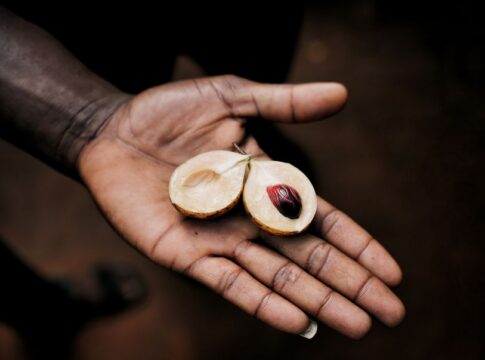
Modern nutmeg holds some interesting trivia beyond its historical price tag. The nutmeg tree produces two spices: nutmeg from the seed and mace from the red aril surrounding it. Mace commands slightly higher prices and has a more delicate flavor, but both come from the same fruit.
Nutmeg contains a compound called myristicin, which in large doses produces hallucinogenic effects. Consuming several whole nutmegs can cause severe poisoning, with symptoms including nausea, hallucinations, and seizures. This toxicity means nutmeg should always be used sparingly—culinary amounts are perfectly safe, but it’s not a recreational substance despite occasional misguided attempts.
The trees themselves grow slowly and require patience. A nutmeg tree takes seven to nine years to produce its first harvest and doesn’t reach full production for twenty years. Once mature, however, a single tree can produce for sixty years or more, yielding thousands of nutmegs over its lifetime.
Frequently Asked Questions
Why was nutmeg so expensive in medieval Europe?
Nutmeg grew only on the tiny Banda Islands in Indonesia, creating extreme scarcity. Combined with beliefs that it cured plague and other diseases, plus the costs and dangers of transporting it halfway around the world, prices soared to exceed gold by weight.
Did the Dutch really trade Manhattan for a nutmeg island?
Yes. In 1667, the Dutch traded Manhattan to the British in exchange for Run, a small nutmeg-producing island in the Banda archipelago. At the time, nutmeg seemed far more valuable than the undeveloped island of Manhattan.
Is nutmeg still expensive today?
No. Once nutmeg cultivation spread to Grenada, India, and other tropical regions in the late 1700s and 1800s, the Dutch monopoly collapsed and prices fell dramatically. Today nutmeg is one of the most affordable spices available.
Can nutmeg really be poisonous?
Yes, in large quantities. Nutmeg contains myristicin, which causes severe toxicity when consumed in amounts much larger than culinary use. Normal cooking amounts are completely safe, but eating several whole nutmegs can cause serious poisoning requiring medical attention.
The next time you sprinkle nutmeg into eggnog or onto a baked sweet potato, consider the centuries of conflict, exploration, and monopoly hidden in that simple brown powder. What we take for granted was once precious enough to reshape empires and redraw maps. The transformation from priceless treasure to pantry staple tells us as much about human ingenuity—and greed—as any history book.