
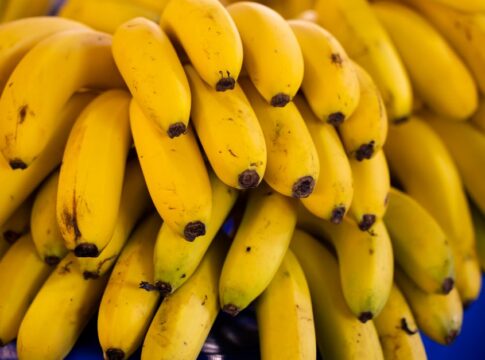
Why Bananas Are Radioactive: The Potassium-40 Truth
By Trivia Daily, Staff Writer — Published August 23, 2026
Table of Contents
- Key Takeaways
- Understanding Natural Radioactivity in Bananas Radioactive Potassium
- Comparing Radioactive Foods and Everyday Exposures
- The Science Behind Radiation Measurement and Safety
- Myths and Misconceptions About Radioactive Foods
Every banana you’ve ever eaten has been mildly radioactive. This surprising fact about bananas radioactive potassium isn’t a cause for alarm—it’s a fascinating window into the natural radioactivity that surrounds us every day. The culprit is potassium-40, a naturally occurring isotope that makes bananas one of the most commonly cited examples of everyday radiation exposure. Discover why this curious trivia reveals more about the atomic world than you might expect.
The radiation in bananas is so well-known that scientists have coined a term for it: the “banana equivalent dose.” This measure helps put radiation exposure into perspective, showing that the natural world is far more radioactive than most people realize. Let’s explore the amazing science behind this everyday wonder.
Key Takeaways
- Bananas contain potassium-40, a naturally radioactive isotope that makes them emit low levels of radiation.
- The “banana equivalent dose” equals about 0.1 microsieverts of radiation exposure per banana consumed.
- Potassium-40 has a half-life of 1.25 billion years and represents about 0.012% of all potassium in nature.
- Your body naturally contains about 16 milligrams of potassium-40, making you more radioactive than a single banana.
- Eating bananas does not increase your radiation exposure because your body maintains constant potassium levels.
- Brazil nuts, potatoes, and carrots are also naturally radioactive for similar reasons.
Understanding Natural Radioactivity in Bananas Radioactive Potassium
1. Potassium-40 Is a Natural Radioactive Isotope
Potassium-40 is one of three naturally occurring isotopes of potassium. While potassium-39 and potassium-41 are stable, potassium-40 undergoes radioactive decay, releasing small amounts of beta particles and gamma rays. This isotope has existed since the formation of Earth and will continue decaying for billions of years to come.
2. All Potassium Contains This Radioactive Component
Approximately 0.012% of all naturally occurring potassium is potassium-40. This means that any food rich in potassium—bananas, potatoes, spinach, beans—contains trace amounts of this radioactive isotope. The ratio remains constant throughout nature, making it impossible to avoid completely.
3. Bananas Are Particularly Rich in Potassium
A medium banana contains about 422 milligrams of potassium, making it one of the most potassium-dense common foods. This high concentration is why bananas became the poster child for natural radioactivity, even though many other foods contain comparable or higher amounts.
4. The Banana Equivalent Dose Simplifies Radiation Comparisons
Scientists created the banana equivalent dose (BED) as an informal measurement to help the public understand radiation exposure. One BED equals approximately 0.1 microsieverts, the amount of radiation exposure from eating one banana. It’s a relatable way to contextualize other radiation sources.
5. Your Body Is Already Radioactive
The average human body contains about 140 grams of potassium at any given time, which means roughly 16 milligrams of potassium-40. This makes every person naturally radioactive, emitting about 4,400 beta particles per second from potassium-40 decay alone.
6. Eating Bananas Doesn’t Increase Your Radioactivity
Your body tightly regulates potassium levels through homeostasis. When you eat a banana, your body doesn’t accumulate extra potassium—it excretes the excess to maintain balance. This means eating more bananas won’t make you more radioactive over time.
7. Potassium-40 Has an Extremely Long Half-Life
The half-life of potassium-40 is approximately 1.25 billion years. This means that half of any given sample of potassium-40 will decay over that timespan. This incredibly slow decay rate is why potassium-40 from Earth’s formation still exists today.
8. Two Different Decay Pathways Exist
Potassium-40 can decay in two ways: about 89% of the time it decays into calcium-40 by emitting a beta particle, while 11% of the time it decays into argon-40 through electron capture, releasing a gamma ray. Both pathways contribute to the radiation bananas emit.
9. Gamma Rays From Bananas Are Detectable
Sensitive radiation detectors can easily measure the gamma rays emitted by a bunch of bananas. The characteristic 1.46 MeV gamma ray from potassium-40 decay serves as a clear signature that can be detected from several feet away with proper equipment.
10. Radiation Detection Equipment Can Flag Banana Shipments
Customs and border security agencies use radiation portal monitors to detect smuggled radioactive materials. Large shipments of bananas have occasionally triggered these alarms due to their collective radioactivity, though officials quickly recognize the harmless source.
Comparing Radioactive Foods and Everyday Exposures
11. Brazil Nuts Are Far More Radioactive Than Bananas
Brazil nuts contain not only potassium-40 but also radium, which they absorb from the soil through their extensive root systems. A single Brazil nut can deliver radiation equivalent to dozens of bananas, making them one of the most radioactive common foods.
12. Carrots and Potatoes Also Contain Potassium-40
Root vegetables accumulate potassium from the soil, making carrots and potatoes naturally radioactive. A potato contains roughly the same amount of radiation as a banana, while carrots contain slightly less due to their lower overall potassium content.
13. Drinking Water Contains Trace Radioactivity
Tap water contains small amounts of naturally occurring radioactive elements, including potassium-40, uranium, and radon. The levels vary by location depending on local geology, but all drinking water contributes some radiation exposure.
14. Your Own Body Emits More Radiation Than a Banana
Because the human body contains more total potassium than a single banana, sleeping next to another person exposes you to more radiation than eating a banana does. The dose is still infinitesimally small and completely harmless.
15. Cosmic Rays Deliver More Radiation Than Bananas
A single transcontinental flight exposes you to radiation equivalent to eating hundreds of bananas. Cosmic rays from space constantly bombard Earth, and at high altitudes, the atmosphere provides less shielding from this natural radiation.
| Radiation Source | Approximate Banana Equivalent Dose |
|---|---|
| One banana | 1 BED |
| One Brazil nut | 20-40 BED |
| Living in a brick house (yearly) | 700 BED |
| Chest X-ray | 1,000 BED |
| Cross-country flight | 400 BED |
| Natural background radiation (yearly) | 35,000 BED |
16. Building Materials Release Natural Radiation
Granite countertops, concrete, and brick contain trace amounts of uranium and thorium, making buildings themselves sources of low-level radiation. Granite emits radon gas as uranium decays, though the levels in homes remain far below dangerous thresholds.
17. The Earth Itself Is Radioactive
Earth’s core generates heat partly through radioactive decay of uranium, thorium, and potassium-40. This process has kept the planet’s interior molten for billions of years and drives plate tectonics, volcanic activity, and the magnetic field that protects us from solar radiation.
18. Carbon-14 Makes All Living Things Radioactive
Every living organism contains carbon-14, a radioactive isotope created when cosmic rays strike nitrogen in the atmosphere. This isotope is the basis for radiocarbon dating and contributes to the natural background radiation in all organic matter.
19. Medical Scans Use Radioactive Tracers
PET scans and other medical imaging techniques use radioactive isotopes like fluorine-18, which has a half-life of just 110 minutes. A single PET scan delivers radiation equivalent to thousands of bananas, though the medical benefits far outweigh the minimal risk.
20. Smoke Detectors Contain Americium-241
Ionization smoke detectors use a small amount of americium-241, a radioactive element that ionizes air to detect smoke particles. The radiation from a smoke detector is contained within the device and poses no health risk under normal use.
The Science Behind Radiation Measurement and Safety
21. Sieverts Measure Biological Impact
The sievert is the standard unit for measuring radiation’s effect on human tissue. One sievert represents a significant dose; most everyday exposures are measured in microsieverts or millisieverts, which are one-millionth and one-thousandth of a sievert, respectively.
22. Different Types of Radiation Have Different Effects
Alpha particles, beta particles, and gamma rays interact with matter differently. Alpha particles can’t penetrate skin, beta particles penetrate only a few millimeters, while gamma rays pass through the body. Potassium-40 emits beta particles and gamma rays.
23. Background Radiation Varies by Location
People living in Denver receive about twice the cosmic radiation as those at sea level due to the higher elevation. Areas with granite bedrock or certain minerals experience elevated natural radiation, yet populations in these regions show no increased health effects.
24. The Linear No-Threshold Model Guides Safety Standards
Radiation safety regulations assume any amount of radiation carries some risk, no matter how small. This conservative approach, called the linear no-threshold model, remains debated among scientists but ensures protective standards for workers and the public.
25. Natural Radiation Far Exceeds Banana Contributions
The average person receives about 3,000 microsieverts of radiation per year from natural sources—equivalent to eating roughly 30,000 bananas annually. This background radiation comes from cosmic rays, radon gas, rocks, soil, and the food we eat.
26. Potassium Is Essential for Life
Despite being radioactive, potassium is absolutely crucial for human survival. It regulates heartbeat, nerve signals, and muscle contractions. The body’s need for potassium far outweighs any concern about the tiny radiation dose from potassium-40.
27. Evolution Occurred in a Radioactive Environment
Life evolved on Earth surrounded by natural radioactivity from potassium-40, uranium, thorium, and cosmic rays. All organisms have developed repair mechanisms to fix DNA damage from background radiation, making low-level exposures manageable for living systems.
28. You Cannot Avoid Natural Radiation
Natural radioactivity is woven into the fabric of our planet and bodies. Even in the most controlled environments, cosmic rays penetrate and internal sources like potassium-40 remain. This unavoidable exposure is part of life on Earth.
29. Potassium-40 Helps Date Ancient Rocks
Because potassium-40 decays into argon-40 at a known rate, geologists use potassium-argon dating to determine the age of rocks millions to billions of years old. This technique has been crucial for understanding Earth’s geological history and the timeline of evolution.
30. The Oklo Natural Nuclear Reactor Proves Ancient Radioactivity
About 1.7 billion years ago in Gabon, Africa, natural uranium deposits achieved critical mass and sustained nuclear fission reactions for hundreds of thousands of years. This natural reactor demonstrates that radioactive processes have shaped Earth’s chemistry since ancient times.
Myths and Misconceptions About Radioactive Foods
31. Eating Bananas Won’t Harm You
The radiation from bananas is so minimal that you would need to eat millions of bananas in a short period to receive a harmful dose. Long before radiation became a concern, you’d face far more immediate problems from potassium overdose or simply the physical impossibility of consuming that much fruit.
32. Organic Bananas Are Just as Radioactive
Potassium-40 is a natural component of all potassium, regardless of how the banana was grown. Organic and conventional bananas contain identical amounts of radioactive potassium because it’s determined by the element’s natural isotope ratio, not agricultural practices.
33. Radiation in Food Doesn’t Accumulate
Unlike some radioactive contaminants that can bioaccumulate, the potassium in bananas simply replaces potassium your body excretes. Your total potassium-40 content remains constant, so regular banana consumption doesn’t lead to increasing radioactivity over time.
34. Cooking Doesn’t Remove Radioactivity
Potassium-40 atoms don’t change through cooking, freezing, or any other food preparation method. The radioactivity is intrinsic to the potassium atoms themselves, and those atoms remain whether the banana is fresh, dried, or baked into bread.
35. Airport Scanners Don’t Make Food Radioactive
X-ray machines used to scan luggage don’t make food inside radioactive. The X-rays pass through objects without altering their atomic structure. Any radioactivity in food comes from naturally occurring isotopes, not from security screening.
36. Potassium Supplements Are Also Radioactive
Potassium supplements contain the same isotope ratio as bananas, meaning they’re equally radioactive per unit of potassium. Taking a potassium supplement delivers the same negligible radiation dose as eating potassium-rich foods.
37. The Banana Equivalent Dose Has Limitations
While the BED is useful for public communication, radiation safety experts note it oversimplifies complex factors like internal versus external exposure, dose rate, and the specific tissues affected. It’s a teaching tool rather than a precise scientific measurement.
38. Irradiated Food Is Different From Radioactive Food
Some foods are intentionally exposed to radiation to kill bacteria and extend shelf life, but this doesn’t make the food itself radioactive. Irradiation and natural radioactivity are completely separate phenomena with different purposes and effects.
39. All Isotopes of an Element Behave Identically Chemically
Your body cannot distinguish between radioactive potassium-40 and stable potassium-39. They have identical chemical properties, so the body processes them the same way. The only difference is that potassium-40 occasionally undergoes radioactive decay.