
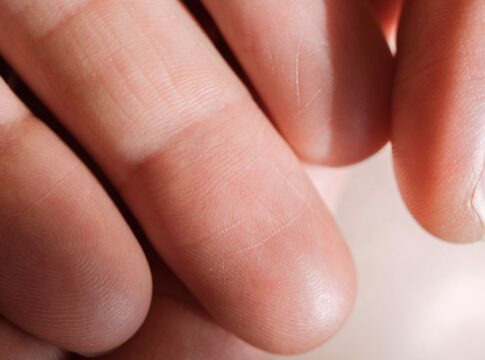
The Truth About Fingerprints: No Two Are Ever Identical
By Trivia Daily, Staff Writer — Published September 13, 2026
Table of Contents
- Key Takeaways
- Discovering the Truth About Fingerprints Ever Being Duplicated
- Why Identical Twins Have Different Fingerprints
- Comparing the Three Main Fingerprint Patterns
- Interesting Facts That Make Fingerprints Amazing
- How Fingerprint Technology Continues to Evolve
- Surprising Trivia About Your Fingertips
- Frequently Asked Questions
Press your fingertip against a window and take a close look at the pattern left behind. Those swirls, loops, and ridges are yours alone—a biological signature so unique that no one else on Earth shares it. Not even identical twins. The truth about fingerprints ever being duplicated? It simply doesn’t happen. This remarkable fact has made fingerprints the gold standard for identification for more than a century, solving crimes, securing devices, and proving identities across the globe.
What makes this everyday feature of human anatomy so endlessly fascinating is the sheer impossibility of repetition. With roughly eight billion people alive today and countless billions who came before, the odds that two people share identical fingerprints remain effectively zero.
Key Takeaways
- Fingerprints form in the womb between the 10th and 24th weeks of pregnancy, shaped by random factors including amniotic fluid movement, position in the womb, and blood pressure—ensuring uniqueness even between identical twins.
- There are three basic fingerprint patterns—loops (about 60-65% of people), whorls (30-35%), and arches (5%)—but the specific arrangement of ridges within these patterns is what makes each print one-of-a-kind.
- No two fingers on your own hands have the same print; each of your ten fingers carries a distinct pattern.
- Fingerprints remain unchanged throughout your entire life, from before birth until decomposition after death, making them a permanent form of identification.
- The chances of two people having identical fingerprints are estimated to be less than one in 64 billion, a number that exceeds Earth’s current population.
- Law enforcement agencies worldwide maintain databases containing hundreds of millions of fingerprints, yet no confirmed case of two identical prints from different people has ever been documented.
Discovering the Truth About Fingerprints Ever Being Duplicated
The scientific study of fingerprints began in earnest during the late 19th century, though humans had been using thumbprints as signatures for thousands of years in ancient civilizations. Researchers discovered that the ridge patterns on fingertips develop during fetal development through a complex interplay of genetic and environmental factors. While your DNA determines that you’ll have fingerprints, it doesn’t dictate their specific pattern.
Here’s where it gets interesting. As a fetus develops, the skin on fingertips forms in response to multiple variables: the exact position of the baby in the womb, the density of amniotic fluid at any given moment, the length of the umbilical cord, and even the baby’s blood pressure. These factors are never identical, not even for twins sharing the same womb. The result? Every person receives a unique set of ridge patterns that will never be replicated.
Scientists classify fingerprints by their general pattern type, but within each category exist millions of possible variations. The specific details—called minutiae—include the exact points where ridges end, split, or form small islands. A single fingerprint can contain anywhere from 75 to 175 of these minutiae points. When forensic experts compare prints, they examine these fine details, and matching just 12 to 15 points is typically considered sufficient for positive identification in many legal systems.
Why Identical Twins Have Different Fingerprints
Many people assume identical twins share fingerprints since they share DNA. They don’t. While identical twins may have similar general pattern types—both might have loop patterns, for example—the specific details differ dramatically. This fact alone proves that fingerprints aren’t purely genetic.
The developmental environment in the womb ensures variation. Even twins positioned side by side experience different pressures, different amounts of amniotic fluid contact, and different rates of growth at crucial moments when fingerprints form. These tiny environmental differences create permanent distinctions in their ridge patterns. Twin studies have been instrumental in helping researchers understand that fingerprints result from both nature and nurture—genetic instructions modified by random developmental events.
Comparing the Three Main Fingerprint Patterns
| Pattern Type | Percentage of Population | Characteristics |
|---|---|---|
| Loop | 60-65% | Ridges enter from one side, curve around, and exit the same side; most common pattern |
| Whorl | 30-35% | Circular or spiral patterns with ridges forming complete circuits; includes plain whorls, central pocket loops, and double loops |
| Arch | 5% | Ridges enter from one side and exit the other with a rise in the center; rarest pattern type |
Interesting Facts That Make Fingerprints Amazing
Beyond identification, fingerprints serve a practical purpose. Those ridges improve your grip by increasing friction between your skin and objects you touch. They also enhance your sense of touch by amplifying vibrations, helping you feel textures more acutely. Without these tiny ridges, you’d struggle to pick up smooth objects and couldn’t detect subtle differences in surface textures.
Fingerprints are surprisingly resilient. Superficial cuts and burns don’t permanently alter them—the pattern regenerates as the skin heals, following the original template. Only deep injuries that damage the dermal layer can cause permanent scarring that changes the pattern. Even then, the altered pattern becomes a new unique identifier.
Some rare genetic conditions can affect fingerprint development. People with adermatoglyphia, an extremely rare condition, are born without fingerprints entirely. Fewer than ten families worldwide are known to have this condition. Certain medications used in chemotherapy can also temporarily smooth fingerprints, occasionally causing problems for patients trying to pass through fingerprint scanners at airports or border crossings.
How Fingerprint Technology Continues to Evolve
Modern fingerprint analysis has come far from the ink-and-paper methods of the past. Digital scanners now capture prints in seconds, converting the physical ridges into mathematical algorithms that computers can quickly compare against massive databases. Your smartphone likely uses this technology dozens of times per day.
Law enforcement agencies worldwide rely on Automated Fingerprint Identification Systems that can search through millions of prints in minutes. The FBI’s database alone contains more than 150 million fingerprint records. Despite this enormous collection spanning decades of crime-solving, no two identical prints from different individuals have ever been found. This remarkable track record continues to validate what scientists discovered more than a century ago: fingerprints are truly unique.
Surprising Trivia About Your Fingertips
- Your fingerprints formed before you were born and will remain essentially unchanged until after your death
- Koalas and some primates also have fingerprints with ridge patterns remarkably similar to humans
- The word “dermatoglyphics” (the study of fingerprints) contains no repeated letters, making it one of the longest English words with this property
- Fingerprints can be left on surfaces for decades under the right conditions, with some crime scene prints being recovered and identified years after being deposited
- Even if your hands are wet, you still leave fingerprints—though they may be harder to detect visually
Frequently Asked Questions
Can fingerprints wear away or change over time?
The ridge patterns remain constant throughout life, though the skin itself ages and may become less defined. Heavy manual labor, certain chemicals, or medical conditions can temporarily affect print quality, but the underlying pattern doesn’t change.
Do fingerprints grow back if burned or cut?
Superficial damage heals completely, regenerating the original pattern. Only deep injuries that destroy the dermal layer create permanent scars that alter the print, though even scarred prints remain unique and identifiable.
How accurate is fingerprint identification in solving crimes?
When properly analyzed by trained experts, fingerprint identification is extremely reliable. Most jurisdictions require a minimum of 8 to 16 matching minutiae points for positive identification, making false matches exceptionally rare.
Are there people born without fingerprints?
Yes, but it’s extremely rare. A genetic condition called adermatoglyphia affects fewer than ten known families worldwide, causing people to be born with smooth fingertips lacking the typical ridge patterns.
The next time you unlock your phone with a fingertip or watch a crime drama where prints crack the case, remember you’re witnessing one of nature’s most elegant solutions to the problem of identity. Your fingertips carry a pattern that has never existed before and will never exist again—a small biological miracle hiding in plain sight at the ends of your hands.