
The Truth About Bananas: Are They Really Going Extinct?
By Trivia Daily, Staff Writer — Published September 12, 2026
Table of Contents
- Key Takeaways
- The Truth About Bananas Going Extinct: A Clone Army’s Weakness
- The Fungus That Already Killed a Banana
- History Repeats: Tropical Race 4 Emerges
- Comparing Banana Varieties: What Makes Cavendish Special?
- The Search for Solutions: Science Steps In
- Frequently Asked Questions
The humble banana might be the world’s most popular fruit, yet it faces a threat most people never consider while tossing one into their shopping cart. The truth about bananas going extinct isn’t science fiction—it’s a very real possibility rooted in monoculture farming and a relentless fungal disease. This surprising reality reveals fascinating facts about how we grow our food and why genetic diversity matters more than you might think. The banana you eat today is likely doomed, but the story is more complex and interesting than simple extinction.
Before you panic about your breakfast routine, discover the amazing science behind banana cultivation and why the fruit in your kitchen is actually a clone of millions of identical siblings around the world.
Key Takeaways
- Nearly all commercial bananas are genetically identical Cavendish clones, making them extremely vulnerable to disease.
- A fungal disease called Panama disease (Tropical Race 4) is spreading globally and has no known cure, threatening the Cavendish variety.
- The Gros Michel banana, once the world’s most popular variety, was effectively wiped out by an earlier strain of Panama disease in the 1950s.
- Wild bananas contain large, hard seeds and are nearly inedible compared to the seedless varieties humans cultivated.
- Scientists are exploring genetic modification and searching for disease-resistant varieties to save the banana industry.
- Bananas don’t grow on trees—they’re actually giant herbs, and the “trunk” is made of tightly packed leaf bases.
The Truth About Bananas Going Extinct: A Clone Army’s Weakness
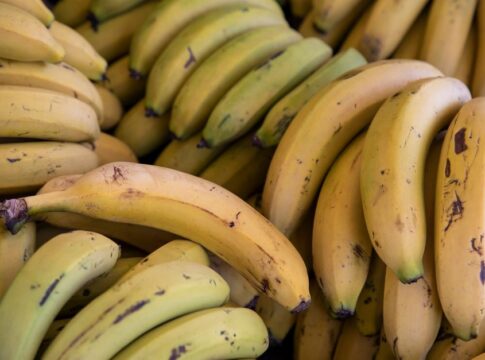
Walk into any grocery store and you’ll find bananas that look remarkably uniform. There’s a reason for that. The Cavendish banana, which accounts for roughly 99% of bananas sold in Western countries, is a genetic clone. Every single Cavendish plant is propagated from cuttings, not seeds, making each one a perfect genetic copy of the others.
This trivia fact has enormous consequences. When a disease evolves to attack one Cavendish plant, it can attack them all. There’s no genetic variation to provide resistance, no natural selection to favor hardier individuals. The entire global crop shares the same vulnerability.
Commercial bananas are also sterile and seedless—that’s why you don’t crunch on hard seeds when you eat one. Wild bananas, by contrast, are filled with large, rock-hard seeds that make them nearly impossible to eat. Humans have cultivated the seedless mutation for thousands of years, but this convenience comes at a price: bananas can’t reproduce sexually and create genetic diversity.
The Fungus That Already Killed a Banana
This isn’t the first time bananas have faced extinction. Until the 1950s, the Gros Michel variety dominated international trade. By all accounts, it was creamier, sweeter, and had a longer shelf life than today’s Cavendish. Artificial banana flavoring still mimics the Gros Michel’s taste, which is why candy and banana-flavored products don’t quite match the fruit you buy today.
Then came Panama disease, specifically a strain called Tropical Race 1. This soil-borne fungus, Fusarium oxysporum, attacks banana roots and blocks water uptake. Infected plants wilt and die. The fungus persists in soil for decades, making replanting impossible in contaminated areas.
By the 1960s, the Gros Michel was commercially extinct in most of the world. The banana industry pivoted entirely to the Cavendish, which happened to be resistant to that particular fungal strain. Crisis averted, or so it seemed.
History Repeats: Tropical Race 4 Emerges
A new strain of the same fungus, called Tropical Race 4 (TR4), first appeared in Southeast Asia in the 1990s. This variant attacks Cavendish bananas with the same ruthless efficiency that Tropical Race 1 killed the Gros Michel. It spreads through contaminated soil, water, tools, and even boots, making containment nearly impossible.
TR4 has now reached banana-growing regions across Asia, Africa, the Middle East, and has been detected in Latin America—the source of most bananas imported to North America and Europe. There is no chemical treatment that can cure infected plants or sterilize contaminated soil. Quarantine measures slow the spread but cannot stop it entirely.
The question isn’t whether TR4 will impact global banana supplies, but when and how severely. Some experts predict major shortages within the next decade if no solution is found.
Comparing Banana Varieties: What Makes Cavendish Special?
| Variety | Flavor Profile | Shelf Life | Disease Resistance | Current Status |
|---|---|---|---|---|
| Gros Michel | Sweet, creamy | Excellent | Vulnerable to TR1 | Commercially extinct |
| Cavendish | Mild, sweet | Good | Vulnerable to TR4 | Dominant globally |
| Plantain | Starchy, less sweet | Good | Variable | Widely grown |
| Red Banana | Raspberry notes | Poor | Variable | Niche markets |
The Search for Solutions: Science Steps In
Researchers worldwide are racing to develop disease-resistant banana varieties. Several approaches show promise:
- Gene editing techniques like CRISPR to introduce resistance genes without traditional genetic modification
- Crossbreeding wild banana species that have natural TR4 resistance with commercial varieties
- Screening thousands of banana varieties and wild relatives for natural immunity
- Developing genetically modified Cavendish bananas with inserted resistance genes from other species
Scientists in Australia have created a genetically modified Cavendish with a resistance gene from a wild banana species. Field trials show promising results, but public acceptance of GM bananas remains uncertain in many markets. Meanwhile, researchers continue exploring conventional breeding techniques, though creating a new commercial variety through traditional methods typically takes decades.
The banana’s botanical classification adds another layer of curiosity to this story. Bananas don’t grow on trees at all—they’re technically giant herbs. The apparent “trunk” is actually a pseudostem made of tightly wrapped leaf bases. After producing fruit once, the entire plant dies back, and new shoots grow from the underground rhizome.
Frequently Asked Questions
Will bananas completely disappear from stores?
Complete extinction is unlikely, but the affordable, uniform Cavendish banana you know today may become scarce or expensive. Alternative varieties exist, though they may taste different, bruise more easily, or cost more to produce and transport.
Why don’t banana companies just grow different varieties?
The global supply chain is built around Cavendish characteristics: durability during shipping, predictable ripening, and consumer familiarity. Switching varieties requires massive infrastructure changes and consumer acceptance of different taste and texture profiles.
Are wild bananas still safe from disease?
Wild banana species maintain genetic diversity, giving them better odds against diseases. However, some wild species are also threatened by habitat loss and climate change, making conservation efforts critical for future breeding programs.
What did bananas look like before humans cultivated them?
Wild bananas are filled with hard, marble-sized seeds and have very little edible flesh. Ancient humans selectively cultivated mutations with reduced seeds and more fruit over thousands of years, creating the soft, seedless varieties we enjoy today.
The banana’s precarious future reminds us that monoculture farming—growing a single genetic clone across millions of acres—carries enormous risks. The next banana you eat connects you to a global agricultural drama playing out in laboratories and fields worldwide. Whether through genetic innovation or rediscovering forgotten varieties, the solution will reshape how we think about one of humanity’s oldest and most beloved fruits.