









Why Koalas Sleep 22 Hours Daily: The Eucalyptus Effect
By Trivia Daily, Staff Writer — Published August 21, 2026
Table of Contents
- Key Takeaways
- The Science Behind Koalas Sleep Hours and Energy Conservation
- Comparing Koala Sleep to Other Champions of Slumber
- Frequently Asked Questions
Koalas are nature's ultimate sleepyheads, and their extreme slumber habits have puzzled scientists and fascinated animal lovers for generations. These fuzzy Australian marsupials don't just enjoy a good nap—they sleep an astonishing amount, sometimes clocking in up to 22 hours of shut-eye in a single day. This surprising fact about koalas sleep hours isn't laziness; it's an evolutionary adaptation to one of the world's most nutritionally challenging diets. The secret lies in their exclusive menu: eucalyptus leaves, which are toxic to most animals and provide remarkably little energy.
Discover the amazing science behind this curious behavior, and you'll find a story of survival, digestion, and evolutionary trade-offs that make koalas one of the most interesting animals on Earth.
Key Takeaways
- Koalas sleep 18 to 22 hours daily due to their extremely low-energy eucalyptus diet
- Eucalyptus leaves are toxic and fibrous, requiring massive amounts of energy to digest
- Koalas have one of the smallest brain-to-body ratios of any mammal, conserving energy
- Their specialized digestive system contains bacteria that break down toxic compounds
- Koalas are not bears but marsupials, more closely related to kangaroos and wombats
- Climate change and habitat loss are reducing the quality of eucalyptus available to koalas
The Science Behind Koalas Sleep Hours and Energy Conservation
1. Eucalyptus Leaves Are Nutritional Nightmares
Eucalyptus leaves contain very little protein and almost no fat—the building blocks of energy. These leaves are approximately 50 percent water and high in indigestible fiber, making them one of the least nutritious food sources in the animal kingdom. For perspective, a koala must consume roughly one kilogram of leaves daily just to meet its basic caloric needs. This poor nutritional value means koalas have evolved to conserve every possible joule of energy.
2. Toxic Compounds Require Serious Detoxification
Eucalyptus leaves contain phenolic compounds and terpenes that are poisonous to most mammals. These chemical defenses evolved to protect eucalyptus trees from herbivores, but koalas developed specialized liver enzymes to neutralize the toxins. This detoxification process is metabolically expensive, burning through energy reserves and necessitating long periods of rest to recover.
3. The Digestive Marathon Takes Hours
A koala's digestive system works overtime to extract nutrients from fibrous eucalyptus. Food takes up to five days to pass through their specialized digestive tract, one of the longest transit times of any mammal. The cecum—a fermentation chamber in their gut—houses beneficial bacteria that break down cellulose and neutralize toxins, but this process is slow and energy-intensive.
4. Metabolic Rate Runs Exceptionally Low
Koalas have a metabolic rate roughly half that of most other mammals their size. This dramatically slowed metabolism means they burn fewer calories at rest, allowing them to survive on their meager diet. Sleeping conserves energy that would otherwise be wasted on movement or activity.
5. Brain Size Sacrificed for Survival
Koalas have unusually small brains relative to their body size, with brain tissue occupying only about 60 percent of the cranial cavity. Brain tissue is metabolically expensive—human brains consume about 20 percent of our daily calories despite representing only 2 percent of body weight. By reducing brain size, koalas cut energy costs significantly.
6. Body Temperature Regulation Requires Minimal Effort
Unlike active animals that generate heat through movement, koalas rely on behavioral thermoregulation. They sleep hugging tree trunks on hot days, as the trees can be up to 9 degrees Fahrenheit cooler than the surrounding air. This passive cooling strategy requires no energy expenditure.
7. Sleep Cycles Differ from Human Patterns
Koalas don't experience sleep the way humans do. Their rest includes both deep sleep and lighter dozing states, with frequent brief awakenings to check for predators or adjust position. This fragmented sleep pattern allows them to remain somewhat alert while still conserving energy.
8. Nocturnal Feeding Happens During Brief Active Periods
The few hours koalas spend awake occur primarily at night when they feed. They're most active during cooler evening and early morning hours, which reduces water loss and heat stress. Even during these active periods, their movements are slow and deliberate to minimize energy expenditure.
9. Social Interaction Is Minimal and Brief
Koalas are largely solitary animals, interacting mainly during breeding season. This antisocial lifestyle means they don't waste energy on group dynamics, territorial disputes, or social grooming behaviors common in other mammals. Every avoided interaction is energy saved.
10. Muscle Mass Remains Minimal
Koalas have just enough muscle to climb trees and grip branches. They don't develop unnecessary muscle tissue because muscle requires constant energy to maintain, even at rest. Their climbing style is slow and energy-efficient, using strong grip rather than dynamic movement.
11. Water Intake Comes Mostly from Leaves
The word "koala" likely derives from an Aboriginal word meaning "no drink." Koalas obtain most of their water from eucalyptus leaves, which reduces the energy needed to search for water sources. They do occasionally drink, especially during droughts or heat waves, but this behavior is relatively rare.
12. Picky Eaters Choose Only the Best Leaves
Koalas feed on only about 30 of the roughly 600 eucalyptus species available. They're highly selective, choosing leaves with lower toxin levels and slightly higher protein content. This pickiness means they extract maximum nutrition from their limited diet, but it also makes them vulnerable to habitat loss.
13. Joey Development Happens in the Pouch
Female koalas give birth to underdeveloped joeys roughly the size of a jellybean. The joey completes development in the mother's pouch for about six months, feeding on milk and eventually "pap"—a specialized fecal substance that transfers gut bacteria needed to digest eucalyptus. This reproductive strategy minimizes the mother's energy investment during pregnancy.
14. Fur Provides Excellent Insulation
Koalas have dense, woolly fur that insulates them from temperature extremes. This natural insulation reduces the energy needed for thermoregulation, allowing them to maintain body temperature without burning extra calories. Their fur is also water-resistant, protecting them during rain.
15. Limited Predators Mean Less Vigilance Required
Adult koalas have few natural predators in their tree-dwelling habitat. Dingoes, pythons, and large owls occasionally prey on them, but the risk is relatively low compared to ground-dwelling animals. This reduced predation pressure means koalas can afford to sleep deeply without constant vigilance.
16. Climate Stress Increases Sleep Time
During heat waves or droughts, koalas sleep even more than usual. Extreme temperatures increase metabolic demands, and reduced leaf quality during dry periods means less nutrition. Sleeping through the worst conditions is a survival strategy that has served koalas for millions of years.
17. Evolutionary History Spans Millions of Years
Koalas have been perfecting this low-energy lifestyle for approximately 20 million years. Fossil evidence shows their ancestors were larger and more diverse, but modern koalas represent the survivors of a lineage that specialized in eucalyptus consumption. Their extreme adaptations are the result of millennia of natural selection.
18. Captive Koalas Sleep Slightly Less
Koalas in zoos and wildlife sanctuaries sometimes sleep fewer hours than their wild counterparts, averaging closer to 18 hours daily. This difference likely reflects improved diet quality—captive koalas receive carefully selected leaves and sometimes nutritional supplements, reducing the energy deficit they face.
19. Smell Helps Identify Safe Leaves
Koalas have an excellent sense of smell that helps them identify which eucalyptus leaves are least toxic and most nutritious. They sniff leaves carefully before eating, rejecting those with high toxin levels. This sensory screening saves energy that would be wasted detoxifying particularly poisonous leaves.
20. Habitat Fragmentation Threatens Energy Budgets
As human development fragments eucalyptus forests, koalas must travel greater distances between suitable trees. This increased movement burns precious calories and can push their already tight energy budget into deficit. Stressed koalas sleep even more to compensate, but this reduces feeding time, creating a dangerous cycle.
21. Climate Change Affects Leaf Nutrition
Rising carbon dioxide levels in the atmosphere alter eucalyptus leaf chemistry, reducing protein content and increasing tannins. Research has shown that koalas feeding on leaves grown under elevated CO2 conditions must consume more to meet their nutritional needs, further straining their energy reserves and potentially increasing sleep requirements.
22. Conservation Efforts Focus on Habitat Quality
Wildlife organizations recognize that protecting koalas means preserving high-quality eucalyptus habitat. Conservation programs focus on maintaining diverse, healthy eucalyptus forests where koalas can find nutritious leaves without excessive travel. These efforts acknowledge that the eucalyptus effect—the relationship between diet and sleep—is fundamental to koala survival.
Comparing Koala Sleep to Other Champions of Slumber
| Animal | Average Daily Sleep | Primary Reason |
|---|---|---|
| Brown Bat | 20 hours | High metabolism, nocturnal hunting |
| Giant Armadillo | 18 hours | Energy conservation, low-nutrient diet |
| Koala | 18–22 hours | Toxic, low-energy eucalyptus diet |
| Sloth | 15–18 hours | Extremely slow metabolism |
| House Cat | 12–16 hours | Crepuscular activity pattern |
Frequently Asked Questions
Are koalas actually bears?
No, koalas are marsupials, not bears. They're more closely related to kangaroos and wombats than to any bear species. The nickname "koala bear" is a misnomer that originated with European settlers who noticed their bear-like appearance.
Can koalas survive on any type of eucalyptus?
Koalas are highly selective and feed on only about 30 of the 600-plus eucalyptus species. They prefer species with lower toxin levels and higher protein content, and individual koalas often show preferences for specific trees in their home range.
Do baby koalas sleep as much as adults?
Joeys sleep extensively while developing in the pouch and during their first year. As they transition to solid food and begin eating eucalyptus, their sleep patterns gradually match adult schedules, reflecting the energy demands of their diet.
How do koalas avoid falling while sleeping in trees?
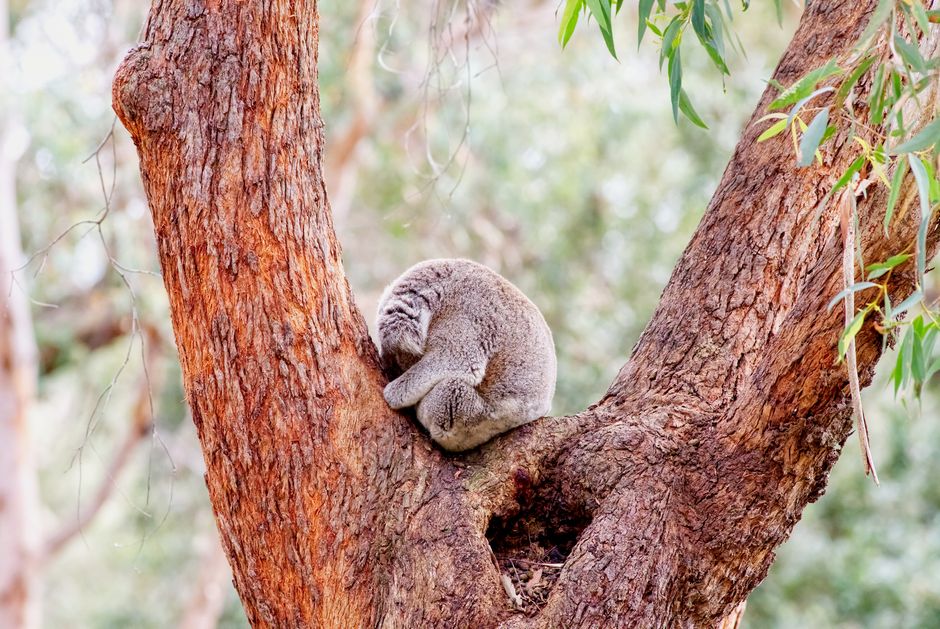
Koalas have specialized curved claws and opposable digits that create a powerful grip. They wedge themselves into tree forks and their grip remains strong even during deep sleep, preventing falls from heights of 30 feet or more.
The next time you see a sleeping koala, remember that what looks like laziness is actually a masterclass in evolutionary efficiency. Every hour of sleep represents millions of years of adaptation to one of nature's most challenging diets, proving that sometimes doing less is the smartest survival strategy of all.