











1 / 10 Questions
0 Points

What breakfast bread has a grid pattern?

Waffle

Pancake

Biscuit

Muffin

Points won
0
Correct score
0%

More Questions

7 Amazing Facts About How Bees Navigate Using Sunlight

Discover how bee navigation works through sunlight detection, polarized light patterns, and celestial cues that guide these insects across miles.

Which President Added A Bowling Alley To The White House In 1947?

Which President Added A Bowling Alley To The White House In 1947? Question 1: Which President Added A Bowling Alley To The White House In...

What ocean creature can regrow its arms?

What ocean creature can regrow its arms? Question 1: What ocean creature can regrow its arms? A. Starfish B. Seahorse C. Jellyfish D. Clownfish Explanation: Starfish have remarkable regenerative abilities...

More Articles

Did You Know? 10 Facts About Neutrinos

Did You Know? 10 Facts About Neutrinos

⏱️ 6 min read

Did You Know? 10 Facts About Neutrinos

Neutrinos are among the most mysterious and fascinating particles in the universe. Often called "ghost particles," these tiny subatomic entities pass through matter almost effortlessly, making them incredibly difficult to detect yet fundamentally important to our understanding of physics and cosmology. Despite being produced in astronomical numbers every second, neutrinos remain elusive and continue to challenge scientists around the world. Here are ten remarkable facts about these enigmatic particles that reveal why they're so crucial to modern physics.

1. Neutrinos Are Nearly Massless

For decades, scientists believed neutrinos had no mass at all. However, groundbreaking discoveries in 1998 and 2001 revealed that neutrinos do possess a tiny amount of mass, though it remains extraordinarily small. A neutrino weighs at least a million times less than an electron, which itself is already incredibly light. This discovery was so significant that it earned Takaaki Kajita and Arthur B. McDonald the 2015 Nobel Prize in Physics. The exact mass of neutrinos is still unknown, but determining it could help explain some of the universe's greatest mysteries.

2. Trillions Pass Through Your Body Every Second

The Sun produces neutrinos in staggering quantities through nuclear fusion reactions in its core. Approximately 65 billion neutrinos from the Sun pass through every square centimeter of Earth every single second. This means that trillions upon trillions of neutrinos are streaming through your body right now as you read this. Despite this constant bombardment, you don't feel anything because neutrinos rarely interact with normal matter. Most will pass completely through the entire Earth without touching a single atom.

3. They Travel at Nearly the Speed of Light

Neutrinos move at velocities extraordinarily close to the speed of light. While they're not quite as fast as photons (particles of light) due to their small mass, the difference is negligible for most practical purposes. This incredible speed, combined with their reluctance to interact with matter, means neutrinos can carry information about cosmic events from the most distant reaches of the universe virtually unimpeded. They serve as cosmic messengers, delivering news about stellar processes that other particles cannot.

4. There Are Three Different "Flavors" of Neutrinos

Neutrinos come in three varieties, or "flavors": electron neutrinos, muon neutrinos, and tau neutrinos. Each flavor is associated with a corresponding charged particle (electron, muon, and tau particle respectively). What makes this even more interesting is that neutrinos can actually change from one flavor to another as they travel through space, a phenomenon called neutrino oscillation. This flavor-changing ability was key evidence that neutrinos have mass and represents one of the most important discoveries in particle physics.

5. Detecting Neutrinos Requires Massive Underground Facilities

Because neutrinos interact so weakly with matter, detecting them requires enormous, sophisticated equipment. Neutrino detectors are typically housed deep underground to shield them from other particles that could interfere with measurements. These facilities contain thousands of tons of ultra-pure water or other materials, monitored by thousands of sensitive light detectors. Even with these massive installations, scientists might detect only a handful of neutrino interactions per day. Notable facilities include the IceCube detector at the South Pole, which uses a cubic kilometer of Antarctic ice as its detection medium.

6. Neutrinos Were Predicted Before They Were Discovered

The neutrino was first proposed by physicist Wolfgang Pauli in 1930 to solve a puzzle involving radioactive decay. Energy seemed to be disappearing during certain nuclear reactions, violating the law of energy conservation. Pauli theorized that an invisible, nearly massless particle must be carrying away the missing energy. Italian physicist Enrico Fermi named this hypothetical particle the "neutrino," meaning "little neutral one" in Italian. However, neutrinos weren't actually detected experimentally until 1956, 26 years after Pauli's prediction, when Frederick Reines and Clyde Cowan finally observed them near a nuclear reactor.

7. They're Produced by Supernovae

When a massive star explodes in a supernova, it releases an enormous burst of neutrinos—carrying away roughly 99% of the explosion's total energy. These neutrino bursts are so intense that detectors on Earth can observe them from supernovae occurring thousands of light-years away. In 1987, neutrinos from Supernova 1987A in the Large Magellanic Cloud were detected on Earth, arriving hours before the light from the explosion became visible. This was because neutrinos escaped the star's core immediately, while light had to work its way out through the stellar material.

8. Neutrinos May Explain Why Matter Exists

One of the greatest mysteries in physics is why the universe contains matter instead of being empty. According to the Big Bang theory, matter and antimatter should have been created in equal amounts, and they should have annihilated each other completely. Neutrinos might hold the key to this puzzle. Scientists theorize that neutrinos and antineutrinos may behave slightly differently, a property called CP violation. This asymmetry could explain why matter survived and antimatter didn't, allowing the universe—and us—to exist.

9. They Can Pass Through Entire Planets

The weak interaction between neutrinos and matter is so feeble that these particles can pass through entire planets without being stopped. If you could somehow see neutrinos, you would observe them streaming up through the ground beneath your feet, having traveled through the entire Earth from the other side of the planet. In fact, scientists sometimes use the Earth itself as a filter, studying neutrinos that have passed through the planet to learn about their properties. This ghostly behavior makes neutrinos unique among known particles.

10. Cosmic Neutrino Background Fills the Universe

Similar to the cosmic microwave background radiation left over from the Big Bang, there exists a cosmic neutrino background (CνB) that permeates all of space. These primordial neutrinos were produced approximately one second after the Big Bang and have been traveling through the universe ever since. Scientists estimate there are roughly 330 neutrinos from this background in every cubic centimeter of space. Unfortunately, these ancient neutrinos have cooled to such low energies that detecting them directly remains beyond current technology, though their existence is strongly supported by theoretical models and indirect evidence.

Conclusion

Neutrinos represent one of nature's most intriguing phenomena, combining extreme abundance with extreme elusiveness. From their role in stellar processes to their potential to unlock the mystery of matter's existence, these ghost particles continue to captivate physicists and drive cutting-edge research. The ten facts presented here only scratch the surface of neutrino science, a field that continues to evolve as new detection methods and facilities come online. As we learn more about these remarkable particles, we edge closer to understanding the fundamental nature of our universe and the forces that shaped it from the earliest moments of creation.
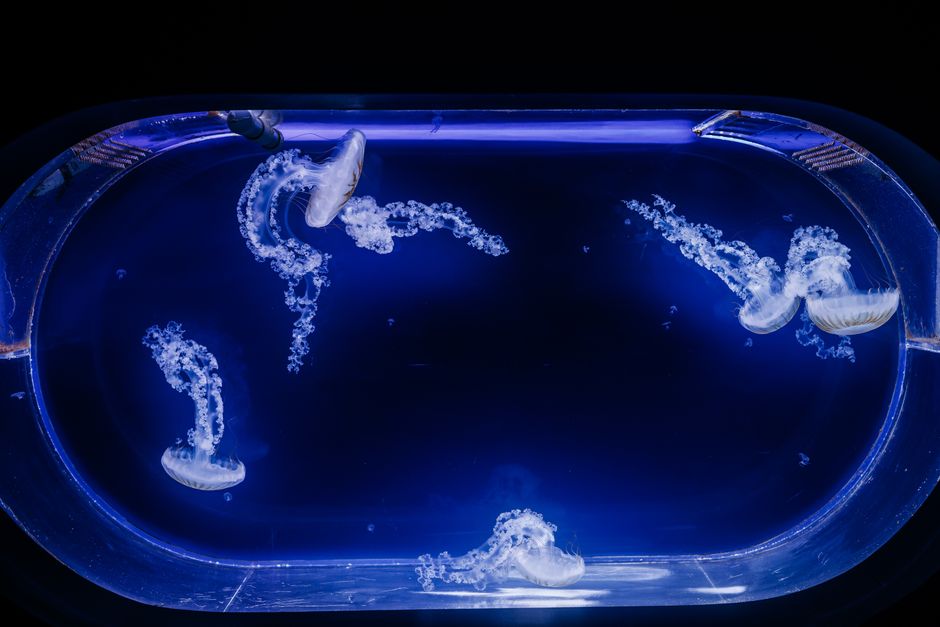
Immortal Jellyfish: How Turritopsis Reverses Aging

Immortal Jellyfish: How Turritopsis Reverses Aging

Immortal Jellyfish: How Turritopsis Reverses Aging

By TriviaOwl, Animals Desk — Published August 15, 2026

Table of Contents

Death may be inevitable for most creatures on Earth, but one tiny jellyfish has discovered a biological loophole. The immortal jellyfish Turritopsis dohrnii possesses a remarkable ability to reverse its aging process, essentially rewinding its biological clock and starting life over again. This extraordinary species, no larger than a pinky nail, can transform from a mature adult back into its juvenile polyp stage—a feat that has captivated scientists and challenged our understanding of aging in the animal kingdom.

Found in oceans around the world, this translucent creature represents one of nature's most astonishing examples of biological immortality. While the term "immortal" might sound like science fiction, the jellyfish's ability to avoid death through aging is very real, though it doesn't make the species invincible to predators or disease.

Key Takeaways

  • The immortal jellyfish Turritopsis dohrnii can reverse its life cycle through a process called transdifferentiation, converting adult cells back into juvenile cells.
  • This species measures only about 4.5 millimeters in diameter, making it one of the smallest jellyfish in the ocean.
  • Turritopsis is not truly invincible—it can still die from disease, predation, or injury, but theoretically can avoid death from old age.
  • The jellyfish has spread from its native Caribbean waters to oceans worldwide, likely hitchhiking in ship ballast water.
  • Scientists study this creature to understand cellular aging and regeneration, with potential implications for human medicine.
  • The transformation process takes roughly two days, during which the jellyfish settles on the seafloor and reorganizes its cellular structure.

The Science Behind Biological Immortality

When faced with physical damage, starvation, or environmental stress, Turritopsis dohrnii activates an extraordinary survival mechanism. The mature jellyfish sinks to the ocean floor and begins transforming its existing cells into different cell types—a process called transdifferentiation. Imagine if a butterfly could transform back into a caterpillar, then grow up to become a butterfly again. That's essentially what this jellyfish accomplishes.

During transdifferentiation, specialized adult cells convert into different types of cells entirely. A cell from the jellyfish's bell might become part of its digestive system in the next life cycle. This isn't simply reproduction or regeneration—it's a complete cellular reorganization that reverses the aging process. The jellyfish essentially becomes its own offspring.

The transformation creates a blob-like cyst that attaches to a surface. New polyps sprout from this mass, eventually budding off as genetically identical juvenile jellyfish. These youngsters then mature into adult medusae, and the cycle can theoretically repeat forever. No other known animal in the wildlife kingdom can perform this remarkable feat.

From Rare Specimen to Global Traveler

Turritopsis was first discovered in the Mediterranean Sea, though its native habitat is believed to be the Caribbean. Thanks to its tiny size and resilience, this species has become a global traveler. Ships pumping ballast water into their holds in one port and releasing it in another have inadvertently transported these creatures across the world's oceans.

Today, populations of the immortal jellyfish exist in temperate and tropical waters on every continent except Antarctica. This widespread distribution has actually helped scientists study the species more extensively, as specimens can be collected from various locations. The jellyfish thrives in both coastal waters and the open ocean, demonstrating remarkable adaptability for such a small creature.

The species feeds on plankton, fish eggs, and other tiny organisms, using its stinging tentacles to capture prey. In its polyp stage, it remains anchored to rocks or ship hulls, extending tentacles to snatch passing food particles from the water.

Immortality Doesn't Mean Invincibility

Despite its impressive abilities, Turritopsis faces the same dangers as any other small marine animal. Predators including sea turtles, fish, and other jellyfish species readily consume it. Disease can strike these creatures just as it affects other wildlife. Physical damage from waves or human activity can kill them before they trigger their transformation.

The behavior of reverting to a polyp stage appears to be a stress response rather than a regularly scheduled event. A well-fed, healthy jellyfish in ideal conditions might live its entire life without ever transforming. Only when facing threats does the animal activate this survival mechanism. This suggests the immortality trait evolved as an emergency escape hatch rather than a standard life cycle strategy.

Scientists estimate that very few Turritopsis actually achieve multiple life cycles in the wild. The ocean is simply too dangerous for such a small, vulnerable creature. Most likely die before they can complete even one transformation. In controlled laboratory conditions, however, researchers have successfully induced and observed the process multiple times in individual specimens.

Comparing Turritopsis to Other Long-Lived Species

Species Maximum Lifespan Longevity Method
Turritopsis dohrnii Potentially indefinite Cellular reversal and regeneration
Greenland Shark Up to 400 years Extremely slow metabolism
Ocean Quahog Clam Over 500 years Low metabolic rate, minimal aging
Bowhead Whale Over 200 years DNA repair mechanisms, large body size
Glass Sponge Over 10,000 years Simple structure, extreme cold habitat

What Scientists Hope to Learn

Research into Turritopsis has attracted attention from biologists studying aging, cellular regeneration, and cancer. The jellyfish's ability to reprogram cells offers insights into how cellular differentiation works and whether it might be reversible in other animals. Understanding the genetic switches that allow this transformation could someday inform treatments for age-related diseases or tissue regeneration in humans.

The creature's cells don't accumulate the typical markers of aging that plague other species. While human cells can only divide a limited number of times before reaching senescence, Turritopsis cells appear to reset this biological countdown. Researchers have identified specific genes involved in this process, though the complete mechanisms remain under investigation.

Cancer researchers find the jellyfish particularly interesting because cancer involves cells that won't stop dividing, while Turritopsis controls its cell division and differentiation precisely. The species somehow achieves rapid cell transformation without developing tumors—a trick that could hold valuable lessons.

Frequently Asked Questions

Can the immortal jellyfish really live forever?

Theoretically, yes—Turritopsis can avoid death from aging by repeatedly reverting to its juvenile form. However, in practice, most are killed by predators, disease, or environmental factors long before achieving true immortality in the wild.

How many times can Turritopsis reverse its aging?

There appears to be no limit to how many times the jellyfish can undergo transdifferentiation. Laboratory studies have observed individual specimens completing the transformation multiple times, though tracking wild specimens over extended periods remains challenging.

Are there other immortal animals besides Turritopsis?

No other animal can reverse its life cycle like Turritopsis. Some species like certain hydras show negligible senescence and may not age in traditional ways, but they cannot transform back into juvenile forms. Turritopsis remains unique in the animal kingdom.

Could humans ever use this jellyfish's abilities?

While research into Turritopsis may inform treatments for aging and cellular regeneration, humans and jellyfish are vastly different organisms. The complexity of human biology makes direct application unlikely, though the underlying cellular mechanisms being studied could contribute to medical advances in tissue regeneration and age-related disease treatment.

This tiny, translucent creature floating through the world's oceans carries within it one of nature's most profound secrets—the ability to cheat death itself. While we may never achieve the immortal jellyfish's remarkable transformation, studying Turritopsis reminds us that evolution can produce solutions to problems we once thought unsolvable. In the depths of the ocean, a creature smaller than your thumbnail continues to rewrite the rules of life and death.