










1 / 10 Questions
0 Points

What ocean creature can regrow its arms?

Starfish

Seahorse

Jellyfish

Clownfish

Points won
0
Correct score
0%

More Questions

Which river flows through Cairo, Egypt?

Which river flows through Cairo, Egypt? Question 1: Which river flows through Cairo, Egypt? A. Tigris B. Niger C. Nile D. Congo Explanation: Cairo sits on the banks of the...

7 Strange Facts About Axolotls Regenerating Body Parts

Discover how axolotl regeneration works with these 7 bizarre facts about regrowing limbs, organs, and even brain tissue in these remarkable salamanders.

9 Surprising Facts About Crows Recognizing Human Faces

Crow intelligence includes remarkable facial recognition abilities that rival primates. Discover how these birds remember humans for years and warn others.

More Articles

7 Surprising Facts About the Origin of the Dollar Sign

7 Surprising Facts About the Origin of the Dollar Sign

7 Surprising Facts About the Origin of the Dollar Sign

By TriviaOwl, Staff Writer — Published August 2, 2026

Table of Contents

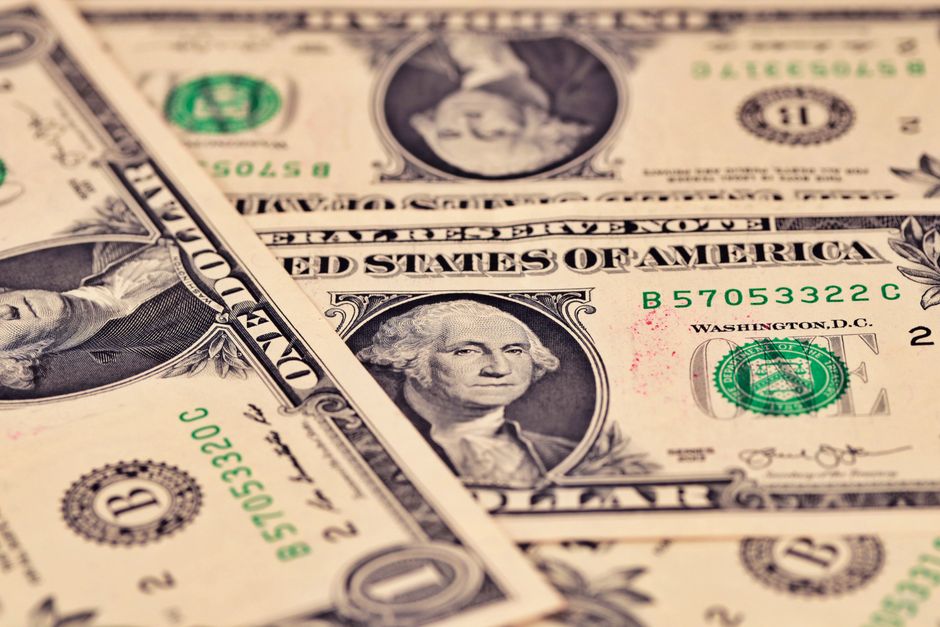
You see it every day on price tags, receipts, and bank statements, but have you ever stopped to wonder where the dollar sign ($) actually came from? The origin of the dollar sign is shrouded in mystery and competing theories, each more fascinating than the last. This simple symbol has sparked debates among historians, numismatists, and typographers for centuries. What's certain is that the story behind this ubiquitous mark reveals surprising connections to colonial trade, ancient currencies, and handwritten shortcuts that evolved over time.

Discover the hidden history of one of the world's most recognizable symbols. These amazing facts will change how you see those two little lines forever.

Key Takeaways

  • The dollar sign's true origin remains disputed, with multiple competing theories backed by historical evidence.
  • The most widely accepted theory links the symbol to Spanish colonial currency abbreviations used in the Americas.
  • Early versions of the dollar sign appeared with two vertical lines, not the single line commonly used today.
  • The symbol predates the United States dollar itself by several decades.
  • No definitive documentation exists showing exactly who created the dollar sign or when it first appeared.
  • The dollar sign is used for multiple currencies worldwide, not just the U.S. dollar.

The First Known Use: Earlier Than You Think

The dollar sign appeared in written documents before the United States even established its own currency. Researchers have found examples in business correspondence from the 1770s, when the American colonies still used Spanish dollars and other foreign coins for trade. The Continental Congress didn't adopt the dollar as the official U.S. currency until 1785. This timing is interesting because it suggests the symbol evolved from practical merchant shorthand rather than official government design.

Early manuscript evidence shows considerable variation in how people drew the symbol. Some used one line, others two. The strokes varied in angle and placement. This inconsistency supports the idea that the symbol emerged organically from multiple sources rather than being invented by a single person at a specific moment.

Understanding the Competing Theories

Several origin stories have gained traction over the years. Each theory draws on different historical evidence and linguistic analysis. Here's how the main contenders compare:

Theory Proposed Origin Supporting Evidence
Spanish Peso Abbreviation "P" with "S" superimposed Widespread use of Spanish dollars in colonial America
Pillars of Hercules Spanish coat of arms showing pillars with banners Visual similarity on Spanish piece of eight coins
U.S. Abbreviation Letters "U" and "S" overlapped Coincides with early American nationalism
German Thaler Evolved from symbols on German silver coins Linguistic connection between "thaler" and "dollar"

1. The Spanish Peso Connection Dominates Historical Consensus

Most currency historians favor the theory that the dollar sign evolved from the Spanish or Spanish-American abbreviation for pesos. Merchants in the 18th century commonly wrote "ps" as shorthand for pesos, the dominant currency in the Americas. Over time, with hurried handwriting, the "p" and "s" began to overlap. The vertical stroke of the "p" extended through the "s," eventually morphing into the symbol we recognize today. Spanish silver dollars, also called pieces of eight, circulated widely throughout the American colonies and remained legal tender in the United States until 1857, giving this theory strong historical foundation.

2. Two Lines Were the Original Standard

The dollar sign with two vertical lines ($) actually came first. Early printed versions consistently showed the double-stroke form, which persisted well into the 20th century. The single-line version ($) gained popularity primarily for practical reasons: it was faster to write by hand and easier to render in early typewriters and printing presses. Some style guides and financial institutions still prefer the double-line version for formal documents, though the single-line form now dominates in digital typography and everyday use.

3. No Official Record Documents Its Invention

Unlike many symbols and punctuation marks, the dollar sign has no clear inventor or documented moment of creation. No decree, patent, or official announcement introduced it to the world. This absence of documentation frustrates historians but also tells us something important: the symbol emerged from practical necessity among merchants and clerks who needed efficient ways to record transactions. The dollar sign represents a rare example of a symbol that evolved democratically through common use rather than being imposed from above by authorities or scholars.

4. The Pillars of Hercules Theory Offers Visual Appeal

Spanish pieces of eight featured the coat of arms of Spain, which included two pillars representing the Pillars of Hercules at the Strait of Gibraltar. Banners wrapped around these pillars in an S-shape, creating a visual that resembles the dollar sign. While this theory captures the imagination and the resemblance is striking, most scholars consider it less likely than the peso abbreviation theory. The visual similarity may be coincidental, or it could have reinforced a symbol that was already emerging from written abbreviations.

5. Multiple Currencies Adopted the Same Symbol

The dollar sign isn't exclusive to U.S. currency. More than 20 countries use dollar-denominated currencies, and many employ the same $ symbol, including Canada, Australia, New Zealand, and Singapore. Other nations have modified it slightly—the cifrão (₵) used in some Portuguese-speaking countries features two vertical lines, while the peso sign in some Latin American countries may use different stroke weights. This widespread adoption occurred because many of these currencies historically tied their value to the Spanish dollar or later to the U.S. dollar, inheriting the symbol along with the name.

6. Early Typewriters Cemented Its Modern Form

The standardization of the dollar sign accelerated with the invention of the typewriter in the late 1800s. Manufacturers had to choose which version of the symbol to include on their keyboards. Most opted for the single-line version because it required less mechanical complexity and took up less space on the type bar. This mechanical constraint influenced how billions of people would write the symbol for generations. When computers arrived, they inherited the typewriter's conventions, further solidifying the single-stroke dollar sign as the default.

7. The Symbol Predates Modern Copyright and Trademark Law

Because the dollar sign emerged before intellectual property protections existed for symbols and typography, it belongs to everyone. No person, company, or government can claim ownership or restrict its use. This public-domain status differs dramatically from modern currency symbols like the euro (€), which was carefully designed by a specific team and introduced with official fanfare in the 1990s. The dollar sign's anonymous, grassroots origin makes it a democratic symbol in the truest sense—created by common people for common use, refined over decades through collective practice.

Frequently Asked Questions

When was the dollar sign first used in print?

The earliest confirmed printed examples of the dollar sign appear in documents from the 1790s, though handwritten versions likely existed earlier in the 1770s. The symbol predates the official establishment of the U.S. Mint in 1792.

Why does the dollar sign have one or two lines?

Both versions are correct, though the two-line version ($) came first and was standard in early printing. The one-line version ($) became more common due to handwriting speed and typewriter limitations.

Do other countries use the dollar sign?

Yes, more than 20 countries with dollar-denominated currencies use the dollar sign, including Canada, Australia, and Singapore. The symbol has become internationally recognized regardless of the specific currency.

Is the dollar sign related to the cent sign?

The cent sign (¢) is a separate symbol that represents one-hundredth of a dollar. It likely developed independently, using the letter "c" for cent with a vertical stroke, following similar abbreviation conventions used for the dollar sign.

The next time you scribble a dollar sign on a check or see it flash across a screen, remember that you're using a symbol with a genuinely mysterious past. Its exact origins may never be fully known, but that uncertainty only adds to its charm—a reminder that even the most familiar parts of our daily lives carry hidden stories worth exploring.

Did Carrots Really Improve Night Vision in World War II

Did Carrots Really Improve Night Vision in World War II

Did Carrots Really Improve Night Vision in World War II

By Trivia Daily, Staff Writer — Published September 27, 2026

Table of Contents

During the darkest nights of World War II, British Royal Air Force pilots were mysteriously intercepting German bombers with uncanny accuracy. The official explanation? A diet rich in carrots. The British government launched a propaganda campaign claiming that carrots improved night vision, explaining why their pilots could see so well in the dark. But this interesting tale of wartime nutrition was actually a clever cover story for one of the war's most closely guarded secrets. The truth behind whether carrots improve night vision reveals a fascinating blend of nutritional science and military deception that continues to surprise people today.

The carrot myth became one of history's most successful pieces of misinformation, persisting decades after the war ended. What began as strategic misdirection evolved into genuine nutritional advice, leaving generations wondering where the facts end and the fiction begins.

Key Takeaways

  • The British government promoted carrots to hide the existence of radar technology from German forces during World War II
  • Carrots contain beta-carotene, which the body converts to vitamin A, essential for eye health and low-light vision
  • Vitamin A deficiency can cause night blindness, but eating extra carrots won't give people with adequate nutrition superior night vision
  • The propaganda campaign was so effective that British citizens grew carrots in victory gardens and the myth persists today
  • RAF pilot John Cunningham, nicknamed "Cat's Eyes," became the poster child for the carrot campaign despite his success relying on airborne radar
  • This amazing example of wartime disinformation demonstrates how scientific facts can be twisted to serve strategic purposes

The Real Reason Carrots Improve Night Vision Became a Wartime Story

In 1940, British scientists developed a revolutionary technology called airborne interception radar. This system allowed RAF fighter pilots to detect enemy aircraft in complete darkness, giving them an enormous tactical advantage during nighttime raids. The technology was so valuable that British intelligence needed to prevent the Germans from discovering it.

Enter the humble carrot. The British Ministry of Food launched a campaign attributing the pilots' success to their exceptional carrot consumption. Newspapers ran stories about pilots eating carrots to sharpen their vision. Recipe pamphlets featured carrot-based dishes. The campaign served dual purposes: concealing radar technology while encouraging citizens to eat vegetables that were abundant and easy to grow during wartime rationing.

The deception worked brilliantly. German intelligence reportedly investigated the carrot claims rather than suspecting advanced technology. Meanwhile, British citizens embraced carrots with patriotic enthusiasm, planting them in gardens and incorporating them into countless wartime recipes.

The Nutritional Truth About Carrots and Vision

Despite the wartime propaganda origins, carrots do play a genuine role in eye health. They're rich in beta-carotene, an orange pigment that the human body converts into vitamin A. This nutrient is absolutely essential for maintaining healthy vision, particularly in low-light conditions.

Vitamin A forms part of rhodopsin, a protein in the eye's rod cells that enables vision in dim light. Without adequate vitamin A, people develop night blindness, a condition where the eyes struggle to adjust to darkness. In severe cases, vitamin A deficiency can lead to complete blindness, a serious public health issue in some developing regions.

Here's the catch: eating carrots only helps if you're deficient in vitamin A. For people with adequate nutrition, consuming extra carrots won't enhance night vision beyond normal levels. You can't eat your way to superhuman sight. The body converts and uses only the vitamin A it needs, storing excess or eliminating it.

How Vitamin A Actually Works in Your Eyes

The eye contains two types of photoreceptor cells: cones for color vision in bright light, and rods for black-and-white vision in low light. Rods contain rhodopsin, sometimes called "visual purple," which breaks down when exposed to light and regenerates in darkness.

This regeneration process requires vitamin A. When light hits rhodopsin molecules, they split into retinal (derived from vitamin A) and opsin (a protein). In darkness, these components recombine, preparing the rods to detect light again. This cycle happens constantly as your eyes adjust between light and dark environments.

Without sufficient vitamin A, rhodopsin can't regenerate properly. The rods become less sensitive, making it difficult to see in dim conditions. This explains why vitamin A deficiency causes night blindness. But once you have enough vitamin A, adding more doesn't accelerate or enhance this natural process.

Comparing Vitamin A Sources

Food Source Vitamin A Type Relative Amount Additional Benefits
Carrots Beta-carotene (provitamin A) High Fiber, antioxidants
Sweet potatoes Beta-carotene Very high Fiber, potassium
Liver Preformed vitamin A Extremely high Iron, B vitamins
Spinach Beta-carotene High Iron, calcium
Egg yolks Preformed vitamin A Moderate Protein, choline

The Legacy of Wartime Propaganda

The carrot campaign's success extended far beyond the war years. Generations grew up believing that carrots dramatically improved vision, a testament to effective messaging. Parents encouraged children to eat carrots to see better in the dark. The myth embedded itself in popular culture, appearing in cartoons, books, and everyday conversation.

This curious piece of wartime trivia demonstrates how governments can manipulate scientific facts for strategic purposes. The British didn't lie outright—carrots do support eye health—but they exaggerated the effect to serve military objectives. The campaign succeeded because it contained a kernel of truth wrapped in strategic misdirection.

Historians now recognize the carrot story as a masterclass in information warfare. It protected critical technology, boosted morale, encouraged healthy eating during rationing, and misled enemy intelligence. Few propaganda efforts have achieved such comprehensive success or maintained their influence for so long.

Other Foods That Support Eye Health

While we're exploring vision and nutrition, several other foods deserve recognition for supporting eye health:

  • Leafy greens like kale and spinach contain lutein and zeaxanthin, antioxidants that protect the retina
  • Fish rich in omega-3 fatty acids support retinal health and may reduce age-related vision problems
  • Citrus fruits and berries provide vitamin C, which helps maintain blood vessels in the eyes
  • Nuts and seeds offer vitamin E, protecting eye cells from damage
  • Eggs contain multiple eye-healthy nutrients including lutein, zeaxanthin, and zinc

Frequently Asked Questions

Can eating lots of carrots turn your skin orange?

Yes, consuming excessive amounts of beta-carotene can cause carotenemia, a harmless condition where the skin develops an orange tint, particularly on the palms and soles. The condition resolves when you reduce beta-carotene intake.

Do carrots help prevent cataracts or other eye diseases?

Adequate vitamin A intake supports overall eye health, but no evidence suggests that eating extra carrots prevents cataracts or age-related macular degeneration. A balanced diet with various nutrients offers better protection than focusing on one food.

How much vitamin A do adults need daily?

Adult men need approximately 900 micrograms of vitamin A daily, while adult women need about 700 micrograms. One medium carrot provides roughly 500 micrograms of vitamin A equivalents from beta-carotene, easily meeting a significant portion of daily requirements.

Did the Germans ever discover the radar deception?

German forces eventually learned about British radar technology through other intelligence channels and their own radar development, but the carrot campaign successfully delayed their understanding of how advanced British airborne radar had become during critical early war years.

The next time you hear someone claim that carrots give you night vision, you'll know the fascinating story behind this enduring myth. It's a reminder that even our most innocent-sounding "facts" sometimes have extraordinary hidden histories, waiting to be discovered by the curious mind.