
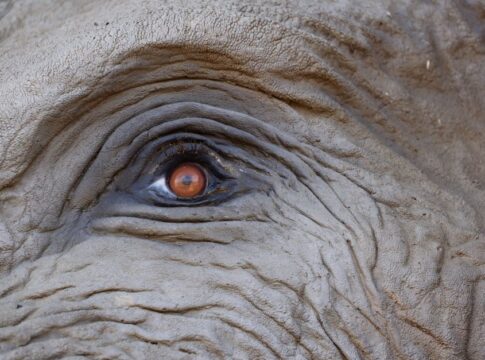
Did Elephants Really Mourn Their Dead Like Humans Do
By Trivia Daily, Animals Desk — Published October 12, 2026
Table of Contents
- Key Takeaways
- What Elephants Actually Do When One of Them Dies
- The Science Behind Elephant Emotions and Intelligence
- Comparing Mourning Behaviors Across Species
- What Mourning Might Mean in Nature
- Conservation Implications of Understanding Elephant Emotions
- Frequently Asked Questions
When an elephant dies, something remarkable happens. The herd doesn’t simply move on. Fellow elephants gather around the body, touching it gently with their trunks, standing in apparent silence, sometimes for hours or even days. This behavior has fascinated scientists and wildlife observers for generations, raising a profound question: do elephants mourn dead members of their species in ways that mirror human grief? The evidence suggests that these intelligent creatures experience something far deeper than instinct when confronted with death.
Elephants display behaviors toward their deceased that are rare in the animal kingdom. They return to the bones of dead elephants years later, carefully examining skulls and tusks with their trunks. They’ve been observed trying to lift fallen companions, covering bodies with branches and dirt, and showing visible signs of distress. These aren’t isolated incidents but documented patterns observed across different elephant populations in various habitats throughout Africa and Asia.
Key Takeaways
- Elephants consistently show behaviors toward their dead that suggest emotional responses, including touching bodies with their trunks, standing vigil, and returning to remains years later.
- These creatures have been documented covering deceased elephants with branches, leaves, and dirt in what appears to be burial-like behavior.
- Elephants show particular interest in the bones and tusks of other elephants, often pausing to examine them carefully even when encountering remains of strangers.
- Brain studies reveal elephants possess a highly developed hippocampus and temporal lobes, regions associated with memory and emotion processing in mammals.
- Similar mourning behaviors have been observed in other intelligent species including great apes, cetaceans, and some corvids, suggesting complex emotional lives aren’t unique to humans.
- Female elephants who lose calves have been observed carrying the bodies for days and showing signs of depression, including reduced social interaction and changes in vocalization patterns.
What Elephants Actually Do When One of Them Dies
The behavior elephants display around death isn’t subtle. When a member of the herd dies, other elephants approach the body cautiously, extending their trunks to touch and smell it. They pay particular attention to the head and tusks. Some elephants become visibly agitated, while others stand remarkably still. The herd may remain with the body for several days, and during this time, they often become unusually quiet.
One of the most striking aspects of elephant behavior involves their interaction with bones. Elephants will stop and investigate the skeletal remains of other elephants they encounter, even if those remains are years old and belong to elephants they never knew. They pick up bones with their trunks, turning them over, sometimes carrying them short distances. Interestingly, elephants show little interest in the bones of other species. This selective attention suggests they recognize the remains as belonging to their own kind.
Mother elephants who lose calves display particularly poignant behavior. They’ve been observed carrying dead calves with their trunks and feet, attempting to rouse them, and staying with the body long after the rest of the herd has moved on. Some mothers show what researchers interpret as signs of depression following such losses, including decreased appetite and social withdrawal.
The Science Behind Elephant Emotions and Intelligence
Understanding whether elephants truly mourn requires examining their cognitive capabilities and brain structure. Elephants possess the largest brain of any land animal, weighing around 11 pounds. More significant than size is structure. Their brains contain a highly developed hippocampus, a region crucial for memory formation and emotional processing. The elephant temporal lobes are also proportionally larger than those in humans, suggesting sophisticated processing of sensory information and social cues.
Elephants demonstrate self-awareness, a trait shared by only a handful of species. They recognize themselves in mirrors, suggesting a level of consciousness necessary for complex emotions. Their social structures are intricate, with strong family bonds maintained over decades. Female elephants live in matriarchal herds with their daughters, sisters, and offspring, creating multi-generational family units with deep social connections.
Communication among elephants is remarkably sophisticated. They use infrasonic calls that travel for miles, allowing herds to maintain contact across vast distances. They also employ a range of vocalizations, body language, and chemical signals. This complex communication system supports the social bonds that make responses to death so emotionally charged.
Comparing Mourning Behaviors Across Species
Elephants aren’t alone in displaying death-related behaviors that suggest grief. Several highly intelligent species show similar patterns, offering context for understanding what elephant behavior might mean.
| Species | Observed Mourning Behaviors | Social Structure |
|---|---|---|
| Elephants | Touching bodies, standing vigil, covering with vegetation, revisiting bones | Matriarchal herds with strong family bonds |
| Chimpanzees | Grooming deceased, attempting to rouse them, carrying dead infants | Complex social groups with alliances |
| Dolphins | Supporting dead companions at surface, vocalizing, staying with bodies | Pods with long-term relationships |
| Crows and Ravens | Gathering around dead, calling loudly, avoiding areas where deaths occurred | Pair bonds and family groups |
| Gorillas | Gentle touching, sitting with deceased, mothers carrying dead infants | Stable family groups led by silverbacks |
The common thread among these species is notable. All possess large, complex brains relative to body size. All live in stable social groups with long-term relationships. All demonstrate problem-solving abilities and tool use to varying degrees. These shared characteristics suggest that mourning behavior emerges from a combination of intelligence, social complexity, and emotional capacity.
What Mourning Might Mean in Nature
Whether elephant behavior constitutes “mourning” in the human sense remains a subject of scientific debate. Some researchers argue that what we observe is genuine grief—an emotional response to loss that serves social and psychological functions. Others suggest these behaviors might have evolutionary explanations that don’t require attributing human-like emotions to animals.
One hypothesis proposes that death-related behaviors help elephants learn about mortality and danger. By investigating remains, elephants might gather information about threats in their habitat. Spending time with deceased herd members could reinforce social bonds among survivors and help younger elephants understand death as a concept.
Yet this functional explanation doesn’t fully account for the observed behaviors. Why would elephants return to bones years later if the behavior were purely educational? Why show such specific interest in elephant remains versus those of other species? Why do mothers carry dead calves when doing so offers no survival advantage? These questions push researchers toward acknowledging that elephant responses to death likely involve genuine emotional experiences, even if we can’t know their exact nature.
Conservation Implications of Understanding Elephant Emotions
Recognizing the emotional depth of elephants carries weight beyond scientific curiosity. Both African and Asian elephant populations face significant threats from habitat loss, human-wildlife conflict, and poaching. Understanding that elephants form deep social bonds and experience trauma from loss informs conservation strategies.
When poachers kill elephants for ivory, they don’t just remove individuals from the population. They traumatize entire herds. Young elephants who witness the killing of family members show behavioral changes consistent with post-traumatic stress. Herds with disrupted social structures due to poaching display increased aggression and decreased reproductive success. Conservation efforts that prioritize keeping family groups intact and protecting matriarchs—the repositories of crucial survival knowledge—prove more effective than approaches that view elephants as interchangeable population units.
Wildlife sanctuaries and rehabilitation centers now incorporate understanding of elephant psychology into their practices. Rescued elephants are carefully introduced to new social groups, recognizing their need for companionship. Facilities maintain multi-generational groups when possible, allowing younger elephants to learn from elders.
Frequently Asked Questions
Do elephants cry tears when they’re sad?
Elephants do produce tears, but these serve to lubricate their eyes rather than express emotion. However, elephants do display other signs of distress including changes in vocalization, body language, and behavior that suggest emotional responses to loss and stress.
How long do elephants stay with dead family members?
Elephants typically remain with deceased herd members for hours to several days. The duration varies based on circumstances, but they’ve been observed returning to the site of death or to remains weeks, months, or even years later to investigate bones.
Can elephants recognize the bones of family members specifically?
Research suggests elephants show heightened interest in the remains of elephants they knew personally, spending more time investigating these bones compared to those of strangers. However, they examine all elephant remains with apparent interest, regardless of familiarity.
Do male elephants mourn differently than females?
Adult male elephants, who typically live more solitary lives after leaving their birth herds, show less pronounced mourning behaviors than females in matriarchal groups. However, males do investigate elephant remains and have been observed showing interest in deceased elephants they encounter.
The question of whether elephants truly mourn may ultimately be less important than what their behavior reveals about the nature of consciousness itself. These creatures, separated from us by millions of years of evolution, independently developed responses to death that mirror our own in uncanny ways. Whether we call it mourning, grief, or something else entirely, elephant behavior challenges us to reconsider where the boundaries of emotional experience lie in the animal kingdom—and perhaps to recognize that the capacity for profound connection and loss extends far beyond our species.