
Why Mermaids Were Likely Manatees Mistaken by Sailors
By Trivia Daily, Staff Writer — Published October 12, 2026
Table of Contents
- Key Takeaways
- How Mermaids Likely Became Manatees in Sailors’ Eyes
- The Science Behind the Sirenia Connection
- Comparing Manatee Species and Their Mermaid Connections
- Historical Context: Life at Sea and Perception
- Other Creatures Behind Mermaid Myths
- Frequently Asked Questions
For centuries, sailors returned from long voyages with tales of beautiful mermaids singing from rocky shores and beckoning ships toward dangerous waters. These mythical creatures have captivated human imagination across cultures and continents. Yet the truth behind many mermaid sightings is far less enchanting—and far more blubbery. Evidence suggests that mermaids were likely manatees, dugongs, and other marine mammals misidentified by exhausted, vitamin-deficient sailors who’d spent months at sea. This surprising connection between myth and marine biology reveals how human perception, combined with harsh ocean conditions, can transform an ordinary sea cow into legendary folklore.
The confusion becomes easier to understand when you consider the circumstances. Sailors endured long periods of isolation, limited diets that often led to scurvy and hallucinations, and the disorienting effects of sun exposure and dehydration. When a curious manatee surfaced near their vessel—perhaps nursing its young in an upright position—the resemblance to a human form was just close enough to fuel the legend.
Key Takeaways
- Christopher Columbus himself reported seeing “mermaids” off the coast of Haiti in 1493, describing them as “not as pretty as they are depicted” and noting they had masculine faces—consistent with manatee features.
- Manatees and dugongs belong to the order Sirenia, named after the sirens of Greek mythology, acknowledging the historical connection between these animals and mermaid legends.
- Female manatees nurse their young while holding them with their flippers, creating a posture that resembles a human mother cradling an infant when viewed from a distance.
- Sailors suffering from scurvy, which was common on long voyages, often experienced hallucinations and visual distortions that could have enhanced the mermaid illusion.
- Manatees can remain underwater for up to 20 minutes but typically surface every few minutes to breathe, giving sailors brief, mysterious glimpses that fed their imaginations.
- Historical accounts of mermaids often describe them in shallow coastal waters where manatees naturally feed on seagrass beds.
How Mermaids Likely Became Manatees in Sailors’ Eyes
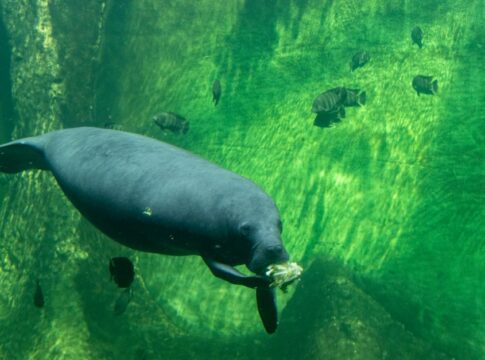
The physical characteristics of manatees and dugongs offer clues to this case of mistaken identity. These marine mammals possess rounded, somewhat humanoid heads when viewed from certain angles. Their front flippers can appear arm-like, especially when used to manipulate food or hold their young. Manatees have flexible lips and facial muscles that allow them to grasp vegetation, creating expressions that might seem eerily human to someone expecting to see one.
Size played a role too. Adult manatees typically weigh between 800 and 1,200 pounds and can reach lengths of up to 13 feet. From a distance, especially in murky water or fading light, such a large creature breaking the surface could easily be misinterpreted. The mammal’s gray-brown coloration might even suggest wet hair or clothing to an observer primed by cultural myths about sea-dwelling humanoids.
The nursing behavior of manatees particularly strengthened the resemblance. Female manatees have mammary glands located near their flippers—similar to human anatomy—and they nurse their calves in an upright position. A sailor glimpsing this maternal scene from the deck of a ship, after months without seeing women or families, might well project human characteristics onto what he was witnessing.
The Science Behind the Sirenia Connection
The scientific classification itself tells the story. When taxonomists named the order containing manatees and dugongs, they chose “Sirenia” after the sirens—those dangerous creatures of Greek mythology who lured sailors to their doom with enchanting songs. This wasn’t accidental. Scientists recognized that these animals had likely inspired countless mermaid legends throughout maritime history.
Manatees are found in warm coastal waters, rivers, and estuaries—exactly the environments where many mermaid sightings were reported. The West Indian manatee inhabits waters from Florida to Brazil, while dugongs live in the Indo-Pacific region. Both areas feature prominently in historical mermaid folklore. The animals’ habitat preferences meant they frequently encountered ships traveling trade routes or exploring new territories during the Age of Exploration.
Their behavior patterns align with mermaid mythology too. Manatees are curious creatures that sometimes approach boats and swimmers. They’re generally slow-moving and docile, spending much of their time grazing on aquatic vegetation in shallow waters. This peaceful demeanor might explain why some mermaid tales describe friendly encounters rather than dangerous ones.
Comparing Manatee Species and Their Mermaid Connections
| Species | Geographic Range | Historical Mermaid Legends | Key Physical Features |
|---|---|---|---|
| West Indian Manatee | Caribbean, Gulf of Mexico, Amazon | Columbus’s 1493 sighting; Caribbean folklore | Rounded tail, gray body, up to 13 feet long |
| Dugong | Indo-Pacific waters | Asian and Pacific Island mermaid myths | Fluked tail, slightly smaller, more dolphin-like |
| West African Manatee | West African coast and rivers | African water spirit legends (Mami Wata) | Similar to West Indian, adapted to freshwater |
| Amazonian Manatee | Amazon River basin | Indigenous South American water deity stories | Smallest species, freshwater only, pink belly |
Historical Context: Life at Sea and Perception
Understanding why sailors made this mistake requires examining the brutal reality of historical sea voyages. Ships during the Age of Exploration spent months crossing oceans with no fresh food, limited water, and cramped conditions. Scurvy, caused by vitamin C deficiency, didn’t just weaken the body—it affected the mind. Sailors experienced fatigue, confusion, and sometimes vivid hallucinations.
The psychological effects of isolation compounded these physical challenges. Months without touching land, surrounded by endless water, created a mental state where the boundary between reality and imagination blurred. Cultural expectations shaped perception too. Sailors grew up hearing mermaid stories and viewing artistic depictions of these creatures. When confronted with something unusual in the water, their brains filled in gaps based on existing beliefs.
Lighting conditions at sea further contributed to misidentification. Dawn and dusk create tricky visibility, and reflections on water can distort shapes and sizes. A manatee surfacing briefly at twilight, viewed through salt-crusted eyes by an exhausted sailor, could easily transform into something more fantastical in the retelling.
Other Creatures Behind Mermaid Myths
While manatees and dugongs explain many sightings, other marine animals contributed to mermaid legends across different cultures:
- Seals and sea lions: These pinnipeds can appear surprisingly human-like when their heads emerge from water, and their vocalizations might have inspired tales of singing mermaids.
- Beluga whales: Their white coloration and rounded heads, combined with their complex vocalizations, may have sparked Arctic mermaid stories.
- Oarfish: These rarely-seen deep-sea fish can reach lengths of 30 feet and have ribbon-like bodies that might explain serpentine mermaid descriptions.
- Giant squid tentacles: Breaking the surface could be mistaken for limbs or hair, especially when glimpsed briefly.
Frequently Asked Questions
Did Christopher Columbus really see manatees and think they were mermaids?
Yes, Columbus documented seeing three “mermaids” off the coast of Haiti in January 1493, though he noted they weren’t as beautiful as depicted in art and had somewhat masculine faces. Marine biologists and historians agree he almost certainly saw manatees, which are common in those waters.
Why are manatees called sea cows if they look like mermaids?
The “sea cow” nickname comes from their grazing behavior—manatees spend up to eight hours daily eating aquatic vegetation, much like cattle grazing on land. Their scientific order name, Sirenia, acknowledges the mermaid connection, while the common name describes their lifestyle.
Are manatees related to other marine mammals like whales or seals?
Surprisingly, manatees are more closely related to elephants than to other marine mammals. Despite their aquatic lifestyle, genetic evidence shows their nearest living relatives are elephants and hyraxes, small terrestrial mammals. This makes their evolution particularly fascinating.
Do manatees make sounds that could be mistaken for singing?
Manatees do vocalize, producing chirps, whistles, and squeaks to communicate, especially between mothers and calves. While not melodic enough to explain siren songs, these sounds could have contributed to the mystique surrounding unidentified creatures in the water, particularly when heard but not seen clearly.
The transformation of gentle, grass-munching manatees into alluring mythical sirens reminds us how powerfully human imagination shapes our interpretation of the natural world. Next time you encounter a mermaid in art or literature, picture instead a thousand-pound sea cow peacefully grazing in shallow waters—the real creature that launched a thousand ships’ worth of legends.